Welcome to the season opener for the Oklahoma City Thunder. Hold on, what? It’s not the season opener? It’s the 46th game of the season? Wow! With the amount of time we’ve been off (4 whole days) and the amount of time since the last home game (over two weeks), you can see how it feels like an entire off-season since we’ve last seen the team live. Also, this is the longest we’ve had to marinate after a loss since Game 5 of last season’s Finals. Needless to say, Oklahoma City is chomping at the bit to play a game at home.
Their opponent for their return back home is the new look Memphis Grizzlies, although Memphis may be a bit short handed tonight. Yesterday, the Grizzlies traded Rudy Gay and Hamed Haddadi to the Toronto Raptors for Ed Davis and Jose Calderon. The Grizzlies then turned around and traded Calderon to the Detroit Pistons for Tayshaun Prince and Austin Daye. Unfortunately (or luckily for the Thunder), those players will not be available for the Grizzlies tonight.
But it’s not like this will be an easy game. This is basically the same team that took the Thunder to 7 games two postseasons ago in the Western Conference Semis. That team was also without Rudy Gay, who was out following in-season shoulder surgery. The Grizzlies defeated the Thunder in their first meeting this season, 107-97, in Oklahoma City. In that game, Rudy Gay hit every big shot in the 2nd half to keep the Thunder at bay. Much like what the Thunder were facing in their 3rd game of the season, the Grizzlies will be getting acclimated to life without a key component of their team.
The Opponent
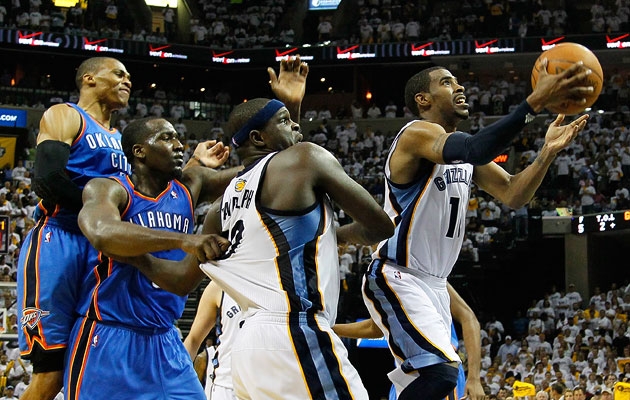
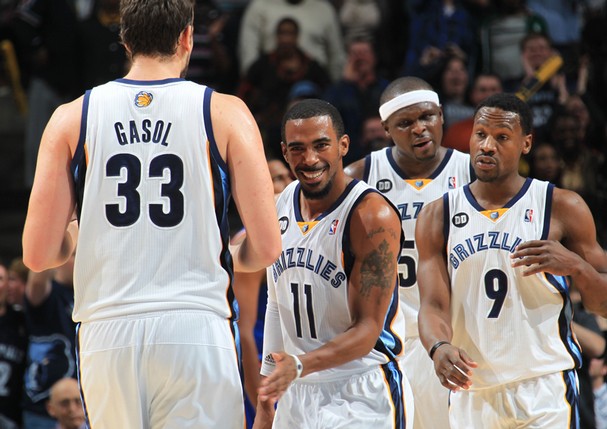
The Grizzlies come into the game with a 29-15 record, good for 4th in the Western Conference. Though they struggle to score points (93.4, 27th in the league), they more than make up for it with the best defense in the league, in terms of opponents’ ppg (89.5, 1st in the league). Offensively, they are highly dependent on post play and taking care of the ball. On defense, they use their physicality and brute strength to gobble up boards and get opponents out of position on offense. The offense is led by the big boys inside, Marc Gasol and Zach Randolph. Though not a very athletic duo, their high basketball IQ more than makes up for their athletic shortcomings. Randolph, who was selected as a reserve to the All-Star game, averages 15.8 points and 11.6 rebounds per game. Gasol, who has been struggling a bit this season, averages 13.7 points and 7.5 rebounds per game. The offense is directed by Mike Conley, who is one of the better floor generals in the league. SG Tony Allen is one of the best defensive wings in the league. The bench is one of the more consistent ones in the league, with 6 players each averaging more than 14.5 minutes and scoring more than 5.5 ppg.
Probable Starters
Memphis Grizzlies
PG – Mike Conley
SG – Wayne Ellington
SF – Tony Allen
PF – Zach Randolph
C – Marc Gasol
Oklahoma City Thunder
PG – Russell Westbrook
SG – Thabo Sefolosha
SF – Kevin Durant
PF – Serge Ibaka
C – Kendrick Perkins
3 Keys to the Game
Don’t give this team a chance – Yes, they just lost their best scorer. Yes, they will be shorthanded. But, don’t give this team a chance or they will steal this game. Memphis is a veteran bunch that has won without Rudy Gay before. Take advantage of their lack of depth and play transition basketball and try to draw fouls.
Control the boards – While Memphis may not score much, their bigs do get a lot of rebounds. This leads to extra opportunities offensively, which is big for a team that is short handed. If necessary, Kevin Durant may need to hedge over to the post to help out on the boards.
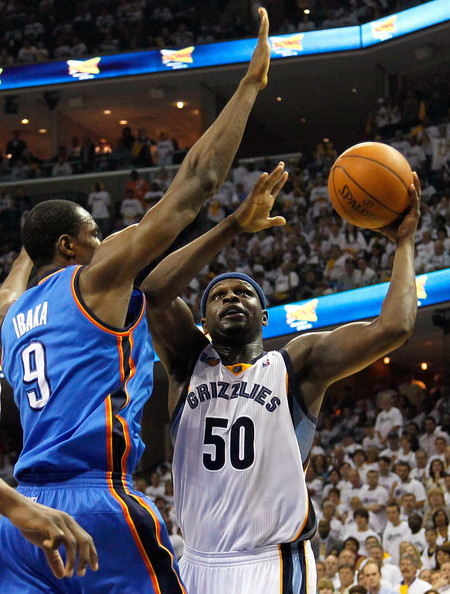
Play Randolph smartly – Serge Ibaka always seems to have trouble against crafty, non-athletic PFs (Randolph, Nowitzki, etc.). Don’t bite on the pump fakes and keep your hands straight up in the air. It seems like when the Thunder play the Grizzlies, Collison always ends up in the game for an extended period of time due to Ibaka’s foul trouble.
This was supposed to be the year where the Oklahoma City Thunder’s young quartet of Kevin Durant, Russell Westbrook, Serge Ibaka, and James Harden was supposed to put it all together and finally reach the mountain top. These four young men who had just competed (and medaled) in the Olympics were supposed to pick up where they had left off and continue on their improvement track. From 1st round losers to Western Conference Finals losers to NBA Finals losers, the eventual next step would have been NBA Finals winners. Everyone went into training camp with that mind set.
And then, 5 days before the season started, in the middle of a stirring football game between the Oklahoma Sooners and Notre Dame Fighting Irish, came the shocking news that one of the quartet had been traded. James Harden, whose contract extension talks had stalled with the team, was traded, along with Daequan Cook, Cole Aldrich, and Lazar Hayward, to the Houston Rockets for Kevin Martin, Jeremy Lamb, and 3 draft picks. It took several days before the jaws of Oklahomans throughout the state were picked up off the ground.
Once the shock wore off, and the trade was analyzed, it was one of those instances where it was a good trade for both teams. The Thunder got a comparable player in Martin, a good young guard in Lamb, assets in the form of draft picks, and salary cap flexibility. Championship contending teams usually never have assets and salary cap flexibility, but this trade gave that back to the Thunder before they had an opportunity to lose it. Houston, in return, got a franchise player in Harden. After clearing cap space and failing to land Dwight Howard in the offseason, the Rockets were chomping at the bit for a franchise-type guy. So far, it’s been a win-win for both teams.
Whether we were ready for the season or not, it still had to be played. The schedule doesn’t care whether the Thunder made a big roster move five days before the start of the season. The schedule doesn’t care that the Thunder never got the opportunity to play any pre-season games with any of its new players. All the schedule decrees is that said team be at the location of the game with at least 8 dressed players. So with that, the Thunder embarked on the first half of the season.
November 1st, 2012 – November 4th, 2012 : The sky is falling!!!! Grab the women and children, and head to higher ground!!!!! (1-2)
After the core rattling trade five days prior, the Thunder had to open their season on the road against their Western Conference Finals opponent, the San Antonio Spurs. The game was back and forth most of the night with neither team controlling the game. In the final minute with the Spurs down by three, Tony Parker hit a 3-pointer with 28 seconds left to tie the game. On the Thunder’s next possession, with the opportunity to take the lead, Russell Westbrook turned the ball over to give the Spurs one final shot. Tony Parker calmly sank a 21-footer at the buzzer to give the Spurs the victory.
Of course, panic set in after that. Would the Thunder ever win another game again? Is this the beginning of the Curse of the Beard? Would we have won that game had James Harden not been traded? The second game was against the Portland Trailblazers in Oklahoma City. The Thunder easily dispatched of the Trailblazers in expected fashion. But that did little to quell the panic of the fan base, especially when Harden was in Houston averaging 35.3 points per game after the first three games of the season.
The Thunder entered the third game of the season with high hopes. But after 21 turnovers and an inability to make shots in the second half, the Thunder lost to the Atlanta Hawks to bring their record to 1-2. Needless to say, some in the fan base were ready to jump off of the Devon Energy Tower.
Novemeber 6th, 2012 – November 23rd, 2012: Getting to know you, getting to know all about you. (8-2)
This home heavy stretch against lesser opponents is just what the doctor ordered, not only for the team, but also for the fan base. After the Atlanta loss, the Thunder reeled off five straight win against 3 likely lottery teams (Cleveland, Detroit (x2), and Toronto), and one injury ravaged team (Chicago). It’s almost like the team had a mini training camp with these 5 games serving as preseason games. The players got a sense of what their roles were, and the coaching staff got a sense of how the rotation would work.
Then we played the Memphis Grizzlies, and got man-handled. The big boys (Marc Gasol and Zach Randolph) did work inside and Rudy Gay went all KD on the Thunder, hitting seemingly every big shot in the 4th quarter. The fear that engulfed the fan base at the beginning of the season changed from, “When will we win a game?” to “Will we be able to hang with the top teams in the West?”
Those fears were eased a little when the Thunder won their next 3 games, the final two being against Western Conference playoff hopefuls Los Angeles Clippers and the Golden State Warriors. Against the Warriors, Kevin Durant notched his first career triple double with 25 points, 13 rebounds, and 10 assists. The Thunder went on the road and lost against the Boston Celtics after that in a close game. Overall, the feeling at this point in the season is that the Thunder were starting to get it together, but still had some kinks to work out.
November 24th, 2012 – December 19th, 2012: We’re going streaking!!!!! (12-0)
This is where the team seemed to put it all together. During this stretch of games, the Thunder beat their opponents by an average of 13.8 points per game. The team averaged 108.6 points per game. That is an astonishing run. The winning percentage of the teams that the Thunder beat during this streak was .477, not necessarily power house numbers, but not necessarily the Sisters of the Poor, either.
There were some very important things that happened during the streak:
1) We completely emasculated a team. In the second game of the streak, the Thunder beat the Charlotte Bobcats 114-69. The Bobcats were riding high coming into the game at 7-5, the same amount of victories as the previous season. The young Bobcats were looking to show what they could do against one of the big boys in the league. And the Thunder just beat them with their own stick. To a team that was still feeling itself out, this victory is just what they needed to prove to themselves that they could still run somebody out of the gym if necessary. The beating was so bad for the Bobcats that they did not win another game for the next month (17 games total after that).
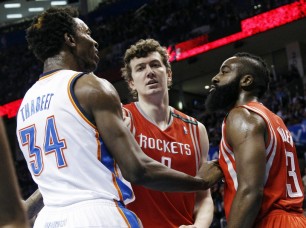
2) In the next game, the Thunder exorcised any demons from the trade and beat James Harden and the Houston Rockets handily, 120-98. While the game started off as a walk down memory lane, it quickly turned into an “us versus them” mentality when Harden had a spat that momentarily had Hasheem Thabeet ejected from the game. After that, Harden became another opponent that received boos. And the cherry on the top was that Harden completely struggled against the Thunder shooting 3-16 for 17 points, well below his average.
3) We dominated the Los Angeles Lakers at home 114-108. I know these aren’t the Lakers from a couple years ago. But this was the superteam that was constructed in the offseason to battle the Thunder for Western Conference supremacy. When Dwight Howard and Steve Nash were added to the core of Kobe Bryant, Pau Gasol, and Metta World Peace, it sent shockwaves through the league that this would be the new team to beat. Though chemistry issues have kept the Lakers from achieving this, it was still good to beat them and let them know that we still run the West.
4) We beat the Spurs handily at home 107-93. With the Lakers struggling, this team is probably our biggest rival. With the Western Conference Finals last season, and the close game the Spurs won to start the season, this was a pivotal matchup for the Thunder, not only record-wise, but mentally also.
December 20th, 2012 – January 7th, 2013 – Holiday sputter (5-4)
It’s a funny thing about perspective. If I were to tell you that we’ve won 17 of our last 21 games, you’d probably think that’s a pretty good run. But, if I told you that we’ve lost 4 of our last 9 games, you’d probably think that we are struggling a bit. This is where the Thunder found themselves at this point in the season. After winning 12 in a row, they lost on the road to an upstart Minnesota team that was just beginning to put it all together, before injuries once again derailed their season. Then, the Thunder lost on Christmas day to the Miami Heat. The one monkey that still hangs on the team’s back is the ability to consistently beat Miami.
After the Miami loss, the Thunder went on to win 5 of their next 7. One of the losses was against the Davids of the NBA, or as I like to call them, the Washington Wizards. This Wizards team, with the worst record in the NBA, always seems to play its best against the Goliath’s of the league. They’ve already beaten the Heat once this season, and they beat the Thunder last season also. It’s just something about that slingshot.
January 9th, 2013 – January 20th, 2013 – Wonder Twins activate! (6-1)
This is what Kevin Durant and Russell Westbrook have done in the past 7 games:
KD – 35.9 points / 6.1 rebounds / 4.1 assists /1.7 steals / 1.3 blocks per game
RW – 29.0 points /6.7 rebounds /7.1 assists /1.0 steal per game
What these two guys have been doing the past two weeks has been nothing short of dominant. Durant had a career high 52 points in a win over the Dallas Mavericks during this stretch. And Westbrook has notched 4 straight games of 30 points or more. It’s become a tradition that when the Thunder trade away a major player, someone steps up in his place. When Jeff Green was traded two seasons ago, Serge Ibaka and James Harden stepped up their games and the Thunder continued improving. This time around, when Harden was traded, Ibaka has elevated his game to another level, and the two superstars have gotten even better.
The Thunder ended the first half of the season with a 32-9 record, good for best in the league. They are the last team with single digit losses and have the best scoring differential in the league, at +9.0. Looking forward, the second half of the season will be a little bit tougher, though. The Thunder will have 3 more road games and the teams they’ll be facing have a combined .511 winning percentage. In the end, I see the Thunder ending up with the number 1 seed, not only in the Western Conference, but in the entire NBA with a 63-19 record.
With Eric Maynor’s DNP-CD on Wednesday night, in a blowout of the Denver Nuggets, it was quite apparent that his run with the Oklahoma City Thunder is over. Ten months after suffering a torn right ACL, Maynor’s athleticism and confidence seemed to be wavering to the point that 2nd year guard Reggie Jackson took over sole possession of the back-up point guard duties on the team 25 games into the season. While Maynor’s numbers were never that impressive, his command of the 2nd unit (and sometimes, the 1st unit) showed he had the potential to run his own team.
Back about two years ago, Maynor was being hailed at the best back-up point guard in the league. He led one of the best benches in the league, along with James Harden and Nick Collison. In hindsight, though, it seems that a lot of Maynor’s success was due in large part to James Harden. The former Thunder guard is now the 4th leading scorer in the NBA, with a 26.3 points per game average. The skills that he is currently exhibiting now as a Houston Rocket, were on full display during his first 3 seasons in the league, the last of which culminated with the NBA’s 6th Man of the Year award.
Maynor’s game was never dependent on athleticism. He was a prober that constantly tried to find the open man or an open lane, and rarely turned the ball over. After the knee injury, though, what little athleticism Maynor did have was sapped, as was his confidence. Maynor began to drive less and shoot more, leading to career lows in FG% (30%) and assists per game (2.1). Though he was never touted for his defense, that part of Maynor’s game suffered greatly after the injury. He was constantly getting beat off the dribble, which led to either leads dwindling or deficits increasing. After 24 games, the Thunder decided to try Reggie Jackson as their primary back-up point guard. Though not the floor general that Maynor is, Jackson’s athleticism and physical tools lend him to be a better defender and more of a driving threat on offense.
Being that Maynor is a free agent after this season, the Thunder would still like to get some value for him before the trading deadline. Maynor can still play the game, and maybe a change of scenery will help get his confidence back. Maynor’s value may not be that high, but the Thunder can package him with any number of assets to get a necessary piece to their championship puzzle. The Thunder are loaded with picks (Toronto’s top 3 protected, Dallas’s top 20 protected, and Charlotte’s 2013 2nd rounder) and young talent (Jeremy Lamb, Perry Jones III, DeAndre Liggins, and Daniel Orton) that would be very attractive in a deal. I, for one, am not in favor of dealing Lamb, Jones, or Liggins. With the current cost of the top half of the roster, the Thunder will need good, cheap talent to stay in championship contention.
That would leave Maynor and Orton, plus the picks, as the only tradable assets I see on the roster. Being that the only feasible need I see for the Thunder is another bench scorer, hopefully a 3/4 tweener, I’ve decided to become armchair GM for the day, and see what moves I can come up with. Move over Sam Presti, my shine is too bright for the both of us.
Disclaimer: All moves have been approved on ESPN’s NBA Trade Machine. Any move involving Daniel Orton would need to get done after January 31st.
Deal 1
Houston get Eric Maynor and the Thunder’s 2014 2nd rounder.
Oklahoma City gets Royce White and the rights to either Sergio Llull or Furkan Aldemir.
Why Houston makes the deal – Houston is loaded with PnR-reliant guards in Jeremy Lin, James Harden, and Toney Douglas. If a defense knows how to defend the PnR effectively, it cuts off the Rocket’s first plan of attack. Having a traditional point guard would be a change of pace for the Rockets and will allow them to exploit other facets of their offense, such as Omer Asik’s post game and Chandler Parson’s 3 point shooting. Also, Houston gets rid of a headache in White. The verbal/social media sparring that has gone on between White and the Rockets is well documented concerning his mental health.
Why Oklahoma City makes the deal – While this eschews the notion of obtaining a bench scorer now, having the rights to either Llull or Aldemir would be a steal. Llull is the premier combo guard in Euroleague and would fit immediately into the Thunder’s rotation. Aldemir is great on the boards and would really help the Thunder in the post. Presti would probably tell White to stay at home and would negotiate a buy-out with his agent.
Deal 2
Milwaukee gets Eric Maynor, Daniel Orton, and the Mavericks top 20 protected pick.
Oklahoma City gets Mike Dunleavy
Why Milwaukee makes the deal – Milwaukee will be in a state of flux after the season. Their top two point guards, Brandon Jennings and Beno Udrih, are both free agents, though Jennings is restricted. The Bucks have been on record as saying they will retain Brandon Jennings, no matter what. A large enough extension would make retaining Udrih, currently making $7.8 million, nearly impossible. A cheap replacement like Maynor, who would sign for far less, would be more feasible. They could test drive Orton for half a season as all of their true centers are also free agents at the end of the season. The draft pick is just a sweetner.
Why Oklahoma City makes the deal – Mike Dunleavy would immediately have an impact on the 2nd team as a scorer and shooter. The dribble and drive ability of Jackson would open up even more with Dunleavy and Kevin Martin on the floor together.
Deal 3
New Orleans gets Eric Maynor and the Thunder 2013 draft pick
Oklahoma City gets Al-Farouq Aminu
Why New Orleans makes the deal – With Ryan Anderson, Anthony Davis, and Robin Lopez on the front line, Aminu becomes the odd man out. His inconsistent play has been a source of ire from the Hornet’s fan base. A veteran point guard would help this young roster out and an extra first rounder will help in the Hornet’s rebuilding process.
Why Oklahoma City makes the deal – Aminu is exactly the type of player that the Thunder covet. A 3/4 tweener with possible upside and a long wingspan (7’3!!). In the right system, he could be a valuable contributor off the bench.
Deal 4
Phoenix gets Eric Maynor, Daniel Orton, the right to swap either of their lottery picks (theirs or the Lakers’) lottery picks if it benefits the Suns, and the Thunder’s 2013 pick.
Oklahoma City gets Jared Dudley
Why Phoenix makes the deal – Let’s face it. Phoenix is rebuilding and is not interested in long-term role player contracts. Dudley still has 2 years at $4.25 million guaranteed after this season, plus a player option for the same amount. Phoenix could flip Dudley for a young center, a possible better lottery pick, and a late first rounder.
Why Oklahoma City makes the deal – The Thunder get a great role player with a good contract for the next 2-3 seasons. Plus, a player like Dudley has value and can possibly be flipped for other assets.
Deal 5
Cleveland gets Eric Maynor and Dallas top 20 protected pick.
Oklahoma City gets CJ Miles
Why Cleveland makes the deal – It isn’t the Anderson Varejao deal, but Cleveland still gets a future first rounder for a role player that’s a free agent after this season. Plus, Maynor could dispense some veteran wisdom onto Kyrie Irving.
Why Oklahoma City makes the deal – The Thunder get a good role player that can shoot and stretch the floor. Plus, they don’t give up much.
As a fan, I would hate to see Maynor go. He’s grown with this team and was a big part of its development. But, as we’ve seen with the Jeff Green and Harden trades, it is also a business in which every team is trying their hardest to get better. If a move can be made, and it is advantageous to the team, then it’s a deal that must be made. When the inevitable happens, I wish Maynor nothing but the best. He’s been a consummate professional and has a long career ahead of him.
This is literally the NBA’s best versus the NBA’s worst. When the Oklahoma City Thunder meet the Washington Wizards on Monday night, Washington will be 21.5 games behind the Thunder with 32 games already played. The Thunder come into the game having defeated the Toronto Raptors in a Sunday matinee, 104-92. Russell Westbrook and Kevin Durant led 5 Thunder players in double figures with 23 and 22 points, respectively. After dropping 3 of 6, the Thunder have won 2 in a row by an average of 18 points.
In their only meeting last season, the Wizards defeated the Thunder 105-102. That was the Thunder’s only loss in a 12 game stretch during the early portion of the strike shortened season. Wizards’ point guard John Wall led the way with a near triple double of 25 points, 7 rebounds, and 8 assists. Russell Westbrook had 36 points, 5 boards, and 7 assists, while Kevin Durant had 33 points, but the Thunder could never catch up after digging themselves a hole early in the game.
The Opponent
The Washington Wizards find themselves with the worst record in the NBA at 4-28. They score an anemic 88.9 points per game, good for last in the league, while allowing 97.2 points per game. Part of the reason for their slow start is the absence of John Wall, who has been sidelined with a knee injury the entire season. The Wizards start Garrett Temple and rookie Bradley Beal in the back court. Beal was rumored to be a target of the Thunder’s in a possible draft day deal involving then Thunder guard James Harden. After averaging 11 points per game his first month of the season, Beal has increased his scoring to 14.4 point per game in December and January. He has also nearly doubled his assists numbers in that same time frame from 1.6 to 3.4 assists per game. Three point specialist Martell Webster is the other starting wing at small forward. The Wizards are formidable inside with a trio of veteran big men in Emeka Okafor, Nene, and Kevin Seraphin. Together the trio combines for 31.6 points, 18.8 rebounds, and 2.6 blocks per game. Off the bench, the Wizards deploy some fire power in the form of guard Jordan Crawford and Cartier Martin, who can easily rattle off 15-20 points in a game.
Probable Starters
Washington Wizards
PG – Garrett Temple
SG – Bradley Beal
SF – Martell Webster
PF – Nene
C – Emeka Okafor
Oklahoma City Thunder
PG – Russell Westbrook
SG – Thabo Sefolosha
SF – Kevin Durant
PF – Serge Ibaka
C – Kendrick Perkins
3 Keys to Victory
1) Long-term and short-term memory – The Wizards were 1-12 when the Thunder faced them last season and lost 105-102. The Wizards were 1-13 this season when they beat the Miami Heat, 105-101. Regardless of record, this is still a collection of professional players that plays in the NBA. With their record, they view the big time opponents as their playoff games.
2) Wizards inside trio (Okafor, Nene, Seraphin) vs. the Thunder’s inside trio (Perkins, Ibaka, and Nick Collison) – Though not as effective as they used to be, Emeka Okafor and Nene can still come up with double double games if given the opportunity. Seraphin is a lot like Ibaka from 2 years ago, still raw, but polished enough to give big minutes. The Wizards are the 7th best rebounding team in the league with an average of 43.6 rebounds per game. If the Thunder big men are not on their post games, the Wizards could collect second chance boards and make a game out of this.
3) Kevin Durant – Trevor Ariza is the only player on the Wizards that has a sliver of hope of guarding Durant, and he’ll probably be out with a strained calf. Martell Webster is too short, Chris Singleton is too slow, and Jan Vesely is too European to guard Durant one on one. Hometown Durant could be on full display tonight. The only person stopping Durant tonight is Durant…and the bench if he doesn’t get off of it in the 4th quarter.
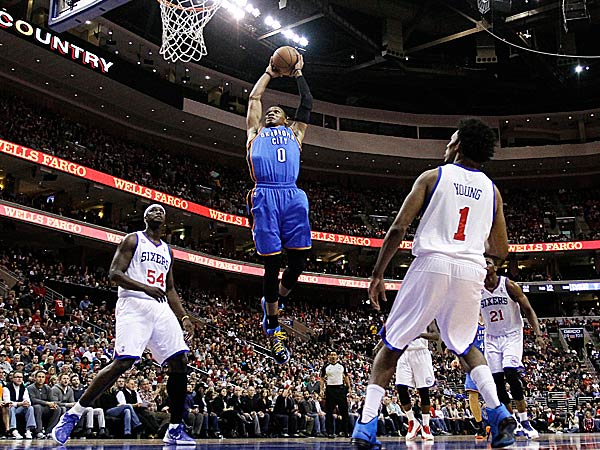
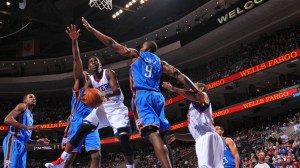
Regardless of what you think of Nike’s “KD is not nice” campaign, imagine the fear in the Philadelphia 76ers’ locker room when A) they have to face the Thunder after a loss and B) they have to face Kevin Durant after the first ejection of his career. The Thunder come into the game having lost to the Brooklyn Nets in one of the more frustrating games of the season. After being down by 20+ in the first half, the Thunder battled back to tie the game in the 4th, only to completely squander the game through bad defense and questionable officiating.
The Thunder come into the game 24-7, tied for 1st in the Western Conference. They lead the season series 1-0, after beating the Sixers in Philadelphia in overtime 116-109. Durant scored 37 and Russell Westbrook had 30 points in a game that the Thunder could never put the Sixers away. Every time the Thunder got a sizeable lead, Philly went on a run. The difference came in overtime in the form of four consecutive 3-pointers from 4 different Thunder players.
The Opponent
The Sixers come into the game with a 15-18 record, clinging on to the 8th spot in the East over Boston by percentage points. The Sixers are 3-9 in their last 12 games and have been plagued by lack of consistency on the offensive end, as evidenced by their 93.3 points per game average (good for 26th in the league). They are led by 4th year point guard Jrue Holiday who is blossoming this season, averaging 18.8 points, 9 assists, and 4.2 rebounds per game. He is joined in the backcourt by veteran Jason Richardson and 3rd year wingman Evan Turner, who is also starting to come into his own after struggling his first two seasons in the league. The front court is undersized, manned by versatile PF Thaddeus Young and Lavoy Allen. Their bench can be explosive led by Nick Young and Dorell Wright and center Spencer Hawes. Each of the bench players is capable of catching fire from 3-point land and putting up big numbers.
Probable Starters
Philadelphia 76ers
PG – Jrue Holiday
SG – Jason Richardson
SF – Evan Turner
PF – Thaddeus Young
C – Lavoy Allen
Oklahoma City Thunder
PG – Russell Westbrook
SG – Thabo Sefolosha
SF – Kevin Durant
PF – Serge Ibaka
C – Kendrick Perkins
3 Keys to Victory
1) Russell Westbrook vs. another UCLA point guard – Russell Westbrook has had a go of it lately versus his fellow Bruins point guards. He got torched by Darren Collison of the Dallas Mavericks for 32 points and 4 assists a week ago. Utah Jazz reserve guard Earl Watson had one of his higher assist games against the Thunder with 8 assists. The good news is that Westbrook held Holiday to 6 points on 3-11 shooting the last time they played.
Another note – Russell Westbrook shot over 50% in his last game. He has not shot over 50% in consecutive games this season. I think he’s due.
2) Serge Ibaka vs. Thaddeus Young – Young is one of those versatile, undersized power forwards that give Ibaka fits. He does most of his work in the midrange area, thus negating Ibaka’s biggest strength as a defender. This was on full display the last time the Sixers played the Thunder, as Young had 29 points and 15 rebounds. All the while, Ibaka had 0 blocks and 9 boards.
3) Rebound advantage – The Thunder should take full advantage of the Sixers being undersized in the post. Young and Allen don’t go over 6’9, and while Hawes is a legit 7 footer, he spends a lot of his time on the perimeter, thus negating his offensive rebounding potential. Durant should take full advantage of this opportunity and drop down to the post to help out on the boards.
We, as fans, sometimes view players as objects of entertainment. We look to them as visual and emotional toys that we unwrap every October, and hope to play with through June. When they no longer entertain us or completely frustrate us, they become highly expendable in our minds. We get on blogs and forums and completely blame that player for everything that is wrong with the team. It doesn’t matter whether the team is the best in the league or the worst in the league, there’s always that one player that catches the ire of most of the fanbase. Unfortunately, we sometimes forget that they are humans too.
There has developed a sort of love-hate relationship between Thunder fans and center Kendrick Perkins in the last couple of weeks. None of it is due to anything personal. For all intents and purposes, Perkins seems like an affable guy who is completely devoted to his family. A big extended family that includes his nuclear family and his Thunder fam. Some players talk about their team being a family, when, in reality, family just means people that they have to deal with for 6-9 months out of the year. Some players, though, really do live by the “team is family” creed, inviting teammates to their house and generally, trying to bond with them throughout the season, and sometimes, even after the season.
As a team, the Oklahoma City Thunder are very family oriented. The leaders on the team adhere to this concept as does the organization as a whole. The foundational culture of the team is rooted in family. And included in that family, is the entire fan base. We, as fans, are all invested in the same cause, but at different ends of the spectrum. The players are the performers and the fans are the audience. But sometimes, it’s easy to forget that the family concept is a two way street. We, as fans, expect for the team to acknowledge us, either through charity work, through team interviews, or through slogans, such as “Team is One”. We expect players to sign autographs for us at all hours of the day, wherever we see them. But, the sad truth is that fans do a bad job of picking players up when they aren’t providing what we expect of them.
Family means different things to different people. To me, family is the group of people you are born/raised into and the people you accept into your circle. It’s a set of people whom you accept and can depend on through the good and the bad. And as a sports family, we’ve accepted the Oklahoma City Thunder into our family. They are interwoven into our fabric from October through June. We have Thunder watch parties, talk about the team around the dinner table, and talk about the people in the organization like they reciprocate talking about us at their dinner tables.
Family dynamics are a difficult part of co-existing as a family. Not everyone is going to get along the same all the time. But if a family is to co-exist, they have to accept the good and the bad of a member and go with it. For example, every family has that one family member. You know, the black sheep that’s kind of an outcast and rough around the edges. Its usually an uncle. They may have either served some time in jail or have a short temper. And they usually have drama with a wife, ex-wife, girlfriend, or baby momma (or a combination of all four) that spills over into family events. And when something goes down involving a bar, a fight, and a woman, you know Uncle was involved. But here’s the thing about Uncle, though. He’s full of wisdom and has a great ear for listening. And, he’s great at some sort of handy work, usually mechanics or carpentry. And when you need him, he’s always there, no questions asked.
Well, that Uncle is Kendrick Perkins. He’s a little rough around the edges with the scowl and the intimidation. He’s probably on the naughty list of most of his opponents. And, he’s had some injury issues in the past. But when we need him to guard a Dwight Howard or a Marc Gasol, he’s there with his hard hat on, no questions asked. When we needed him to play through a torn groin and a wrist that needed to be surgically repaired, he gutted it out and performed beautifully. When his young teammates need an ear to vent to, he’s there to listen with some Southern drawl wisdom to accompany it. Whenever we need Perk, he’s there. And yet, when he is used incorrectly, or he doesn’t perform to our standards, we chastise him and await his presence with a pink slip in our hands.
If comparing Perkins to a family member doesn’t help you see his value, let me give you some tangible evidence versus some of the top centers in the game:
Before Perkins
2009-10 – including playoffs vs. Bynum (LAL), Howard (Orl), Perkins (Bos), Duncan (SA), M.Gasol (Mem), and Nene (Den) – 9-16
2010 thru Feb 23, 2011 – vs. Duncan (SA), Bynum (LAL), M.Gasol (Mem), and Nene (Den) – 2-6
With Perkins
March 14, 2011 – end of season (including playoff) vs. Bynum (LAL), Jefferson (UTA), Nene (Den), and D. Jordan (LAC) – 13 – 6
2011 – 2012 – 66 game season including playoffs vs. Bynum (LAL), Howard (Orl), M.Gasol (Mem), Duncan (SA), Jefferson (Uta), and D. Jordan (LAC) – 19 – 11
2012 – through the New Year 2013 – vs. Howard (LAL), M.Gasol (Mem), Duncan (SA), D.Jordan (LAC), and Jefferson (Uta) – 4 – 2
Excluding the first season the Thunder were in Oklahoma City, the team went 11 – 22 against top tier centers in the league before the arrival of Perkins. That’s a .333 winning percentage. After the arrival of Perkins, the team has gone 36 – 19 against top tier centers. That’s a .655 winning percentage. Looking at the raw data, Perkins has nearly doubled the chances of the Thunder winning versus a team with a top tier center.
Understandably, the correlation is not one to one. The players around Perkins have gotten better as they have aged. But the Thunder doesn’t improve as quickly as it has without that rock in the middle. And there is no way the Thunder make it to the Finals last season without Perkins manning the middle. The defensive job he did on Dirk Nowitzki, Andrew Bynum, and Tim Duncan was a big reason the Thunder were Western Conference Champions. While his performance against the Heat in the Finals exposed his flaws, it wasn’t like he was put in a position to succeed by Coach Scott Brooks, either. Brooks needs to understand that against smaller, quicker teams, Perkins’s strengths will be negated. Conversely, Perkins needs to understand that against these teams, he may have to sit more time than usual. But that’s the thing about those crazy uncles. They are usually stubborn as a mule.
The NBA’s new collective bargaining agreement brought changes to how teams could use their D-League affiliates. As NBADL president Dan Reed said, “The new CBA will deepen the level of integration between NBA D-League and NBA teams, and marks the next stage of our league’s evolution as the official minor league for the NBA. By encouraging more robust use of our league to accelerate the development of NBA players and prospects, over time we believe this agreement will lead to more NBA teams operating their own NBA D-League affiliate, an increased number of NBA players that develop in our league, and an even better in-arena experience for our fans.” In other words, the NBA felt the restrictions placed on player movement from the D-League to the NBA were hindering the D-League’s ability to reach its full potential as a true developmental/minor league for the NBA.
In the previous CBA, a team could only assign a player to the D-League up to three times per season. This lack of flexibility made it difficult for teams to assign players because the assigned player still counted on their 15 man roster. Normally, a team would assign a player to the D-League and leave them there for a three to five game stints, if not longer. While this allowed for some consistency with the player, it became an issue for the team if they had to recall said player due to injuries on the NBA roster. It didn’t matter whether it was a 1 game stint or a 10 game stint, it still counted as a D-League assignment. In the new CBA, a team has no limit as to how many times it can assign a player with 3 years or less experience in the league.
This new rule becomes very advantageous to teams that have their own D-League affiliate. Currently, there are 11 teams in the league that have their own D-League team. The rest of the 19 teams have to divide their assigned players amongst the remaining 5 D-League teams. The teams that have their own D-League affiliates are able to run the same system throughout their NBA and minor league teams. This leads to a level of consistency in all facets of the organization. Even though the players may not be the same on either level, the defensive and offensive systems can be consistent throughout. On these 11 teams, players that are shuffled back and forth between the “farm” team and the NBA team don’t have to learn new terminology or new schematics between the different teams. The schema remains the same and the confidence that usually accompanies consistency starts to show through.
This has been very evident with the Thunder’s young players. Oklahoma City is in strange position of being a contending team with young players to develop. Most contending teams have veteran-laden rosters and don’t have the time to develop young talent. Though the Thunder’s roster is young throughout, the main core is veteran enough, having gone through 3 successive playoff runs that culminated with a loss in the Finals last season. With great players comes the cost of paying these superstar players. The Thunder currently have $54.2 million allotted to its top 5 players (Kevin Durant, Russell Westbrook, Serge Ibaka, Kevin Martin, and Kendrick Perkins). That number jumps up to $54.3 million with Ibaka’s extension kicking in, but that is without Martin, as he becomes an unrestricted free agent at the end of this season. Assuming that the Thunder re-sign Martin, the Thunder are looking at $60+ million in salary for 5 players next season. The need for cheap labor (rookies and young players) becomes very necessary as a team tries to balance being a contender with balancing the proverbial NBA checkbook.
When you are battling for playoff positioning throughout the season, there aren’t many opportunities to develop young talent. Every game counts when a team is looking to secure home court advantage. A slip up here or there can be the difference between a team playing a deciding game at home or on the road. Non-playoff teams have all the time and patience in the world to develop young talent at an NBA level. The Thunder experienced a little bit of this last season when they were forced to play then rookie guard Reggie Jackson heavy minutes as the back-up point guard after Eric Maynor went down 9 games into the season with a torn ACL. Jackson struggled throughout the season in this role and was relegated to the end of the bench by the end of February after the Thunder signed Derek Fisher. With Maynor back this season, the Thunder have been able to send Jackson back and forth between the D-League and the Thunder.
One of the advantages of this system is that it allows young players to build their muscle memory and confidence. Athletes, especially basketball players, live off of muscle memory. Muscle memory is defined as a form of procedural memory that involves consolidating a specific motor task into memory through repetition. When a movement is repeated over time, a long-term muscle memory is created for that task, eventually allowing it to be performed without conscious effort. An example of muscle memory would be typing. Once you learn where the letters are on the keyboard, you can begin typing at your heart’s content without looking at the keyboard. Basketball involves a lot of fast-twitch muscularity due to the read and react nature of the sport. You see a defender leaning in one direction and you react by driving in the opposite direction in a split second. This type of muscle memory can only be duplicated in in-game settings. During the season, teams cannot scrimmage during every practice to replicate in-game situations. The only way to develop this type of muscle memory is to actually play in the games. If a team is not willing to let its young players develop on the NBA floor, the next best option is in the D-League.
That muscle memory is extremely important when a player a called upon to give you 5-6 good minutes in a game. When Jeremy Lamb was put into a game against the Detroit Pistons at the beginning of the season, he played 3 minutes, committed 1 turnover and 2 fouls. He played and looked like every bit of the rookie that he was. But after a couple of games in the D-League in which he averaged 23 ppg, 4.9 rpg, and 3.3 apg, Lamb’s number was called again against the Atlanta Hawks. This time, he performed beautifully in his 5 minutes, scoring 5 points, grabbing 1 rebound, and getting 1 steal, all while effectively guarding Josh Smith, who had 5 inches and 40 pounds on him. I can’t definitively state that there is a direct correlation between Lamb’s time in the D-League and his performance in that one game, but the confidence he played with definitely had something do with his time in Tulsa.
Reggie Jackson is another one of those players that has benefitted from his time in Tulsa. After providing a spark off the bench in a game versus the New Orleans Hornets as an energy player, Jackson was sent to the D-League for a 2 game stint in which he averaged 32 ppg, 8 rpg, and 7 apg. Jackson logged significant minutes in the game prior to his 2 game stint and then logged 13 minutes in the prime time game against the Miami Heat on Christmas day. While he didn’t come anywhere close to averaging the number he put up in Tulsa in those two games, the confidence he played with shows a maturation to his game. Even more significant in the Miami game is that he played the back-up point guard role, while Maynor received a DNP-CD.
The Thunder have also been sending rookie Perry Jones III to the D-League, along with 2nd year wingman DeAndre Liggins and 3rd year center Daniel Orton. While these players have yet to have a breakout moment in the NBA this season, the ability to play in the D-League and then practice with the NBA team will only improve the skill-set and their confidence. Jones III’s development is of utmost importance to the Thunder, as his skill set as a tweener forward will give the Thunder a serious weapon in the front court as they move forward.
Confidence and playing time are two of the most important things in the development of a young player. While NBA teams may not be able to provide the young players with copious amounts of playing time, they can provide them with an avenue (the D-League) to continue developing and improving, all while playing basketball in real game situations. The Thunder hope that the pipeline from Tulsa to OKC will provide them with cheap, young talent that will allow them to maintain their championship contending core.
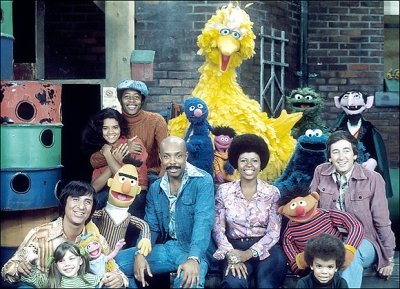
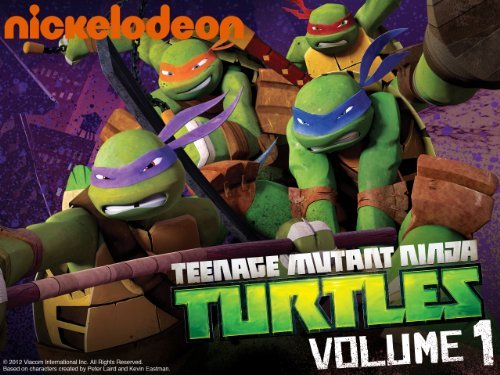
One of the greatest things about fatherhood is the ability to relive your childhood without having to feel one ounce of guilt or embarrassment. For example, when I was coming up, I grew up on the Street……Sesame Street, that is. So when my kids started reaching the age of noticing the moving objects on the television screen, one of the first things I put on the tube for them was Sesame Street. I would watch it with them and sing along, all while reminiscing about my own childhood. After growing too old for the Street, I progressed to the Teenage Mutant Ninja Turtles. That was my fad until my cousin showed me some shoes with the insignia of a man flying through the air with a basketball in his extended left hand and his legs spread apart. It was all over for cartoons after that.
Eventually, kids develop their own individual likes and drop old favorites into the dusty corners of their long term memory. So, it was a complete surprise to me when my kids were looking through the DVD collection and grabbed my Teenage Mutant Ninja Turtles: Season 1 DVD and said they wanted to watch it. So, of course, we sat down and watched it and they LOVED it. Luckily, Nickelodeon was coming out with a new Ninja Turtles series themselves, so it fit in with them nicely. Now they (and myself) are all about the Turtles. I watch the new cartoon with them on Saturday mornings (I know, I didn’t know Saturday morning cartoons existed anymore, either) and we sometimes have matches where I’m the Shredder and they take turns beating me with weapons (bruises go away, memories don’t).
So, as I’m watching this new Ninja Turtles series, I can’t help but make comparisons to another team in my life, namely the Oklahoma City Thunder. If you’ve never seen or heard of the Teenage Mutant Ninja Turtles, let me give you a real quick overview. Four mutated turtles with humanoid features fight evil from their backdrop of their sewer lair where they are trained in ninjutsu by a mutated humanoid rat. The rat and turtles share a father/sons relationship, with the turtles coming into their teenage years. Hence, the Teenage Mutant Ninja Turtles. Of course, each turtle has his own personality traits, which lends to the parental struggles of Splinter, their rat sensei. Along with their human friends, April O’Neal and Casey Jones, they form a team and battle different foes.
This is not very different from any other professional team: different personalities all coming together to battle one common opponent. And that’s where I thought the similarities between the Ninja Turtles and the Oklahoma City Thunder crossed-over. The personality traits of the characters are very similar to the personality traits of some of the main component of the Thunder. So without further ado….
The Good Guys
Leonardo is Kevin Durant – The unquestioned leader of the Turtles, Leonardo is an apt pupil and the apple of Splinter’s eyes. He exhibits strong leadership qualities, but also struggles in keeping harmony with all the different personalities on his team. Part of leadership is ability, and Leonardo is a master at the martial arts. Similarly, Kevin Durant is the unquestioned leader of the Thunder. Though words may not be his tool of choice, Durant’s actions on the court often dictate how his teammates react.
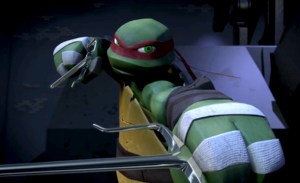
Raphael is Russell Westbrook – Was there ever really any question? I mean, if there is anyone in the cartoon world that fits Westbrook to a tee, it is Raphael. Raphael is the hot head of the group. He has the most attitude in comparison to the other turtles, but also has the most swag (confidence, if you don’t speak street). He’s good and he knows it. His quick temperedness can be a detriment as it clouds his judgment. Part of the reason for Raphael’s hot temper, though, is that he cares too much about situations and about others around him. Westbrook, the volatile point guard for the Thunder, and their unquestioned second in command, has always toed the line between beauty and disaster. He has an unwavering confidence in himself that can lead to astonishing displays of awe or to frustrating learning moments that leave you shaking your head. While many question his motives, those who are in tune with the Thunder know that Westbrook does the things that he does because all he cares about is winning. The bottom line, not individual stats, are the most important thing for Westbrook.
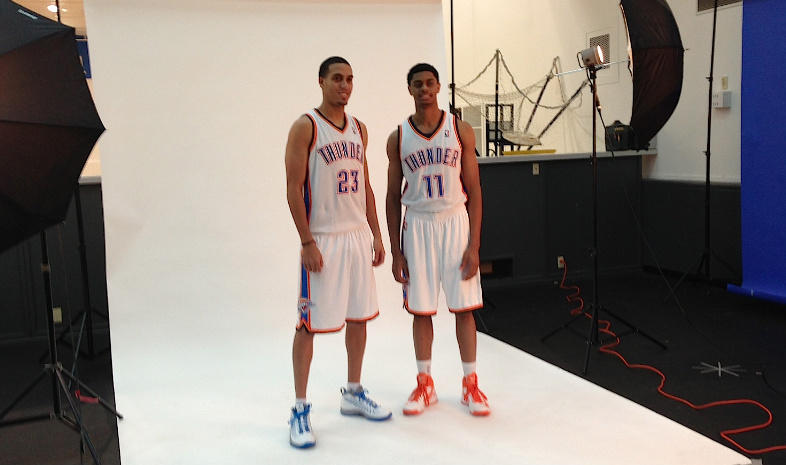
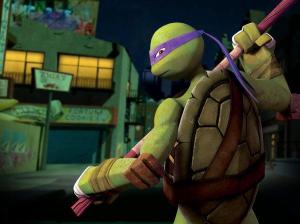
Donatello is Kevin Martin – Donatello is the scientific brains behind the whole operation. He’s mild-mannered and spends his free time building gizmos and gadgets for his turtle brethren that will be used in combat. He’s an adept fighter, but his intelligence is his biggest asset. Kevin Martin is probably one of the smartest offensive basketball players in the NBA in terms of floor spacing and angle awareness. His high basketball IQ help him find spaces on the floor where he can launch his automatic jumper. His mellow demeanor only masked the trained assassin that lurks inside the No. 23 jersey.
Michelangelo is Serge Ibaka – Believe me, this was probably the most difficult one. Michelangelo is the fun-loving, “life of the party” of the turtle quartet. He’s very innocent and young-minded, and tends to see the good in everything. But he’s also very loyal and willing to fight for what he considers important (namely, family). Before the trade, James Harden was a shoo-in for the role of Michelangelo. But with Harden’s departure, Serge Ibaka becomes the representative for Michelangelo. He’s a fun loving guy who was probably very innocent and young-minded to the ways of the United States when he first got here. Now that’s he adjusted, though, he is the life of the party (well, parties with a lot of women in them). Due to his rough upbringing, he probably sees the positive in many things in life. But mess with his team (family), and you’ll have something else coming to you.
Splinter is Scott Brooks – Splinter is the sensei (teacher) of the turtles. He is much older than them and acts as their father figure. He is a mutated rat that has humanoid features. He has raised them from young turtles to where they are today, extolling values and morals onto them. He is ultra-protective of them, but like any parent of a teenager, knows that he must let up a bit to allow the turtles to explore the world on their own. Five years ago, Scott Brooks was tasked with taking an extremely young team, that had known nothing but losing. Through his teachings (“play defense with your heart”, “push it, push it, push it, “we’re not out of this”) the Thunder have improved upon themselves every season and are now one of the best teams in the league.
April O’Neal is Wanda Pratt – April is the human liaison for the Turtles. Since the NBA still does not have any female players (enter joke here about NBA player X whom you think is a female), super fan/mother Wanda Pratt would have to do for this comparison. She cheers on the team that her son plays for and treats them all like her kids.
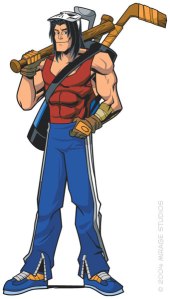
Casey Jones is Kendrick Perkins – Casey Jones is a male character in the series that is a vigilante and sometimes fights with the Turtles. He carries an assortment of weapons, such as hockey sticks and baseball bats, and wears a mask. If weapons were allowed on the court, Kendrick Perkins would probably be carrying the biggest bag. Thankfully, all he has on the court is his Scowl Mask. But like Casey Jones, he will extol justice whenever necessary.
The Bad Guys
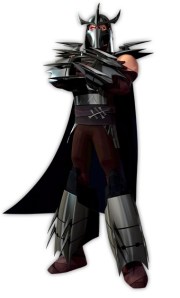
Shredder is Lebron James – The Shredder is the Turtle’s biggest enemy. He is a lifelong foe of Splinter, and would like nothing more than to destroy the Turtles and Splinter. Even though, Kevin Durant and Lebron James are all buddy-buddy off the court, there is no doubt in my mind that James is our biggest obstacle from attaining our prize. Like the Shredder, James has become ruthless when the game is on the line and is starting to come up big when it matters.
The Foot Clan are the Miami Heat – The ninja army put together by the Shredder. Need I say more how this relates to the Miami Heat. When you face Lebron, you also have to face The Foot.
Krang is Gregg Popovich – Krang is an alien brain that brought technology from space to help the Shredder and his sinister plan. Extremely intelligent and cunning, Krang is only limited by a lack of a body. Gregg Popovich has only one thing on his mind…and that is winning. No matter what he has to do. Rest all his starters on a nationally televised game against the Foot Clan (Heat), and absorb a $250,000 fine? Check. Play rookies when other contenders wouldn’t even mess with young players? Check. Extremely meticulous, he details every plan and plans for every detail.
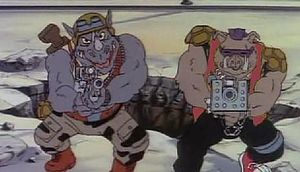
Bebop and Rocksteady are Marc Gasol and Zach Randolph – Bebop and Rocksteady are the evil mutant equivalent to the Turtles. A wart hog mutant and a rhino mutant, they punish objects using their physicality and brute strength. Gasol and Randolph are probably the best big man duo in the league and do not lack for size.
Tokka and Rahzar are Dwight Howard and Pau Gasol – The movie (Hollywood) equivalent to Bebop and Rocksteady, these guys were also very physically imposing, but were very intellectually limited. While not intellectually limited, the Lakers’ record with Howard and Gasol manning the middle is currently very limiting.
Baxter Stockman is Mike D’antoni – Stockman, a brilliant scientist, is transformed into a humanoid fly after a mutagen accident. D’antoni, a brilliant offensive strategist, was transformed into the Lakers’ head coach after the firing of Mike Brown. So far, the results have been a underwhelming, with a 4-7 start.
If you are reading this and are over the age of 35, I can understand if this may seem foreign to you. But remember any of your favorites quartets growing up (the O’Jays, the Beatles, the Four Horseman, the Seinfeld crew, etc.), and you’ll realize that the different personalities/talents actually made the whole better than the individual parts. Cartoons never seem to have a finality to them because the writers want to keep the story arcs going. But if I were to write the ending for the Thunder this season, it would end with a Western Conference playoff run that sees us vanquishing the Lakers, Spurs, and Grizzlies. Then, it would culminate with the Thunder defeating the Heat in 7 games in OKC, and the networks renewing us for another season.
Any time something catastrophic happens, people always measure time from that point forward. In the show “Revolution”, everything is measured from the blackout, which is the catastrophic event in the show. Similarly, anytime something shocking happens to a sports team (i.e. trade, injury, retirement, suspension, etc), everything is measured from that time for the immediate future. No matter what they tell you, Clevelanders are still thinking about Lebron and The Decision. It’ll take a nice playoff run or two from Kyrie Irving, Dion Waiters, and the young Cavs to start to erase the time clock from their collective memory. Chicagoans have become quite adept at handling these differentiating time clocks for the past 20 years. They’ve had Michael Jordan’s first retirement, his comeback, his second retirement, and, finally, Derrick Rose’s knee injury. They are just chomping at the bit to start the Derrick Rose comeback timeclock.
The Oklahoma City Thunder experienced something very similar a month ago. On October 27, 2012, the Thunder traded James Harden, Daequan Cook, Lazar Hayward, and Cole Aldrich to the Houston Rockets for Kevin Martin, Jeremy Lamb, 2 future first round picks, and a 2013 2nd round pick. The Thunder were just coming off a trip to the Finals with their young core just coming into its own. They had their world-class scorer in Kevin Durant, their hyper-competitive floor general in Russell Westbrook, their pogo-stick blocking machine in Serge Ibaka, and their “jack of all trades” in James Harden. All under 24 years of age at the time. THIS team was supposed to grow together and contend for the next decade. Instead, after not being able to come to terms on a long term extension, Thunder GM Sam Presti decided to pull the trigger on the trade, and send Harden to Houston.
The first thought amongst Thunder fans was how Martin would compare to Harden. The players, while similar in some facets, were completely different in other facets. Both were great shooters who were very adept at drawing fouls when driving to the basket. The major difference between the two players was that Harden was more of a playmaker, while Martin was more of a scorer. That major difference was of chief concern to Thunder fans because Harden was usually the go-between when Durant and Westbrook were on the floor together in the 4th quarter. When Durant and Westbrook were out there on the floor together, teams had an idea on how to guard the duo. But add Harden to that mix, and the floor spaced out like the Red Sea of Moses.
Basketball skills aside, the primary concern was how this trade would affect the Thunder’s chemistry. This Thunder team was one that had been hardened by its experiences. The struggles of learning how to win followed by the lessons of winning when favored. It was a 180 degree turn that many teams never experience. Many teams have trotted out young talented rosters that have either failed to pan out or were destroyed from within when it was time for contract extensions. The best comparison I have for the Durant-Westbrook-Harden-Ibaka Thunder was the late 90’s Dallas Cowboys of Troy Aikman, Emmitt Smith, and Michael Irvin. Eliminate one of the Triplets from that mix, and the Cowboys aren’t winning 3 Super Bowls in four seasons. This is the current dilemma facing the Thunder.
One month in, and the transition has been about as smooth as it can be when changing out key parts. There have been some transitional growing pains, but that is to be expected when a core shattering trade is made 4 days before the start of the regular season. What is important is the Martin seems to be integrating quite nicely into his role as the team’s 6th man. Luckily, the team’s schedule has been home-heavy in this early going with the opponent’s collective win percentage being under .500. On the other hand, against teams with strong playoff pedigrees, such as the Spurs, Grizzlies, Clippers, and Celtics, the team has struggled and is 1-3 against those teams. The surprising revelation is that compared to James Harden’s stat line from last season’s first 15 games, you would almost not even notice a difference.
Stat Harden (11-12) I Martin (12-13)
Minutes per game 30.030.7
Points per game 16.315.9
Turnovers per game 1.81.8
Steals per game 0.81.3
Blocks per game 0.20.1
Assists per game 3.11.8
Rebounds per game 3.92.7
FT Attempts per game 6.54.6
FT Made per game 5.74.4
FT % 86.7%94%
3pt FG attempts per game 4.64.9
3pt FG made per game 1.72.4
3pt FG % 36.2%50%
FG attempts per game 9.99.9
FG made per game 4.54.6
FG % 43%46%
TS % 66%66.5%
eFG % 58.2%58.3%
Thunder Record 12 – 311 – 4
Other than the difference in assists per game, Harden and Martin have virtually the same offensive stats. Eventually, even the assists may be a wash, as Martin has shown a willingness to become more of a playmaker. People tend to forget that Martin has been the main offensive option on most of the teams that he’s played on and has been given the green light to shoot at will. But, with teammates like Durant, Westbrook, and Ibaka on the floor, Martin has shown that he can find the open man for an easy bucket or two.
Defensively, Martin has been a liability, but Harden wasn’t necessarily on his way to being named to any of the All-Defensive Teams. This first half of the season will be one lesson after another for the Thunder. Durant and Westbrook have been learning on the fly how to incorporate Martin into their crunch time offense. And Martin has been learning how to be more aggressive as a bench player. Overall, the transition has gone a lot smoother than many Thunder fans had feared. With Harden coming to town on Wednesday with his new team, the cycle seems to have come full circle. The more things change…….
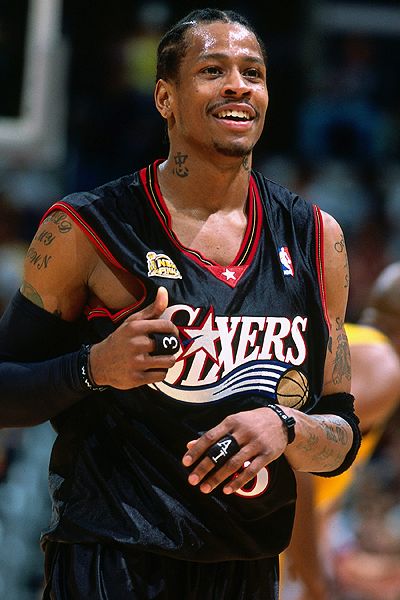
How exactly do you measure a man’s worth? Is it by his successes? If so, everyone looks great when they are succeeding. But, it’s what happens whenever a person has tasted success, fails, and then gets back up that shows the true character of that man. Some people aren’t able to come back once they have failed. Allen Iverson could have been a great redemption story. Here was a man who had tasted nothing but success since coming into the league. A man whose Frank Sinatra-like demeanor (“I did it my way”) garnered him many fans and many enemies, many of whom were in the league’s front office. A man whose ego eventually surpassed his usefulness to the point that NBA teams basically shut him out of the league. His is an example of a person who could not adapt to the slightest bit of failure.
One of the worst things in sports is to be labeled a bust. It is the apex of failure. There are two ways to be labeled a bust: either you were a high draft pick that didn’t live up to your expected potential or you were signed to a big contract that you could never live up to. Once given this label, it’s very difficult for a player to shake it off. Regardless of whether the player is injured or not, fan forgiveness is not usually a word related to the bust label. Just ask Greg Oden. Sometimes, though, a player is either too oblivious or too hard-headed to care about the bust label and continues to truck on.
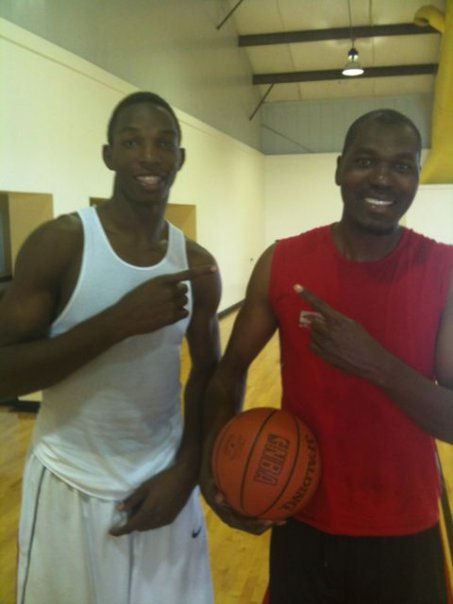
Hasheem Thabeet is one of those players. A player, who by all accounts and purposes, should have just said, “Forget this (alternate words, of course)”, and taken his millions and retired on an island. With all the criticism and embarrassment that was heaped onto him in his first 3 seasons in the league, it would have been easy to walk away with whatever money he had in hand and move on to the next phase of his life. But that just isn’t Thabeet’s style. Here’s a man who, at the age of 14, lost his father to diabetes and decided at that point that he had to become the man of the house. To assert himself into manhood, Thabeet decided to drop his father’s last name of Manka, and instead use his middle name as his last name. Mind you, this was not a move to forget his father or his past. Instead, it was a symbolic gesture towards a new start. One that Thabeet could have never imagined would turn out the way it has.
One of Thabeet’s first decisions as the man of the house was to quit school and get a job. For about a year, Thabeet worked odd jobs as a model and as a bouncer at a club. With his imposing height, he could definitely look the part of a mean bouncer, but Thabeet never took part in the fights. He was too afraid to. His mother eventually convinced him to go back to school to continue his education. It was in this second go-around in school that a coach coaxed him into playing basketball. It was only a matter of time before Thabeet’s tall frame and go-go gadget arms were introduced to the game where those attributes are strengths. At first hesitant, he eventually adapted to the game and began to flourish.
The road to the NBA is not always a linear path. When you think of basketball hotbeds in Africa, you think of countries like Angola, Zaire, and Congo. You definitely don’t think of a country like Tanzania where soccer reigns supreme. Thabeet took the proactive approach and began filling out applications for every university he could find via Google. Eventually, his talents took him to a prep school in Nairobi, Kenya, where French businessman Oliver Noah took notice of Thabeet and asked to send the kid to the US for further prepping. Thabeet’s mother obliged and he was on his way to the USA to attend high school. Of course, not everything went as planned, as it is sometimes difficult to compare African school standards to American school standards. Transcript issues arose, and what should have been one stop in Los Angeles, turned into stops in Picayune, Mississippi and Houston, Texas.
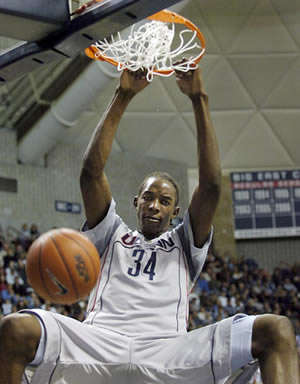
After graduating from Cypress Christian School in Houston, Thabeet made his way to Storrs to attend the University of Connecticut. For the first time in five years, Thabeet finally had some semblance of stability. He could finally be what he really was: a 19 year old freshman. He flourished under Jim Calhoun’s tutelage, becoming a dominant force on the defensive end, while holding his own on the offensive end. Thabeet went on to win 2 consecutive Big East Defensive Player of the Year awards, and shared the Big East Player of the Year award in his junior season with Pittsburgh’s Dejuan Blair.
Needless to say, expectations were definitely high when Thabeet declared for the 2009 NBA Draft. Names like Dikembe Mutombo and Samuel Dalembert were being tossed around as comparisons. The consensus was that Thabeet would be great defensively, but would need time to develop offensively. As is the standard with most big men, Thabeet was considered to be a high risk, high reward project that would need a lot of development.
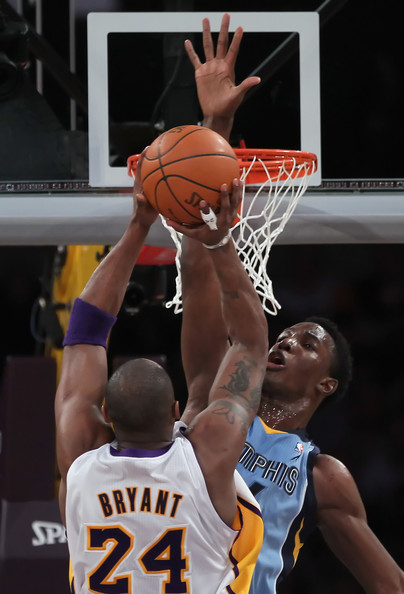
The funny thing about expectations is that it’s a two way street. On one hand you have the player, of whom the results are expected from. On the other hand, you have the basketball mind (usually a front office personnel or scout) that acknowledges that the skills seen in the lower level of basketball will translate to the highest level of basketball. In this case, it was former Memphis Grizzlies GM Chris Wallace who selected the center with the No.2 pick in the draft. Usually, when a team drafts that high, they are looking for an impact player at a position of need. But the Grizzlies already had two young centers that they were developing in Marc Gasol and Hamed Haddadi. The leash was short in Memphis and when Thabeet struggled to adjust to the speed of the game, he was sent to the D-League, earning the dubious record of being the highest draft pick ever sent down.
The next season, Thabeet battled with Haddadi for back up minutes throughout the season. At the trading deadline, Thabeet was traded to Houston Rockets for Shane Battier. In Houston, Thabeet only appeared in 2 games for the Rockets, spending most of the rest of the season in the D-League. In the next season, Hasheem was once again dealt at the trading deadline, this time to the Portland Trailblazers. At the end of the season, the Blazers chose not to pick up Thabeet’s 4th year rookie option, and the center became an unrestricted free agent.
There had been rumors that Oklahoma City Thunder GM Sam Presti was very intrigued with the possibility of drafting Thabeet with the No.3 pick in the 2009 draft. As we know, that opportunity never materialized and the Thunder selected James Harden, instead. There were also rumors that Presti had tried to pull off a couple trading deadline deals to obtain Thabeet, but those, again, never materialized. So when Thabeet became an unrestricted free agent this past offseason, Presti pounced on the opportunity to sign the center for the league minimum.
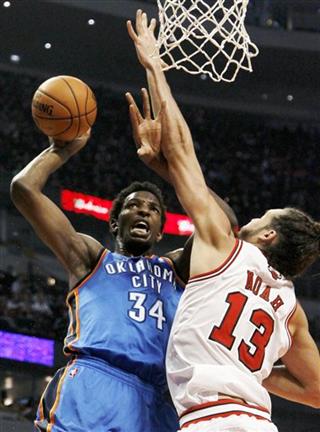
Brimming with a confidence not seen since his UConn days, Thabeet is flourishing in his role as the Thunder’s back-up center. No longer burdened by his draft position, Thabeet is going out there and playing the role that he has earned. Though his numbers aren’t that gaudy through 8 games, you can tell Hasheem has learned a lot about the game in these last 3 seasons and is only now starting to put it all together. He is no longer needed to save a franchise. Instead, he can be part of a team and contribute
Not unlike a young quarterback who has struggled through numerous coaching and system changes, Thabeet was never allowed to develop in one system for any amount of time. Instead, he has been shuffled from one team to another in his first 3 seasons and never was able to develop his game or his confidence. His move to OKC probably feels like his move to Storrs, Connecticut seven years ago. A sense of stability is coming and Thabeet is just now scratching the surface of his potential. On this team, he doesn’t need to be Dikembe Mutombo or Hakeem Olajuwon. He just needs to be Hasheem.





















 Now That's Thunder Basketball