Tag Archives: Toronto Raptors

Oklahoma City Thunder at Fenerbahce Ulker Preview

durant reggie jackson thunder

  • When: Saturday, 05 October 2013 at 8:00 AM CST
  • Where: Fenerbahce Ulker Sport Arena, Istanbul, Turkey

The time has finally arrived. After getting spoiled with 2 trips to the Western Conference Finals and 1 trip to the NBA Finals, last season’s second round exit made the offseason seems exponentially longer. But thankfully, the basketball gods listened to one of our prayers and gave us the first preseason game of the season (at 8:00 am CST, to boot).

The Oklahoma City Thunder will be playing Fenerbahce Ulker, one of the premier teams in Turkey. Its kind of cool when you think that Oklahoma City didn’t have a team 6 years ago and now, they are opening up the league’s preseason schedule in Turkey as one of their premier teams. The Thunder have a lot of work to do with Russell Westbrook being out for at least the first month of the season. They have to incorporate a couple new players and have to implement a couple young players into the rotation. Work aside though, I hope they take this experience (on the road, together) and build a ton of chemistry that will last them throughout the season.

bo ulker

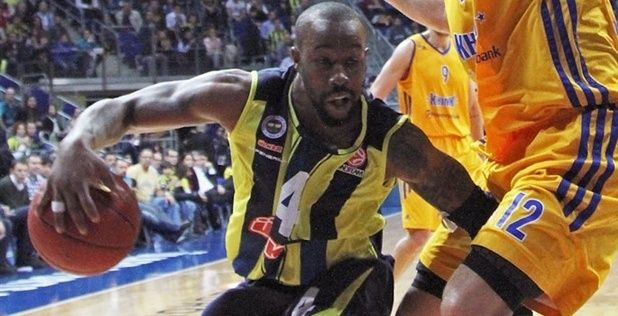
Regarding FB Ulker, there’s nothing much I can tell you about the team. Their point guard, Bo McCalebb (pictured above) is not Turkish. He’s from New Orleans. Their starting small forward is Linas Kleiza, who was a pretty good player when he was in the league with the Denver Nuggets and the Toronto Raptors. He was usually used as a spark off the bench and could quickly catch fire from the outside. Ulker has a couple players that have been drafted by NBA teams, but they have yet to play a game in the league. Izzet Turkyilmaz was drafted by the Denver Nuggets in the 2nd round of the 2012 draft and Bojan Bogdanovic was drafted by the Miami Heat in the 2nd round of the 2011 draft. Continue reading Oklahoma City Thunder at Fenerbahce Ulker Preview

5 for 5: The Longest Shortest Season

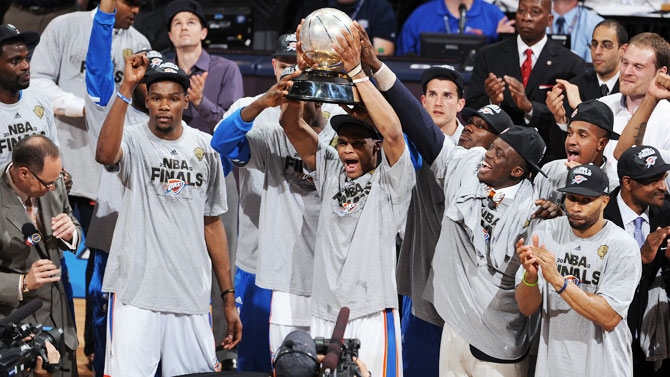
thunder western conference champs

5 for 5: Tragedies, Courtrooms, and Beginnings | 5 for 5: The Rivalries  |  5 for 5: The Run  |  5 for 5: The Thunder’s Godfather

This past season, the Oklahoma City Thunder completed their 5th season in the state of Oklahoma. In a world dominated by round numbers, getting to the midway point is always a cause for celebration. In any relationship, you look back at key moments that made it possible to arrive at certain anniversary marks. In the next few weeks heading into training camp, I’ll be looking at 5 defining moments that made it possible for the Thunder to not only roar into the Plains, but also to do it in winning fashion.

The first part of this series focused on the beginnings of the Thunder organization in Oklahoma  City. For the second part of the series, I want to focus on what was the apex for these first five years of Thunder basketball, the 2012 NBA Finals. For a little comparative perspective, there are 9 NBA teams (in their current city/team format) that have never reached the NBA Finals. The Toronto Raptors, Atlanta Hawks, Sacramento Kings, Memphis Grizzlies, Charlotte Bobcats, Minnesota Timberwolves, Los Angeles Clippers, Denver Nuggets, and New Orleans Hornets/Pelicans have never tasted the fine champagne of a conference championship. I’m excluding the Brooklyn Nets from the list because they’ve only been in Brooklyn for one season and went to the Finals as the New Jersey Nets twice. The proximity of Brooklyn, NY to Newark, NJ (about 15 miles apart) negates a huge change of fan base because of distance. I’m also excluding the Washington Wizards because they made it to the Finals as the Bullets, but decided to change the team’s name in 1997 due to the negative connotation between actual bullets and WashingtonDC being mentioned in the 90’s as the murder capital of the US.

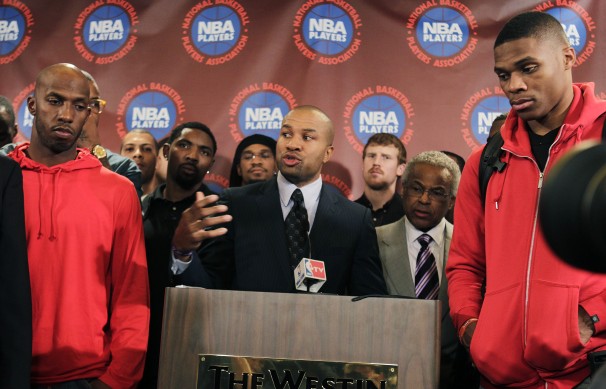
The road to the Finals that season was like the Grateful Dead’s greatest hits album; that is to say a long, strange trip. To begin with, it was a season that almost never was. Although this lockout never reached the DEFCON 4 levels the ’98-‘99 lockout did, it was still nerve-wracking to watch every labor meeting end with the two sides having separate press conferences to disparage the other side. It was like watching your parents, after a nasty divorce, arguing over your custody.

nba lockout

When you are a fan of a team that is drastically improving and just entering the prime of its championship window, the last thing you want is a work stoppage. Anything that cuts into a year of your team’s development when you are close to becoming a perennial contender is the ultimate of detriments. The chemistry built from the previous seasons basically gets thrown out the window if players are allowed to sit for 15-18 months with no access to team coaches or trainers. Not to mention, the veteran players would be a year older and there would be a ton of questions regarding roster moves.

But alas, on November 26th, 2011, after months of hearing about BRI, luxury tax, hard caps, and mid-level exceptions, cooler heads prevailed and an agreement was reached between the NBA and the players’ union. Instead of playing an entire 82 game schedule, the regular season would be trimmed to 66 games with the first day of the season beginning on Christmas. If seeing your team in the NBA Finals is Christmas in June, then seeing the NBA come back from a lockout was, literally, Christmas on Christmas. Continue reading 5 for 5: The Longest Shortest Season

2013 OKC Thunder Draft: A Postscript

2013 NBA Draft

The NBA draft to me is a time of hope. Whether your team has the first pick or the last pick in the draft, there’s always a sense of optimism that the guy your team drafted is destined for great things. And that’s why I’ve always enjoyed the draft. When the Thunder started becoming one of the better teams in the league, their position on the draft board started rising into the late first round. Their draft position from the last 5 seasons went as followed: 4th (still as the Seattle Supersonics), 3rd, 18th, 24th, and 28th. Even with those high draft numbers though, we’ve been able to get good players late in the draft, namely Reggie Jackson and Perry Jones III.

Flash back to October 28th, 2012. As soon as the details of the James Harden trade came out, and I saw that we got a first round pick from what was almost guaranteed to be a lottery team (Toronto) and a 2nd round pick, which was almost guaranteed to be in the lower to mid 30’s (Charlotte), I started paying more attention than usual to the 2013 NBA draft. I would visit sites dedicated specifically to the draft (NBADraft.net and DraftExpress.com) and would study up on the prospects. I knew how to spell Giannis Adetokunbo before he Greek-a-nized his last name to Antetokounmpo.

For a team that was on the cusp of a championship the season before, the lottery pick could have been the final piece in the championship puzzle. While it is true that the Thunder gave up a big piece in Harden, having a possible lottery pick may have made finding his replacement a bit easier. Also, the possibility of drafting a good player on a rookie salary for, at least, 4 seasons is like manna from heaven for a team teetering on the luxury tax line.

Needless to say, when the Thunder were eliminated in the 2nd round of the playoffs, my focus quickly switched to the NBA draft. With two picks in the first round, No. 12 and 29, and one early pick in the second round, No. 32, in what was deemed to be a weak draft, my expectations were that we weren’t going to be using all the picks. By most accounts, the teams in the top 5 weren’t necessarily exalting the selection of prospects at the top of the board. I thought the Thunder were going to do something big (i.e. trade up or trade for good veteran player).

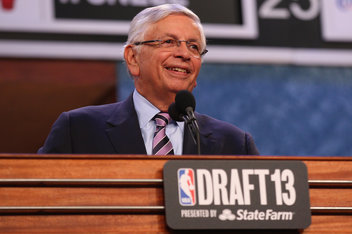
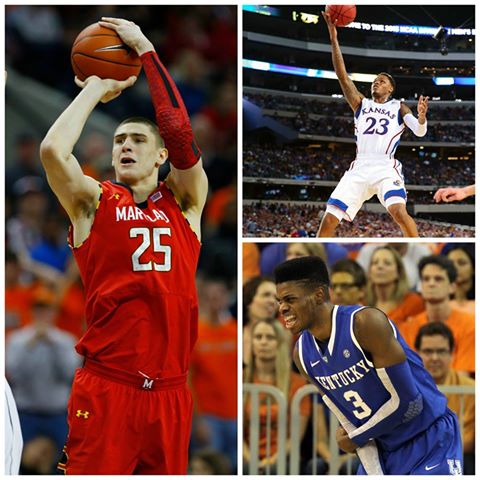
It’s a funny thing about expectations, though. They can sometimes cloud your vision. When the picks started coming in, and guys that I thought were high on the Thunder’s draft board (Alex Len, Nerlens Noel, Ben McLemore, and CJ McCollum) started dropping, I thought it was prime time to make a trade and move up. But as those players started getting drafted, and every “We have a trade,” from David Stern yielded nothing for the Thunder, I started to feel disappointment.

len, noel, mclemore

As the draft went along and we only made minor moves, I literally had a feeling of utter dejection about this draft. I mean, this was the “Harden redemption” draft. We were supposed to get ourselves a blue chip prospect to join with Jeremy Lamb in order to have a feeling of success when it came to the James Harden trade. And it didn’t necessarily have anything to do with the players we drafted. It just felt like we let a golden opportunity go by without even trying to do anything.

But, alas, a little bit of sleep and a little bit of retrospect usually puts things into perspective. The more I thought about the players we got in this draft, the more I liked it. First off, this was not your draft if you are into instant gratification. This was a developmental draft, just like the last two drafts for the Thunder have been developmental drafts (Jackson, Lamb, and Jones III). As I analyzed this draft, I saw that we obtained players that will greatly help us in the future.


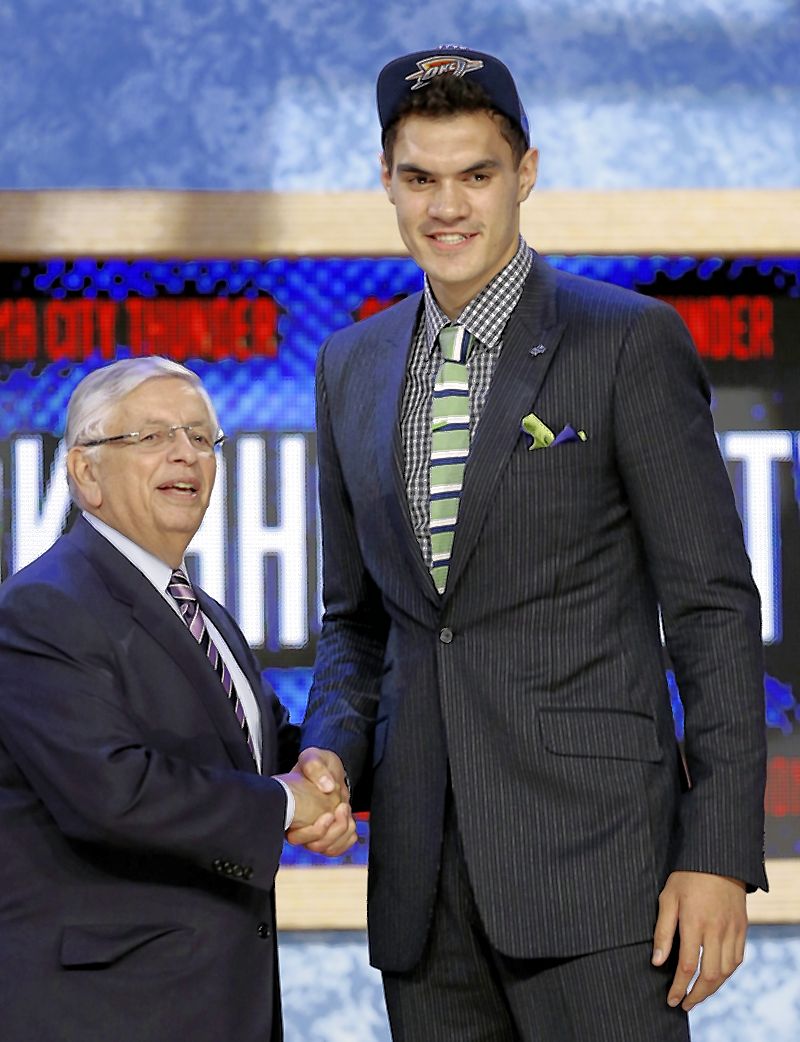
No. 12 – Steven Adams – C, University of Pittsburgh

adams draft

The Thunder don’t necessarily have a good track record with it comes to centers. Since they’ve arrived in Oklahoma City, the Thunder have drafted two flame-outs and one Eurostash: Byron Mullens, Cole Aldrich, and Tibor Pleiss. The carryovers from the Seattle days (Mouhamed Sene, Robert Swift, and Johan Petro) were 21 feet of nothingness, and the current placeholder, Kendrick Perkins, just posted a negative PER in the playoffs. To say that the center position is a position of need is an understatement.

The 7 footer from New Zealand is a late bloomer, but has the tools to be successful in the NBA. He’s an athletic big man with quick feet known for his defense. He won’t be asked to contribute immediately and may spend a good deal of his rookie season in Tulsa playing for the Tulsa 66ers. With two of the top 10 players in the NBA in Kevin Durant and Russell Westbrook, the Thunder don’t necessarily need an offensive savant in the middle. What they do need is someone that can move around, play defense, grab rebounds, catch a pass, and finish when they are within 5 feet of the basket. I have no doubt that Adams will be able to do that.


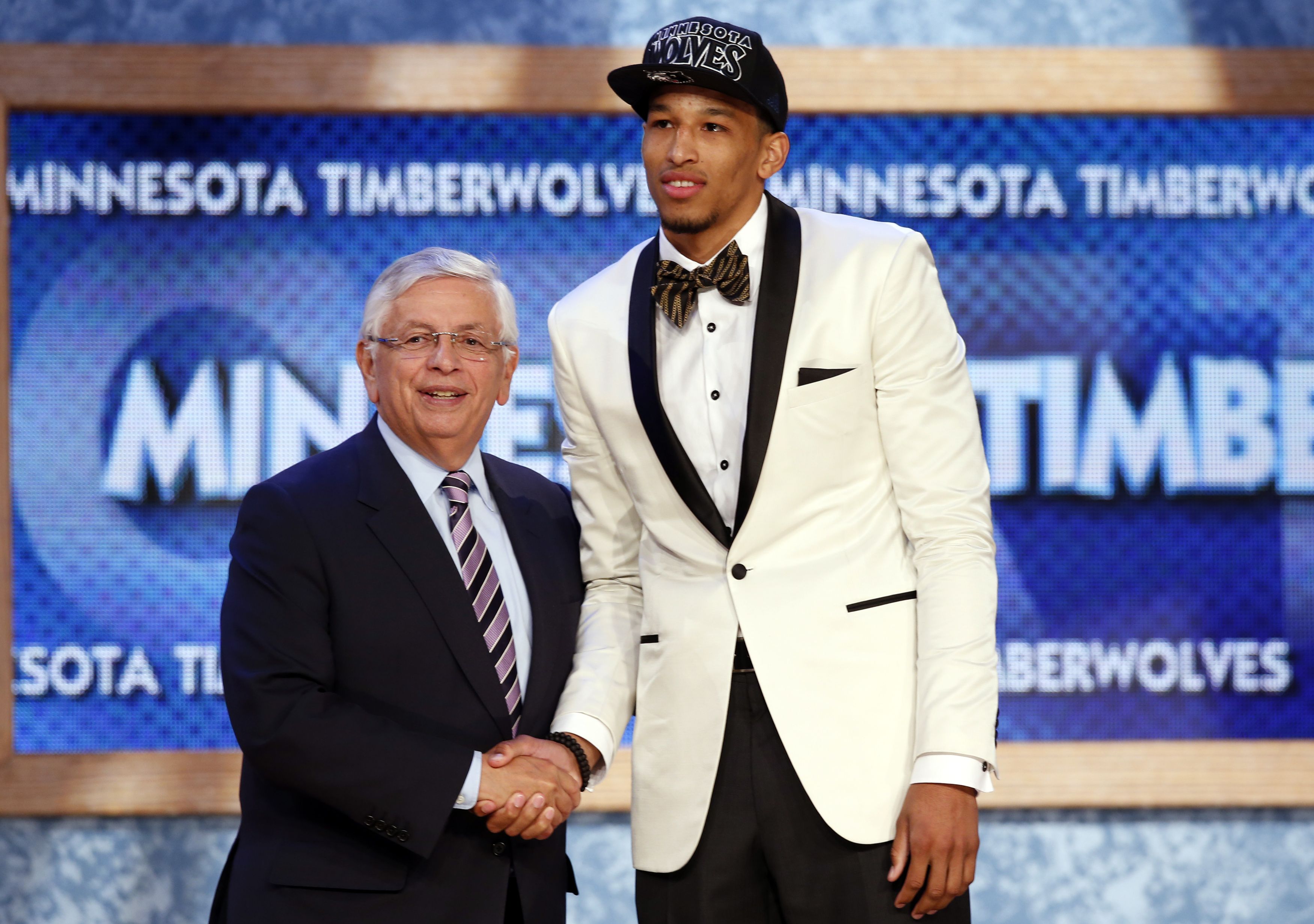
No. 26 – Andre Roberson – SF-PF, University of Colorado

Roberson from the University of Colorado shakes hands with NBA Commissioner Stern after being selected by the Timberwolves as the 26th overall pick in the 2013 NBA Draft in Brooklyn

This pick was a bit of head-scratcher to me. Not necessarily the pick itself, but the fact that the Thunder moved up 3 spots (albeit just for cash) to make the selection. Roberson was creeping up on every mock drafts, but wasn’t in line to be picked in the first round. Every mock draft had him falling to the beginning of the second round. Why the Thunder felt the need to move up to grab him? We may never know. Being that he is a Kawhi Leonard-like player, maybe the Thunder caught wind that the San Antonio Spurs were looking to draft him with the 28th pick.

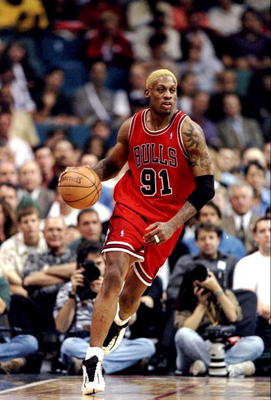
Roberson is a bit of an enigma. He’s 6’7, but has a 6’11 wingspan and was second in the NCAA in rebounding at 11.2 per game. Also, he’s one of the premier defenders in college. Those traits usually translate very well to the pro game. His offensive game is a different story. He struggles for consistency on the perimeter, but excels if he gets close to basket on dribble drives, cuts, and offensive put back. Because of this, he is often compared to Hall of Famer Dennis Rodman.

rodman

In a system and on a team that values players that can guard multiple positions, Roberson should eventually find a spot in the rotation as a defender. It wouldn’t surprise me if Roberson saw the most minutes with the Thunder of all the Thunder rookies.


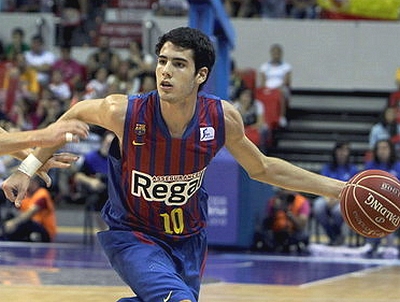
No. 32 – Alex Abrines – SG-SF, FC Barcelona (Spanish ACB League)

alex abrines

Abrines is a stash pick that will probably stay in Europe for 1-2 more seasons. He asked teams not to drat him late in the first round, as the guaranteed money would be less and he would probably have to fit some of the bill for his buyout. The Thunder took a chance and drafted him with the second pick of the second round. He is a smooth shooting wing player with a flair for the dramatic that many have compared to Rudy Fernandez and Drazen Petrovic.

At 19 years of age, Abrines will have to improve his game and strengthen his body before he’ll be able to compete in the NBA. The only negative for the Thunder is that Abrines is young enough to improve to the point where going the NBA would not make financial sense, causing him to stay in Europe for the rest of his professional career.


No. 40 – Grant Jerrett – PF, University of Arizona (selected by Portland, traded to Oklahoma City for cash considerations)

grant jerrett

Just when I thought there was no way we would draft three rookies to actually play on the team this upcoming season, the team goes and acquires a shooting big man in the 2nd round. At 6’10, Jerrett showed great potential as a shooter and as a stretch 4 in the NBA. At this point though, perimeter shooting is his only noticeable strength. Jerrett has a tool the team needs, but will need to put in a lot of work to make the opening day roster. He may be a Ryan Anderson-type player, but he may have benefited from another season in college. If his strengths don’t outweigh his weaknesses in Summer League and during the preseason, Jarrett, as a second rounder, is a good candidate to not make the team.

thunder team

Surprisingly, this draft said more about the players already on the team than those that were drafted. The team’s unwillingness to part with Jackson, Lamb, or Jones III to move up showed the confidence the team has in the young guys, and shows how the team values cohesiveness and development. With three rookies on the roster, look for the team to try to sign one or two veteran free agents to even out the youth on the bench.

Scoreboard Watching

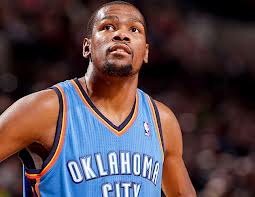
kd

Last month of the season. A time where every game has meaning. Teams are either jockeying of playoff positioning or draft positioning. The worst teams are balancing between increasing their chances in the NBA draft lottery and creating a late season winning attitude to carry over into the next season. And the best teams are either trying to solidify their spot in the playoff rankings in an effort to get home court advantage throughout the playoffs, or trying to get into the playoffs.

For most teams in the playoff hunt, the only thing they are worried about is playoff seeding. For these teams, their draft picks for the next draft will be in the 15-30 range, and unfortunately, there aren’t too many franchise saviors drafted in that range. What these teams will end up drafting in this range are solid rotation players, Euro-stashes, and players that most fans won’t hear about again once their rookie contracts have run their course. But sometimes, due to prior trades or deals, some of these teams luck into a lottery pick.

nba-draft-lottery

The Oklahoma City Thunder find themselves in the position of battling for the number 1 seed in the Western Conference and picking in the lottery in the following NBA draft. When the Thunder traded James Harden to the Houston Rockets, some of the assets that OKC obtained were draft picks. These are the 3 draft picks the Thunder obtained in that trade and their restrictions:

  • Dallas Mavericks 1st round pick (Top 20 protected until 2018)
  • Charlotte Bobcats 2nd round pick (no restrictions)
  • Toronto Raptors 1st round pick (Top 3 and 15-30 protected in 2013 and 2014, Top 2 and 15-30 protected in 2015 and 2016, Top 1 and 15-30 protected in 2017 and  2018, unprotected after that.)

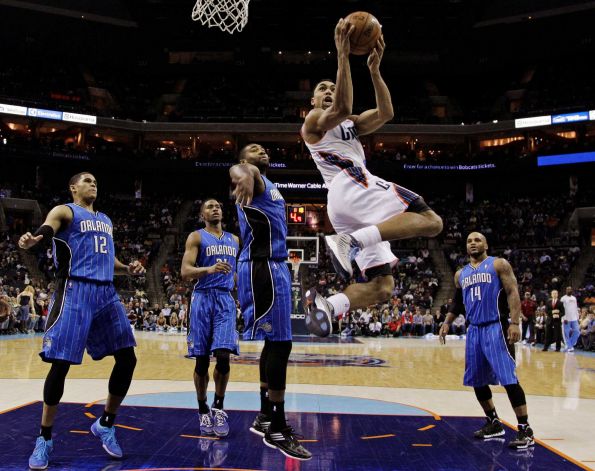
The Dallas pick probably won’t come to fruition in this draft as Dallas is currently in the lottery and has a very small chance of even reaching the 21st pick if they make the playoffs. They would need to win out and have the 7 other playoff teams currently under 45 wins completely fall apart. A scenario that is very unlikely. The Toronto and Charlotte picks, on the other hand, are in play for the 2013 Draft. As a fan of the Thunder, this has made scoreboard watching in April must-see-TV.

Toronto Pick (Teams that warrant watching – Philadelphia, Washington, Minnesota, Sacramento, New Orleans, and Toronto)

Again, this pick is Top 3 and 15-30 protected for this upcoming draft. Since the Raptors aren’t making the playoffs this season, you can eliminate the 15-30 protection from their draft pick. As of April 1st, the Raptors are slated to pick No.8. With 8 games left, the Raptors have the possibility of picking as high as third (if they lose out) or as low as 13th (if they win out). The position of the Raptors’ pick is not only dependent on their play, but also on the play of the teams around Toronto in the league standings. This is how the teams listed above are currently slotted and how far apart they are in games as of April 1st:

11. Philadelphia          –

10. Washington           3

9. Minnesota               3

8. Toronto                   3.5

7. Sacramento             3.5

6. New Orleans           4.5

So there are currently 3.5 games separating Toronto from the Number 11 slot in the draft and 1 game separating Toronto from the Number 6 slot in the draft. A lot of movement is possible in the standings within the final 2 weeks of the season.

Charlotte Pick (Teams that warrant watching – Orlando and Charlotte)

The Charlotte pick is not protected meaning wherever Charlotte’s pick falls in the 2nd round, that’s where Oklahoma City will pick. Granted, 2nd round picks are more miss than hit. The players selected in the 2nd round of the NBA draft fall into one of four categories. You have the 1st round talents that slipped into the 2nd round for a myriad of reasons, the Euro-stashes, the upper classmen that may surprise and make it onto an NBA roster, and the players that are a reach. Usually, the higher you pick in the 2nd round, the higher the probability of success in the NBA.

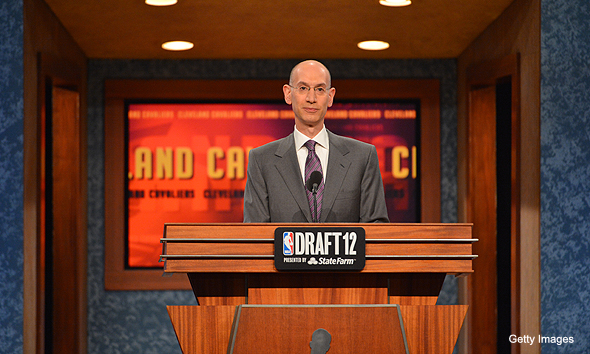
adam-silver-draft

With the worst record in the NBA, the Charlotte Bobcats would get the 1st pick of the 2nd round (pick No. 31). Here’s a list of the last 5 players selected with the 31st pick:

  • 2008: Nikola Pekovic (currently with the Minnesota Timberwolves)
  • 2009: Jeff Pendergraph (currently with the Indiana Pacers)
  • 2010: Tibor Pleiss (still playing in Europe, rights owned by the Oklahoma City Thunder)
  • 2011: Bojan Bogdanovic (still playing in Europe, rights owned by the Brooklyn Nets)
  • 2012: Jeffrey Taylor (currently with the Charlotte Bobcats)

These are 3 quality players that were obtained with the first pick in the 2nd round, along with two Euro-stashes whose NBA careers have yet to begin. The allure of a 2nd round pick is that the contract is not initially guaranteed. Every player selected in the first round gets a contract that is guaranteed in the first two seasons with team options for the next 2 seasons at a set salary depending on where they were drafted. Most second round players have to prove their worth in summer league and training camps before the team offers them a guaranteed contract.

For a while it appeared that Charlotte had a stranglehold on the bottom spot in the NBA. In the last few weeks, though, Orlando has lost their veteran interior presence (Glen Davis) to injury, traded their veteran wing/bench scorer (JJ Redick), and lost their starting shooting guard (Arron Afflalo) to injury. Combine that with the general rebuilding nature the franchise currently finds itself, and that has led to Orlando losing 9 of its last 10 games. Orlando trails Charlotte by only 1.5 games for the final spot in the NBA.

bobcat magic

Is there a difference between the 31st and 32nd pick? I don’t know, but of the last 5 players selected with the 32nd pick, only one is still the NBA (Dexter Pittman) and one is still in Europe. The other three have fizzled out and are currently out of the league. Based on this recent history, it is definitely better to get the 31st pick instead of the 32nd pick.

Number 1 seed in the Western Conference (Teams that warrant watching – San Antonio and Oklahoma City)

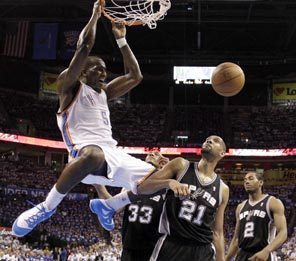
With the Oklahoma City Thunder trailing the San Antonio Spurs by one game for the top spot in the Western Conference, every game from here on out is of tantamount importance to both teams. The two teams play each other one more time on April 4th. As I mentioned in a previous article, home court advantage may be more important to the Thunder this season than it was last season, when the Thunder beat the No.1 seeded Spurs in the Western Conference Finals. The Thunder had an overhaul to their bench before the season began, and have a couple unproven players (as far as playoff experience goes) that perform better at home than on the road.

perk smash

Every day that goes by offers a game that is of importance to the Thunder. It is a fun time to be a fan of the team, and a fan of the NBA in general. Whether it affects their future or present, you can be certain that Thunder fans will be watching that scoreboard every day until the season ends.

The Thunder and their tradeable assets

After the pomp and circumstances that was the NBA All-Star Weekend, it is now time to get to the meat of the NBA season. But before we even reach that point, there’s a little something called the trade deadline that can change the fates of aspiring championship teams. For the next 4 days, you will hear every sort of rumor, from the asinine to the very believable. And that is what makes this time of year one of my favorites.

nba_trade_machine_288

In the last two seasons, the Oklahoma City Thunder have made some sort of move at the trade deadline. In Feb. 2010, they traded Jeff Green and Nenad Krstic to the Boston Celtics for Kendrick Perkins and Nate Robinson. Last season, they eschewed a trade, instead choosing to sign veteran guard Derek Fisher for their playoff run that went all the way to the Finals. This season, the Thunder made their big splash before the season started, trading reigning 6th man of the year James Harden to the Houston Rockets for Kevin Martin, Jeremy Lamb, and 3 draft picks. The Thunder went from a team with hardly any assets to one brimming with them. Any one of those assets or combinations of assets could be used to make a bigger move to help the Thunder either in the short term or in the long term.

Here are the top 5 tradable assets for the Thunder in terms of their desirability from other teams.

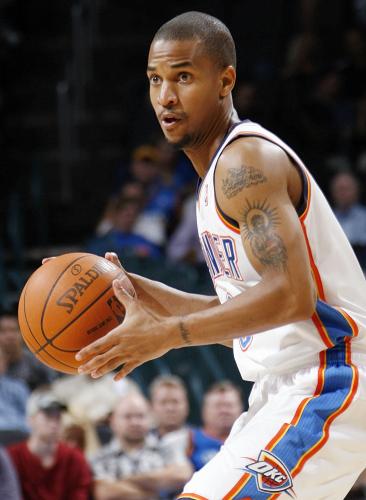
5. Eric Maynor

Two seasons ago, when the Thunder made a surprise run to the Western Conference Finals, Maynor was viewed as one of the top back-up point guards in the league. The fervor that is currently surrounding Los Angeles Clipper’s back-up point guard Eric Bledsoe was akin to what was being said about Maynor two seasons ago. A young floor general that was good enough to start for many other teams, and maybe even good enough to start ahead of Russell Westbrook. 

emaynor_648218153

The Thunder, sensing that Maynor’s rising stock may make him difficult to keep, drafted guard Reggie Jackson in the 2011 NBA draft. At the beginning of last season, it became increasingly evident that Maynor’s game had stagnated and hadn’t really improved that much during the offseason. Then, before the season was even 10 games old, Maynor tore his ACL and was lost for the season. While Maynor was rehabbing, Jackson was receiving his baptism by fire and earning precious playing time on a championship contending team. When this season started, Maynor was given the opportunity to earn his spot back as back-up point guard. He played as the primary back-up point guard for the first 23 games of the season. What became evident was that the injury had sapped Maynor of what little athleticism he had, and the Harden trade had robbed Maynor of his greatest asset off the bench. Thunder coach Scott Brooks chose to go with the more athletic Reggie Jackson off the bench to anchor the 2nd team from there on out.

reggie jax

Maynor is in the final year of his rookie contract that owes him $2.34 million. He has value as a cheap rental for a team looking to scout point guards for next season. Maynor has recently shed his bulky knee brace and is moving around a lot better than he did at the beginning of the season. He is just 14 months removed from major knee surgery and may be getting back to being healthy again.

Percentage the Thunder move Maynor: 65% (The Thunder aren’t going to move Maynor just to move him. If they are able to acquire any value, such as a high 2nd rounder or a young player, they’ll make the move. If not, they’ll roll with Maynor for the rest of the season as the insurance point guard.)

4. Charlotte’s 2013 2nd round pick

Second round picks are usually tossed back and forth between teams in almost comedic fashion. Most players selected in the 2nd round usually never make it onto an NBA roster, instead spending most of their careers in the D-League or overseas. The beauty of 2nd round picks, though, is that their contracts aren’t guaranteed and don’t fall into the pay scale system of the 1st round picks.

The valuable 2nd round picks are those that fall in the 31-35 range. In those picks, you can get a good player that has slipped into the 2nd round for a variety of reasons. A good example would be Dejuan Blair of the San Antonio Spurs, who slipped into the 2nd round because of injury concerns with his knees. Being that this pick belongs to Charlotte, who currently owns the worst record in the league, it could be a good asset as the first pick of the 2nd round.

dejuan_blair_2012_01_17

Percentage the Thunder moves this pick: 0.000001% (The Thunder fought long and hard to get this pick back. They initially obtained this pick in the trade that sent Byron Mullens to the Bobcats. The pick was later given to the Boston Celtics by the NBA as punishment for the deal involving Jeff Green, who had a heart condition that the Thunder may or may not have known about. Boston then sent the pick to the Houston Rockets in an off-season deal that sent Courtney Lee to the Celtics. And then the Thunder re-obtained the pick in the James Harden deal. I honestly think Thunder GM Sam Presti would have dealt Kevin Durant to get this pick back.)

3. Kevin Martin

This was the player the Thunder got back in the James Harden trade that could be labeled as “of equal or comparable value”. Martin is one of those fringe All-Star players that can average 20 points per game in the NBA, but bring little else to the table. Martin has done a good job this season of reproducing the offensive production that Harden gave the Thunder last season. Martin’s trade value, though, comes in the fact that he has a $12 million expiring contract.

kevin-martin-thunder

Martin is still a really good player that could still average 20 points per game if he were on a bad team. He’s one of the top players in free throw percentage and 3-point FG percentage and averages 15 points per game off the bench. He had done a good job of assimilating himself to his role on the Thunder and assimilating himself to the culture of the city. He has made it known that he would like to stay in Oklahoma City and sounds like he would be willing to take a pay cut to stay. (Annnd, cue Thunder fans saying “We’ve heard that before”).  

Percentage the Thunder move Martin: 12.5% (Having already made a major trade to start the season, I doubt the Thunder make another major trade in the middle of the season. They have the 2nd best record in the league and Martin has been a willing participant in his bench role. Unless the Thunder are able to acquire 2 players for the price of one, I think the Thunder head into the playoffs with Martin as their 6th man.

2. Jeremy Lamb/Perry Jones III

When you are a rookie on a championship contending team, playing time can be at a premium. This is where the Thunder and their rookies currently find themselves. Besides end of blowout situations, Lamb and Jones III have gotten most of their playing time with the Thunder’s D-League affiliates, the Tulsa 66ers. Their lack of playing time is not indicative of their potential, though. On a bad to mediocre team, these two would be logging major minutes. But on this team, their major function this season is in developing their game.  

lamb-jones

The league still views them as rookies dripping with potential. And that is where their value lies. I’m pretty sure many trade proposals have started with Eric Maynor and ended with one or both of these rookies. Young players on rookie deals are like gold in the NBA, and the Thunder have 2 bars in their safe.

Percentage the Thunder move either of these players: 10% (With their future salary cap situation (2 max players in Westbrook and Durant, Ibaka’s upcoming extension, Perkins’ contract, and Martin possibly resigning), the Thunder place optimum value on young players on rookie scale contracts. Both of these players emulate the Thunder model (athletic, long, and able to play multiple positions) and have performed well in their time in Tulsa.  

1. Toronto’s protected 1st round pick (2013 – Top 3 and 15-30 protected, 2014,2015 – Top 2 and 15-30 protected, 2016,2017 – Top 1 and 15-30 protected, 2018 – unprotected)

Before Toronto acquired Rudy Gay, this pick looked like it was going to be in the 6-8 range. Since the Gay trade, Toronto seems to be a much tougher out for opponents and reeled off 4 straight wins before the All-Star break. The Raptors currently sit 6 games out of the 8th spot in the Eastern Conference, so while it is not an impossibility for them to make a run at the playoffs, the hole they dug themselves before the trade may be too much to overcome this season.

Rudy-Gay-Raptors

For a team looking to rebuild, a pick in the lottery is a steal. Any draft pick is a gamble, but those in the lottery have a higher percentage of panning out than those outside of the lottery. The Raptors picks is now looking to be in the 10-14 range.

Percentage the Thunder deal this pick: 10% (The same logic that applies to the Thunder and why they probably won’t deal Lamb or Jones III, applies to this draft pick. Earlier this season, this pick looked like it was going to be in the 4-6 range. But even where it stands today, this pick probably has more value for the Thunder than for another rebuilding team, especially in a draft that is perceived to be weak.).

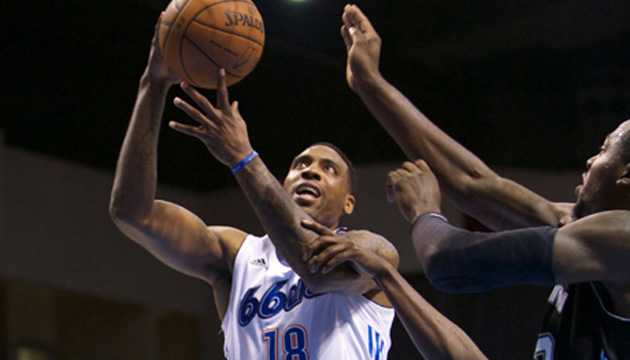
One thing to look out for is the empty roster spot the Thunder have. If they don’t fill this spot with someone in a trade, look for the Thunder to sign veteran forward Rasual Butler. Oklahoma City fans may remember Butler from his days with the New Orleans/Oklahoma City Hornets. He is currently playing for the Tulsa 66ers and may be what the Thunder need in a 3-point shooter and perimeter defender.

butler 66ers

The fact is that the Thunder have the 2nd best record in the league and are coming off of a Finals appearance. Sam Presti is not known to deal in haste or for a quick fix. He believes in sustainability and cap-flexibility, so any deal will have to work for the Thunder’s present and for their future. Needless to say, I don’t really see the Thunder making a move this trading deadline….but I’ll be watching.


Memphis Grizzlies vs. Oklahoma City Thunder Preview (Game 46 of 82)

grizz thunder

  • When: Thursday, 31 January 2013 at 7:00 PM CST
  • Where: Chesapeake Energy Arena, Oklahoma City, OK

Welcome to the season opener for the Oklahoma City Thunder. Hold on, what? It’s not the season opener? It’s the 46th game of the season? Wow! With the amount of time we’ve been off (4 whole days) and the amount of time since the last home game (over two weeks), you can see how it feels like an entire off-season since we’ve last seen the team live. Also, this is the longest we’ve had to marinate after a loss since Game 5 of last season’s Finals. Needless to say, Oklahoma City is chomping at the bit to play a game at home.

Their opponent for their return back home is the new look Memphis Grizzlies, although Memphis may be a bit short handed tonight. Yesterday, the Grizzlies traded Rudy Gay and Hamed Haddadi to the Toronto Raptors for Ed Davis and Jose Calderon. The Grizzlies then turned around and traded Calderon to the Detroit Pistons for Tayshaun Prince and Austin Daye. Unfortunately (or luckily for the Thunder), those players will not be available for the Grizzlies tonight.

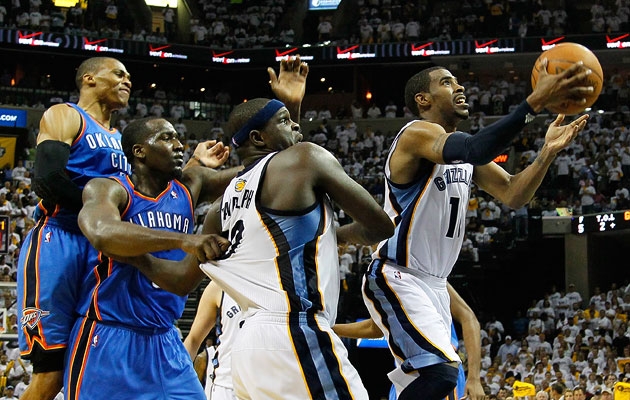
But it’s not like this will be an easy game. This is basically the same team that took the Thunder to 7 games two postseasons ago in the Western Conference Semis. That team was also without Rudy Gay, who was out following in-season shoulder surgery. The Grizzlies defeated the Thunder in their first meeting this season, 107-97, in Oklahoma City. In that game, Rudy Gay hit every big shot in the 2nd half to keep the Thunder at bay. Much like what the Thunder were facing in their 3rd game of the season, the Grizzlies will be getting acclimated to life without a key component of their team.

The Opponent

grizz

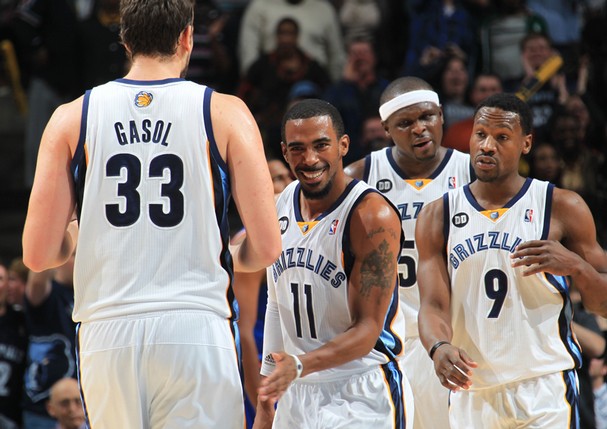
The Grizzlies come into the game with a 29-15 record, good for 4th in the Western Conference. Though they struggle to score points (93.4, 27th in the league), they more than make up for it with the best defense in the league, in terms of opponents’ ppg (89.5, 1st in the league). Offensively, they are highly dependent on post play and taking care of the ball. On defense, they use their physicality and brute strength to gobble up boards and get opponents out of position on offense. The offense is led by the big boys inside, Marc Gasol and Zach Randolph. Though not a very athletic duo, their high basketball IQ more than makes up for their athletic shortcomings. Randolph, who was selected as a reserve to the All-Star game, averages 15.8 points and 11.6 rebounds per game. Gasol, who has been struggling a bit this season, averages 13.7 points and 7.5 rebounds per game. The offense is directed by Mike Conley, who is one of the better floor generals in the league. SG Tony Allen is one of the best defensive wings in the league. The bench is one of the more consistent ones in the league, with 6 players each averaging more than 14.5 minutes and scoring more than 5.5 ppg.

Probable Starters

Memphis Grizzlies

PG – Mike Conley

SG – Wayne Ellington

SF – Tony Allen

PF – Zach Randolph

C – Marc Gasol

Oklahoma City Thunder

PG – Russell Westbrook

SG – Thabo Sefolosha

SF – Kevin Durant

PF – Serge Ibaka

C – Kendrick Perkins

3 Keys to the Game

  1. Don’t give this team a chance – Yes, they just lost their best scorer. Yes, they will be shorthanded. But, don’t give this team a chance or they will steal this game. Memphis is a veteran bunch that has won without Rudy Gay before. Take advantage of their lack of depth and play transition basketball and try to draw fouls.  
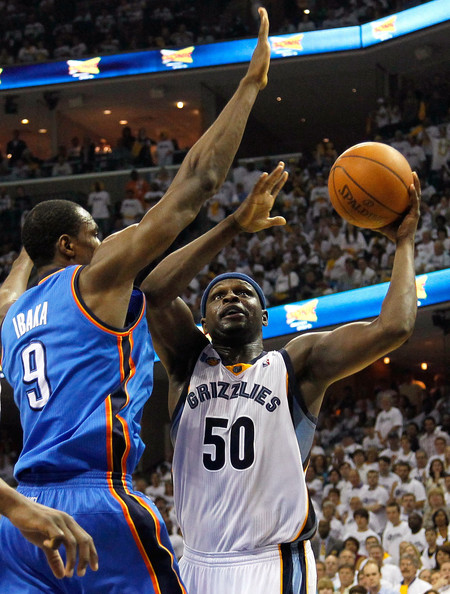
  2. Control the boards – While Memphis may not score much, their bigs do get a lot of rebounds. This leads to extra opportunities offensively, which is big for a team that is short handed. If necessary, Kevin Durant may need to hedge over to the post to help out on the boards.ibaka randolph
  3. Play Randolph smartly – Serge Ibaka always seems to have trouble against crafty, non-athletic PFs (Randolph, Nowitzki, etc.). Don’t bite on the pump fakes and keep your hands straight up in the air. It seems like when the Thunder play the Grizzlies, Collison always ends up in the game for an extended period of time due to Ibaka’s foul trouble.

Mr. Harden’s Opus

So I had this blog detailing why I didn’t think the Oklahoma City Thunder would sign James Harden by the October 31st deadline. I was going to work on it this weekend and publish it on Monday. I was hoping Harden and the team would still be in negotiations by the time I finished said blog. I truly believed the negotiations would be an issue that would be shelved until next offseason when the front office had more information (an entire season’s worth) to make more of an informed decision. Instead, with the OU/Notre Dame tied at 13 in the 4th quarter, I checked my twitter feed and saw this inconspicuous tweet:

Wow #Harden

I don’t remember who the tweet was from. But it piqued my curiosity and I clicked on the hash tag. I thought it was going to be a person that was surprised Harden had turned down a 4 year/ $52 million dollar contract extension. Instead, to my complete and utter surprise/horror, I started seeing the all the tweets about Harden being traded to the Houston Rockets for Kevin Martin and Jeremy Lamb. The “Whhhhaaaatttttt???!!!” I let out startled my wife into rushing out of the kitchen to see what the hell was going on. The rest of the OU game was a blur to me after that. I went into Twitter frenzy mode and didn’t stop until after midnight. Once the shock and awe of it wore off (which most of it hasn’t), I was able to process the trade and evaluate it.

Here are the details from the trade:

Houston gets SG James Harden, C Cole Aldrich, SG Daequan Cook, and SF Lazar Hayward

Oklahoma City gets SG Kevin Martin, G/F Jeremy Lamb, 2013 first round pick (from Toronto, top 3 protected), 2013 first round pick (from Dallas), and 2013 second round pick (from Charlotte)

Here are some of the thoughts I have about it. I call this my “Mr. Harden’s Opus.”

The Good

My first option would have been to keep the Thunder nucleus together. But if you are going to trade Harden, this was probably the perfect batch of expiring contract, promising rookie, and draft picks galore. Let’s start with the big name from Houston: Kevin Martin. If you are going to find a substitute teacher for Harden, Martin is probably the best one year prospect available. An effective scorer who has averaged 18.4 points per game for his career, with a great mid-range game and an effective 3-point shot (38%). Someone who goes to the free throw line 6.6 times per game for his career. Defensively, Martin may not be as big as Harden, but it isn’t like Harden was in line for the All-Defense team, either. Both are sieves on the perimeter, but Harden is able to bang with bigger bodies like Kobe Bryant and Stephen Jackson. The one thing Harden really has on Martin is his play-making ability.

If the Thunder plan on bringing Martin off the bench, this plays out perfectly for them. With Eric Maynor back, Martin won’t need to take Harden’s place as a play-maker on the second team. Martin could be the gunner off the bench and the Thunder could use him in late game situations if offense is needed. For all the talk about Martin being a selfish player, he has never played with players of the caliber of Kevin Durant, Russell Westbrook, and Serge Ibaka. The focus will be off Martin and he can do what he does best, which is score from the perimeter and get to the line.

The second, lesser known name in the trade was rookie Jeremy Lamb. This, in my opinion, will determine whether this trade will be viewed as a success or a failure. Lamb has the skill set and potential to be that dual threat shooting guard that the Thunder have been coveting in their championship run. Someone, potentially, with the length, athleticism, and defensive ability of Thabo Sefolosha, but also with the scoring and shooting ability of James Harden. Jeremy Lamb could prove to be that kind of player. With Martin in the mix for at least one season, Lamb can sit and learn this season without the pressure of being a starter.

The draft picks were probably what sealed the deal on this trade. Getting a good veteran with an expiring contract like Martin, and a rookie dripping with potential, like Lamb are things that many teams could have offered. But not many teams could have offered that and a slew of draft picks like Houston could. The Thunder, as weird as this sounds, are a championship contending team that got younger and obtained great assets. The Toronto pick will be a great trade chip going forward, as the Raptors are not expected to improve much from where they were last season. The 2nd round pick from Charlotte will also be valuable as it will probably be one of the first few picks from the 2nd round.

The Bad

According to sources, the final offer the Thunder made to Harden was in the 4 years / $55.5 million dollar range. Harden will probably end up signing with Houston for 4 years / $60 million dollars. You mean to tell me the difference between a potential dynasty with an established core, and completely blowing up a team 5 days before its season opener is $4.5 million dollars. That difference amounts to $1.125 million per season. The ownership group, which has made a commitment to all of its core players, could not come up with $4.5 million dollars more? This group of multi-millionaires and billionaires were panicking over an extra $1.125 million per year. Don’t get me wrong, though. I understand it is their money and not mines. But, keeping this core intact for at least another 4 years would almost certainly guarantee runs to the Western Conference Finals and NBA Finals in that allotted time. Those extra games means about $20-40 million dollars extra in profit for the ownership group. You can talk about cap flexibility and assets until you are blue in the face, but when you have the potential to win championships in the here and now, AND you’re making money, you take those chances.

The scariest part about this trade is that a championship contending team was blown up less than a week before the start of the season when it didn’t need to be. We just went through 7 preseason games with our normal core intact, and now we only have 4 days worth of practice time to integrate 2, and possibly more, pieces to our team. When, in the minds of the front office personnel, did they say, “You know, this sounds like a great idea.” While the linchpin of this trade may have been Harden, Cole Aldrich may prove to be a big loss for the Thunder. He seemed ready to assume the role of back up center, getting 2 double-doubles in the preseason. Now, we are heading into the season with Hasheem Thabeet as our backup center. Granted, Nick Collison, Serge Ibaka, and possibly, Perry Jones III can all play the 5 in a pinch. But in a future playoff series against the Memphis Grizzlies, Los Angeles Clippers, or Los Angeles Lakers, having an inexperienced and oft maligned center as a back up could prove to be detrimental.

The Ugly

Can someone tell me why the hell we had a lockout last season? All I heard during the lockout was about the percentage of the revenue that the players got and how salaries had gotten out of hand. Some even tabbed it as the “Rashard Lewis” lockout, with Lewis being the best example of a 2nd or 3rd tier player that received a max extension, thus limiting the cap flexibility of that team for up to 5 seasons. Basically, it was a lockout to keep the owners from actually overspending their profitabilities. So, then, why are teams paying players like Eric Gordon, Roy Hibbert, and James Harden max extension money. I thought max money was for top 10 players like Lebron James, Kobe Bryant, and Kevin Durant. Instead teams are throwing around stupid money for 2nd tier players. There’s 5 years left until the owners and players can revisit the CBA, and believe me, it will be revisited again, and this time, I fear, with dire consequences.

WWJD – What would James do?

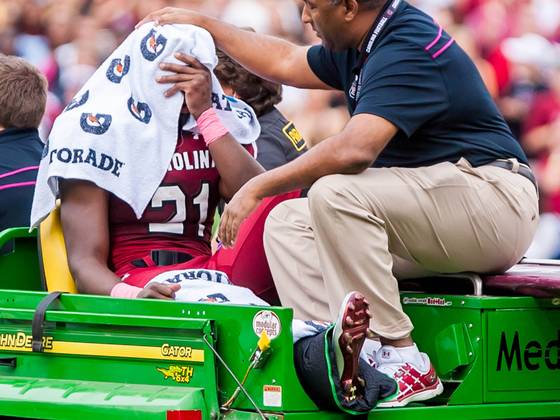
Do you know who I’m not mad at for this trade? James Harden. Before the OU game on Saturday, I spent the whole afternoon thinking about University of South Carolina running back Marcus Lattimore, who had just suffered a gruesome right knee injury. If you haven’t seen it, just think of Shaun Livingston’s knee injury from 5 years ago. Reports are coming out that Lattimore tore a couple ligaments and completely dislocated his kneecap. To make matters worse for Lattimore, he was coming back from a torn ACL in his left knee suffered the previous season. If Lattimore was a stock and NFL teams were the buyers, he would currently be considered a toxic asset.
In a profession where your best years are in your mid to late 20’s, your earning potential is contingent on 5-7 years of performance and luck. If you suffer an injury or get involved in a legal scandal, your earning potential will go down. You, as an athlete, cannot dictate what the market will pay for you. If the market wants to pay you max money, then that’s what they pay. If they want to pay you veteran minimum money, then that is what you will get paid. I don’t blame Harden for taking what the market gives him.

As I wrote in my Pippen/Westbrook column, Pippen consistently took less than his market value to keep the core of the Bulls team together. Where did that leave him? Broke (most of it his fault, but still) and bitter. Harden could have taken a couple million less than what the market had placed his value at, but why. While we like to moralize athletics into this great teaching tool where you sacrifice for the greater good, at the end of the day, its a business. If a player can’t perform anymore, the owner is going to let that player go and move onto the next able body. It’s a business and a player would be a fool to leave money on the table.

I’m the Oklahoma City Thunder blogger for the blogging network called Hoops Talk Nation through the website www.thebreakdownshow.com. I currently blog on there for free. But if ESPN, YahooSports, or CBSSports ever called to offer me a spot on their blogging network for cash, I would take it in a heart beat. While I love the opportunity that Audley Stephenson and Dave Mendonca have afforded me, I wouldn’t be able to turn down the possibility of blogging AND earning cash to do it. Regardless of how I fancy myself as a blog writer, I would never turn down the opportunity to move up on the pay scale.
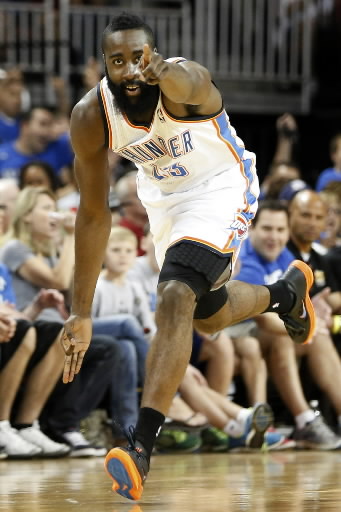
OKC fans should not hold this against James Harden. This is a business, and him turning down less money is a business decision. He is doing what he feels is best for himself and his family. Not unlike what we do everyday, but with less zeroes attached to it. Many will be mad for what they perceive was a lie from Harden with all the “sacrifice and brotherhood” talk. What did you expect from him? To come out and say, “I don’t give a shit what you think I’m worth. If the market says I’m a max player, I want max money!”

Being a fan is an emotional experience. When you mix emotion and money, you don’t make sound decisions. So, if you take the emotion out of the equation, you’d realize that James Harden did the same thing you and I would’ve done, which is to never leave 7.5% of a raise on the table.

The Trade and the Thunder

Well, what’s done is done. The NBA is not going to step in and rescind this trade, as Harden does not suffer from any pre-existing toe injuries or heart ailments. He is a Houston Rocket. And so are Daequan Cook, Cole Aldrich, and Lazar Hayward. We cannot worry about them anymore.

What we do have are two unique players and 2 roster spots to fill. I think Kevin Martin will slide in seamlessly into Harden’s role off the bench. His efficient scoring and knack for getting to the line will have Thunder fans wondering whether James Harden shaved his beard, lost some weight, and slightly bleached his skin. The real prize in this trade could be Jeremy Lamb. If, in an alternate basketball universe, the basketball DNAs of James Harden and Thabo Sefolosha were interwoven, the result could be a player like Lamb. A 6’5” shooting guard with a 7’0 wing span and the ability to knock down long jumpers and play in transition. If you thought the Thunder were good with the Sefolosha/Harden SG platoon, imagine if only one player supplied most of those needs. There’s still a lot of development that needs to take place, but the skill set is already in place.
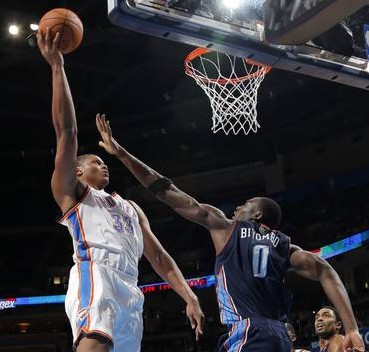
The open roster spots are a different story. The Thunder not only traded their 6th man of the year, but also their back up center, their designated 3-point specialist, and their designated end of the bench guy. While Hayward won’t be that difficult to replace, Aldrich and Cook could. I fully expect the Thunder to sign Daniel Orton to a minimum deal to compete with Hasheem Thabeet for back-up center minutes. The final roster spot is a bit of a mystery, though. Before training camp started, the Thunder signed Georgetown sharp shooter Hollis Thompson to a non-guaranteed 3 year contract. After playing in only 2 preseason games, he was one of the final roster cuts by the Thunder. They could sign him as a future replacement for Cook. Or, they could leave that roster spot open for future options, such as taking on a salary in a trade, or signing a veteran free agent (Derek Fisher, anyone?).

As for the core players, I’m curious to see how Nick Collison will react. He and Harden had one of the top 5 pick and roll combos in the league. Collison is one of the consummate professionals in the league and will be fine no matter what situation he is placed in. I think the onus of this transition will fall mainly on Russell Westbrook. If Westbrook continues to be consistent, as he was this preseason, then the Thunder should be fine. But if there was one player that helped Russell when he got into Honey Badger mode, it was Harden. Harden would take over the point guard duties and become the primary play-maker, especially at the end of games. That role now falls primarily in the hands of Westbrook, and to a lesser extent, Eric Maynor. While Maynor could fill the role of play-maker at the end of games, no defense will respect Maynor’s ability to drive and draw fouls like they did Harden’s. Martin could always be inserted at the end of games, but his play-making ability may be less than Westbrook’s.

How does this change affect the Thunder? They have never had to deal with a core-rattling trade like this one. The Jeff Green for Kendrick Perkins trade shook the tree, but it was necessary given that Green was out of position at the 4 spot and affecting the team’s post defense. This trade wasn’t necessary for anything on the floor. Instead, it was a financial deal the team made to avoid paying costs in the future. The biggest negative in all of this is that it happened 5 days before the first game of the regular season. There will be no preseason games to indoctrinate the new players. Only a couple practices and then on to the season. The only positive I see in this situation is that our biggest threat, the Los Angeles Lakers, are also having to work out chemistry issues, after bringing in 2 main cogs (Dwight Howard and Steve Nash) in the offseason. The Western Conference may come down to whoever vibes first.

I do think this affects us this season. These guys just went from going to the Finals, then to the Olympics, then through training camp and preseason thinking they were going to defend their Western Conference title without a hitch. Then, BOOM!!! Over a quarter of the team gone, with 2 new pieces coming back. This is a team that is used to consistency. This consistency is what fostered to current Thunder culture. Consistency leads to comfort. Comfort leads to confidence. If you were part of the culture, you were part of the brotherhood. Now a shred of that is gone. I do think it will take the team a while to adjust from this one. Has their championship window closed? No, it hasn’t closed, but somebody definitely threw a baseball through it. The Thunder may come out stronger in the end, but I think it will be a case of one step backwards, two steps forward.

 In Memoriam
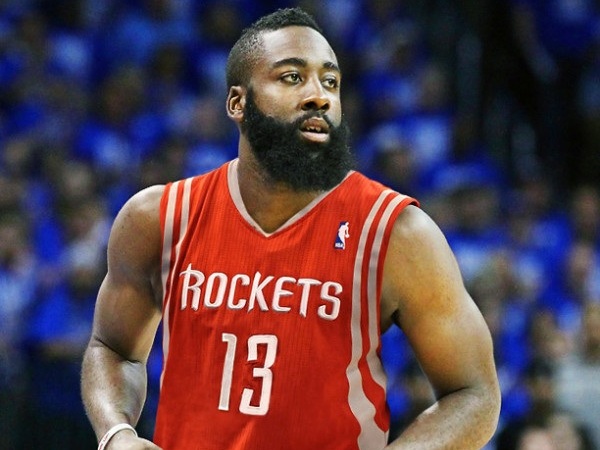
I will miss the Beard. Harden became a part of the fan culture. When you mentioned the characters on the team, you always had to mention Harden and his Beard. If the Thunder had a Teenage Mutant Ninja Turtles-like quartet, Harden was definitely Michaelangelo (the party dude!). I wish him nothing but the best in Houston. But if we are being honest, Harden was but a great role player. He scored when called upon, drove and drew fouls when needed, and made plays at will. But I never considered him to have the “it” to be The Man. Westbrook has that dogged “it” to be The Man. Durant is The Man. But Harden just seemed happy doing what needed to be done. So if Harden wants to see how his life will be post-Thunder, he need look no further than the man he was traded for.
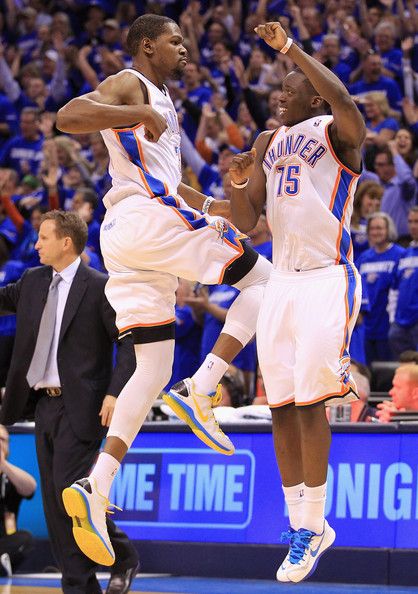
Trading Deadline and the Thunder

Business transactions are always about needs versus assets. And that’s what trades in professional sports are.  A GM will assess their team and see what is needed and what can be given up. Sam Presti, the GM for the Oklahoma City Thunder, has made his bread and butter in the previous 5 seasons by taking advantage of other teams’ needs for financial relief. It’s how he obtained Thabo Sefolosha, Eric Maynor, Kendrick Perkins, Daequan Cook, and the draft pick that became Serge Ibaka. He did this by meticulously managing his cap space and not making hasty free agent/trade decisions.

Now that the Thunder are done with the rebuilding process, and are currently in the championship building phase of their development, some of the things that Presti used to swing advantageous deals are no longer available. The Thunder are currently $900K over the salary cap, meaning that they can’t absorb contracts, and must instead match salaries up to 125%. As ironic as it sounds, a negative of being frugal and careful with your spending, is that the Thunder are not saddled with any bad contract, which can become very advantageous in their expiring years.

Needs

  • With the loss of Eric Maynor earlier in the season, the Thunder lost one of the best game managers (backup or starting) in the game. He was the ultimate yin to Russell Westbrook’s yang, and provided the Thunder with a stabilizing force at the point guard position whenever necessary. Now, in his place, is a rookie, Reggie Jackson, who has looked every bit the part of a rookie. His play, while improving, has been inconsistent, as he is still trying to find his comfort zone on this championship caliber team. Kind of a tall order for someone who wasn’t expected to be thrust into such an important position at this moment in his young career. Because of Jackson’s inconsistent play, a quality backup point guard has suddenly become a need for the Thunder.
  • The thing about a wing oriented team is that if the shots aren’t falling and the “box and 1” defense is working, it makes it nearly impossible to consistently score points. The Thunder are lucky to have such dynamic scorers like Kevin Durant, James Harden, and Westbrook. These players have made their careers by consistently hitting shots with hands in their faces. But in basketball, the closer you are to the basket, the more efficient and easier your scoring becomes. And the Thunder have never had a low post scoring threat. It’s one of those things that makes scoring in the playoffs a whole lot easier.

Realistic Assets

  1. Nazr Mohammed – $3.75 Million – Veteran big man that could fit in on a contender that needs size.
  2. Cole Aldrich – $2.29 Million – 2nd year big man that has shown improvement and could be a good rotational big, if not for the Thunder, than for another team.
  3. Thabo Sefolosha – $3.3 Million – Veteran wing who is still one of the better wing defenders in the league.
  4. Royal Ivey – $1.2 Million – Veteran guard who provides good energy off the bench.
  5. Charlotte’s 2013 2nd round pick (obtained in the Byron Mullens trade) – Charlotte probably isn’t going to get much better next season and that pick will probably be in the 30-35 range, where a good player can still be picked up.
  6. OKC’s 2012 1st round pick – Will probably be in the 25 – 30 range of the first round. Late in the first, but still useful for stashing an overseas pick or rebuilding.

Possible trade partners (based on need and cost of transaction):

Boston  – Keyon Dooling ($2.25 M) and Marquis Daniels ($854 K) for Nazr Mohammed. Boston is in desperate need for big men after the losses of Jeff Green, Jermaine O’Neal, and Chris Wilcox. Keyon would provide a veteran point guard that has played in the playoffs before. Daniels would more than likely be cut.

New Jersey – Sundiata Gaines ($854 K) for Charlottes 2013 2nd round pick – Gaines has quietly put up a good season as a backup point guard for the New Jersey Nets.

New York – Mike Bibby ($854 K) for OKC’s 2013 2nd round pick – With the emergence of Jeremy Lin and the return of Baron Davis from injury, Mike Bibby is no longer necessary in New York.

Cleveland – Ramon Sessions ($4.3 M) for Nazr Mohammed and Charlotte’s 2013 2nd round pick – Compared to other teams’ offers, this is probably a “No” for Cleveland, but it’s still worth a try.

Milwaukee – Andrew Bogut ($12 M) for Kendrick Perkins, Daequan Cook, and OKC’s 2012 1st round pick – Bogut is just as good defensively as Perkins, while providing a lot more offense, if necessary. The Bucks will probably want either Harden or Serge Ibaka, which would make this a deal breaker for the Thunder.

New Orleans – Greivis Vasquez ($1.11 M) for Lazar Hayward and Charlotte’s 2013 2nd round pick – New Orleans is in full rebuild mode and looking to acquire quality draft picks. A very high 2nd round pick would do just that. The question becomes how does New Orleans view Vasquez?

Charlotte – DJ Augustine ($3.2 M) for Nazr Mohammed and Lazar Hayward – I don’t understand Charlotte’s desire to trade Augustine, as Kemba Walker is still a rookie and is more undersized SG than starting PG at this point in his career. But, if they want to, we’ll participate if the cost is not too much.

Free Agent – Anthony Carter (formerly of the Toronto Raptors) was recently waived to give him the opportunity to sign with a contender. Using our Disabled Player Exception from the Maynor injury, which comes out to $758,340, we could sign Carter for the rest of the season.

And just for fun:

Orlando – Dwight Howard ($18.1 M) and Ish Smith ($762 K) for Kendrick Perkins, James Harden, Eric Maynor, Cole Aldrich, OKC’s 2012 1st round pick, and Charlotte’s 2013 2nd round pick. I don’t know if Orlando gets a better infusion of young talent and draft picks from any other team.

What does the team look like on Thursday at 3:01 PM?

I think we stay pat. Making reactionary moves is not Presti’s style. He knows we still have Maynor next season and Jackson will have gained an invaluble amount of experience in his rookie season. A smaller scale signing, like Anthony Carter will be possible, though.