I have a friend that currently finds himself at a crossroads in life. Now, before I continue, let me give a little background of my friend. He moved into town about 5 years ago right out of law school. He was from a bigger city, but decided to start a law office in a smaller town to avoid the oversaturation of law offices in the bigger cities. He started the law firm with one of his old law school classmates, who was already in the area working as a public defender. After struggling for a couple years, they finally started building a good clientele portfolio from in and around town. Besides his job, my friend also began laying down roots in the community, marrying a local girl and becoming a recognized lawyer in the area. With that recognition, comes opportunities, of which, some were not local.
Now, I’ll keep my friend nameless, because I am privy to his finances. Due to them having their own business, much of their profits go to operational costs. My friend currently pays himself a salary of $65,000; enough to get by pretty well in the small town. As his clientele portfolio has expanded, he has increased his salary by $2000 every year since he began. He recently got a job offer from a law firm in a bigger city that would start him off at $100,000 with the opportunity to be a partner within a year of accepting the job.
My friend’s partner has started his own attack to keep my friend by his side. He has started pulling on my friend’s heartstrings, telling him that they can be the best law office in the area if they continue what they started; telling him that he is like the brother he never had; and even said he would increase his salary to $78,000 to prevent him from leaving. So this is where my friend finds himself: an opportunity to go to a major law firm and be a major player in the future or stay behind based on loyalty to continue building something that he started.
What would you do?
Before you answer, realize that there is no wrong answer. When it comes to financial decisions, you always decide with one of the two things: your heart or your wallet. Sometimes those two things are homogenous, making decisions extremely easy. But sometimes, those two things are at war, making the decision that much tougher. But in the end, you make your decision and live with it. Like I told my friend, people will always judge, but the only judges that matter are the ones at home and, more importantly, the one in the mirror.
Would you fault this person for whatever decision they make?
I would hope that most people wouldn’t. When we are talking about money in the $50,000 – $100,000 range, we see a lot of ourselves in those dollar amounts, and know how we would side. In my friend’s case, he was debating between $100K and $78K. In this economy, many people would take the money and hope that the extra 22% would cushion the homesick feeling that sometimes accompanies a job-related move. And yet, when those figures move from $100,000 to $63 million, sports fans feel completely sickened by the fact that an athlete would choose the money over the team.
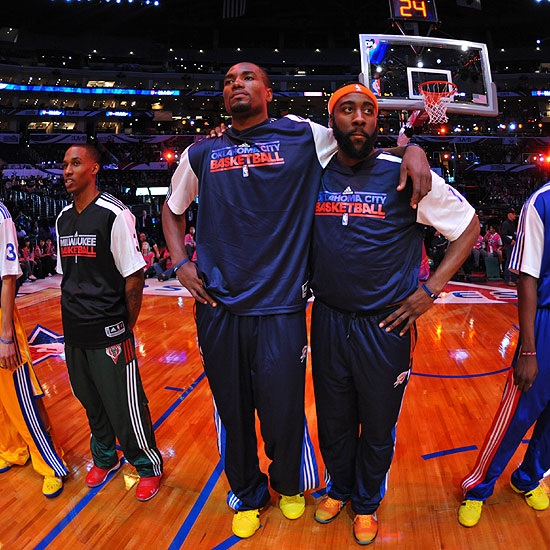
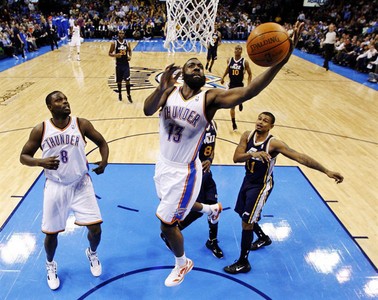
James Harden, of the Oklahoma City Thunder, currently finds himself in a boat similar to the one my friend is in. In a year, he could take the money and sign a max 4 year/$63 million contract with another team. Or, he could take less money (possibly as low as the $49 million Serge Ibaka extended for) to stay with the tightly-knit, championship-contending team he has help build from the foundation up. We, sports fans, are sometimes so myopic in our thinking, that we don’t realize the difference in money between my friend’s two offers and James Harden’s two possible offers are the same in terms of percentage (22%).
Would you ever leave 22% of your possible future income on the table?
Think about that. How ecstatic would you be if your job offered you a 22% raise tomorrow? I don’t know if there is a sound proof room insulated enough to not hear my screams of joy if that happened. And yet, sports fans like to believe they are above reproach and would always choose loyalty over money. And let’s not argue over the semantics of thousands versus millions. Most people in our salary range would like to think they can live just fine off of one million dollars per year. But if you had the opportunity to choose between $63 million and $49 million, would you really leave $14 million on the table? Forty nine million dollars can help you and children. Fourteen more can help your grandchildren. Money is money. The more you have, the better off you usually are.
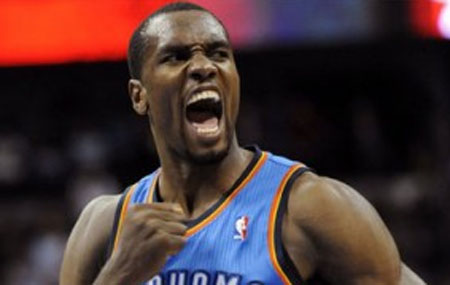
I know James Harden’s heart is currently at war with his wallet. He has stated that he loves the city, loves the team, and hopes to continue building a possible dynasty with his brothers. He even intimated that he is willing to take less money, but, recently has backed off of that statement. When you don’t know what you are worth, you make statements like that. But when you realize what your market value is, your wallet (agent) starts to do the talking. I won’t fault Harden if he runs and takes the money. In an occupation where you are an injury away from not earning another paycheck, you take what you can, when you can. If the stories of my friend and James Harden are parallel, then we Thunder fans better enjoy the Bearded One as much as we can this season.
As a fan of the game, I’ll watch any basketball game you have on the television, especially playoff games. But there’s a slight disconnect when your team is not involved. It’s not as emotionally taxing. With that said, I’ve never enjoyed basketball as a connected fan all the way into mid-June. Though I’m disappointed that we lost in the Finals, its fun to look at the calendar and know that in 3 months, training camps should begin to open up. I’ve forgotten what it feels like for the season to be over in mid-April. But this all leads us to the offseason. Time to rest and recover from the grind of the season. Oh, I forgot we have the draft coming up. And then we have Summer League. And all the offseason moves and transactions. All the while, we have the national team gearing up to defend its gold medal in this summer’s Olympics. What the hell does the off in offseason mean?
There’s a saying that the NBA season is a marathon, not a sprint. The things that happen after the All Star break, such as trades and the signing of recently released players, can have a big impact on the rest of the season and the postseason. The Thunder have been the beneficiary of both of these player transaction moves in the past two season. Two seasons ago, at the trading deadline, the Thunder traded Jeff Green and Nenad Krstic to the Boston Celtics for starting center Kendrick Perkins and ultimate cheerleader Nate Robinson. Then, last season, they signed point guard Derek Fisher off waivers after he was released from the Houston Rockets. Due to the team’s stability, the Thunder usually remain pretty quiet during the offseason, though.
2012 NBA Draft
This offseason, though, the moves have been quiet, but plentiful. Heading into the draft, the Thunder’s only draft pick was the 28th pick in the first round. When you are picking this late in the draft, this usually means your team already has the necessary players to succeed. For a team as set as the Thunder, there wasn’t an immediate need that any player chosen this late was going to provide. One of the biggest needs the Thunder had was a big that was agile enough to defend other athletic bigs while being able to score from the outside and inside. Players with this skill set don’t usually last this long in the draft. The thinking was that the team would draft either an athletic wing or an overseas player that would be stashed in Europe for a couple of seasons.
Sometimes, though, the stars and planets align, and a player you were needing all along falls into your lap. There was always concern about Perry Jones III’s work ethic. The word ‘motor’ usually came up when his draft status was discussed. But, no one could deny the potential he had. The description of a 6’11” athletic forward that could score from outside and inside is the type of player that usually has teams salivating for his services. But a day before the draft, they were reports that many teams were concerned with the condition of his knees. After the recent knee concerns of Greg Oden and Blake Griffin proved to be true, not many teams were willing to spend a lottery pick on a player whose work ethic AND knees were called into question. Surprisingly though, 11 other teams outside of the lottery chose to pass on Jones III also. So when the Thunder’s name came up, Thunder general manager Sam Presti never hesitated, and went with the best player available, which coincidentally also filled a need. The best thing about it, though, is that it comes at an extremely cheap price.
Orlando Summer League
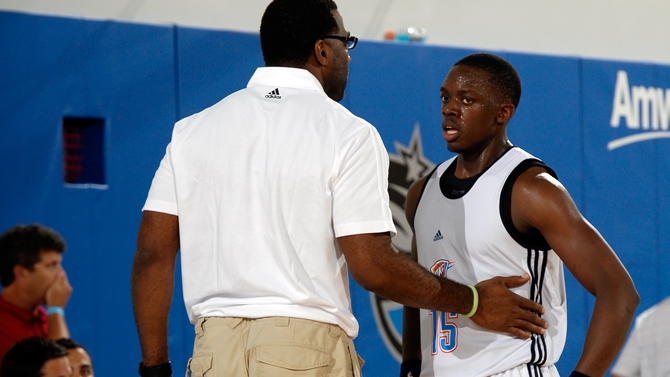
After the draft, the focus turned to the Orlando Summer League, where the Thunder were participating with 7 other NBA teams. As I wrote previously, the Summer League is full of good young players, Fringers, and Dreamers. Some of the players are already guaranteed a spot on an NBA roster and just want to mix in some team-oriented scrimmages and practices during the offseason. Most of the players though, are clawing and scratching for an opportunity to get onto an NBA roster. The Thunder’s roster consisted of 4 guys that, barring a trade, will be on the Thunder’s opening day roster (Perry Jones III, Reggie Jackson, Lazar Hayward, and Cole Aldrich). The rest of the players were probably not going to make it onto the Thunder’s roster, but could make an impression on another team depending on how they played.
The Thunder finished the Orlando Summer League 3-2. Reggie Jackson played like the most seasoned guy on the team controlling the tempo of the offense and attacking the basket at will. He even gave 2012 NBA Dunk champ Jeremy Evans a taste of his own medicine. Lazar Hayward showed why he’ll be at the end of an NBA bench for the next couple of years. He does a lot of things good, but nothing great. Cole Aldrich’s play was mediocre, at best. For a player that is looking to step up and be the back up center, his lack of improvement was a bit alarming. But, I would ask people to please step off the ledge when it comes to Aldrich’s development. Summer league games are made for wing players. They are glorified street games with refs and NBA assistant coaches on the sidelines. Aldrich will be asked to defend the paint, set picks, and put up a couple hook shots in the regular season. He will be fine. Perry Jones III suffered a sprained ankle in the 2nd half of the 2nd game, but not before impressing with his array of inside/outside skills. He will be in the Thunder’s regular rotation, if not in the 2nd half of this season, then definitely in the 2013-14 season. Other notables were forward Latavious Williams, who needs to be on an NBA roster somewhere, and Garrett Temple, whose play was almost veteran-like.
Off-season Moves
The Thunder has never been a big player in free-agency in their time in Oklahoma City. But in reality, they’ve never had to be a big player. Their main focus has always been on player development. When you have players like Kevin Durant, Russell Westbrook, James Harden, and Serge Ibaka, that’s what you put most of your focus on. That came to fruition in the last two seasons with consecutive trips to the Western Conference Finals and a trip to the NBA Finals this past season. The Thunder had 3 players that were coming up on free agency and all of them were veterans. Nazr Mohammed, Derek Fisher, and Royal Ivey could have all been signed to cheap veteran deals. But due to their years of employment in the league, even their minimum salaries would have been upwards of $1.5 million. The Thunder chose instead to let those vets walk, and focus on cheaper, younger alternatives. With Perry Jones III signing his rookie contract, that left 2 more spots on the roster.
The Thunder signed much maligned center Hasheem Thabeet to a 2-year veteran minimum contract. Now the difference between Thabeet’s veteran minimum deal and any of the other 3 Thunder players that were up for an extension, is that Thabeet has only been in the league for 3 seasons. For the final roster spot, the Thunder signed undrafted free agent Hollis Thompson from Georgetown to a 3 year contract. Thompson is a sharp-shooter in the Thunder mold (tall and long) that could be a cheap replacement for Daequan Cook in upcoming seasons.
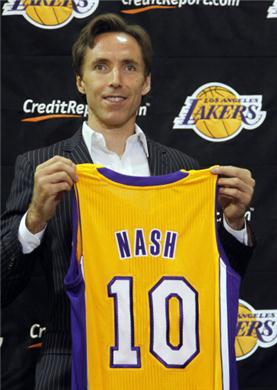
The two signings sent Thunder nation into a tizzy, and not for good reasons. Most were questioning the “lackluster” moves by the team, while the team that beat us in the Finals picked up former All-Stars Ray Allen and Rashard Lewis, and one of our biggest threats in the West, the Lakers, picked up a former 2-time MVP (Steve Nash) in their biggest position of weakness (point guard) without giving up a single player. The thinking was that the curse of the small market team was starting to take hold of the Thunder. That the ideology that small market teams can’t attract free agents and can’t spend money like the big boys was starting to rear its ugly head.
I, for one, completely disagree with that thinking. While it would be nice to sign former All-Stars ad-nauseam every offseason, the reality is that that would be bad business in this new NBA. The goal is to try and keep cost down while maintaining a competitive team. If your team does spend into the luxury tax territory, it better be winning. The Thunder have the right components in place to continue winning. The moves they made this offseason were made to keep those components in place. When you start talking about the luxury tax, every dollar counts. And if the Thunder are truly looking to keep both James Harden and Serge Ibaka on the same team as Durant and Westbrook, they are going to have to continue making these cost effective moves. Both Harden and Ibaka will demand deals that get them at least $10+ million per season. And, rightfully so. We’ll be in the luxury tax no matter what, if we keep these 4 players. The payments get more feasible, though, if you are competing for and winning championships.
Another thing that these signings do is maintain the flexibility that Presti loves. These signings not only have low cost-high reward potential, but they are also short term deals. That way, the team isn’t saddled with long-term contracts if the player, in question, either gets injured or doesn’t produce. Also, if someone better comes along, you could cut your losses with the player and attempt to obtain the better option. Cap flexibility is a commodity in the NBA, and Presti is one of the best at maintaining it.
Team USA
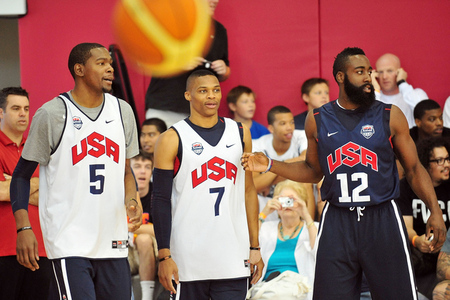
As if this offseason hasn’t been crazy enough, you have Team USA preparing for the Olympics in London. Not only that, but the Thunder has 4 representatives in the Olympics (Kevin Durant, Russell Westbrook, and James Harden for Team USA, and Serge Ibaka for Spain). Durant and Westbrook were near locks to make the team, but Harden was actually a surprise addition after players like Dwayne Wade and Derrick Rose bowed out because of injury. The team torched the Dominican Republic and eeked out a victory against a tough Brazil squad in the US leg of pre-tournament games. After this, it’s across the pond for a couple friendlies and then the real thing. Durant has a possibility of leading the team in scoring, while Westbrook will be the defensive pitbull/offensive sparkplug off the bench. Harden will probably play a role similar to what he does with the Thunder, but to a smaller degree.
As a fan of the game, I love this. Before NBA-TV, the offseason was usually a time to hear about a trade or two, and wait for football season to start. So, even though, this has been a whirlwind offseason, I still appreciate it. When this offseason gets too crazy, I always hark back to the 2011 offseason. Oh, you don’t remember the 2011 offseason? Oh, thats right, because there wasn’t an offseason that year.
In remembering these past 2 weeks, and watching the first 6 minutes of the first quarter in the Phoenix game, I’m reminded that, even though the Oklahoma City Thunder are athletically superior to most teams, their defense will be the tell-tale sign whether they reach glorious heights this postseason. A lot of the defensive breakdowns they had last season, are back again this season. The cast of characters is the same, so the fact that improvements have not been made, is really worrisome for their future postseason success.
Two seasons ago, when the Thunder had Ron Adams as an assistant coach, they were near the top of the league in defensive efficiency and used that to propel them to the postseason for the first team since moving to Oklahoma City. Since Adam’s departure after that postseason, there has been a lack of defensive focus that is being masked and hidden by the team’s improved offensive efficiency. When the team struggles offensively, this lack of defensive focus can have adverse effects on the Thunder’s ability to win, especially in the playoffs.
The thing about defensive breakdowns is that they are usually a combination of several defensive breakdowns in one series. It’s not just one play in a possession that causes this. It’s usually a chain reaction of defensive lapses. The first thing the Thunder struggle with is their pick-n-roll defense. The Thunder guards, Russell Westbrook, in particular, have a tendency to go over the pick, instead of fighting through it to stay in front of their man. The problem with this is if the big man doesn’t hedge over a bit, the opposing guard just blows right by them and past their primary defender.
It’s a play like this where you have to know your opponent’s tendencies. If the scenario is guarding a slower guard (i.e. Jason Kidd or Mike Conley), then the Thunder guard can go over the screen as there is no threat of a blow-by. The only threat is if the guard is a competent 3-point shooter. The big man in this situation has to know who he is guarding and decide whether to hedge or stay with his man. In this case, if we are talking about Dirk Nowitzki or Zach Randolph, then it would probably be best for the defending big man to stay on his man.
If the situation is changed to a speedier guard, such as Ty Lawson or Tony Parker, then the big will have to hedge to allow the defending guard a chance to stay in front of his man. The worst thing that can happen in this situation is a switch, where the big is guarding a speedy guard, and the defending guard is on the offensive big. This opens up a ton of options for the offense and puts a lot of pressure on the defense.
The primary goal of the pick-n-roll is to allow movement towards the rim. But, against the Thunder, this is also achieved through dribble penetration. When he was drafted out of UCLA, Russell Westbrook was advertised as a defensive guard, having just won Pac-10 defensive player of the year. But what worked in college (gambling on steals, using other-worldly athleticism to pressure opponents) hasn’t worked quite as well in the NBA where the world’s best basketball players play. A lot of what makes defense work is where you are positioned. If you are not in the correct defensive position, an NBA player will blow by you in a heartbeat.
Where Thabo Sefolosha is more of a technical defender, using his length to make the opposition adjust their play, Westbrook is more an instinctual defender, always trying to go after the steal. But don’t mistake steals for good defense. When you constantly gamble for steals, you put pressure on the rest of the defense to play 4 on 5 defensively. Eventually, the open man will be located, and its usually on the 3-point line or for an easy bucket.
This, then leads to the next defensive issue for the Thunder, which is closing out shooters. After the acquisition of Kendrick Perkins and the insertion of Serge Ibaka into the starting lineup last season, the Thunder went from squishy soft interior presence to hardcore interior presence. One would surmise, with that kind of support in the interior (to also include Nick Collison and Nazr Mohammed), the Thunder wings would trust their bigs more and not sink in every time the ball gets into the paint. Instead, it’s become commonplace for the entire defense to sag into the paint when a breach occurs which leads to wide open three point shots. Teams like San Antonio and Dallas feast on this and always give the Thunder problems.
Once the defense has been breached and the ball is in the paint, then the advantage goes to the offense. When big men have to move around, it takes them out of their comfort zone. Our big men like to battle until the shot goes up and then box out for a rebound. But if ball is penetrated into the paint, then the bigs have to move around to defend the paint. Even with Ibaka leading the league in blocked shots, this still puts the defense at a disadvantage. If Ibaka leaves his man and whiffs on a blocked shot attempt, then his man is in position for the offensive rebound and put back. Much like steals, blocked shot don’t automatically equate to good defense. But if you are going to have Ibaka play free safety in the paint, then KD needs to slide down on defense and help out on the boards. While it may seem like this has been happening, as evidenced by Durant averaging a career high 7.9 rebounds per game, it also needs to be taken into account that the Thunder have played a lot more small ball with Durant at the 4 this season.
The most important issue with the Thunder’s lack of defensive intensity is their will. A lot of their deficiencies can be overcome by focusing more on the defensive end and working smarter. Ron Adams may have been a great defensive strategist. But even more important was that he held the players accountable for their actions on the defensive end. Once he left, there was a general sense of apathy concerning smart defensive basketball. The Thunder were content with just being good enough defensively and letting their athleticism dictate their defensive schemes. This is especially evident in the 4th quarter of close games. When the Thunder are focused, they can play great defensively and use that close out games.
It’s not all bad though. Due to their athleticism, length, and youth, the Thunder are one of the better teams at defending the fast break. They are constantly stifling transition opportunities for the opposition and cause a good number of turnovers defending the fast break. As we saw in the 4 game stretch from March 25th thru April 1st, where the Thunder played the Heat, Trailblazers, Lakers, and Bulls, the Thunder can put together a string of great defensive games. The question becomes, will that translate to the playoffs?
Recently, I had the opportunity to sit down and interview the great James Harden’s Beard. Needless to say, it was a life changing event. After the interview, everything has became so much more clearer to me. Colors are brighter. Sounds are crisper. Smells are more odorous. And I’ve added 6 inches to my vertical. So without further ado, I bid you the interview.
(Pre-interview)
Me: Let me start by saying it is a pleasure and an honor to be in your presence. This interview could be a career changer for me.
Beard: This won’t just be a career changer, my friend. It will be life-altering. Many people have dropped everything they were doing, and have decided to follow me. I like to call them my Beard-sciples. And there are definitely more than 12.
Me: Wow, so would you say you have a cult following?
Beard: It’s not a following. It’s a way of life. Getting your Beard on allows to see things in a way that you’ve never seen them before. My Beard-sciples break their lives up into 2 parts: BB and AB. Before Beard and After Beard. There is no in-between.
Me: Interesting. Well, let’s go ahead and get this started.
(Interview)
Me: Hello, I’m Alex Roig of www.nowthatsthunderbasketball.wordpress.com and www.HoopsTalkNation.com , and I have the distinct honor of interviewing one of the greatest entities of our time. The Dalai Lama once said “When I seek peace, I always look for my inner Beard.” The President once sent the Beard to Russia to negotiate the release of 2 captured American reporters. Needless to say, the Cold War ended when he was done with his trip.
First off, welcome and thank you for this opportunity. As revered and well-known as you are, you’re also a bit of a mystery. You’re known by many names, but what do you like to be called?
Beard: Well, my creator named me Beardfjelfioeualkjfdlskjfoisdjlfksdjsnuffalufagousgarciaortizrodriguezmikeandmikeinthemorning. But the “fjelfioeualkjfdlskjfoisdjlfksdjsnuffalufagousgarciaortizrodriguezmikeandmikeinthemorning” is silent. In fact, I joke with Serge (Ibaka) all the time that my name is actually longer than his real name and I have no spaces. The first time I said it, he got mad and gave me this look.
Feeling threatened, I put him in the cobra clutch and subdued him. We have since become great friends and, as Mike Dunleavy can attest, I have passed the secrets of the cobra clutch on to him.
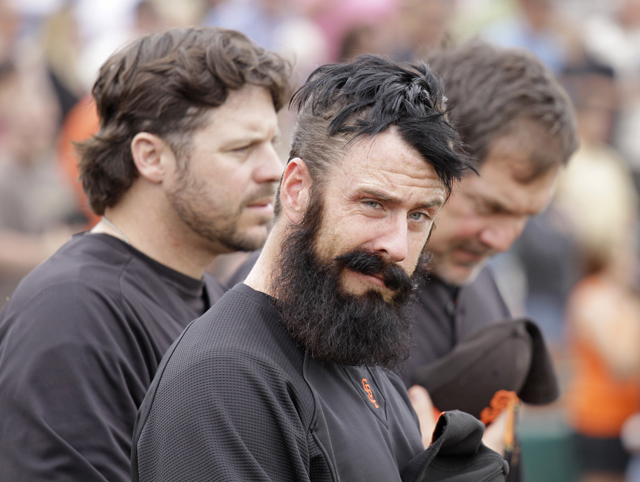
I’m also known as James Harden’s Beard, The Beard, Beard, Bearded One, Jeff Bearden, The Great JHB, The Most Interesting Beard in the World, Brian Wilson’s Nemesis, Brett Keisel’s Darker Brother, Rick Ross’s Homey, and Bob. But, I prefer to go just by Beard.
Me: Interesting. So, one of your aliases is James Harden’s Beard. Describe your relationship with Mr. Harden.
Beard: Well, it’s a symbiotic relationship. Animals in the wild will sometimes form alliances with other different types of animals that benefit both parties. That’s how our relationship works. He’s my vehicle and my protection. He carries me and I carry the message. In return, I give him powers beyond belief. As I grow bigger, his skills become more diverse and more immense. He’s gone from 2nd Team All-Rookie, to possible 6th Man of the Year this season, to probable future All Star selection. Can you imagine when I reach the floor?
Me: How did you guys come together?
Beard: I’ve always had James. Many people think I grew out of him. It is quite the opposite in fact. I allowed James to manifest himself and become a man. He didn’t always have the beard, you know.
When he was mature enough to handle the responsibility, I appeared. And I’ve been growing ever since.
Me: It seems like a lot of this is based on James’s maturity. If he ever digresses, will you move onto another subject?
Beard: It all depends. There’s a judgment period after what we call, ‘the great betrayal.’ It usually involves the person wanting to cut us off. If that happens, we then judge the person and see if we want to stay with that subject or not. It all depends on what James does if he ever commits that betrayal. We give our subjects free will to do as they please.
Me: How many of you are there?
Beard: That question is so subjective. How many of you are there out there? (Me: Just one) But there are over 6 billion people out there in the world. It’s all relative. There’s only one James Harden’s Beard. But there are plenty of beards out there.
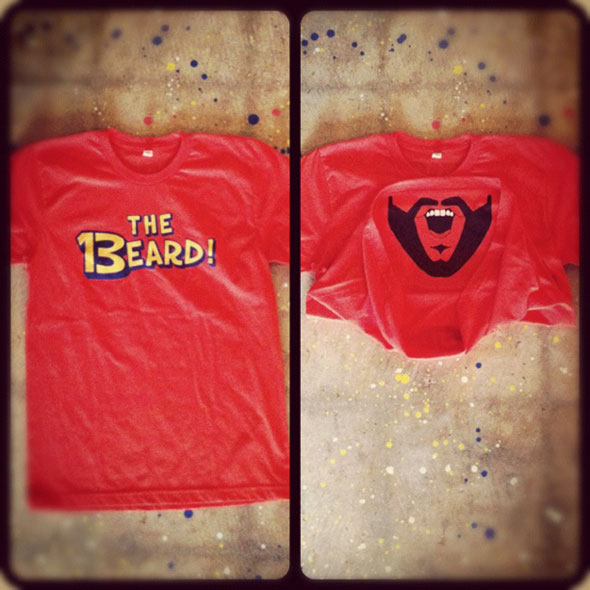
Me: What are your feelings towards people making shirts based on your likeness and people wearing fake beards trying to imitate you?
Beard: They say imitation is greatest form of flattery. I don’t fault or look down on those people. Unlike Charles Barkley, I want to be a role model. There’s a message I’m trying to spread and silence will get you nowhere. The more free advertisement I get, the better.
Me: Is there anyone in the NBA community that you have a kinship with?
Beard: Well, me and Baron Davis’s Beard are tight. Baron even touched me one time. And it may surprise you, but me and Chris Kaman’s Beard work out often. That crazy wannabe German.
The competition for the Thunder’s third banana is in full swing between James Harden and Serge Ibaka. Harden provides on the offensive end what Ibaka provides on the defensive end. What I have begun to notice, though, is that teams, especially playoff teams, are starting to aggressively scout James Harden and his tendencies. Serge Ibaka is still a wild card, in that his untapped potential lends an air mystery surrounding how to guard him. The way Ibaka played at the beginning of the season is completely different from the way he is playing now. Eventually, Serge’s evolution as a player will plateau and teams will have a checklist on how to guard Ibaka. But for right now, the man receiving the opposing team’s attention on the defensive end is the Bearded One.
When teams play the Oklahoma City Thunder, they have an idea of how to counter Kevin Durant and Russell Westbrook. They either have a physical defender for Durant or they hope that he has an off-night in the FG department. Regarding Westbrook, they either play him with a bigger player (a la Lebron James or Kobe Bryant), force him into the heart of the defense, or hope he has one of those high turnover, low FG percentage nights. Either way, it’s a classic case of pick your poison. But with so much of the offense coming from those two players alone, many teams are content with letting them get their numbers, and instead focusing their defensive attention on the rest of the players, especially James Harden.
Great games by Durant and Westbrook usually net around 55 – 65 points. If you maintain Harden and shut down his attack with the 2nd unit, you can probably beat the Thunder with 95 points. Using that wisdom, teams are starting to focus a lot of their defensive attention on Harden. When the second unit is in, the Thunder usually runs the same 3 or 4 sets. But their favorite, by far, is the Nick Collison/James Harden pick and roll on the 3-point wing. One of 4 things happens on this play:
Nick completely screens the defenders and Harden backs up for an uncontested 3-pointer.
Nick screens the defender just enough for Harden to split the double team and use his patented Euro-step to get into the lane.
The two defenders pays so much attention to Harden that it leaves Collison either open for a midrange jumper or a roll to the basket
The defenders switch creating a mismatch that either Harden or Collison can exploit.
This James Harden mix shows all the ways that the Harden/Collison pick and roll works:
With about a season and half worth of film on Harden and Collison, good teams are starting to do a couple things to stymie this effective offensive attack. First off, they are putting their hands up in the passing lanes. While Harden is an effective passer, he has a tendency to be predictable and, in essence, choreograph his no-look passes. The second thing that defenses are doing is closing up the lane between the two defenders in the pick and roll. This negates the ability for Harden to split the double team and get into the lane. This was very evident in the Heat game, when the 8 – 0 Heat run in the 4th quarter was spearheaded by two consecutive turnovers by Harden in this pick and roll scenario. Great defensive teams will choose Collison to beat them offensively, instead of Harden.
Harden has been the key to OKC’s offensive efficiency. Durant and Westbrook are going to get theirs. When you have the 2nd and 5th leading scorers in the league, they will find ways to put the ball through the basket. When Harden is allowed to be effective, he adds an entirely different dimension to the Thunder offense that makes the defense feel like the attack is coming in continuous waves. When he protects the ball and manages the second team, the team usually wins. In their 12 losses, Harden is averaging 3.5 turnovers per game. In the wins in which he has played, he’s averaging just under 2 turnovers per game (1.9).
The predictability of Harden’s offense has allowed teams to start making defensive game plans against Harden. While the increase in turnovers over the past 10 games (3.4, as compared to 2.0 in the first 39 games) can be attributed to an increase in usage and minutes, there’s no denying that an efficient Harden is the key to the Thunder advancement this season and beyond.
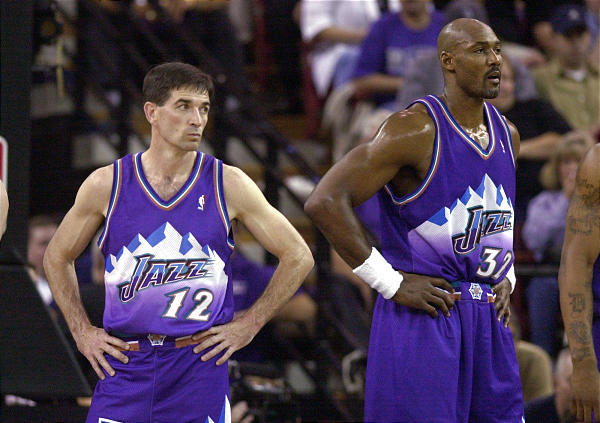
Ask any great player who has retired having never won a championship what they would’ve done to get one. Anything short of selling their first born or their soul would probably be the collective answer. But, realistically, would they have traded their best friend on the team to get that final piece? Would they have signed that one questionable knucklehead if it meant getting that title? The answer, each and every time, will probably be yes. The window of opportunity to win a championship is so small, that when that opportunity knocks, it’s best not to hesitate. Can you imagine what Charles Barkley would have given to get a ring? What about Karl Malone? John Stockton? Patrick Ewing?
Fans tend to think if their team has 2 young superstars, they will contend for the next decade. Ask Portland fans how that worked out for them. The Oklahoma City Thunder have one of the best young cores in the league. Kevin Durant, Russell Westbrook, James Harden, and Serge Ibaka are all under the age of 24 and are all primed to see action in future All Star games. But what would have happened if the point guard on the team that was recovering from ACL surgery were Russell Westbrook, instead of Eric Maynor?
That injury to Maynor is what thrust rookie point guard Reggie Jackson into prime action for a title contending team. Before we get into what Jackson has done since he’s been pushed into the rotation as the main back-up point guard, let’s see what he was supposed to be. As the 24th pick in the draft, a player is not expected to be an instant contributor. If a team is picking that late, it usually means that they have a good record and made it into the playoffs. While they may be needing an impact player, they don’t expect to acquire one this late in the draft. Reggie Jackson was supposed to get his feet wet this year. He was expected to learn the speed and nuances of the game, develop a niche, and possibly spend some time in Tulsa with the Thunder’s D-League team. Instead, with the injury to Maynor, he was expected to manage a bench unit that was one of the best in the league. For those of you with any military experience, this is the equivalent of a private being put in charge a platoon.
Jackson has played the way a rookie in his position would. Good plays sandwiched between mental errors. One of the hardest things to do as a rookie is to play the game while you are thinking. Young players tend to rely exclusively on instincts and athleticism. But if they start to think too much, it begins to muddle their athleticism. This is currently what is happening withJackson. He wanting to play like a traditional point guard, but his game is more geared towards being a combo guard. Teams are starting to trap him more and, in a way, make him think more. This leads to one of two things with Jackson: either a turnover or Jackson trying to neuter himself on the court, by giving the ball up to a teammate as quickly as possible.
And don’t get me wrong; I’m not dogging the kid. He’s been put in a situation that he shouldn’t have been facing for at least another season. When Jackson does make a play, all the potential that Presti saw in him gets put on full display. The athleticism, the fearlessness, the comic-book like wingspan, the defensive potential. But he never has gotten a chance to ease into learning how to play in the league. Just imagine getting behind the wheel for the first time, and then getting your license the next day. You would eventually learn how to drive, but you may get into a couple of fender benders along the way.
This is why the possible signing of newly released Derek Fisher is so important. What Fisher lacks in athleticism, he makes up for in experience and veteran savvy. The signing would not be a chemistry shaker, as Fisher has always been regarded as a great locker room guy. It’s a move that just makes sense. He would slide into the back-up point guard role when needed, and would be the experienced hand that would guide the team when necessary. It’s moves like this that win championships. You don’t just plug up holes in sinking ships. You do that in strong ships too. Good back-up point guard play is a necessity on this team. Fisher provides that. Make the move Presti. Go Thunder!
Business transactions are always about needs versus assets. And that’s what trades in professional sports are. A GM will assess their team and see what is needed and what can be given up. Sam Presti, the GM for the Oklahoma City Thunder, has made his bread and butter in the previous 5 seasons by taking advantage of other teams’ needs for financial relief. It’s how he obtained Thabo Sefolosha, Eric Maynor, Kendrick Perkins, Daequan Cook, and the draft pick that became Serge Ibaka. He did this by meticulously managing his cap space and not making hasty free agent/trade decisions.
Now that the Thunder are done with the rebuilding process, and are currently in the championship building phase of their development, some of the things that Presti used to swing advantageous deals are no longer available. The Thunder are currently $900K over the salary cap, meaning that they can’t absorb contracts, and must instead match salaries up to 125%. As ironic as it sounds, a negative of being frugal and careful with your spending, is that the Thunder are not saddled with any bad contract, which can become very advantageous in their expiring years.
Needs
With the loss of Eric Maynor earlier in the season, the Thunder lost one of the best game managers (backup or starting) in the game. He was the ultimate yin to Russell Westbrook’s yang, and provided the Thunder with a stabilizing force at the point guard position whenever necessary. Now, in his place, is a rookie, Reggie Jackson, who has looked every bit the part of a rookie. His play, while improving, has been inconsistent, as he is still trying to find his comfort zone on this championship caliber team. Kind of a tall order for someone who wasn’t expected to be thrust into such an important position at this moment in his young career. Because of Jackson’s inconsistent play, a quality backup point guard has suddenly become a need for the Thunder.
The thing about a wing oriented team is that if the shots aren’t falling and the “box and 1” defense is working, it makes it nearly impossible to consistently score points. The Thunder are lucky to have such dynamic scorers like Kevin Durant, James Harden, and Westbrook. These players have made their careers by consistently hitting shots with hands in their faces. But in basketball, the closer you are to the basket, the more efficient and easier your scoring becomes. And the Thunder have never had a low post scoring threat. It’s one of those things that makes scoring in the playoffs a whole lot easier.
Realistic Assets
Nazr Mohammed – $3.75 Million – Veteran big man that could fit in on a contender that needs size.
Cole Aldrich – $2.29 Million – 2nd year big man that has shown improvement and could be a good rotational big, if not for the Thunder, than for another team.
Thabo Sefolosha – $3.3 Million – Veteran wing who is still one of the better wing defenders in the league.
Royal Ivey – $1.2 Million – Veteran guard who provides good energy off the bench.
Charlotte’s 2013 2nd round pick (obtained in the Byron Mullens trade) – Charlotte probably isn’t going to get much better next season and that pick will probably be in the 30-35 range, where a good player can still be picked up.
OKC’s 2012 1st round pick – Will probably be in the 25 – 30 range of the first round. Late in the first, but still useful for stashing an overseas pick or rebuilding.
Possible trade partners (based on need and cost of transaction):
Boston – Keyon Dooling ($2.25 M) and Marquis Daniels ($854 K) for Nazr Mohammed. Boston is in desperate need for big men after the losses of Jeff Green, Jermaine O’Neal, and Chris Wilcox. Keyon would provide a veteran point guard that has played in the playoffs before. Daniels would more than likely be cut.
New Jersey – Sundiata Gaines ($854 K) for Charlottes 2013 2nd round pick – Gaines has quietly put up a good season as a backup point guard for the New Jersey Nets.
New York – Mike Bibby ($854 K) for OKC’s 2013 2nd round pick – With the emergence of Jeremy Lin and the return of Baron Davis from injury, Mike Bibby is no longer necessary in New York.
Cleveland – Ramon Sessions ($4.3 M) for Nazr Mohammed and Charlotte’s 2013 2nd round pick – Compared to other teams’ offers, this is probably a “No” for Cleveland, but it’s still worth a try.
Milwaukee – Andrew Bogut ($12 M) for Kendrick Perkins, Daequan Cook, and OKC’s 2012 1st round pick – Bogut is just as good defensively as Perkins, while providing a lot more offense, if necessary. The Bucks will probably want either Harden or Serge Ibaka, which would make this a deal breaker for the Thunder.
New Orleans – Greivis Vasquez ($1.11 M) for Lazar Hayward and Charlotte’s 2013 2nd round pick – New Orleans is in full rebuild mode and looking to acquire quality draft picks. A very high 2nd round pick would do just that. The question becomes how does New Orleans view Vasquez?
Charlotte – DJ Augustine ($3.2 M) for Nazr Mohammed and Lazar Hayward – I don’t understand Charlotte’s desire to trade Augustine, as Kemba Walker is still a rookie and is more undersized SG than starting PG at this point in his career. But, if they want to, we’ll participate if the cost is not too much.
Free Agent – Anthony Carter (formerly of the Toronto Raptors) was recently waived to give him the opportunity to sign with a contender. Using our Disabled Player Exception from the Maynor injury, which comes out to $758,340, we could sign Carter for the rest of the season.
And just for fun:
Orlando – Dwight Howard ($18.1 M) and Ish Smith ($762 K) for Kendrick Perkins, James Harden, Eric Maynor, Cole Aldrich, OKC’s 2012 1st round pick, and Charlotte’s 2013 2nd round pick. I don’t know if Orlando gets a better infusion of young talent and draft picks from any other team.
What does the team look like on Thursday at 3:01 PM?
I think we stay pat. Making reactionary moves is not Presti’s style. He knows we still have Maynor next season and Jackson will have gained an invaluble amount of experience in his rookie season. A smaller scale signing, like Anthony Carter will be possible, though.
CLUTCH. A word that can define careers in the NBA, especially if you are labeled a superstar. A word that can make you the most feared player on the court for the opponent, or the biggest liability for your team. It’s a term that has no gray area. Either you are clutch or you are not. When Lebron James passed the ball to Udonis Haslem for the game-winning shot against the Utah Jazz a week ago, we didn’t anticipate that Haslem would make that shot. Not that Haslem is a horrible player. He usually sinks those mid-range jumpers. But he’s not a superstar. The guy that passed him the ball is a superstar and it has been his modus operandi for the past 2 seasons to shrink in those high pressure situations during those waning seconds of close games. The words “not clutch” have been following James around for the past few seasons like the stench when you unknowingly step in dog poop. And yet, his team has succeeded to the point where they reached the NBA Finals last season, and are one of the top 3 teams in the league this season. But that loss in the Finals, which kept the Heat from starting their string of winning, “not 5, not 6, not 7…” titles, can be partially blamed on James’s lack of “clutchness”.
It’s easy to see how not being clutch can be a detrimental to team success. But can being too clutch also be a detriment? Now, mind you, I understand how oxymoronic that sounds. How can being able to perform in high pressure situations be a detriment to a team? If a team constantly performs when all the chips are on the table, then that team should be in pretty good shape. Case in point: the Oklahoma City Thunder and their last 5 games.
As Steven Tyler of Aerosmith would say, the Thunder are literally “living on the edge” in the last 5 games. Its one of those runs where the team could easily be 0 – 5, just like it could be 5 – 0. Instead, the Thunder find themselves at 4 – 1 since the All Star Break and building on their lead at the top of the Western Conference. Here’s a look at the key 2nd halves in each of those games and how the Core 4 (Kevin Durant, Russell Westbrook, James Harden, and Serge Ibaka) performed:
Opponent
Largest Deficit/Quarter/Score at the time of deficit
Durant’s 4th qtr Stat Line
Westbrook’s 4th qtr Stat Line
Harden’s 4th qtr Stat Line
Ibaka’s 4th qtr Stat Line
@ Philly
8 / 4th /66 – 74
10 pts / 3 rebs / 1 ast /1 stl
2 pts / 2 rebs /1 ast
7 pts / 3 rebs
2 pts / 2 rebs /1 blk /1 stl
@ Orlando
11 / 4th / 72 – 83
18 pts / 5 rebs
4 pts / 2 asts
8 pts / 3 rebs / 2 asts
Donuts
@ Atlanta (L)
8 / 4th /79 – 87
6 pts / 2 rebs
2 pts / 1 ast
3 pts / 2 rebs /1 ast
1 reb / 1 blk
Dallas
7 / 3rd / 45 – 52
6 pts /2 rebs
5 pts / 2 rebs
14 pts / 2 asts
2 pts / 2 rebs / 1 blk
Phoenix(W)
16 / 3rd / 68 – 84
12 pts / 2 rebs / 1 asts / 2 stls
9 pts / 1 ast
8 pts / 1 reb / 1 ast
2 pts / 8 rebs /1 blk
While this style of basketball makes for great fun as a fan, especially if you are winning most of the time, it also paints a conflicted picture in the Thunder’s outlook for the postseason. Two trains of thoughts come into play when a team is winning in this fashion. The first is that the team is learning how to win close games and is showing the ability to come back from 2nd half deficits. The second is that, come playoff time, constantly falling behind in the first half to elite teams will be the coup de grace to this year’s championship aspirations. Which train of thought is correct?
The answer, as usual, lies somewhere in the middle. As a young team, it’s necessary to build the fortitude to be able to come from behind and win. If you’ve never experienced having to recover from a sizeable deficit, then you may choke if the situation arises in the playoffs. But you also don’t want to make it a habit of constantly falling behind your opponents in the first half. It’s almost like the team goes into a mode where they say, “let’s keep the score somewhere around 10 entering the 4th quarter and we have a chance.” While it’s a luxury to have not one, but two great clutch players (Durant and Westbrook), there can come a time where the natural effect of statistics takes hold and they both have a bad second half. You just hope it isn’t in an elimination game in the playoffs
Any time I hear the word halftime, this is the first thing I think about.
We’ve reached the half-way point in this strike-shortened season. Half time, baby! Everyone to the locker room, or as it’s called in the NBA, All-Star Weekend. Coming into the season, I didn’t know what to expect. We were bringing back our entire 10 man rotation, plus a couple young guys that had potential. But with a very short training camp, no summer league, and only 2 preseason games against the same team, it was a little difficult to gauge how the team would come out the gates. Conventional wisdom would say that in a shortened season, a team that experienced hardly any change would benefit the most early in the season.
That thought has not proven to be incorrect when it comes to the Oklahoma City Thunder. They are currently tied for the best record in the league at 25 – 7 and have a 2 game lead in the hyper-competitive Western Conference. If natural progression is the law of the land, then the Thunder are right where they are supposed to be. After finishing 4th in the conference last season and making it all the way to the Western Conference Finals, the Thunder are poised to take the next step in their natural progression.
Individual Grades (alphabetical order): I take into account what was expected of the player before the season started and how that player has fared in this first half of the season.
After spending last season shuffling between the Thunder and the Tulsa 66ers of the D-League, Aldrich was expected to continue developing into a rotational big man. When Nazr Mohammed was re-signed before the beginning of the lockout, it was an indication that the organization wanted Cole to continue to develop. In the 12 games that he has gotten in, Cole has shown a knack for causing havoc on the defensive end with his long wingspan and penchant for blocking or altering shots. On the offensive end, he has shown flashes of a nice post-up game (hooks, drop step, put back dunks), but has yet to fully assert himself and ask for the ball on the block consistently. He tends to be a bit over zealous on the defensive end and is prone to picking up fouls pretty quickly, especially on pump fakes. Aldrich shows great heart on the floor, though, constantly diving for loose balls. #FreeCole!
The No-Stats MVP. The ultimate glue guy. Collison was expected to continue being the first big man off the bench. A key cog that can be plugged in seamlessly if foul trouble or defensive lapses rear their ugly heads. Collison has not disappointed in his role. He is basically the same guy from last season with more of a willingness to unleash the soul crushing 12-15 foot jumper. A charge magnet, the 2nd unit gets their defensive identity from Collison. One of the smartest players in the league that is usually in the right place, at the right time (and not by coincidence). Future coach potential.
One of the wild cards coming into the season, Cook started last season in a rut that eventually led to him getting over 30 DNP-CD’s in the first half of the season. When finally given an opportunity to play, Cook became the deep threat that the Thunder had hoped for when they traded for him on draft night in 2010. Cook has continued to provide the deep threat for the Thunder this season and has also become a more integral part of the rotation, even starting 12 games in place of injured SG Thabo Sefolosha. He has improved his man on man defense and has involved himself more on the boards.
Expected Grade – C+ Mid-Term Grade – B-
Kevin Durant (Stat line: 32 GP (32 GS), 37.8 mpg, 8.2 rpg, 3.3 apg, 1.3 blks, 1.3 stls, 27.7 ppg)
A candidate for MVP coming into the season, Durant has not disappointed. While his scoring may have gone down just a tad bit, his rebounding, assists, and blocks are at career high levels. He is scoring at the most efficient rate in his career and he is starting to be relevant defensively, especially on the boards. He is learning how to get the ball in better spots and how to position himself to get better shots in crunch time. The only negative I can see in his game is the turnovers. The athletic part of Durant is starting to mesh with the cerebral part. And that is a scary reality for the rest of the league.
The glue that holds the “feuding” yin and yang that is Kevin Durant and Russell Westbrook together. We all know that the “feuding” part of that statement has proven to be false as this season has progressed. What started as an improvement over the 2nd half of the season last year morphed into calls for Harden to be the starting 2-guard as the new season began. Coach Scott Brooks kept Harden on the bench and he has turned into arguably the best 6th man in the league, providing instant offense off the bench, ala Jason Terry or Jamal Crawford. Along with being the unquestioned leader of the bench unit, he’s also in the game with the starters to close it out in most games. His playmaking ability and penchant for getting foul calls make Harden an offensive weapon to be marveled. While steadily improving defensively, he can still be had by good 2-guards, especially if quickness is a factor. Also, the home/road splits were an issue in the beginning of the season, but have normalized since then. Hopefully that doesn’t come up in the playoffs.
Expected Grade – B+ Mid-Term Grade – B+
James Harden’s Beard (Stat line: No stats can measure the greatness)
Seriously, this needed its own section. We’ve seen this thing grow from when Harden first joined the Thunder in June 2009. It started off so small and has blossomed into something so much greater. Olympic gods now bow in the presence of the Beard.
Expected Grade – A+ Mid-Term Grade – Infinity on a 4 point scale
Haywardwas obtained in a deal with the Timberwolves before the season. Hayward’s presence on the team is more as a practice player than as a regular rotation player. I believe, the bigger bodied Hayward has allowed Durant to simulate what its like to go against a stronger defender and to see what works against these types of defenders and what doesn’t. In his time on the floor,Hayward has shown to be a good transition player. He needs to be more consistent with his shot, especially from the 3-point line. Defensively, Hayward is an average defender.
Just like James Harden (and Kevin Durant and Russell Westbrook before them), Ibaka was expected to make the big 3rd year leap that we’ve seen from developing Thunder players. At the beginning of the season though, Ibaka seemed a bit out of sync. He wasn’t as aggressive and was settling for jumpers, instead of trying to do his damage from the inside. But over the last month, we’ve seen the Ibaka that we love and that opposing teams hate. In the last 3 weeks, we’ve seen 3 double digit block games, a man’s triple double (points, boards, blocks), and a disruptive defensive force not seen since the heydays of Ben Wallace. He still leaves a lot to be desired on the offensive end of the court as an inside presence. Though he sometimes leave us salivating with Olajuwon like post moves, he still prefers the 15 footer, which he is starting to hit with more consistency lately. His penchant for going for blocks usually leaves a gaping hole in the middle for offensive rebounders.
Ivey’s role on the team is that of veteran point guard. He’s a defensive minded player that probably pushes Russell Westbrook and Eric Maynor in practice. When he has received playing time, Ivey has made a couple 3 pointers and played good defense. He has recently been called to duty a lot earlier in games because of some injuries to players. His defense keeps him in games, but his lack of a true identity (not really a point guard, but not very consistent with his jumper) can be a detriment if the team starts to struggle offensively.
My expectation for the rookie was that he would split time between the Thunder and the Tulsa 66ers of the D-League, gaining valuable experience against lesser competition in preparation to possibly be a regular rotation player next season. But with the injury to Maynor, Jackson was thrust into the rotation as the primary back up point guard. The results have been par for the course for a late first round rookie point guard. Some flashes of decent play sandwiched between lessons from the school of hard knocks. They say that experience is the best teacher, so hopefully this is a blessing in disguise for the future. But in the present, Reggie has shown that he has the athletic ability to play in this league, but is still trying to figure out the nuances of the point guard position. If he is on the floor with one of the three main ball handlers (Westbrook, Durant, or Harden), he immediately defers to them to run the offense. Also, defenses have learned to pressure the rookie into making bad decisions. With all that said, though, I like what I see in Jackson and believe this experience will help him immensely in the future.
As a third year player, I fully expected Maynor to make that leap from okay player to good player. Already labeled by some to be the best back-up point guard in the league, Maynor’s steady hand at point made him the quarterback of one of the best bench units in the league. Like many players in this condensed season, Maynor’s play at the beginning was a bit careless, as he was averaging less assists and more turnovers. Nine games into the season though, Maynor suffered a torn ACL and was lost for the season. For all intents and purposes, Maynor’s recovery seems to be going ahead of schedule and he will be ready for training camp next season.
Expected Grade – B Mid-Term Grade – Inc.
Nazr Mohammed (Stat line: 31 GP (1 GS), 12.4 mpg, 3.0 rpg, 0.3 apg, 0.6 blks, 3.1 ppg)
The old man of the crew. In a room full of 20-somethings, Mohammed is the revered veteran. Mohammed’s role is that of back up center. Last season, he was invaluable as a stop gap until Kendrick Perkins came back from injury and as Perkins’s backup. There have been times this season where Mohammed has looked as spry as a spring chicken. And then there’s been blocks of game where Mohammed has literally looked like he has cement shoes on. That’s what you get with a 14 year vet. You take the good with the bad.
One of the most polarizing players on the team. Last year, Perkins was coming off major knee surgery and was slowed by bulky knee braces and the weight he put on while recovering. Vowing to come into camp more in shape, Kendrick came in 30-40 pounds lighter and shed the knee braces. But it’s been the same ol’ Perkins; a good post defender who does well against traditional centers, but gets lost if a team has an athletic and/or undersized center. Offensively, Perkins is a turnover waiting to happen. I don’t know if he lost some coordination during his recovery from surgery, but when he puts the ball on the floor, he usually loses it. When he attempts a shot, it’s usually a flat jump hook that is easily rejected. I don’t like to blast on Perkins since the Thunder’s record is so good with him in the lineup, but his biggest asset to the team is that he frees up Ibaka on the defensive end to be the NBA’s version of a roaming free safety. Another negative is the boneheaded technicals that Perkins picks up. He putting himself in a position to get suspended and miss time because of his hard-headedness.
Every year there’s that one guy that you, as a fan, attach your heart strings to. The underdog. The runt of the litter. Ever since the Thunder drafted Reid in the 2nd round of the 2010 draft, I’ve followed his career in the D-League. I was pleasantly surprised when the Thunder offered Reid the final roster spot for this season. This organization rewards “those” types of players that work hard to pursue their dream, even if everyone else has told them they have no chance. Last season it was Robert Vaden. Next season it may be Latavious Williams or Tibor Pleiss. When Reid finally got some run on the Valentine’s Day game, I was texting my brother in law in all caps. Literally, this was my text, “RYAN REID SCORED!!!!!!!!!” Honestly, in his limited game time, he has shown a good mid-range jumper and has shown the potential to be a future glue guy.
Another polarizing player on the team. While he is one of the best wing defenders in the league, his offensive inefficiencies can sometimes lead to the Thunder playing “a man down” on the offensive side of the court. The clamoring for a change in the starting line-up only got louder as last season’s playoffs pushed forward, and teams began corralling Durant and Westbrook. The thinking was that Harden, as a floor spreader, would allow Durant and Westbrook more room to operate on the offensive end. Hypothetically, this would seem like the correct way to go. But, as this season has shown, the value of a great wing defender should never be lost in the search for more efficient offense. The game is played on both ends of the court. As an added bonus, Sefolosha had shown signs of being more offensively efficient this season. He had begun to drive the ball more to the basket and was shooting the 3-pointer at a 48% clip. Not that he shot that many, but of the few that he did shoot, he was making almost half of them. I still cringe when I see him lead a fast-break, though. Unfortunately though, Sefolosha has been battling foot issues and has been limited this season and is expected to miss one more month.
Expected Grade – B- Mid-Term Grade – B+
Russell Westbrook (Stat line: 32 GP (32 GS), 4.8 rpg, 5.5 apg, 1.9 stls, 23.4 ppg)
Probably the most polarizing player on the Thunder. Last season, ironically, Westbrook’s 3rd, he went from good player to superstar. He, along with Derrick Rose, became the new standard for point guards: hybrids that could score 25 ppg and dish out 8 assists per game, while constantly breaking down a defense and doing their damage from the paint. You knew that Durant could score and that all he needed to do was refine the finer points of his game (rebounding, playmaking, etc). But you didn’t know where the learning curve would take you with Westbrook. Because of the criticism that Westbrook was receiving in last season’s playoffs and in the off-season, and the upcoming contract extension, I didn’t know what to expect from Westbrook. In the first 2 weeks of the season, it seemed like Westbrook was in the funk of all funks. His shot wasn’t falling, his assists were down, and there were rumblings of a true feud between he and Durant. Thankfully, things seemed to turn around in the middle of January (coincidentally once Russell signed his new contract) and Russell has been playing great ever since, garnering a couple Western Conference Player of the Week awards along the way. With Derrick Rose’s injury woes this season, Russell Westbrook has taken the role of premier point guard with his driving ability and consistent mid-range jumper. He still turns the ball over way too much and doesn’t always work to involve his teammates, but what I’m seeing from Russell this season is surprising because he’s still improving at a tremendous clip.
Expected Grade – A- Mid-Term Grade – A
Surprises:
It’s amazing how important a real training camp and 4+ preseason games are to players in their preparation for a season. I noticed that in many of the Thunder players’ performances. They didn’t really take off until after the 2nd week of the season, which in actuality, would be the same amount of time as training camp and preseason games in a normal regular season.
I kept hearing about how injuries would shape this season because of the condensed schedule. But I had no idea it would be this bad. The Thunder have never experienced many injuries in their 4 season in Oklahoma City. An ankle sprain here. A pulled hamstring there. But this season, we’ve seen Maynor go out with a torn ACL, Sefolosha miss significant time with foot issues, and other players miss 1-2 games with general soreness.
Looking ahead:
The schedule gets tougher from here on out. We play the Lakers 3 more times, Miami and the Clippers twice, Chicago, Philly, Dallas, and San Antonio once each, and 6 more games against division rivals. We have a 3 game East coast trip after the All-Star break and a 5 game West Coast trip close to the end of the season. Needless to say, if we stay at the top the Western Conference, we would have definitely earned it.
Possible trade targets – Since the trading deadline is on March 15, I looked a possible trade targets for the Thunder and their struggles on the bench:
One word to describe this week: FUN!!!! Yeah, we had that one hiccup in Houston, but had a nail-biter and two blowouts in the other 3 games.
Games played:
February 14th – vs. Utah
Valentine’s Day Massacre. I could only wish that we could play the Utah Jazz for every game the rest of the way. The issue with the Jazz is that they aren’t in full rebuild mode yet, but still have some good veteran players. So they have blocks of the schedule where they look good and then blocks of the schedule where they look bad.
And OKC just happen to play them twice in a block where they looked bad. All you needed to know about this game is that Kendrick Perkins had 6 assists and no turnovers. If you follow the Thunder any, you know that Perkins is a turnover machine when he gets his hands on the ball. But in this game, he channeled his inner John Stockton and went all ‘team basketball’ on the Jazz. The Core 4 (Durant, Westbrook, Ibaka, and Harden) all had yeoman-like efforts in the game and got to rest in the 4th quarter of a 111 – 85 blowout.
February 15th – @ Houston
Oh, the roller coaster that is a condensed season. One day you’re fawning over your past successes and the next you’re wondering what the hell happened. After throwing up on ourselves in the first quarter (29-13), the Thunder made a valiant effort to catch up and actually had a 3 point lead with 1:01 left in the game. But we didn’t score anymore from that point and lost the game 95-96.
Other than the horrible first quarter, two things doomed the Thunder: turnovers and Kevin Martin. The Thunder and Rockets were nearly identical in FG’s made, 3-pt FG’s made, and FT’s made. But the Thunder had 21 turnovers compared to the Rockets’ 13. When you leave that many opportunities on the table in such a close game, you’re bound to lose. Kevin Martin going off for a season-high 32 points on 10-18 shooting shows the value of Thabo Sefolosha on this team. While Thabo may not provide much offensively, it’s what he takes away from the opposing team that shows his true value to the Thunder.
February 17 – vs. Golden State
The team that takes years off my life. These two teams usually play each other close, and because of the Warrior’s style of play, they are usually high scoring affairs. After keeping the M.O. of this series with a close first quarter, the Thunder blew the lid off the game, outscoring the Dubs 64 – 41 in the 2nd and 3rd quarter. James Harden had a game high 25 points, while Kevin Durant poured in 23. Every Thunder player that was active scored on their way to a 110 – 87 victory. My heart thanks the Thunder.
February 19 – vs. Denver
The greatest regular season game I’ve ever seen live. To see 3 feats of excellence in one game was awesome. To have all 3 of those feats performed by members of the team you cheer for was great. To see it live with your kids in tow was priceless. For some reason, whenever my kids go to the game, the Thunder win in dramatic fashion. Last season was the Knicks game winner. And this season it was this game.
I don’t even know where to start. Kevin Durant’s career high 51 points. Russell Westbrook scoring 40 points and having 9 assists. Serge Ibaka getting a man’s triple double with 14 points, 15 boards, and 11 blocks. KD and Russ combining for 91 points on 35/57 FG shooting (61%), 8/12 3pt shooting (67%), and 13/15 FT shooting (87%). Or everyone not named Durant, Westbrook, or Ibaka only combining for 19 points.
That’s the beauty of this game. Every point that Westbrook and Durant poured in was necessary. There was not a cheap basket anywhere. Sometimes, when a player is trying to reach their career high, they tend to just hog the ball in order to reach that plateau. But because of our horrible transition defense and no one on our team, not named Westbrook or Durant, being able to buy a bucket, every single point from these two was needed.
As for the game, it was a one of runs. OKC patched together a 20-0 run from the 2nd to the 3rd quarter. Denver patched together a couple 12-1 runs throughout the game. No lead was safe in this one. The only difference was we had two closers and they had none. We applied the clamps in overtime and rode out to a 124 – 118 victory.
Player of the Week: Kevin Durant
Both Kevin Durant and Russell Westbrook played great this week. But Westbrook had a bit of a stinker, in terms of point guard play, in Houston (4 assists, 6 turnovers), and Durant scored a career high 51 points in last night’s game. It’s sometimes so difficult to choose between these two, but for this week, Durant beats Westbrook to the finish line by a head.
Stat line for the week: 32 pts, 8 rebounds, 2.8 assists, 1.5 steals, and 0.75 blocks per game.
3 In the Paint
I’m loving Serge Ibaka’s progression. He started off a bit slow this season, and I was beginning to wonder whether his ceiling was going to be much lower than his actual production. Silly me. Like many other players, the first 15 games of this season were being treated like the training camp, preseason, and first 2 weeks of a normal regular season. We are starting to see many players round into form and Serge Ibaka can certainly be included in this group. That 3rd year leap that happened to Durant and Westbrook, is beginning to take hold of Ibaka. He has become the defensive player of the year candidate we all expected him to become at the beginning of the season.
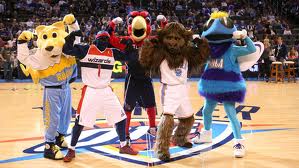
Rumble the Bison should have a birthday every game. Last season, his birthday game was the game winner versus the New York Knicks. This year it was probably the greatest regular season game I’ve ever seen. For those who aren’t familiar with this, when a mascot has a birthday, it’s a game where about 8 other mascots from other teams come and have fun with the “home” mascot. It’s a great game to bring the kids to.
The turnovers need to go down. There has been a straight forward correlation between the number of turnovers and the effects on whether it is a close game that we could potentially lose, or whether its an easy victory for us. Smart basketball usually leads to wins with this team.






















 Now That's Thunder Basketball