Tag Archives: Sam Presti

Innocence Kept: The Thunder and the Moore tornado

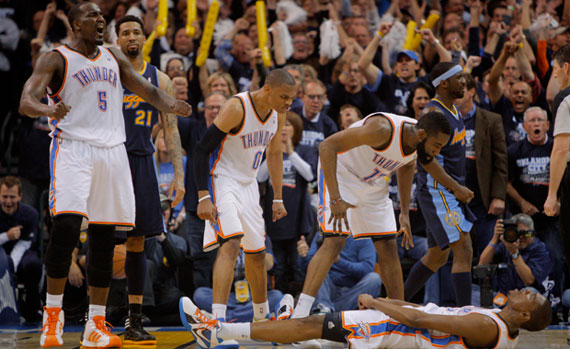
kd tornado

Sports are a strange thing. One second it’s euphoria, ecstasy, and adrenaline all in one bundle. And then the next it’s heart break and sorrow. It’s almost like a drug. And while it’s entrenched in reality, it really isn’t reality. It’s entertainment. Its young men, paid millions of dollars, to do things with spherical objects that you and I wish we could do. For most of us, the entertainment ends when the final buzzer sounds. We either pump our chest up in victory, or slump our heads in defeat. And after a couple minutes, the feeling is over. We go back to our lives and move on.

But sometimes, sports and real life become intertwined due to circumstances beyond our control. We saw that, not too long ago, in the Boston Marathon bombing. Runners and spectators, alike, sprung into action to make the best out of an extremely chaotic situation. We saw the support on the hardwood from the Boston Celtics players and the support on the diamond from the Boston Red Sox players (especially David Ortiz). From 1700 miles away, it was inspiring and heart-warming to see that kind of support from the local pro athletes.

Then, May 20th happened. We, Oklahomans, have been through this before. The Murrah building bombing in 1995. The Moore tornado in 1999. And now, this tornado. We’ve mourned the losses of those killed, mended the hurt and wounded, and have rebuilt even stronger. But, we’ve never done it as a city that houses a professional team. In the grand scheme of things, that last statement doesn’t mean a hill of beans. We would still be doing the things that make us, us. We would still be getting involved in the recovery efforts, the humanitarian aid, and the volunteering, all while maintaining that great Oklahoma spirit.

russ west instagram

We would have completely understood if the Oklahoma City Thunder players would have just tweeted their well wishes and disbelief about the disaster, donated a couple bucks here and there, and given us their support from afar. They were just starting their offseason after a disappointing post season run that included a season ending injury to one of their superstars. And the reality is that most athletes don’t live in the city where they play year round. After exit interviews, the players usually disperse to their various hometowns for their offseason. We wouldn’t have held it against them if they would’ve stayed away from the disaster zone.

There’s an understanding when it comes to the athlete/fan relationship. We, the fans, cheer the athletes on to no end, and, in return, the athletes acknowledge our fandom in their interviews and in social media. It becomes almost scripted when athletes mention their fans as being the best fans in their league or when they say that the crowd played a major role in their comeback. It’s something that the Oklahoma media, and the media, in general, loves to play up.
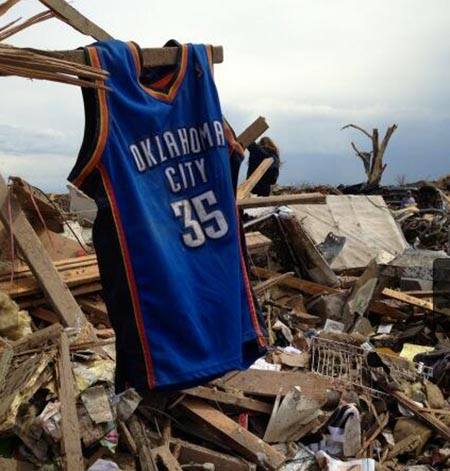
durant jersey torndao

But in our darkest hour, though, there was a bit of a role reversal. The players came out and cheered us on. As soon as the enormity of everything became apparent, Kevin Durant, Russell Westbrook, Derek Fisher, Serge Ibaka, Perry Jones III, Nick Collison, and our old friend James Harden, were tweeting and instragramming their well wishes and prayers out to us. If it would have ended there, that would have been awesome. Then, Kendrick Perkins (you know, the player whose head a lot of OKC fans want on their amnesty plate) set up a donation spot at a local OKC store. And if it would’ve ended there, it would have been great.
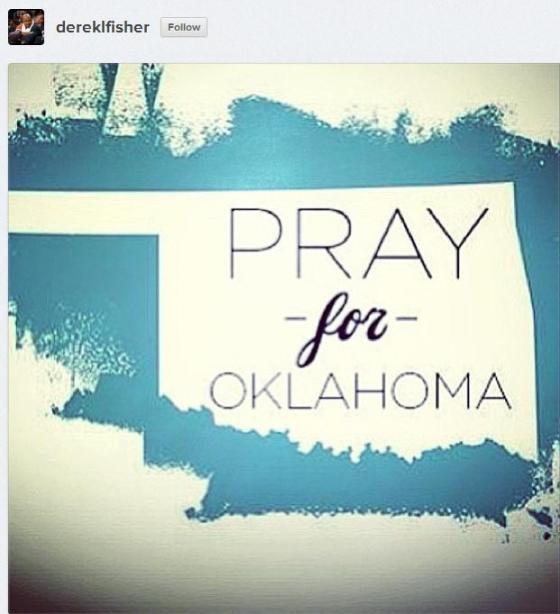
d fish insta

Then Durant stepped it up and donated $1 million dollars to the relief efforts. And Perkins donated $25K to help build future storm shelters. And Russell Westbrook, Hasheem Thabeet, DeAndre Liggins, Jeremy Lamb, and coach Scott Brooks visited OU Childrens’ Hospital to bring some rays of sunshine to children who had probably just witnessed their darkest hour. This spurred the Thunder organization and many of their corporate sponsors to donate millions of dollars in aid. If it would’ve ended there, that would have been the best.

thunder hospital

Then the guys actually started showing up in Moore and walking through the debris and rubble, lending support to those crestfallen by the tornado. You saw Kevin Durant walking around giving encouraging words to those that supported him. You saw Russell Westbrook hobbling around on crutches giving support to those that needed it, even if it was in verbal form. General manager Sam Presti walked around doing his part to help out. CoachBrooks, Thabeet, Thabo Sefolosha, and native son Daniel Orton could also be seen lending their support throughout Moore. Nike, through their association with Durant, agreed to donate a million dollars worth of merchandise to help in the healing process.

thunder tornado ii

And this is just what we’ve heard. Only the person giving actually knows what they have given. During many of the pregame videos in the past few years, the focus has always been about how the values of Oklahomans mesh with the values of the Thunder organization. Resiliency, Team, Together, Team is One, Community. I used to think those were just prompt words to make the team feel more “Okie-centric”. Words aimed at our civil subconscious to make us love the team more. But in the end, the players on the team have shown those values to be true amongst themselves and amongst the team.

thunder tornado

As a realist, I know that one day, someone on the Thunder will rip our innocence from us. Be it one of our players being charged in a criminal case or a long drawn out contract negotiation in which a superstar will want out of OKC and into a bigger market. That day will come. But for right now, these player have kept our innocence intact. These players have shown their Okie values to be true. We’ve been with them through thick and thin, and now, they have reciprocated that support in our darkest hour. In the athlete/fan relationship, that very rarely happens.

Text “REDCROSS” to 90999 for $10 donation to help tornado victims in Moore, Shawnee, and OKC

The OKC Thunder and their trade deadline moves
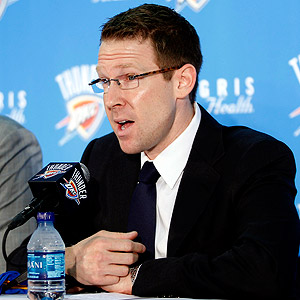
presti-sam

After so much speculation and rumor, this was just about the most anti-climactic trading deadline ever. Other than the Sacramento Kings unloading Thomas Robinson in a “scratch your head” trade to Houston, most teams played it safe and kept their assets. This is probably the first visible sign of how the new CBA will affect how teams view their assets moving forward.  The name of the game is cap space and most teams stuck with what they had instead of taking on salary and risk.

The Oklahoma City Thunder were a microcosm of the trading deadline, itself. The Thunder had one player who was a virtual lock to get traded, in Eric Maynor. The rumors were that teams were interested in Maynor as a solid back-up point guard, but were unwilling to unload a first round pick in exchange for him, which was the asking price from the Thunder. Then on Wednesday, a big rumor sprang up involving the Thunder and the Phoenix Suns. In the proposed trade, Phoenix would send Marcin Gortat and PJ Tucker to the Thunder for Kendrick Perkins, Jeremy Lamb, and a 1st rounder. Though the rumor died down as the day went along, it gained a little bit of momentum late Wednesday when Perkins was a late scratch in the Thunder’s game because of a knee sprain. By Thursday, though, the deal was all but dead. In the end, the Thunder traded Maynor, kept the asset train rolling, and obtained a veteran lock-down defender for virtually nothing.

Deal 1 : Oklahoma City sends Eric Maynor to the Portland Trailblazers for a $2.35 million trade exception and the rights to Georgios Printezis

Eric_Maynor_20130221145500_320_240

One of the greatest things in the world is receiving an extension to a deadline. The Thunder were facing the possibility of losing Maynor for nothing this offseason. While the Thunder didn’t receive the 1st round pick they were initially looking for, they did receive an asset that could help them immensely in the future. The trade exception is actually a little more than Maynor’s actual salary. In essence, the Thunder got a 1 year reprieve on Maynor’s expiring contract, without having a live body taking up a roster spot.

For a player that many fans thought wouldn’t garner anything of value, the Thunder made the best of the situation and got themselves a valuable asset. With possibly 3 draft picks (2 first rounders and a 2nd rounder) in the upcoming draft, look for Oklahoma City to put a package together to get something of high value on draft night.

georgios-printezis-olympiacos-piraeus-eb12-42058

As for Georgios Printezis, he’s a 6’9” PF that currently plays for Olympiacos in the Euroleague. His game is similar to that of Luis Scola of the Phoenix Suns, but with a little more range on his jumper. He is best known for hitting the game winning shot in the Euroleague finals against CSKA Moscow. The 28 year old recently signed a 3 year extension with Olympiacos that will probably keep him in Europe for the rest of his career.

Deal 2: Oklahoma City receives Ronnie Brewer from the New York Knicks for a 2014 2nd round pick.

One of Sam Presti’s tenants is that he never deals for a player with just one team in mind. When he dealt for Kendrick Perkins, many people thought he did that with only the Los Angeles Lakers (who had Andrew Bynum and Pau Gasol) in mind. But the entire Western Conference is full of skilled big men, especially the playoff teams. Teams like Memphis (Marc Gasol and Zach Randolph), Utah (Al Jefferson and Paul Millsap), San Antonio (Tim Duncan and Tiago Splitter), and the Los Angeles Clippers (DeAndre Jordan and Blake Griffin) all pose a threat on the inside to the Thunder.

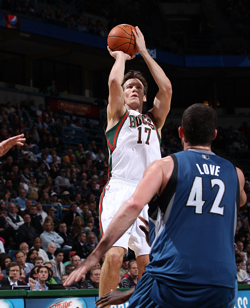
With our recent struggles against the Miami Heat, many Thunder fans were clamoring for a big wing defender like Luc Richard Mbah a Moute of the Milwaukee Bucks or Jared Dudley of the Suns to be that mythical being called a “Lebron stopper”. The truth is, when you play a team that plays inside/out like the Heat or the Spurs, a big wing defender is tantamount when it comes to recovering on 3-point shooters. Players like Tony Parker, Manu Ginobili, Dwayne Wade, and James are great at dribble penetrating, breaking down a defense, and finding the open guy on the perimeter. While the Thunder already have a great perimeter defender in Thabo Sefolosha, an extra set of long arms and active hands would not hurt.

02212013_ronnie_brewer

The New York Knicks, in an effort to slash some payroll and open up a roster spot, were looking to unload one of their perimeter defenders. The early rumor was that they were trying to trade Iman Shumpert for an offensively minded guard like Orlando’s  J.J. Reddick. Instead, the Knicks made Brewer available and the Thunder swung the deal for him. Brewer is regarded as one of the toughest big wing defenders in the league. He’ll be especially helpful to Kevin Martin and the bench unit as their best wing defender. Also, if necessary, in small ball line-ups, Brewer can be put in at SF or SG to help on the defensive end.

An added bonus is that Brewer’s salary is nearly half of what Maynor’s was ($2.3 million for Maynor compared to $1.2 million for Brewer). That saved money could be used to get a veteran free agent for the final roster spot, similar to what the Thunder did in obtaining Derek Fisher last season.

okc lbj

Overall, I think these moves made the Thunder slightly better in the present and made them even more dangerous on the draft/trade front in the future. Whether Brewer proves to be of any use is still to be seen. But it’s better to have a player like that on your team than on your opponent’s team. With the more punitive luxury tax looming next season, many teams will be looking to dump some salary in the offseason. With all their assets they’ve accrued, the Thunder should feel pretty good about themselves as we move forward under the guise of this new CBA.

The Thunder and their tradeable assets

After the pomp and circumstances that was the NBA All-Star Weekend, it is now time to get to the meat of the NBA season. But before we even reach that point, there’s a little something called the trade deadline that can change the fates of aspiring championship teams. For the next 4 days, you will hear every sort of rumor, from the asinine to the very believable. And that is what makes this time of year one of my favorites.

nba_trade_machine_288

In the last two seasons, the Oklahoma City Thunder have made some sort of move at the trade deadline. In Feb. 2010, they traded Jeff Green and Nenad Krstic to the Boston Celtics for Kendrick Perkins and Nate Robinson. Last season, they eschewed a trade, instead choosing to sign veteran guard Derek Fisher for their playoff run that went all the way to the Finals. This season, the Thunder made their big splash before the season started, trading reigning 6th man of the year James Harden to the Houston Rockets for Kevin Martin, Jeremy Lamb, and 3 draft picks. The Thunder went from a team with hardly any assets to one brimming with them. Any one of those assets or combinations of assets could be used to make a bigger move to help the Thunder either in the short term or in the long term.

Here are the top 5 tradable assets for the Thunder in terms of their desirability from other teams.

5. Eric Maynor

Two seasons ago, when the Thunder made a surprise run to the Western Conference Finals, Maynor was viewed as one of the top back-up point guards in the league. The fervor that is currently surrounding Los Angeles Clipper’s back-up point guard Eric Bledsoe was akin to what was being said about Maynor two seasons ago. A young floor general that was good enough to start for many other teams, and maybe even good enough to start ahead of Russell Westbrook. 

emaynor_648218153

The Thunder, sensing that Maynor’s rising stock may make him difficult to keep, drafted guard Reggie Jackson in the 2011 NBA draft. At the beginning of last season, it became increasingly evident that Maynor’s game had stagnated and hadn’t really improved that much during the offseason. Then, before the season was even 10 games old, Maynor tore his ACL and was lost for the season. While Maynor was rehabbing, Jackson was receiving his baptism by fire and earning precious playing time on a championship contending team. When this season started, Maynor was given the opportunity to earn his spot back as back-up point guard. He played as the primary back-up point guard for the first 23 games of the season. What became evident was that the injury had sapped Maynor of what little athleticism he had, and the Harden trade had robbed Maynor of his greatest asset off the bench. Thunder coach Scott Brooks chose to go with the more athletic Reggie Jackson off the bench to anchor the 2nd team from there on out.

reggie jax

Maynor is in the final year of his rookie contract that owes him $2.34 million. He has value as a cheap rental for a team looking to scout point guards for next season. Maynor has recently shed his bulky knee brace and is moving around a lot better than he did at the beginning of the season. He is just 14 months removed from major knee surgery and may be getting back to being healthy again.

Percentage the Thunder move Maynor: 65% (The Thunder aren’t going to move Maynor just to move him. If they are able to acquire any value, such as a high 2nd rounder or a young player, they’ll make the move. If not, they’ll roll with Maynor for the rest of the season as the insurance point guard.)

4. Charlotte’s 2013 2nd round pick

Second round picks are usually tossed back and forth between teams in almost comedic fashion. Most players selected in the 2nd round usually never make it onto an NBA roster, instead spending most of their careers in the D-League or overseas. The beauty of 2nd round picks, though, is that their contracts aren’t guaranteed and don’t fall into the pay scale system of the 1st round picks.

The valuable 2nd round picks are those that fall in the 31-35 range. In those picks, you can get a good player that has slipped into the 2nd round for a variety of reasons. A good example would be Dejuan Blair of the San Antonio Spurs, who slipped into the 2nd round because of injury concerns with his knees. Being that this pick belongs to Charlotte, who currently owns the worst record in the league, it could be a good asset as the first pick of the 2nd round.

dejuan_blair_2012_01_17

Percentage the Thunder moves this pick: 0.000001% (The Thunder fought long and hard to get this pick back. They initially obtained this pick in the trade that sent Byron Mullens to the Bobcats. The pick was later given to the Boston Celtics by the NBA as punishment for the deal involving Jeff Green, who had a heart condition that the Thunder may or may not have known about. Boston then sent the pick to the Houston Rockets in an off-season deal that sent Courtney Lee to the Celtics. And then the Thunder re-obtained the pick in the James Harden deal. I honestly think Thunder GM Sam Presti would have dealt Kevin Durant to get this pick back.)

3. Kevin Martin

This was the player the Thunder got back in the James Harden trade that could be labeled as “of equal or comparable value”. Martin is one of those fringe All-Star players that can average 20 points per game in the NBA, but bring little else to the table. Martin has done a good job this season of reproducing the offensive production that Harden gave the Thunder last season. Martin’s trade value, though, comes in the fact that he has a $12 million expiring contract.

kevin-martin-thunder

Martin is still a really good player that could still average 20 points per game if he were on a bad team. He’s one of the top players in free throw percentage and 3-point FG percentage and averages 15 points per game off the bench. He had done a good job of assimilating himself to his role on the Thunder and assimilating himself to the culture of the city. He has made it known that he would like to stay in Oklahoma City and sounds like he would be willing to take a pay cut to stay. (Annnd, cue Thunder fans saying “We’ve heard that before”).  

Percentage the Thunder move Martin: 12.5% (Having already made a major trade to start the season, I doubt the Thunder make another major trade in the middle of the season. They have the 2nd best record in the league and Martin has been a willing participant in his bench role. Unless the Thunder are able to acquire 2 players for the price of one, I think the Thunder head into the playoffs with Martin as their 6th man.

2. Jeremy Lamb/Perry Jones III

When you are a rookie on a championship contending team, playing time can be at a premium. This is where the Thunder and their rookies currently find themselves. Besides end of blowout situations, Lamb and Jones III have gotten most of their playing time with the Thunder’s D-League affiliates, the Tulsa 66ers. Their lack of playing time is not indicative of their potential, though. On a bad to mediocre team, these two would be logging major minutes. But on this team, their major function this season is in developing their game.  

lamb-jones

The league still views them as rookies dripping with potential. And that is where their value lies. I’m pretty sure many trade proposals have started with Eric Maynor and ended with one or both of these rookies. Young players on rookie deals are like gold in the NBA, and the Thunder have 2 bars in their safe.

Percentage the Thunder move either of these players: 10% (With their future salary cap situation (2 max players in Westbrook and Durant, Ibaka’s upcoming extension, Perkins’ contract, and Martin possibly resigning), the Thunder place optimum value on young players on rookie scale contracts. Both of these players emulate the Thunder model (athletic, long, and able to play multiple positions) and have performed well in their time in Tulsa.  

1. Toronto’s protected 1st round pick (2013 – Top 3 and 15-30 protected, 2014,2015 – Top 2 and 15-30 protected, 2016,2017 – Top 1 and 15-30 protected, 2018 – unprotected)

Before Toronto acquired Rudy Gay, this pick looked like it was going to be in the 6-8 range. Since the Gay trade, Toronto seems to be a much tougher out for opponents and reeled off 4 straight wins before the All-Star break. The Raptors currently sit 6 games out of the 8th spot in the Eastern Conference, so while it is not an impossibility for them to make a run at the playoffs, the hole they dug themselves before the trade may be too much to overcome this season.

Rudy-Gay-Raptors

For a team looking to rebuild, a pick in the lottery is a steal. Any draft pick is a gamble, but those in the lottery have a higher percentage of panning out than those outside of the lottery. The Raptors picks is now looking to be in the 10-14 range.

Percentage the Thunder deal this pick: 10% (The same logic that applies to the Thunder and why they probably won’t deal Lamb or Jones III, applies to this draft pick. Earlier this season, this pick looked like it was going to be in the 4-6 range. But even where it stands today, this pick probably has more value for the Thunder than for another rebuilding team, especially in a draft that is perceived to be weak.).

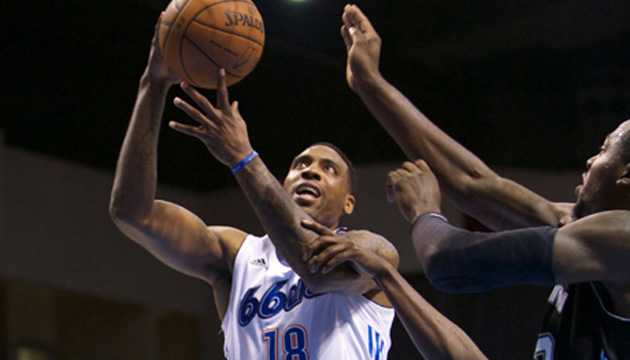
One thing to look out for is the empty roster spot the Thunder have. If they don’t fill this spot with someone in a trade, look for the Thunder to sign veteran forward Rasual Butler. Oklahoma City fans may remember Butler from his days with the New Orleans/Oklahoma City Hornets. He is currently playing for the Tulsa 66ers and may be what the Thunder need in a 3-point shooter and perimeter defender.

butler 66ers

The fact is that the Thunder have the 2nd best record in the league and are coming off of a Finals appearance. Sam Presti is not known to deal in haste or for a quick fix. He believes in sustainability and cap-flexibility, so any deal will have to work for the Thunder’s present and for their future. Needless to say, I don’t really see the Thunder making a move this trading deadline….but I’ll be watching.


The Eric Maynor Sweepstake

bench maynor

With Eric Maynor’s DNP-CD on Wednesday night, in a blowout of the Denver Nuggets, it was quite apparent that his run with the Oklahoma City Thunder is over. Ten months after suffering a torn right ACL, Maynor’s athleticism and confidence seemed to be wavering to the point that 2nd year guard Reggie Jackson took over sole possession of the back-up point guard duties on the team 25 games into the season. While Maynor’s numbers were never that impressive, his command of the 2nd unit (and sometimes, the 1st unit) showed he had the potential to run his own team.

Back about two years ago, Maynor was being hailed at the best back-up point guard in the league. He led one of the best benches in the league, along with James Harden and Nick Collison. In hindsight, though, it seems that a lot of Maynor’s success was due in large part to James Harden. The former Thunder guard is now the 4th leading scorer in the NBA, with a 26.3 points per game average. The skills that he is currently exhibiting now as a Houston Rocket, were on full display during his first 3 seasons in the league, the last of which culminated with the NBA’s 6th Man of the Year award.

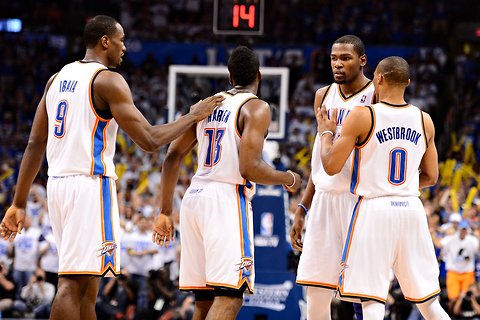
dal_g_thunder_bench_b1_600

Maynor’s game was never dependent on athleticism. He was a prober that constantly tried to find the open man or an open lane, and rarely turned the ball over. After the knee injury, though, what little athleticism Maynor did have was sapped, as was his confidence. Maynor began to drive less and shoot more, leading to career lows in FG% (30%) and assists per game (2.1). Though he was never touted for his defense, that part of Maynor’s game suffered greatly after the injury. He was constantly getting beat off the dribble, which led to either leads dwindling or deficits increasing. After 24 games, the Thunder decided to try Reggie Jackson as their primary back-up point guard. Though not the floor general that Maynor is, Jackson’s athleticism and physical tools lend him to be a better defender and more of a driving threat on offense.

Reggie Jackson, Markeiff Morris

Being that Maynor is a free agent after this season, the Thunder would still like to get some value for him before the trading deadline. Maynor can still play the game, and maybe a change of scenery will help get his confidence back. Maynor’s value may not be that high, but the Thunder can package him with any number of assets to get a necessary piece to their championship puzzle. The Thunder are loaded with picks (Toronto’s top 3 protected, Dallas’s top 20 protected, and Charlotte’s 2013 2nd rounder) and young talent (Jeremy Lamb, Perry Jones III, DeAndre Liggins, and Daniel Orton) that would be very attractive in a deal. I, for one, am not in favor of dealing Lamb, Jones, or Liggins. With the current cost of the top half of the roster, the Thunder will need good, cheap talent to stay in championship contention.

That would leave Maynor and Orton, plus the picks, as the only tradable assets I see on the roster. Being that the only feasible need I see for the Thunder is another bench scorer, hopefully a 3/4 tweener, I’ve decided to become armchair GM for the day, and see what moves I can come up with. Move over Sam Presti, my shine is too bright for the both of us.

Disclaimer: All moves have been approved on ESPN’s NBA Trade Machine. Any move involving Daniel Orton would need to get done after January 31st.

Deal 1

  •  Houston get Eric Maynor and the Thunder’s 2014 2nd rounder.
  • Oklahoma City gets Royce White and the rights to either Sergio Llull or Furkan Aldemir.

furkan

Why Houston makes the deal – Houston is loaded with PnR-reliant guards in Jeremy Lin, James Harden, and Toney Douglas. If a defense knows how to defend the PnR effectively, it cuts off the Rocket’s first plan of attack. Having a traditional point guard would be a change of pace for the Rockets and will allow them to exploit other facets of their offense, such as Omer Asik’s post game and Chandler Parson’s 3 point shooting. Also, Houston gets rid of a headache in White. The verbal/social media sparring that has gone on between White and the Rockets is well documented concerning his mental health.

Why Oklahoma City makes the deal – While this eschews the notion of obtaining a bench scorer now, having the rights to either Llull or Aldemir would be a steal. Llull is the premier combo guard in Euroleague and would fit immediately into the Thunder’s rotation. Aldemir is great on the boards and would really help the Thunder in the post. Presti would probably tell White to stay at home and would negotiate a buy-out with his agent.

Deal 2

  • Milwaukee gets Eric Maynor, Daniel Orton, and the Mavericks top 20 protected pick.
  • Oklahoma City gets Mike Dunleavy

Why Milwaukee makes the deal – Milwaukee will be in a state of flux after the season. Their top two point guards, Brandon Jennings and Beno Udrih, are both free agents, though Jennings is restricted. The Bucks have been on record as saying they will retain Brandon Jennings, no matter what. A large enough extension would make retaining Udrih, currently making $7.8 million, nearly impossible. A cheap replacement like Maynor, who would sign for far less, would be more feasible. They could test drive Orton for half a season as all of their true centers are also free agents at the end of the season. The draft pick is just a sweetner.

mike-dunleavy-jr

Why Oklahoma City makes the deal – Mike Dunleavy would immediately have an impact on the 2nd team as a scorer and shooter. The dribble and drive ability of Jackson would open up even more with Dunleavy and Kevin Martin on the floor together.

Deal 3

  • New Orleans gets Eric Maynor and the Thunder 2013 draft pick
  • Oklahoma City gets Al-Farouq Aminu

Why New Orleans makes the deal – With Ryan Anderson, Anthony Davis, and Robin Lopez on the front line, Aminu becomes the odd man out. His inconsistent play has been a source of ire from the Hornet’s fan base. A veteran point guard would help this young roster out and an extra first rounder will help in the Hornet’s rebuilding process.

aminu

Why Oklahoma City makes the deal – Aminu is exactly the type of player that the Thunder covet. A 3/4 tweener with possible upside and a long wingspan (7’3!!). In the right system, he could be a valuable contributor off the bench.

Deal 4

  • Phoenix gets Eric Maynor, Daniel Orton, the right to swap either of their lottery picks (theirs or the Lakers’) lottery picks if it benefits the Suns, and the Thunder’s 2013 pick.
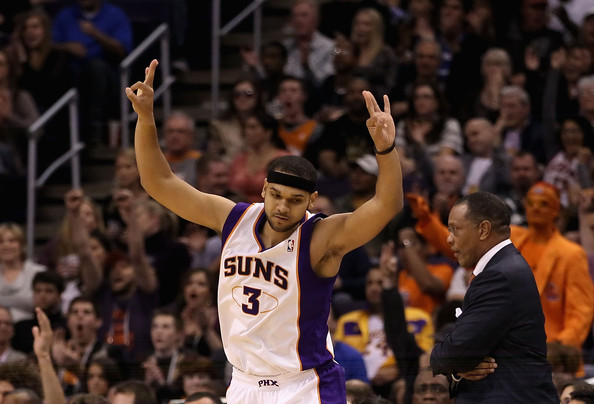
  • Oklahoma City gets Jared Dudley

Why Phoenix makes the deal – Let’s face it. Phoenix is rebuilding and is not interested in long-term role player contracts. Dudley still has 2 years at $4.25 million guaranteed after this season, plus a player option for the same amount. Phoenix could flip Dudley for a young center, a possible better lottery pick, and a late first rounder.

dudley

Why Oklahoma City makes the deal – The Thunder get a great role player with a good contract for the next 2-3 seasons. Plus, a player like Dudley has value and can possibly be flipped for other assets.

Deal 5

  • Cleveland gets Eric Maynor and Dallas top 20 protected pick.
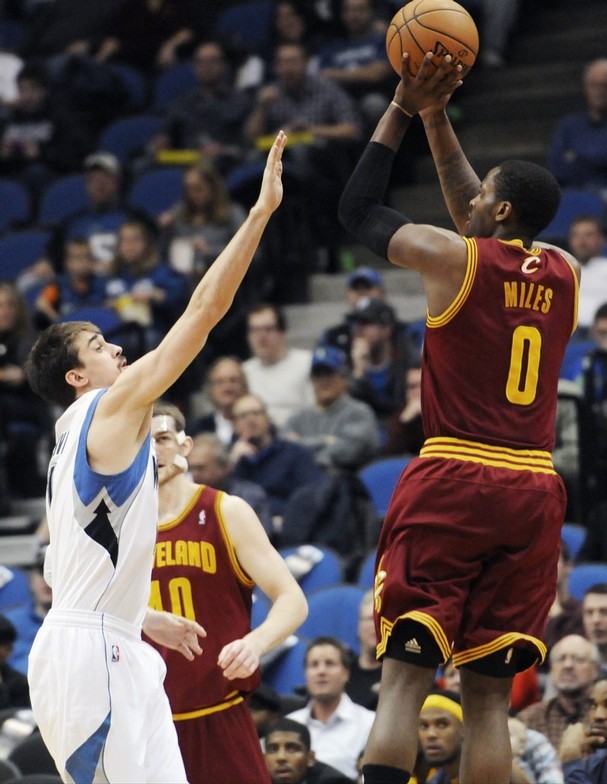
  • Oklahoma City gets CJ Miles

cj miles

Why Cleveland makes the deal – It isn’t the Anderson Varejao deal, but Cleveland still gets a future first rounder for a role player that’s a free agent after this season. Plus, Maynor could dispense some veteran wisdom onto Kyrie Irving.

Why Oklahoma City makes the deal – The Thunder get a good role player that can shoot and stretch the floor. Plus, they don’t give up much.

kevin-durant-eric-maynor-2011-2-6-0-1-11

As a fan, I would hate to see Maynor go. He’s grown with this team and was a big part of its development. But, as we’ve seen with the Jeff Green and Harden trades, it is also a business in which every team is trying their hardest to get better. If a move can be made, and it is advantageous to the team, then it’s a deal that must be made. When the inevitable happens, I wish Maynor nothing but the best. He’s been a consummate professional and has a long career ahead of him.

….The More They Remain The Same

Any time something catastrophic happens, people always measure time from that point forward. In the show “Revolution”, everything is measured from the blackout, which is the catastrophic event in the show. Similarly, anytime something shocking happens to a sports team (i.e. trade, injury, retirement, suspension, etc), everything is measured from that time for the immediate future. No matter what they tell you, Clevelanders are still thinking about Lebron and The Decision. It’ll take a nice playoff run or two from Kyrie Irving, Dion Waiters, and the young Cavs to start to erase the time clock from their collective memory. Chicagoans have become quite adept at handling these differentiating time clocks for the past 20 years. They’ve had Michael Jordan’s first retirement, his comeback, his second retirement, and, finally, Derrick Rose’s knee injury. They are just chomping at the bit to start the Derrick Rose comeback timeclock.

The Oklahoma City Thunder experienced something very similar a month ago. On October 27, 2012, the Thunder traded James Harden, Daequan Cook, Lazar Hayward, and Cole Aldrich to the Houston Rockets for Kevin Martin, Jeremy Lamb, 2 future first round picks, and a 2013 2nd round pick. The Thunder were just coming off a trip to the Finals with their young core just coming into its own. They had their world-class scorer in Kevin Durant, their hyper-competitive floor general in Russell Westbrook, their pogo-stick blocking machine in Serge Ibaka, and their “jack of all trades” in James Harden. All under 24 years of age at the time. THIS team was supposed to grow together and contend for the next decade. Instead, after not being able to come to terms on a long term extension, Thunder GM Sam Presti decided to pull the trigger on the trade,  and send Harden to Houston. 

The first thought amongst Thunder fans was how Martin would compare to Harden. The players, while similar in some facets, were completely different in other facets. Both were great shooters who were very adept at drawing fouls when driving to the basket. The major difference between the two players was that Harden was more of a playmaker, while Martin was more of a scorer. That major difference was of chief concern to Thunder fans because Harden was usually the go-between when Durant and Westbrook were on the floor together in the 4th quarter. When Durant and Westbrook were out there on the floor together, teams had an idea on how to guard the duo. But add Harden to that mix, and the floor spaced out like the Red Sea of Moses.  

Basketball skills aside, the primary concern was how this trade would affect the Thunder’s chemistry. This Thunder team was one that had been hardened by its experiences. The struggles of learning how to win followed by the lessons of winning when favored. It was a 180 degree turn that many teams never experience. Many teams have trotted out young talented rosters that have either failed to pan out or were destroyed from within when it was time for contract extensions. The best comparison I have for the Durant-Westbrook-Harden-Ibaka Thunder was the late 90’s Dallas Cowboys of Troy Aikman, Emmitt Smith, and Michael Irvin. Eliminate one of the Triplets from that mix, and the Cowboys aren’t winning 3 Super Bowls in four seasons. This is the current dilemma facing the Thunder.

One month in, and the transition has been about as smooth as it can be when changing out key parts. There have been some transitional growing pains, but that is to be expected when a core shattering trade is made 4 days before the start of the regular season. What is important is the Martin seems to be integrating quite nicely into his role as the team’s 6th man. Luckily, the team’s schedule has been home-heavy in this early going with the opponent’s collective win percentage being under .500. On the other hand, against teams with strong playoff pedigrees, such as the Spurs, Grizzlies, Clippers, and Celtics, the team has struggled and is 1-3 against those teams. The surprising revelation is that compared to James Harden’s stat line from last season’s first 15 games, you would almost not even notice a difference.

  • Stat                                       Harden (11-12)      I       Martin (12-13)
  • Minutes per game                     30.0                              30.7
  • Points per game                       16.3                              15.9
  • Turnovers per game                  1.8                                 1.8
  • Steals per game                         0.8                                1.3
  • Blocks per game                        0.2                                 0.1
  • Assists per game                       3.1                                 1.8
  • Rebounds per game                  3.9                                 2.7
  • FT Attempts per game               6.5                                 4.6
  • FT Made per game                     5.7                                 4.4
  • FT %                                             86.7%                           94%
  • 3pt FG attempts per game          4.6                                4.9
  • 3pt FG made per game               1.7                                 2.4
  • 3pt FG %                                       36.2%                           50%
  • FG attempts per game                 9.9                                9.9
  • FG made per game                      4.5                                4.6
  • FG %                                              43%                              46%
  • TS %                                               66%                             66.5%
  • eFG %                                            58.2%                          58.3%
  • Thunder Record                            12 – 3                            11 – 4

Other than the difference in assists per game, Harden and Martin have virtually the same offensive stats. Eventually, even the assists may be a wash, as Martin has shown a willingness to become more of a playmaker. People tend to forget that Martin has been the main offensive option on most of the teams that he’s played on and has been given the green light to shoot at will. But, with teammates like Durant, Westbrook, and Ibaka on the floor, Martin has shown that he can find the open man for an easy bucket or two. 

Defensively, Martin has been a liability, but Harden wasn’t necessarily on his way to being named to any of the All-Defensive Teams. This first half of the season will be one lesson after another for the Thunder. Durant and Westbrook have been learning on the fly how to incorporate Martin into their crunch time offense. And Martin has been learning how to be more aggressive as a bench player. Overall, the transition has gone a lot smoother than many Thunder fans had feared. With Harden coming to town on Wednesday with his new team, the cycle seems to have come full circle. The more things change…….

Hasheem Thabeet:ReHashing a Journey

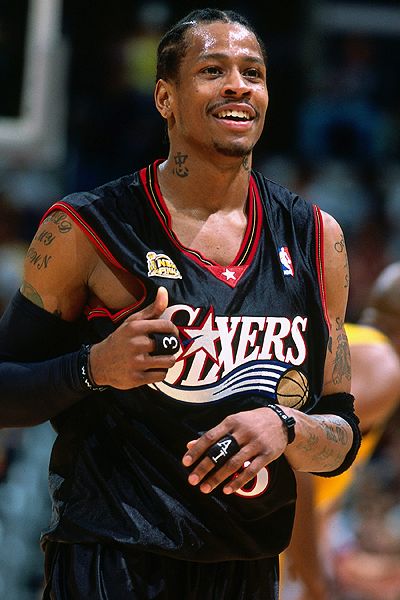
How exactly do you measure a man’s worth? Is it by his successes? If so, everyone looks great when they are succeeding. But, it’s what happens whenever a person has tasted success, fails, and then gets back up that shows the true character of that man. Some people aren’t able to come back once they have failed. Allen Iverson could have been a great redemption story. Here was a man who had tasted nothing but success since coming into the league. A man whose Frank Sinatra-like demeanor (“I did it my way”) garnered him many fans and many enemies, many of whom were in the league’s front office. A man whose ego eventually surpassed his usefulness to the point that NBA teams basically shut him out of the league. His is an example of a person who could not adapt to the slightest bit of failure.

One of the worst things in sports is to be labeled a bust. It is the apex of failure. There are two ways to be labeled a bust: either you were a high draft pick that didn’t live up to your expected potential or you were signed to a big contract that you could never live up to. Once given this label, it’s very difficult for a player to shake it off. Regardless of whether the player is injured or not, fan forgiveness is not usually a word related to the bust label. Just ask Greg Oden. Sometimes, though, a player is either too oblivious or too hard-headed to care about the bust label and continues to truck on.

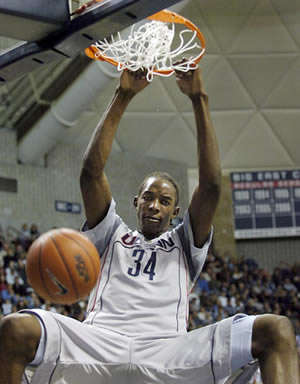
Hasheem Thabeet is one of those players. A player, who by all accounts and purposes, should have just said, “Forget this (alternate words, of course)”, and taken his millions and retired on an island. With all the criticism and embarrassment that was heaped onto him in his first 3 seasons in the league, it would have been easy to walk away with whatever money he had in hand and move on to the next phase of his life. But that just isn’t Thabeet’s style. Here’s a man who, at the age of 14, lost his father to diabetes and decided at that point that he had to become the man of the house. To assert himself into manhood, Thabeet decided to drop his father’s last name of Manka, and instead use his middle name as his last name. Mind you, this was not a move to forget his father or his past. Instead, it was a symbolic gesture towards a new start. One that Thabeet could have never imagined would turn out the way it has.

One of Thabeet’s first decisions as the man of the house was to quit school and get a job. For about a year, Thabeet worked odd jobs as a model and as a bouncer at a club. With his imposing height, he could definitely look the part of a mean bouncer, but Thabeet never took part in the fights. He was too afraid to. His mother eventually convinced him to go back to school to continue his education. It was in this second go-around in school that a coach coaxed him into playing basketball. It was only a matter of time before Thabeet’s tall frame and go-go gadget arms were introduced to the game where those attributes are strengths. At first hesitant, he eventually adapted to the game and began to flourish.

The road to the NBA is not always a linear path. When you think of basketball hotbeds in Africa, you think of countries like Angola, Zaire, and Congo. You definitely don’t think of a country like Tanzania where soccer reigns supreme. Thabeet took the proactive approach and began filling out applications for every university he could find via Google. Eventually, his talents took him to a prep school in Nairobi, Kenya, where French businessman Oliver Noah took notice of Thabeet and asked to send the kid to the US for further prepping. Thabeet’s mother obliged and he was on his way to the USA to attend high school. Of course, not everything went as planned, as it is sometimes difficult to compare African school standards to American school standards. Transcript issues arose, and what should have been one stop in Los Angeles, turned into stops in Picayune, Mississippi and Houston, Texas.

After graduating from Cypress Christian School in Houston, Thabeet made his way to Storrs to attend the University of Connecticut. For the first time in five years, Thabeet finally had some semblance of stability. He could finally be what he really was: a 19 year old freshman. He flourished under Jim Calhoun’s tutelage, becoming a dominant force on the defensive end, while holding his own on the offensive end. Thabeet went on to win 2 consecutive Big East Defensive Player of the Year awards, and shared the Big East Player of the Year award in his junior season with Pittsburgh’s Dejuan Blair.

Needless to say, expectations were definitely high when Thabeet declared for the 2009 NBA Draft. Names like Dikembe Mutombo and Samuel Dalembert were being tossed around as comparisons. The consensus was that Thabeet would be great defensively, but would need time to develop offensively. As is the standard with most big men, Thabeet was considered to be a high risk, high reward project that would need a lot of development.

The funny thing about expectations is that it’s a two way street. On one hand you have the player, of whom the results are expected from. On the other hand, you have the basketball mind (usually a front office personnel or scout) that acknowledges that the skills seen in the lower level of basketball will translate to the highest level of basketball. In this case, it was former Memphis Grizzlies GM Chris Wallace who selected the center with the No.2 pick in the draft. Usually, when a team drafts that high, they are looking for an impact player at a position of need. But the Grizzlies already had two young centers that they were developing in Marc Gasol and Hamed Haddadi. The leash was short in Memphis and when Thabeet struggled to adjust to the speed of the game, he was sent to the D-League, earning the dubious record of being the highest draft pick ever sent down.

The next season, Thabeet battled with Haddadi for back up minutes throughout the season. At the trading deadline, Thabeet was traded to Houston Rockets for Shane Battier. In Houston, Thabeet only appeared in 2 games for the Rockets, spending most of the rest of the season in the D-League. In the next season, Hasheem was once again dealt at the trading deadline, this time to the Portland Trailblazers. At the end of the season, the Blazers chose not to pick up Thabeet’s 4th year rookie option, and the center became an unrestricted free agent.

There had been rumors that Oklahoma City Thunder GM Sam Presti was very intrigued with the possibility of drafting Thabeet with the No.3 pick in the 2009 draft. As we know, that opportunity never materialized and the Thunder selected James Harden, instead. There were also rumors that Presti had tried to pull off a couple trading deadline deals to obtain Thabeet, but those, again, never materialized. So when Thabeet became an unrestricted free agent this past offseason, Presti pounced on the opportunity to sign the center for the league minimum.

Brimming with a confidence not seen since his UConn days, Thabeet is flourishing in his role as the Thunder’s back-up center. No longer burdened by his draft position, Thabeet is going out there and playing the role that he has earned. Though his numbers aren’t that gaudy through 8 games, you can tell Hasheem has learned a lot about the game in these last 3 seasons and is only now starting to put it all together. He is no longer needed to save a franchise. Instead, he can be part of a team and contribute

Not unlike a young quarterback who has struggled through numerous coaching and system changes, Thabeet was never allowed to develop in one system for any amount of time. Instead, he has been shuffled from one team to another in his first 3 seasons and never was able to develop his game or his confidence. His move to OKC probably feels like his move to Storrs, Connecticut seven years ago. A sense of stability is coming and Thabeet is just now scratching the surface of his potential. On this team, he doesn’t need to be Dikembe Mutombo or Hakeem Olajuwon. He just needs to be Hasheem.
The Thunder and their Manchurian Candidate

During the offseason, the Oklahoma City Thunder did something very unconventional. Instead of hiring a scout to serve as their video coordinator/analyst, they, instead, hired premier basketball video blogger Sebastian Pruiti. For those of you who don’t know who Pruiti is, he ran a website called nbaplaybook.com, in which he used clips of games to break down film and explain why a team may or may not have been successful in certain sets. Pruiti did a great job of explaining the content in a way that even the average NBA fan could understand.

His understanding of the game was not without any background. He served as a volunteer assistant coach for the New Jersey Institute of Technology Highlanders. Then, he served as an assistant coach for the Fort Wayne Mad Ants of the D-League. Needless to say, the man is an astute basketball mind. One of the best basketball writers of our generation, Bill Simmons, noticed this and decided to hire Pruiti for his newly formed Grantland multimedia conglomerate. In fact, Simmons was the one that broke the news on Twitter that Pruiti had been hired by the Thunder.

The thought of a Simmons’ disciple going to the Thunder, though, got my conspiracy  mind thinking. On the one hand, Simmons has written about his disdain for how the Seattle Supersonics eventually became the Oklahoma City Thunder. Not that he necessarily carries any ill regard for the team itself, but more for the process that eventually landed the team in the Great Plains. As punishment, he has yet to call the team by its current moniker in any of his writings, instead referring to them as the Zombie Sonics. On the other hand, Simmons’ crowning achievement in life would be to someday become an NBA GM. It’s a dichotomous train of thought that is one part Manchurian Candidate and one part Great Expectations.

Think about it. Before Simmons hired Pruiti, he probably kept tabs on him for years like a spy cultivating an asset. He was the best video blogging analyst in the game and worked on several basketball-related sites. As a basketball junkie, Simmons had to immediately recognize his work and his talent. One of Simmons’ most important traits as a writer is his ability to read situations before they occur. He has correctly predicted the “Ewing Theory” on many occasions, and has a keen understanding of how people will react to certain situations. These are all characteristics of a great point guard; someone who sets things in motion, directs the traffic, sees things before they happen, and makes proper adjustments whenever necessary.

I could see Simmons playing chess, while everyone else plays checkers. He knew that Thunder GM Sam Presti is very analytical and values statistics as a means to better answer questions. He also knew that Presti is young and probably very in tune with the basketball blogosphere and advanced cybermetrics. In terms of probability, there’s a lot better chance that someone like Presti or Houston Rockets GM Daryl Morey would hire Pruiti, than someone like Detroit Pistons GM Joe Dumars or Indiana Pacers GM Donnie Walsh.

Eventually, Presti finally took the bait and hired Pruiti. And with that, Simmons finally had his Manchurian candidate in place. As George W. Bush would say, “Mission (half-way) accomplished!” As a video coordinator/analyst, Pruiti’s job is to break down every one of the Thunder’s possessions (both offensive and defensive), looking to see what works and what doesn’t work for the team. If coaching were compared to another Charles Dickens classic, A Christmas Carol, Pruiti would be the Ghost of Coaching Past and Future, while Scott Brooks would be the Ghost of Coaching Present. The information Pruiti garners from game film will help steer how the team plays in the future.

With Pruiti in the door, does he begin to show skewed video evidence to the Thunder front office suggesting a Keith Bogans for James Harden trade would be beneficial to the team? Does he show slanted video proof that Kendrick Perkins should get the ball more in late game situations? Does he systematically try to derail the team’s ascension from the inside out?

Or perhaps, the motive is completely selfish on Simmons’ part. Let’s say Pruiti climbs up the coaching ranks and gets in good with the owner of a struggling team. Who’s to say that Pruiti won’t put in a good word to the owner that Simmons is a master capologist (via ESPN’s Trade Machine, of course), a burgeoning talent evaluator, and a great judge of character? With those qualifications, which struggling team wouldn’t hire Simmons as their GM?

That would literally make Simmons, Mr. Magwich, to Pruiti’s Pip. While Simmons may have assisted Pruiti in the past and present, Pruiti may some day perform the quid pro quo for Simmons in the future. In life it’s all about your contacts and the more connections you make, the more possibilities you have. Who knows, maybe one day Sebastian Pruiti will be the Thunder’s head coach and Bill Simmons will be the Thunder’s (gulp!) GM. That would be the irony of all ironies. At least then, he would probably have to mention the Thunder by name.

Seize The Day

During Sam Presti’s “opening of training camp” press conference last week, he mentioned that starting center Kendrick Perkins would be out for the entire preseason, recovering from the 2 offseason surgeries he had on his groin and wrist. Being that Perkins is a 10 year veteran and a consummate professional, I am not at all worried about his conditioning, or whether he’ll be ready to play once the season starts. As an aside, can you believe that Perkins has already been in the league a full decade? But, in a way, I’m ecstatic that our younger centers now have a chance to prove themselves in some real game action before the season begins.

Oklahoma City’s trainer Joe Sharp and his medical staff have done a great job of keeping the Thunder players healthy, for the most part. And to their credit, the players’ quick healing and sheer stubbornness have also played a part in them hardly missing any games. With that said, I’ve always wondered how Eric Maynor would fare as the starting point guard for the Thunder in a couple games. We all know how he performed in the 4th quarter of Game 2 of the Western Conference Finals in the 2011 playoffs. Was that an aberration or was it really how Maynor would perform with top notch talent consistently around him?  Not that I necessarily want to see Maynor as a starter for an extended period of time, but if Russell Westbrook were to sit out a game or two in the preseason, I wouldn’t mind at all. In fact, I would welcome it.

The biggest detriment to a young player’s development is lack of playing time. Would Darko Milicic be a better player today had he played for a lottery bound team that immediately needed him to develop, instead of being the human victory cigar for the Eastern Conference runners-up Detroit Pistons? We will never know that answer, but it serves as a cautionary tale in how teams handle their young players’ minutes. In the case of the Pistons, there just wasn’t enough room on the team for Milicic to develop on the floor. With Mehmet Okur, Ben Wallace, Tayshaun Prince, Rasheed Wallace, and Antonio McDyess manning the front line for Detroit at different times during a 5 year championship window, there simply wasn’t enough minutes in a game to help develop a young center while still contending.

Which brings us to the three young centers on the Thunder’s preseason roster. Cole Aldrich, Hasheem Thabeet, and Daniel Orton are all trying to find their spots in the NBA. Three different stories that lead to the same two things: playing time and development. Aldrich would seem to hold the upper hand amongst the 3 centers, as he has been with the organization the longest. The 11th overall selection in the 2010 NBA draft, Aldrich has been entrenched as the team’s 3rd center behind Perkins and Nazr Mohammed. He’s shown enough in D-League stints and garbage time to keep the team intrigued with his defensive potential. With Mohammed’s departure to the Chicago Bulls in the offseason, the back-up center position is his to lose.

Sometimes, an opportunity presents itself that you just have to try out. Sam Presti has always been intrigued by Hasheem Thabeet, going all the way back to the 2009 NBA draft. Thabeet was off the board by the time the Thunder selected James Harden with the 3rd pick, but Presti kept close tabs on him after that. There were always rumors of OKC trying to obtain Thabeet during the trading deadline. After 3 disappointing seasons, in which Thabeet had stints on three NBA teams and two D-League teams, the Portland Trailblazers decided not to pick up his 4th year option, thus allowing him to become an unrestricted free agent going into this offseason. Seeing the potential for a low risk, high reward player, Presti signed him to a 2 year, vet-minimum contract. The center, who is pretty mobile, despite being the tallest player in the league (7’3”), has the potential to be a disruptive force on the defensive end. The question is whether he can put all his physical attributes and talent together to be an effective NBA player.
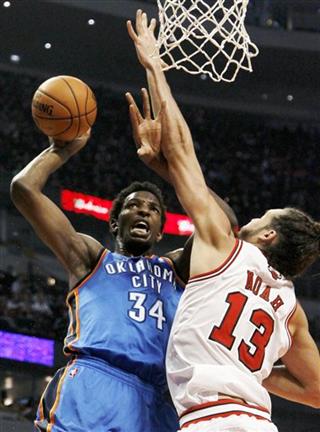
Sometimes injuries play a part in negating a young player’s time on the court. Daniel Orton was drafted in the same year as Aldrich by the Orlando Magic as a possible back-up to Dwight Howard. After suffering a torn ACL during his senior season in high school, Orton once again suffered a season ending knee injury during his rookie season while in the D-League. After recovering in the 2010-11 season, Orton finally saw some game action in the 2011-12 season. The Magic decided not to pick up his 3rd year option, thus allowing him to enter unrestricted free agency. The Thunder decided to bring Orton in as a training camp invite to see how he fits into their system. He probably has the most untapped potential out of the 3 young centers on the team. Rumor has it that if the Thunder don’t sign Orton to a contract, they may try to keep him in their system through the Tulsa 66ers, their D-League affiliate.

The preseason will be a great opportunity for these three young players to show what they got. It may actually be their last chance to prove they are NBA-caliber players. The NBA is a league of “what have you done for me lately?” If a player hasn’t shown anything in his allotted time in the league, you can bet there is another player somewhere looking to seize the day and take that spot.

OKC Thunder: Training Camp Roundtable

Special thanks to the contributions by Zebulun Benbrook of Welcome To Loud City (WTLC) and by one of the smartest basketball minds I know, Max Trueblood (MTB). 

With the turning of the seasons, there are two things you can always look forward to: colder weather and the start of NBA training camps (unless there’s a lockout). Most of the players are already setting up shop in their NBA cities, preparing for the upcoming season. No matter how familiar you are with your team, a new season always brings about new questions. Here are a couple of questions in regards to the beginning of training camp for the Oklahoma City Thunder:  

  • 1)      With the recently finished strike shortened season, a trip to the Finals, and involvement in an Olympic tournament, how do you think Scott Brooks will handle Kevin Durant, Russell Westbrook, James Harden, and Serge Ibaka during training camp?

NTTB: I think they will limit their availability in preseason games, but I don’t think they will limit their training camp practice time. Last season, teams hardly got any practice time due to the compacted schedule. Less practice time meant less time to try new schemes and less time to build cohesion. Luckily for the Thunder, they brought back their entire core and all of their coaching staff from the previous season and didn’t need the practice time in training camp to indoctrinate new players or learn new schemes. This year it’s more of the same, but with more time for practice. Despite their age, the Thunder are a veteran team and the extra practice time will be invaluable to the younger Thunder players, such as Reggie Jackson, Cole Aldrich, Perry Jones III, and Hasheem Thabeet.

WTLC: Once players get to a certain point of their careers, I think you’ve gotta give them room to breathe. Durant and company have proven themselves in the context of the NBA, and while they have room for improvement, they’re pretty much known quantities in the sense of what they can and can’t do. My thought is that Training Camp will focus on the younger guys on the team, like Cole Aldrich, PJ III, and Reggie Jackson. And I’d like to think that it will focus on trying to get them adjusted to the team, rather than improving a certain skill. The Summer League and D-League are more focused on personal improvement, in my opinion.

As for the stars, I’ve gotta think Scott Brooks will make it business as usual. Everybody’s extra motivated after the Finals loss, and they are coming off of a break, even if it is shorter than normal. The NBA season is a long grind, and if you can’t make it through training camp, you probably won’t be able to make it through the dog days of January, either. I think what’s important to remember is that part of the reason Tim Duncan is so successful is that, even in his old age, he still allows Gregg Popovich to coach him like he was a rookie. It sends a message to the rest of the team about how to act, and what it takes to make it to the top. If Durant, Westbrook, Harden, and Ibaka act the same way, then we’re in for a long road of success.

MTB: I’m usually not a fan of preferential treatment for superstar players but given the busy off season for the “Big 4”, I wouldn’t have a problem with them getting a few days off here and there.

 Let’s not forget, this has basically been 3 straight busy off seasons for KD. He had the World Championships in 2010, then played in just about every street ball game imagineable last summer and of course the Olympics this time. 

  • 2)      Out of Daniel Orton, Hollis Thompson, DeAndre Liggins, and Andy Rautins, who earns the coveted 15th spot on the team, and why?

NTTB: I’d say it’s a two man battle between Hollis Thompson and DeAndre Liggins. These two players are both long, which fits into the Thunder’s DNA, with Liggins being more defensive minded, and Thompson being more of a 3-point shooter. With so much of the offense being predicated on dribble penetration, the team would probably benefit from another shooter on the team. So, I would give the nod to Thompson, with Orton, Liggins, and Rautins leading the Tulsa 66ers the NBDL title. 

WTLC: Well, that’s a tough one. I haven’t seen too much of Hollis Thompson, but he’s pretty much the Perry Jones of the second round. He was considered a legitimate prospect and worked out for several teams, but a lot of teams decided to draft and stash Europeans with their later picks, letting him fall off the board. It really depends on how well he can return from his groin injury, and whether he’s really enough of a scorer to be considered better than Daequan Cook, or Andy Rautins. Rautins will be a good litmus test to see how good Thompson really is. Rautins is an excellent shooter, but he’s not very dynamic, which is why he’s never really caught on in the NBA. I’d only see him making the roster is Thompson doesn’t really pan out.

The strongest candidate, aside from Thompson, to make the roster is DeAndre Liggins. He didn’t get too much time with the Magic last year, but he was very efficient in how he played. He never took an unreasonable shot, and he he has good defensive awareness. He’s kind of like Kyle Weaver, but with a bit less energy. The big knocks on him are that his shot is extremely inconsistent (he’s airballed open threes) and that he works best under a slow pace, which doesn’t help when you’re playing with a fast breaking team like the Thunder.

The other guy on the list is Daniel Orton, but I think he’s really only there for the hometown appeal, as he went to Bishop McGuiness. When you see how many big men the Thunder have stockpiled, and the fact that Orlando didn’t re-sign him despite being really thin at center, seeing him make the roster seems like a pipe dream.

MTB: I’m going to roll with Andy Rautins on this one. I think the Thunder have tons of athleticism so an athlete like Liggins or Thompson isn’t really needed but with the team possibly cutting back on bench payroll in anticipation of retaining Harden at a max salary, I could see Presti seeing if Cook has a short term replacement and that would be a shooter. Rautins is the best of the group.

  • 3)      Heading into training camp, how will Perry Jones IIII fit into the rotation, if at all?

NTTB: With Kendrick Perkins coming back from two offseason surgeries and Nick Collison bound to suffer from one of his yearly training camp injuries (sore groin, sore ankle, sore knee, etc), I’m pretty sure we’ll get some idea how he will fit into the rotation right away. He’ll get a lot of reps in practice in our small ball lineups and that’s primarily where I see him being used in the rotation during the season.

WTLC: He won’t be a rotation guy. There’s too few minutes to split with Cole Aldrich, and Thabeet is probably ahead of him due to his previous NBA experience. It really all depends on how he does in training camp, but I don’t think he’ll see regular minutes unless there’s an injury or Cole Aldrich doesn’t live up to expectations.

MTB: I wouldn’t mind seeing Perry get some time in the D league this year. If Serge or Collison get hurt, he can always be called up from Tulsa.

I don’t know enough about Jones to really gauge where his confidence is but lots of young players lose confidence when they get drafted well below where they were expected to be taken. Of course, there are exceptions. Rashard Lewis and Deandre Jordan come to mind. But getting big minutes and success on the D league level could wind up being what’s best in the long run for him. 

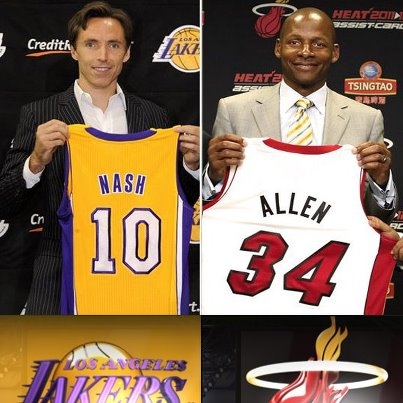
  • 4)      With other teams making significant moves to get better (Lakers acquiring Dwight Howard and Steve Nash / Miami acquiring Ray Allen and Rashard Lewis), is there any way that the Thunder got better without making any major moves? 

NTTB: I think we’ll get better organically because of our youth, but the line on the organic improvement line graph is probably starting to plateau. There’s probably not much more that these guys can do, besides averaging a triple double for a season, that would register as far as team improvement goes. Getting Perry Jones III in the draft negated any necessity to obtain a scoring big. I expect the Thunder to be a big player after the trading deadline, though, for a veteran big man.

WTLC: Well, we got better in the sense that we’ll have another year under our belts to develop. How much that will translate into next year remains to be seen. The Thunder were really sputtering late in the season, dropping a lot of winnable matchups and letting non-playoff teams come back from huge deficits. But when you get right down to it, the Thunder have the talent to beat the Heat and the Lakers. What they need to do is come up with more creative solutions for their obvious flaws.

But on a tangible level, there is improvement in sight. Cole Aldrich might be more of an offensive threat than Nazr Mohammed was, and he was working on a hook shot while in the Summer League. Kendrick Perkins will be fully recovered from his injury. Eric Maynor will be returning, offering a steady offense and a refreshing break from Derek Fishers’ 0fers and terrible defense. Serge Ibaka’s jumpers are getting come consistent. And, of course, James Harden will have had the experience of being on a boat.

MTB: I think the Thunder got better just based on the fact that their star players haven’t hit their prime years yet. It’s rare that All star caliber players take a step back before they hit their prime so I see the Thunder getting better via the internal improvement route. 

  • 5)      Are the Thunder now this season’s participant in the reality show drama known as the “player vs team negotiation” game that the media will incessantly babble about for possibly the next 300 days?

 NTTB: I don’t think so. There are two players out in LA that will be causing a bigger stir with their impending free agency (Dwight Howard and Chris Paul). Plus, the Thunder organization is very hierarchal in nature, and if the top (owner Clay Bennett and GM Sam Presti) remains quiet, you can bet the bottom (players and coaches) will remain quiet. This will not be an issue at all this season. It wasn’t an issue when Westbrook’s extension was in play and it won’t be an issue with Harden’s being in play.   

WTLC: Yes, 100 times yes. If there’s one thing the media love to babble on about, its’ contract negotiations. Nevermind the fact that the Thunder are a title threat now, what are we going to do when Kevin Durant comes off of contract in 2016?! Aye aye aye. Just bring on the basketball, man. I’ll worry about the size of James Harden’s penthouse later. 

MTB: I sincerely hope not. I’m really hoping that Presti and Harden’s representation can just come out and say that they will table negotiations until next summer. That will take the media out of the picture and will simultaneously take the pressure of Harden. Let’s see what type of numbers he can put up and then negotiate a contract based on production.

In conclusion…..one more week!!!!!!!

What offseason? Basketball Never Stops!

As a fan of the game, I’ll watch any basketball game you have on the television, especially playoff games. But there’s a slight disconnect when your team is not involved. It’s not as emotionally taxing. With that said, I’ve never enjoyed basketball as a connected fan all the way into mid-June. Though I’m disappointed that we lost in the Finals, its fun to look at the calendar and know that in 3 months, training camps should begin to open up. I’ve forgotten what it feels like for the season to be over in mid-April. But this all leads us to the offseason. Time to rest and recover from the grind of the season. Oh, I forgot we have the draft coming up. And then we have Summer League. And all the offseason moves and transactions. All the while, we have the national team gearing up to defend its gold medal in this summer’s Olympics. What the hell does the off in offseason mean?

There’s a saying that the NBA season is a marathon, not a sprint. The things that happen after the All Star break, such as trades and the signing of recently released players, can have a big impact on the rest of the season and the postseason. The Thunder have been the beneficiary of both of these player transaction moves in the past two season. Two seasons ago, at the trading deadline, the Thunder traded Jeff Green and Nenad Krstic to the Boston Celtics for starting center Kendrick Perkins and ultimate cheerleader Nate Robinson. Then, last season, they signed point guard Derek Fisher off waivers after he was released from the Houston Rockets. Due to the team’s stability, the Thunder usually remain pretty quiet during the offseason, though.

2012 NBA Draft

This offseason, though, the moves have been quiet, but plentiful. Heading into the draft, the Thunder’s only draft pick was the 28th pick in the first round. When you are picking this late in the draft, this usually means your team already has the necessary players to succeed. For a team as set as the Thunder, there wasn’t an immediate need that any player chosen this late was going to provide. One of the biggest needs the Thunder had was a big that was agile enough to defend other athletic bigs while being able to score from the outside and inside. Players with this skill set don’t usually last this long in the draft. The thinking was that the team would draft either an athletic wing or an overseas player that would be stashed in Europe for a couple of seasons.

Sometimes, though, the stars and planets align, and a player you were needing all along falls into your lap. There was always concern about Perry Jones III’s work ethic. The word ‘motor’ usually came up when his draft status was discussed. But, no one could deny the potential he had. The description of a 6’11” athletic forward that could score from outside and inside is the type of player that usually has teams salivating for his services. But a day before the draft, they were reports that many teams were concerned with the condition of his knees. After the recent knee concerns of Greg Oden and Blake Griffin proved to be true, not many teams were willing to spend a lottery pick on a player whose work ethic AND knees were called into question. Surprisingly though, 11 other teams outside of the lottery chose to pass on Jones III also. So when the Thunder’s name came up, Thunder general manager Sam Presti never hesitated, and went with the best player available, which coincidentally also filled a need. The best thing about it, though, is that it comes at an extremely cheap price.

Orlando Summer League

After the draft, the focus turned to the Orlando Summer League, where the Thunder were participating with 7 other NBA teams. As I wrote previously, the Summer League is full of good young players, Fringers, and Dreamers. Some of the players are already guaranteed a spot on an NBA roster and just want to mix in some team-oriented scrimmages and practices during the offseason. Most of the players though, are clawing and scratching for an opportunity to get onto an NBA roster. The Thunder’s roster consisted of 4 guys that, barring a trade, will be on the Thunder’s opening day roster (Perry Jones III, Reggie Jackson, Lazar Hayward, and Cole Aldrich). The rest of the players were probably not going to make it onto the Thunder’s roster, but could make an impression on another team depending on how they played.

The Thunder finished the Orlando Summer League 3-2. Reggie Jackson played like the most seasoned guy on the team controlling the tempo of the offense and attacking the basket at will. He even gave 2012 NBA Dunk champ Jeremy Evans a taste of his own medicine. Lazar Hayward showed why he’ll be at the end of an NBA bench for the next couple of years. He does a lot of things good, but nothing great. Cole Aldrich’s play was mediocre, at best. For a player that is looking to step up and be the back up center, his lack of improvement was a bit alarming. But, I would ask people to please step off the ledge when it comes to Aldrich’s development. Summer league games are made for wing players. They are glorified street games with refs and NBA assistant coaches on the sidelines. Aldrich will be asked to defend the paint, set picks, and put up a couple hook shots in the regular season. He will be fine. Perry Jones III suffered a sprained ankle in the 2nd half of the 2nd game, but not before impressing with his array of inside/outside skills. He will be in the Thunder’s regular rotation, if not in the 2nd half of this season, then definitely in the 2013-14 season. Other notables were forward Latavious Williams, who needs to be on an NBA roster somewhere, and Garrett Temple, whose play was almost veteran-like.

Off-season Moves

The Thunder has never been a big player in free-agency in their time in Oklahoma City. But in reality, they’ve never had to be a big player. Their main focus has always been on player development. When you have players like Kevin Durant, Russell Westbrook, James Harden, and Serge Ibaka, that’s what you put most of your focus on. That came to fruition in the last two seasons with consecutive trips to the Western Conference Finals and a trip to the NBA Finals this past season. The Thunder had 3 players that were coming up on free agency and all of them were veterans. Nazr Mohammed, Derek Fisher, and Royal Ivey could have all been signed to cheap veteran deals. But due to their years of employment in the league, even their minimum salaries would have been upwards of $1.5 million. The Thunder chose instead to let those vets walk, and focus on cheaper, younger alternatives. With Perry Jones III signing his rookie contract, that left 2 more spots on the roster.

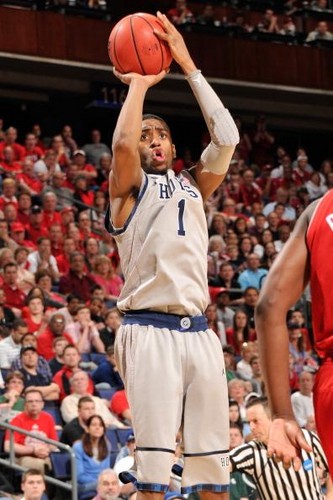
The Thunder signed much maligned center Hasheem Thabeet to a 2-year veteran minimum contract. Now the difference between Thabeet’s veteran minimum deal and any of the other 3 Thunder players that were up for an extension, is that Thabeet has only been in the league for 3 seasons. For the final roster spot, the Thunder signed undrafted free agent Hollis Thompson from Georgetown to a 3 year contract. Thompson is a sharp-shooter in the Thunder mold (tall and long) that could be a cheap replacement for Daequan Cook in upcoming seasons.

The two signings sent Thunder nation into a tizzy, and not for good reasons. Most were questioning the “lackluster” moves by the team, while the team that beat us in the Finals picked up former All-Stars Ray Allen and Rashard Lewis, and one of our biggest threats in the West, the Lakers, picked up a former 2-time MVP (Steve Nash) in their biggest position of weakness (point guard) without giving up a single player. The thinking was that the curse of the small market team was starting to take hold of the Thunder. That the ideology that small market teams can’t attract free agents and can’t spend money like the big boys was starting to rear its ugly head.

I, for one, completely disagree with that thinking. While it would be nice to sign former All-Stars ad-nauseam every offseason, the reality is that that would be bad business in this new NBA. The goal is to try and keep cost down while maintaining a competitive team. If your team does spend into the luxury tax territory, it better be winning. The Thunder have the right components in place to continue winning. The moves they made this offseason were made to keep those components in place. When you start talking about the luxury tax, every dollar counts. And if the Thunder are truly looking to keep both James Harden and Serge Ibaka on the same team as Durant and Westbrook, they are going to have to continue making these cost effective moves. Both Harden and Ibaka will demand deals that get them at least $10+ million per season. And, rightfully so. We’ll be in the luxury tax no matter what, if we keep these 4 players. The payments get more feasible, though, if you are competing for and winning championships.

Another thing that these signings do is maintain the flexibility that Presti loves. These signings not only have low cost-high reward potential, but they are also short term deals. That way, the team isn’t saddled with long-term contracts if the player, in question, either gets injured or doesn’t produce. Also, if someone better comes along, you could cut your losses with the player and attempt to obtain the better option. Cap flexibility is a commodity in the NBA, and Presti is one of the best at maintaining it.

Team USA

As if this offseason hasn’t been crazy enough, you have Team USA preparing for the Olympics in London. Not only that, but the Thunder has 4 representatives in the Olympics (Kevin Durant, Russell Westbrook, and James Harden for Team USA, and Serge Ibaka for Spain). Durant and Westbrook were near locks to make the team, but Harden was actually a surprise addition after players like Dwayne Wade and Derrick Rose bowed out because of injury. The team torched the Dominican Republic and eeked out a victory against a tough Brazil squad in the US leg of pre-tournament games. After this, it’s across the pond for a couple friendlies and then the real thing. Durant has a possibility of leading the team in scoring, while Westbrook will be the defensive pitbull/offensive sparkplug off the bench. Harden will probably play a role similar to what he does with the Thunder, but to a smaller degree.

As a fan of the game, I love this. Before NBA-TV, the offseason was usually a time to hear about a trade or two, and wait for football season to start. So, even though, this has been a whirlwind offseason, I still appreciate it. When this offseason gets too crazy, I always hark back to the 2011 offseason. Oh, you don’t remember the 2011 offseason? Oh, thats right, because there wasn’t an offseason that year.