Tag Archives: Dallas Mavericks

The Thunder and the 32nd pick

draft pj 3

The Oklahoma City Thunder hold 3 draft picks in this upcoming draft. They have two in the first round, No.12 and 29, and one in the second round, No. 32.  While people are usually enamored by the first round picks, it’s the early second round picks (No. 31-35) that hold more value to teams. It’s an opportunity to grab first round talent without the constriction of a guaranteed contract. Here’s a list of notable players that have been drafted in the 31-35 range in the last 5 season: Nikola Pekovic, Mario Chalmers, DeAndre Jordan, Kyle Singler, Jeffery Taylor, Jae Crowder, Draymond Green. The difference in talent from the last 5 picks of the first round and the first 5 picks of the second round is infinitesimal.

For teams holding a slot in those first 5 picks of the 2nd round, it is an opportunity not only to draft a talented player, but also to procure a trade for an asset. The fact that a team can take a flyer on a player without having to offer a guaranteed contract, makes these picks more valuable than those in the lower end of the first round. These picks becomes doubly valuable before the beginning of a maddening free agency season. When teams vying for free agents want to clear cap space and/or not take on anymore guaranteed salary, they dump players and first round picks in exchange for high second round picks.

presti

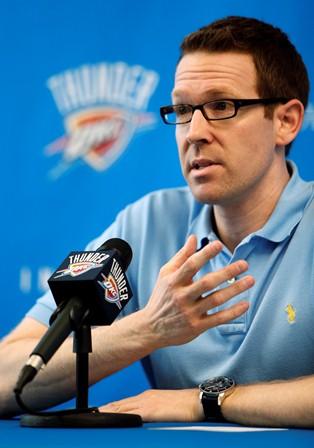
Thunder general manager Sam Presti took advantage of this during the last frenzied free agency class, where he also owned the 32nd pick. We arm-chair GM’s love to talk about the would’ves, could’ves, and should’ves. But we have that beautiful thing called hind-sight in our back pockets. Real NBA GM’s don’t have that advantage, but those few great  GM’s have a little thing called foresight. While we focus on our team in the present tense, great GM’s look at the health of other franchises and plot how they can take advantage of their needs. Presti is great at this and seems to be on the prowl again in this draft.

On July 27th, 2009, the Thunder traded Damien Wilkins and Chucky Atkins to the Minnesota Timberwolves for Etan Thomas and 2 second round picks. Most people thought this was just one of those offseason trades where a team trades 2 bench players for another bench player. But the haul in that trade was actually the 2nd round pick that turned into No. 32 in the 2010 NBA draft.

Etan Thomas, Andrew Bynum

The 2010 offseason was known for one thing and one thing only….the summer of Lebron. That was the offseason where most of the bumper crop from the 2003 draft class was coming up on their 2nd extensions, while other players like Amare Stoudemire, Carlos Boozer, and Joe Johnson were also coming up on unrestricted free agency. If you were a team that believed in quick fixes, this was the summer for you. While a handful of teams were trying their hardest to unload as much salary as possible, the other teams were more than willing to take on decent players (salary) and first round picks.

The Thunder had assets galore in the 2010 draft with 3 picks in the first round (18, 21, and 26) and 2 picks in the second round (32 and 51). The consensus with most teams is that you don’t head into training camp with five rookies. So, the Thunder knew they had to wheel and deal to get what they wanted in this draft, which was a defensive minded big man and more assets. Their first move was to trade the 32nd pick to Miami for the 18th pick and Daequan Cook. Miami was looking to cut salary to position themselves for the summer of Lebron. The Thunder knew they couldn’t get what they wanted at 18, so they traded it to the Clippers for a future first rounder. They eventually traded up to the 11th pick where they picked Cole Aldrich. The future first rounder from the Clippers helped to facilitate the trade with the Boston Celtics for Kendrick Perkins at the trading deadline that following season.

benchmob

There are a lot of similarities between this offseason and the 2010 offseason. First off, the top tier in this free agency class includes some franchise players, such as Chris Paul, Dwight Howard, Andrew Bynum, and Josh Smith. Secondly, these free agents are available and willing to hear out every offer on the table. Thirdly, there are team already vying to dump salary and 1st round draft picks to clear cap space. And, fourthly, the Thunder have the 32nd pick.

The story behind the 32nd pick is akin to the story of Hebrews wandering in the desert for 40 years in the book of Exodus. A little bit of controversy, a little bit of disobedience, and finally back to where it ultimately needed to be. On December 19, 2011, the Thunder traded Byron Mullens to the Charlotte Bobcats for their unprotected 2013 2nd round pick. Simple, right? Wrong! When the Thunder traded for Perkins, they sent Nenad Krstic and Jeff Green to Boston along with that Clippers draft pick. Everything was going good until doctors discovered the following season that Green was suffering from an aortic aneurysm, would need immediate surgery, and would miss the entire 2011-12 season. Boston contended that Oklahoma City knew of this condition previous to the trade. On June 16, 2012, the NBA decided to give Boston the Charlotte pick as compensation for the Green debacle. On July 20, 2012, the Celtics traded the pick to the Houston Rockets as part of a three team trade for guard Courtney Lee. Finally, on October 27, 2012, the pick was sent back to Oklahoma City as part of the James Harden trade. I’ve joked that, to everyone outside of Oklahoma City, the trade between OKC and Houston will be known as the James Harden trade. But to the people in Oklahoma City, the trade will be known as the “reacquisition of the Charlotte 2nd round pick” trade.

Oklahoma City is in prime position to make a significant move to improve their team in this draft. The rumor mill is already rampant with teams wanting to dump salary and picks for a chance at one of the top tier free agents. Adrian Wojnarowski of Yahoo!Sports reported that Houston is looking to unload the No. 5 pick from last season’s draft, Thomas Robinson, in order to clear further cap space. Chad Ford of ESPN.com reported that the Dallas Mavericks were looking to trade away the No. 13 pick in order to avoid the $1.6 million cap hold that the pick carries. Also, Atlanta has picks 17 and 18, but are also looking to throw their hat in the free agency fray. There will be plenty of opportunities to nab a necessary piece on this draft day.

Chris Bosh, LeBron James, Dwyane Wade, Carmelo Anthony

Also, there is one more thing to look out for in this draft. There might be an epic free agency class coming up next offseason. Lebron James, Carmelo Anthony, Chris Bosh, and Dwayne Wade all have early termination options to become free agents in 2014. Add to that, the 2014 NBA draft is predicted to be a lot stronger than this draft class, and you have the perfect storm for further wheelings and dealings. Look for the Thunder to not only get what they need in this draft, but also to pick up assets for the 2014 draft. Let the madness begin!

Oklahoma City Thunder vs. Utah Jazz preview (Game 78 of 82)

jazz_team_rr11_121130

  • When: Tuesday, 09 April 2013 at 8:00 PM CST
  • Where: Energy Solutions Arena, Salt Lake City, UT

One of the most dangerous things to face in the final week of a season is a team fighting to get into the playoffs. Their “win or go home” mentality surfaces with every game leading to the playoffs. Most playoff bound teams are on cruise control in the final week of the season. Some may be battling for playoff positioning, but if you are a team that has an end of alphabet letter (X,Y,Z) by your name in the standings, you’re usually pretty content. But for teams like the Utah Jazz, Los Angeles Lakers, or even, Dallas Mavericks, these final few games are their play-in games to get into the NBA post-season tournament.

I don’t know if the Oklahoma City Thunder are indifferent as to whether they get the No.1 seed in the Western Conference or not. Both the Thunder and San Antonio Spurs seem pretty content with their position in the conference, and are probably both confident they can win the conference whether they have home court advantage or not. With that said, the Thunder will be facing a desperate team trying to put space between themselves and the Los Angeles Lakers for the final playoff spot.

Los Angeles Lakers v Utah Jazz

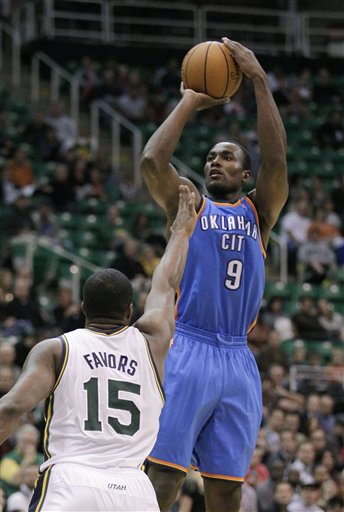
The Jazz come into the game surging, having won 7 of their last 8 games. With Mo Williams finally healthy and Derrick Favors beginning to live up to his potential, the Jazz seem to finally have found their groove. They’ve settled into a consistent rotation of 8-9 players that attacks with balanced offense (inside with Paul Millsap, Al Jefferson, and Favors and on the wings with Williams, Gordon Hayward, and Alec Burks) and consistent work on the boards.

For the season, it has been a home court advantage type of series between these teams with the Thunder dominating their two games in Oklahoma City and the Jazz dominating in their one game in Salt Lake City.

Probable Starting Line-ups

Utah Jazz

  • PG – Randy Foye
  • SG – Mo Williams
  • SF – Gordon Hayward
  • PF – Paul Millsap
  • C – Al Jefferson

Oklahoma City

  • PG – Russell Westbrook
  • SG – Thabo Sefolosha
  • SF – Kevin Durant
  • PF – Serge Ibaka
  • C – Kendrick Perkins

3 Keys to the Game

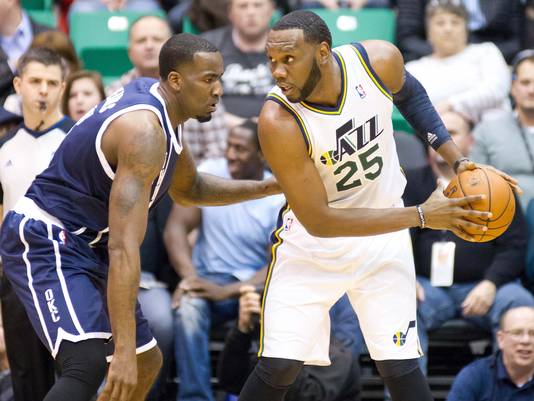
1. Control the paint – This is a team that the Thunder can actually sag off the shooters a bit and help out in the paint. The Jazz only make about 6.2 threes per game, which puts them in the bottom quarter of the league in 3-point makes per game. Kendrick Perkins has had a fair amount of success defending his former Boston battery mate, Al Jefferson.  And Ibaka and Collison have had success against Millsap and Favors. But those three can collectively change the game with the rebounding ability and offensive production in the paint.

al perk

2. Shooters – As in, Oklahoma City shooters. Kevin Martin, Thabo Sefolosha, Derek Fisher, and Ibaka should all be on high alert as they should receive their fair amount of opportunities to attempt open jumpers. The Jazz always have trouble defending Kevin Durant and Russell Westbrook. Look for the Jazz to shade a defender over, leaving someone open on the perimeter.

Serge Ibaka, Derrick Favors

3. Durant and Westbrook – Hey, no one on the Jazz can guard you guys. Begin CDI (Complete Dominance Initiative).

Scoreboard Watching

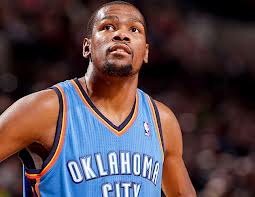
kd

Last month of the season. A time where every game has meaning. Teams are either jockeying of playoff positioning or draft positioning. The worst teams are balancing between increasing their chances in the NBA draft lottery and creating a late season winning attitude to carry over into the next season. And the best teams are either trying to solidify their spot in the playoff rankings in an effort to get home court advantage throughout the playoffs, or trying to get into the playoffs.

For most teams in the playoff hunt, the only thing they are worried about is playoff seeding. For these teams, their draft picks for the next draft will be in the 15-30 range, and unfortunately, there aren’t too many franchise saviors drafted in that range. What these teams will end up drafting in this range are solid rotation players, Euro-stashes, and players that most fans won’t hear about again once their rookie contracts have run their course. But sometimes, due to prior trades or deals, some of these teams luck into a lottery pick.

nba-draft-lottery

The Oklahoma City Thunder find themselves in the position of battling for the number 1 seed in the Western Conference and picking in the lottery in the following NBA draft. When the Thunder traded James Harden to the Houston Rockets, some of the assets that OKC obtained were draft picks. These are the 3 draft picks the Thunder obtained in that trade and their restrictions:

  • Dallas Mavericks 1st round pick (Top 20 protected until 2018)
  • Charlotte Bobcats 2nd round pick (no restrictions)
  • Toronto Raptors 1st round pick (Top 3 and 15-30 protected in 2013 and 2014, Top 2 and 15-30 protected in 2015 and 2016, Top 1 and 15-30 protected in 2017 and  2018, unprotected after that.)

The Dallas pick probably won’t come to fruition in this draft as Dallas is currently in the lottery and has a very small chance of even reaching the 21st pick if they make the playoffs. They would need to win out and have the 7 other playoff teams currently under 45 wins completely fall apart. A scenario that is very unlikely. The Toronto and Charlotte picks, on the other hand, are in play for the 2013 Draft. As a fan of the Thunder, this has made scoreboard watching in April must-see-TV.

Toronto Pick (Teams that warrant watching – Philadelphia, Washington, Minnesota, Sacramento, New Orleans, and Toronto)

Again, this pick is Top 3 and 15-30 protected for this upcoming draft. Since the Raptors aren’t making the playoffs this season, you can eliminate the 15-30 protection from their draft pick. As of April 1st, the Raptors are slated to pick No.8. With 8 games left, the Raptors have the possibility of picking as high as third (if they lose out) or as low as 13th (if they win out). The position of the Raptors’ pick is not only dependent on their play, but also on the play of the teams around Toronto in the league standings. This is how the teams listed above are currently slotted and how far apart they are in games as of April 1st:

11. Philadelphia          –

10. Washington           3

9. Minnesota               3

8. Toronto                   3.5

7. Sacramento             3.5

6. New Orleans           4.5

So there are currently 3.5 games separating Toronto from the Number 11 slot in the draft and 1 game separating Toronto from the Number 6 slot in the draft. A lot of movement is possible in the standings within the final 2 weeks of the season.

Charlotte Pick (Teams that warrant watching – Orlando and Charlotte)

The Charlotte pick is not protected meaning wherever Charlotte’s pick falls in the 2nd round, that’s where Oklahoma City will pick. Granted, 2nd round picks are more miss than hit. The players selected in the 2nd round of the NBA draft fall into one of four categories. You have the 1st round talents that slipped into the 2nd round for a myriad of reasons, the Euro-stashes, the upper classmen that may surprise and make it onto an NBA roster, and the players that are a reach. Usually, the higher you pick in the 2nd round, the higher the probability of success in the NBA.

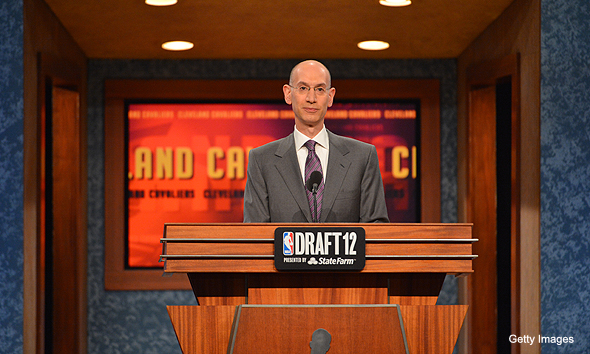
adam-silver-draft

With the worst record in the NBA, the Charlotte Bobcats would get the 1st pick of the 2nd round (pick No. 31). Here’s a list of the last 5 players selected with the 31st pick:

  • 2008: Nikola Pekovic (currently with the Minnesota Timberwolves)
  • 2009: Jeff Pendergraph (currently with the Indiana Pacers)
  • 2010: Tibor Pleiss (still playing in Europe, rights owned by the Oklahoma City Thunder)
  • 2011: Bojan Bogdanovic (still playing in Europe, rights owned by the Brooklyn Nets)
  • 2012: Jeffrey Taylor (currently with the Charlotte Bobcats)

These are 3 quality players that were obtained with the first pick in the 2nd round, along with two Euro-stashes whose NBA careers have yet to begin. The allure of a 2nd round pick is that the contract is not initially guaranteed. Every player selected in the first round gets a contract that is guaranteed in the first two seasons with team options for the next 2 seasons at a set salary depending on where they were drafted. Most second round players have to prove their worth in summer league and training camps before the team offers them a guaranteed contract.

For a while it appeared that Charlotte had a stranglehold on the bottom spot in the NBA. In the last few weeks, though, Orlando has lost their veteran interior presence (Glen Davis) to injury, traded their veteran wing/bench scorer (JJ Redick), and lost their starting shooting guard (Arron Afflalo) to injury. Combine that with the general rebuilding nature the franchise currently finds itself, and that has led to Orlando losing 9 of its last 10 games. Orlando trails Charlotte by only 1.5 games for the final spot in the NBA.

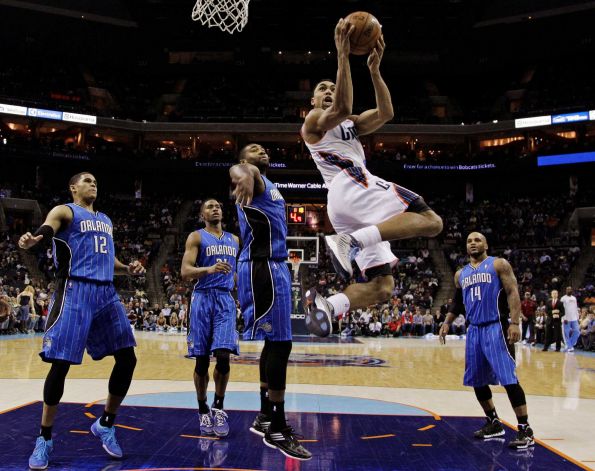
bobcat magic

Is there a difference between the 31st and 32nd pick? I don’t know, but of the last 5 players selected with the 32nd pick, only one is still the NBA (Dexter Pittman) and one is still in Europe. The other three have fizzled out and are currently out of the league. Based on this recent history, it is definitely better to get the 31st pick instead of the 32nd pick.

Number 1 seed in the Western Conference (Teams that warrant watching – San Antonio and Oklahoma City)

With the Oklahoma City Thunder trailing the San Antonio Spurs by one game for the top spot in the Western Conference, every game from here on out is of tantamount importance to both teams. The two teams play each other one more time on April 4th. As I mentioned in a previous article, home court advantage may be more important to the Thunder this season than it was last season, when the Thunder beat the No.1 seeded Spurs in the Western Conference Finals. The Thunder had an overhaul to their bench before the season began, and have a couple unproven players (as far as playoff experience goes) that perform better at home than on the road.

perk smash

Every day that goes by offers a game that is of importance to the Thunder. It is a fun time to be a fan of the team, and a fan of the NBA in general. Whether it affects their future or present, you can be certain that Thunder fans will be watching that scoreboard every day until the season ends.

Kevin Martin’s Future with the Thunder

martin_thunder

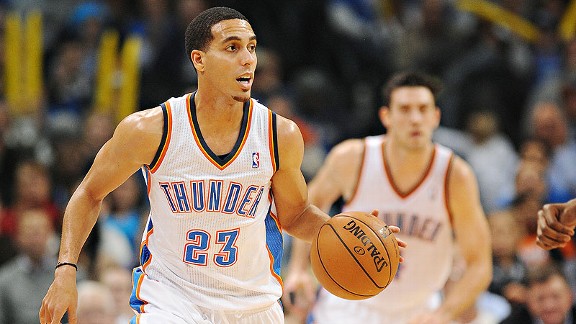
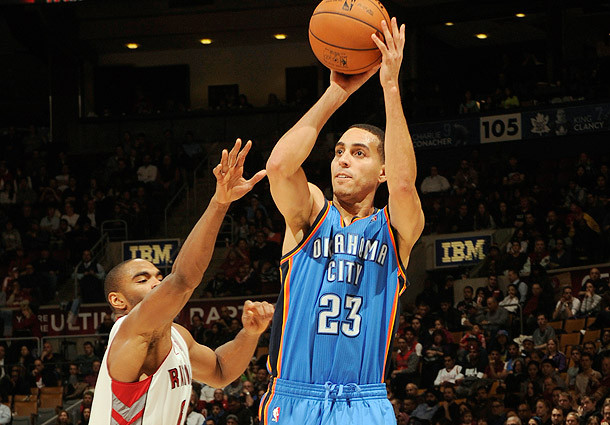
One of the biggest decisions facing the Oklahoma City Thunder this offseason is whether or not to keep Kevin Martin past this season. Martin was the other big name in the blockbuster deal that sent James Harden to the Houston Rockets a couple days before the 2012-13 season began. Martin was brought in to maintain the scoring provided by Harden off the bench and has nearly matched Harden’s bench output from last season when Harden was the NBA’s 6th Man of the Year. Though he has struggled at times this season in his new role, especially in home/road splits, Martin has performed well enough to be an integral part of the Thunder, who are once again, championship contenders.

People tend to think of contract negotiations, exclusively, as an offseason event. But the chess pieces that are the “Kevin Martin negotiations” have been shuffling around the chess board all season long. There are always two sides to any negotiation, but there are so many variables that influence the final decision. Those variables are the chess pieces the Thunder and Martin have been playing around with for the entire season. In this article, I’ll look at some of those variables and see how they will influence the upcoming negotiations between these two parties.

Kevin Martin’s chess pieces

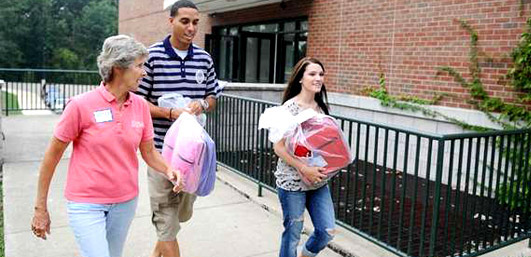
Background – Martin comes from Zanesville, OH, which has a population of about 25,000 people. He has maintained very close ties to that community and is constantly involved in community events (basketball camps, 3-on-3 tournaments, etc.) during the offseason. With that said, it doesn’t seem that big city lights have the same effect on Martin as it does with many other players in the NBA. He started his career in one of the smaller markets in the NBA (Sacramento), and then played in one of the bigger markets in Houston. A community like Oklahoma City probably reminds Martin a lot more of Zanesville than a city like Houston would.

zaneville

Personality – If Russell Westbrook’s personality can be described as hyperactive and intense, then Martin’s can be described as cool, calm, and collective. I don’t think I’ve ever seen a player who touches the ball so much, have so little emotion. It’s not hard to imagine Martin committing a turnover and reacting by saying, “Darn,” in little more than a whisper while jogging to the other end of the floor. And I’m not necessarily saying that’s a bad thing either. On a team full of emotionally charged players (Westbrook, Kevin Durant, Kendrick Perkins, Serge Ibaka), it’s good to have players on the opposite end of the emotional spectrum to balance things out.

Also, Martin’s personality traits are more conducive to accepting a bench role, instead of wanting to be the man. Martin tried that for 9 seasons in Sacramento and Houston with mixed results. He had good stats (21.5 ppg from 2006-2012), but his teams were never good enough to make the playoffs. In an interview with Hoopsworld in late December, Martin stated, “…I’m so happy right now and being with these guys has given me an extra pep in my step. It’s just fun being here. It’s a great organization and great guys. I’m happy right now.” The burden of carrying a team can be pretty daunting, and statements like this lends to me think that Martin is happier being a contributing player on a successful team, than being the man on a mediocre team.

Community-oriented – Martin is known as one of the most affable and approachable players in the league. He is heavily involved in the community in his hometown and even won the 2008 Oscar Robertson Triple Double Award, which is a community involvement award given out annually by the Sacramento Kings. If there’s one thing the Thunder organization places utmost importance on, it’s community involvement. Most players do community activities because the League relegates that they have to. But, Martin is one of those players that truly enjoys being involved in the community.

martin community

On record – When Oklahoma City first got a team, one of the things that detractors hung their hats on was that players weren’t going to want to play or stay in OKC. That the players would skip town at the first opportunity, or never even consider OKC in free agency. In an interview with Marc Stein of Yahoo! Sports in late January, Martin put it on record, saying, “This summer, hopefully everything works out here. I haven’t said that too often. But I will put it out there; hopefully I have found a home in the NBA. I love playing with this group of guys. The organization is great to me. The community has been great to me. It’s the happiest I have been during my NBA career.” While many Thunder fans may take that statement with a grain of salt, after James Harden basically said the same thing in the offseason, there’s an air of wisdom and experience in Martin’s statement that makes it sound more believable.

Production – The trade in late October sent one of the best bench units in the league into complete disarray. Gone from the team were Harden, who was the reigning 6th Man of the Year, Cole Aldrich, who was thought to be the team’s back-up center, and Daequan Cook, who was their situational 3-point shooter/floor spacer. In addition to that, the back-up point guard position was shaky at best, with Eric Maynor coming off of an ACL injury and Reggie Jackson still learning how to play point guard in the NBA. In essence, the Thunder got rid of 4 bench players for one bench player (Martin) and one project player (Jeremy Lamb).

kevin-martin-thunder

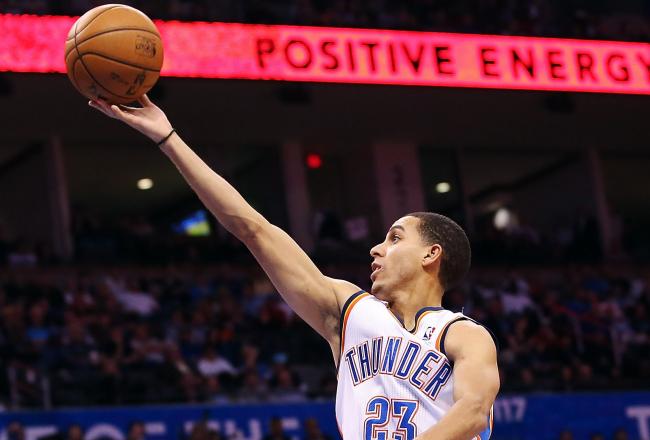
It’s taken a little bit more than half of the season, but the bench seems to have solidified itself into a stable outfit. Martin is one of the league leaders in bench scoring, averaging 14.5 points per game. He’s assumed the role of 3-point specialist (43%) and floor spacer when he’s on the floor with Durant and Westbrook, especially late in games. And he’s begun to develop a chemistry with Nick Collison that is akin to the chemistry Collison and Harden had together.

Thunder’s chess pieces

Leverage – The player Martin was shipped with to Oklahoma City in the James Harden deal may ultimately be the reason Martin becomes expendable. Since the moment he donned a Tulsa 66ers jersey, rookie Jeremy Lamb has been lighting up the D-League to the tune of 21.1 points, 5.4 rebounds, 3.3 assists, and 1.1 steals per game in 16 games. While success in the D-League doesn’t always equate to success in the NBA, Lamb has flashed the tools to be a consistent scorer/shooter at the NBA level.

Jeremy Lamb, DeSagana Diop

Comparable players – These are four players (and their salaries) that are comparable to the role that Martin plays on the Thunder.

  • Jamal Crawford – Los Angeles Clippers (4 years / $21.35 miillion)
  • JJ Redick – Milwaukee Bucks (1 year / $6 million)
  • Jason Terry – Boston Celtics (3 years / $15.675 million)
  • Ray Allen – Miami Heat (2 years / $6.32 million)

All of these players are perimeter oriented bench scorers who are average to below average defenders playing for playoff teams.

Home vs. road splits – It’s no secret that players usually play better at home than on the road. There’s the familiarity factor of the arena, the fact that you get to sleep in your own bed, and the boost from the home crowd. As a bench player, Martin is needed to supplement the offense when the starters (namely, Durant and Westbrook) are out of the game. This is very important on the road, especially in the playoffs. Here’s a look at Martin’s home/road splits through the first 61 games of the season:

  • Home – 16.1 ppg on 47.9% FG, 50% 3ptFG, and 92.2% FT
  • Road – 12.7 ppg on 41.3% FG, 35.6% 3ptFG, and 86.7%FT

That’s a 21% drop off in scoring (and noticeable drops in every shooting percentage) outside of the friendly confines of Chesapeake Energy Arena. This may become a factor in the playoffs as the Thunder move forward.

CBA and luxury tax – This may be the biggest hindrance in keeping the Thunder from resigning Martin. Starting next season, the Thunder will have $54.19 million allocated to 4 players (Durant, Westbrook, Serge Ibaka, and Kendrick Perkins). That leaves about $16 million in pre-luxury tax cap space for 11 roster spots. While the Thunder may have to eventually get into the luxury tax to stay competitive, they will try to stave it off for as long as possible.

Prediction

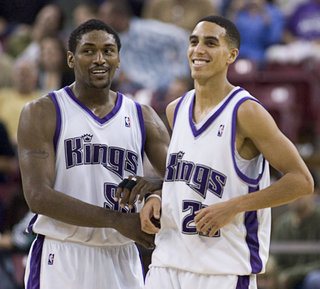
A lot still remains to be seen concerning Martin and the Thunder. While Martin has performed well in the regular season for his career, he’s never been overtly tested in the playoffs. The last time Martin was on a team that made the playoffs, his teammates included Ron Artest, Bonzi Wells, Shareef Abdul Rahim, Mike Bibby, and Corliss Williamson. While he performed well in that one playoff series, it still remains to be seen how Martin will perform as the team advances in the playoffs.

artest martin

Martin seems to be getting more acclimated with his role off the bench. He’s developed a 2-man game with Nick Collison that defenses have to respect. And his ability to space the floor has opened up driving lanes for back-up pg Reggie Jackson. Martin also seems to be getting more used to his role as a shooter/floor spacer late in games with Durant and Westbrook on the floor.

When the Thunder acquired Martin before the season, I think they had every intention on keeping him and seeing how things played out throughout the season. Even though his $12.5 million expiring contract may have been a valuable commodity at the trading deadline, Martin’s name was never mentioned in any trade rumors leading up to the deadline. One of the reasons why the transition from Harden to Martin has been mostly seamless is because Martin provides a lot of the same production that Harden did. He’s an efficient shooter and a good scorer, who’s always looking to attack the defense. That’s a rare commodity to have when a team can rest its starters and still keep the defense on their heels with its second unit. While the trade brought big changes to the roster, the Thunder never had to change any of their game planning because of the similarities in the styles of play of Harden and Martin.

team

Martin, for his part, seems to be genuinely happy in Oklahoma City. I think there are several reasons for his happiness that may work in the Thunder’s favor in resigning Martin. First off, the pressure of being “the man” on the team is no longer on Martin. While Martin is a good scorer, I don’t think he ever embraced being the No.1 guy on a team. Some players are meant to be alpha males, while others are meant to be great role players. Martin seems to fall in the second category. Secondly, he’s playing on a championship contending team. I don’t know how Martin feels about his legacy, but playing for championships tends to enhance your legacy as a player. Thirdly, Martin may actually increase his longevity in the role that he is currently playing. Martin has always been known to be injury prone, playing in over 60 games only 5 times in his 10 year career (to include this season). Coming off the bench on a championship contender, Martin is playing the least amount of minutes since his 2nd season. And he’s going to the FT line a lot less, meaning that he is not driving or putting his body in harm’s way.

The most important factor in all of this is money. How much is Martin willing to sacrifice, and how much are the Thunder willing to offer? Every championship team has an elite bench scorer or a combination of capable bench scorers. I’m sure that even Martin knows he’s not worth the $12.5 million he’s currently getting paid. If the Thunder offer Martin anything comparable to what Jamal Crawford or Jason Terry are making, will he take that offer? Or will he jump at an offer from another team desperate for a shooting guard (Utah, Minnesota, Dallas) that will likely be substantially more than what the Thunder can offer? Another option for the Thunder is Jeremy Lamb. Is Oklahoma City willing to go into next season with Jeremy Lamb and Reggie Jackson as the main components of their bench unit?

fingerroll martin

I think the Thunder see Martin as their firepower off the bench for the next few seasons. If they were willing to go into the luxury tax for Harden, you can be sure that they’ll keep Martin at a much lower price. My prediction is that Martin will sign a contract comparable to what Jason Terry got (possibly 3 years/ $16.5 million) in the offseason. Martin seems like a mature person that realistically knows his strengths and his weaknesses. He knows that this as a great opportunity to play on a team, and in situations, that matter. In the end, I think he’ll choose legacy and longevity over money.

Phoenix Suns vs. Oklahoma City Thunder Preview (Game 50 of 82)

suns thunder

  • When: Friday, 08 February 2013 at 7:00 PM CST
  • Where: Chesapeake Energy Arena, Oklahoma City, OK

What a difference a week makes. Last week we were wondering what was going on with the team following a blow up by Russell Westbrook in a blowout win against the Memphis Grizzlies, and a surprising road loss to a bottom dwelling Eastern Conference team (Cleveland). But, alas, it was probably much ado about nothing. The team was probably just road-weary after having played 12 of their previous 15 games on the road. A three game home stand is just what the doctor ordered. The Thunder have responded with two consecutive 21 point victories against quality opponents (Dallas and Golden State).

durant_suns_bg1_130114

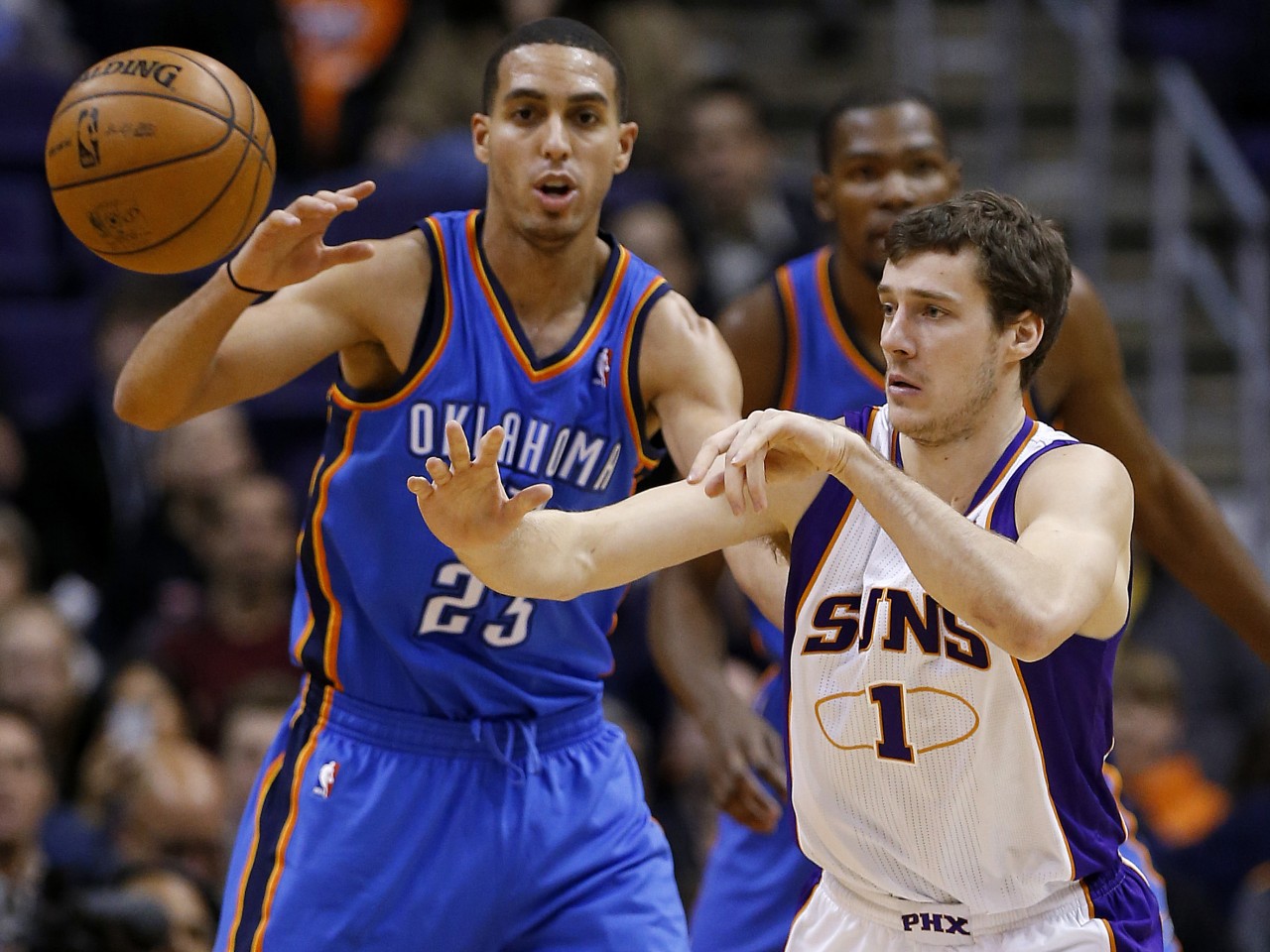
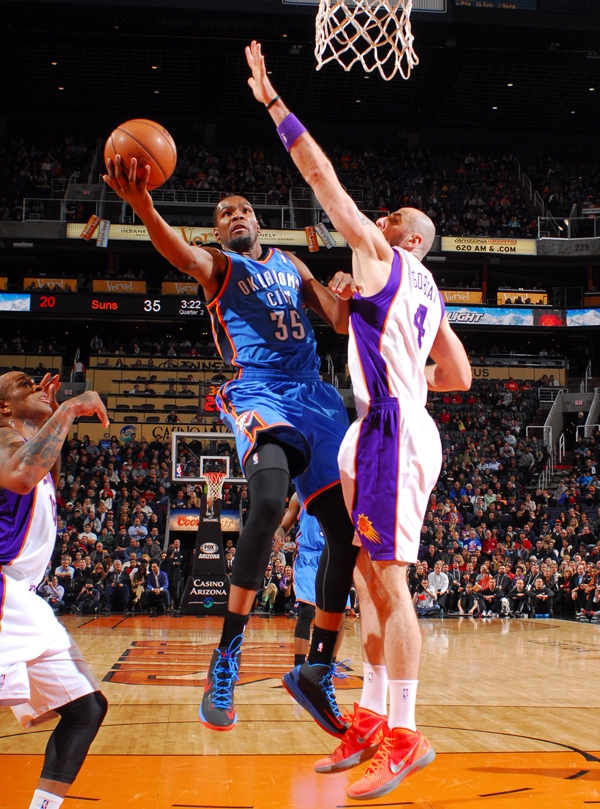
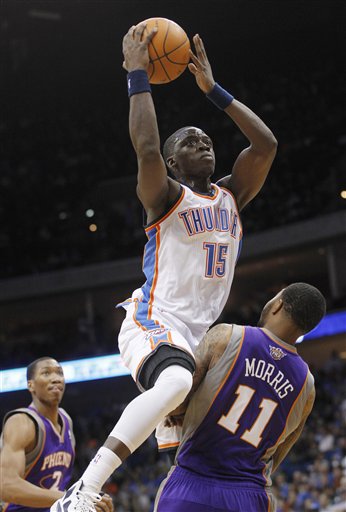
On the third game of their home stand, the Thunder will face the Phoenix Suns. The two teams come into the game on opposite end of the spectrum, with the Thunder being the 2nd best team in the Western Conference, and the Suns being tied for the 2nd worst record in the conference. The Thunder currently lead the season series 2-0, but struggled to close out the game in their last meeting. The Thunder only held a 4 point lead heading into the 4th quarter of that game, but Kevin Durant took over, scoring 19 of his 41 points in the final quarter to lead the Thunder to a 102-90 victory.

The Opponent

suns 13

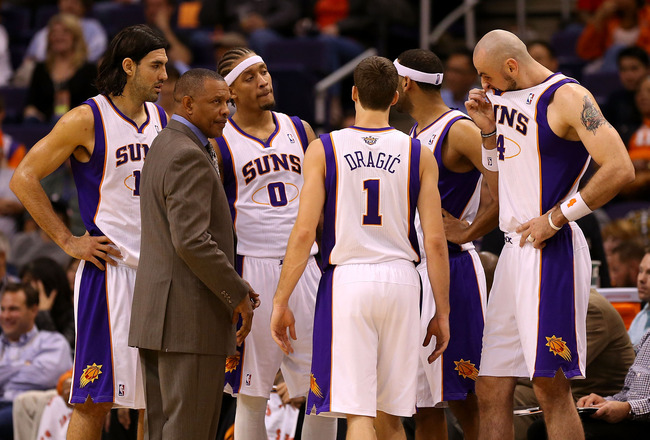
The Suns currently find themselves in the beginnings of a rebuilding process. They aren’t horrible enough to get high draft picks, but they aren’t good enough to be considered mediocre. They find themselves at 17-33, tied for 13th in the conference. They are in the bottom third of the league in scoring (95.3 ppg, 20th in the league) and scoring defense (99.6 ppg against, 22nd in the league). Needless to say, these are not your older brother’s Steve Nash-led Suns. The offensive attack is keyed by point guard Goran Dragic, who leads the team in scoring (14.2 ppg) and assists (6.4 per game). The front court is led by the veteran duo of Marcin Gortat and Luis Scola, with both averaging double figures in points and combining for over 15 rebounds per game. Rounding out the back court is the defensive duo of PJ Tucker and Jared Dudley. The Suns’ bench can be explosive, but very inconsistent, with scorers like Michael Beasley and Shannon Brown, and big men like Jermaine O’Neal and Markieff Morris.

Probable Starters

Phoenix Suns

  • PG – Goran Dragic
  • SG – PJ Tucker
  • SF – Jared Dudley
  • PF – Luis Scola
  • C – Marcin Gortat

Oklahoma City Thunder

  • PG – Russell Westbrook
  • SG – Thabo Sefolosha
  • SF – Kevin Durant
  • PF – Serge Ibaka
  • C – Kendrick Perkins

3 Keys to the Game

  1. Contain their scorers – Sound like logical reasoning. But Phoenix’s roster is littered with guys that can become streaky and go off for 25 points in an instant. Players like Dragic, Scola, Beasley, and Gortat all have the possibility of getting hot at the right time and scoring a ton of points. Just ask the Los Angeles Lakers about Beasley going off for 27 against them, and leading the Suns to victory after they were down by 10 heading into the 4th quarter.Reggie Jackson, Markeiff Morris
  2. Bench play – The starters will do their thing, but it’s up to the bench players to maintain what the starters do. In the last game, the bench allowed the Suns to storm back at the end of the 3rd quarter to bring the Suns within 4 points. The Suns’ bench outscored the Thunder’s bench 30-19 in their previous meeting.
  3. Do what you do – The Thunder are superior to the Suns in every statistical category. And they are playing at home. If the Thunder do what they do, this should be an easy victory.

Mr. Harden’s Opus

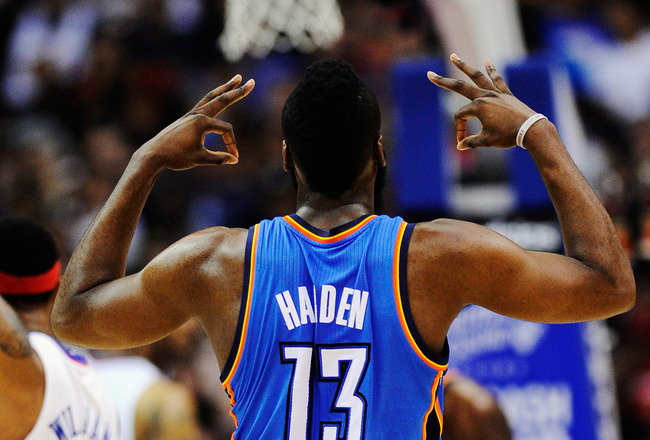
So I had this blog detailing why I didn’t think the Oklahoma City Thunder would sign James Harden by the October 31st deadline. I was going to work on it this weekend and publish it on Monday. I was hoping Harden and the team would still be in negotiations by the time I finished said blog. I truly believed the negotiations would be an issue that would be shelved until next offseason when the front office had more information (an entire season’s worth) to make more of an informed decision. Instead, with the OU/Notre Dame tied at 13 in the 4th quarter, I checked my twitter feed and saw this inconspicuous tweet:

Wow #Harden

I don’t remember who the tweet was from. But it piqued my curiosity and I clicked on the hash tag. I thought it was going to be a person that was surprised Harden had turned down a 4 year/ $52 million dollar contract extension. Instead, to my complete and utter surprise/horror, I started seeing the all the tweets about Harden being traded to the Houston Rockets for Kevin Martin and Jeremy Lamb. The “Whhhhaaaatttttt???!!!” I let out startled my wife into rushing out of the kitchen to see what the hell was going on. The rest of the OU game was a blur to me after that. I went into Twitter frenzy mode and didn’t stop until after midnight. Once the shock and awe of it wore off (which most of it hasn’t), I was able to process the trade and evaluate it.

Here are the details from the trade:

Houston gets SG James Harden, C Cole Aldrich, SG Daequan Cook, and SF Lazar Hayward

Oklahoma City gets SG Kevin Martin, G/F Jeremy Lamb, 2013 first round pick (from Toronto, top 3 protected), 2013 first round pick (from Dallas), and 2013 second round pick (from Charlotte)

Here are some of the thoughts I have about it. I call this my “Mr. Harden’s Opus.”

The Good

My first option would have been to keep the Thunder nucleus together. But if you are going to trade Harden, this was probably the perfect batch of expiring contract, promising rookie, and draft picks galore. Let’s start with the big name from Houston: Kevin Martin. If you are going to find a substitute teacher for Harden, Martin is probably the best one year prospect available. An effective scorer who has averaged 18.4 points per game for his career, with a great mid-range game and an effective 3-point shot (38%). Someone who goes to the free throw line 6.6 times per game for his career. Defensively, Martin may not be as big as Harden, but it isn’t like Harden was in line for the All-Defense team, either. Both are sieves on the perimeter, but Harden is able to bang with bigger bodies like Kobe Bryant and Stephen Jackson. The one thing Harden really has on Martin is his play-making ability.

If the Thunder plan on bringing Martin off the bench, this plays out perfectly for them. With Eric Maynor back, Martin won’t need to take Harden’s place as a play-maker on the second team. Martin could be the gunner off the bench and the Thunder could use him in late game situations if offense is needed. For all the talk about Martin being a selfish player, he has never played with players of the caliber of Kevin Durant, Russell Westbrook, and Serge Ibaka. The focus will be off Martin and he can do what he does best, which is score from the perimeter and get to the line.

The second, lesser known name in the trade was rookie Jeremy Lamb. This, in my opinion, will determine whether this trade will be viewed as a success or a failure. Lamb has the skill set and potential to be that dual threat shooting guard that the Thunder have been coveting in their championship run. Someone, potentially, with the length, athleticism, and defensive ability of Thabo Sefolosha, but also with the scoring and shooting ability of James Harden. Jeremy Lamb could prove to be that kind of player. With Martin in the mix for at least one season, Lamb can sit and learn this season without the pressure of being a starter.

The draft picks were probably what sealed the deal on this trade. Getting a good veteran with an expiring contract like Martin, and a rookie dripping with potential, like Lamb are things that many teams could have offered. But not many teams could have offered that and a slew of draft picks like Houston could. The Thunder, as weird as this sounds, are a championship contending team that got younger and obtained great assets. The Toronto pick will be a great trade chip going forward, as the Raptors are not expected to improve much from where they were last season. The 2nd round pick from Charlotte will also be valuable as it will probably be one of the first few picks from the 2nd round.

The Bad

According to sources, the final offer the Thunder made to Harden was in the 4 years / $55.5 million dollar range. Harden will probably end up signing with Houston for 4 years / $60 million dollars. You mean to tell me the difference between a potential dynasty with an established core, and completely blowing up a team 5 days before its season opener is $4.5 million dollars. That difference amounts to $1.125 million per season. The ownership group, which has made a commitment to all of its core players, could not come up with $4.5 million dollars more? This group of multi-millionaires and billionaires were panicking over an extra $1.125 million per year. Don’t get me wrong, though. I understand it is their money and not mines. But, keeping this core intact for at least another 4 years would almost certainly guarantee runs to the Western Conference Finals and NBA Finals in that allotted time. Those extra games means about $20-40 million dollars extra in profit for the ownership group. You can talk about cap flexibility and assets until you are blue in the face, but when you have the potential to win championships in the here and now, AND you’re making money, you take those chances.

The scariest part about this trade is that a championship contending team was blown up less than a week before the start of the season when it didn’t need to be. We just went through 7 preseason games with our normal core intact, and now we only have 4 days worth of practice time to integrate 2, and possibly more, pieces to our team. When, in the minds of the front office personnel, did they say, “You know, this sounds like a great idea.” While the linchpin of this trade may have been Harden, Cole Aldrich may prove to be a big loss for the Thunder. He seemed ready to assume the role of back up center, getting 2 double-doubles in the preseason. Now, we are heading into the season with Hasheem Thabeet as our backup center. Granted, Nick Collison, Serge Ibaka, and possibly, Perry Jones III can all play the 5 in a pinch. But in a future playoff series against the Memphis Grizzlies, Los Angeles Clippers, or Los Angeles Lakers, having an inexperienced and oft maligned center as a back up could prove to be detrimental.

The Ugly

Can someone tell me why the hell we had a lockout last season? All I heard during the lockout was about the percentage of the revenue that the players got and how salaries had gotten out of hand. Some even tabbed it as the “Rashard Lewis” lockout, with Lewis being the best example of a 2nd or 3rd tier player that received a max extension, thus limiting the cap flexibility of that team for up to 5 seasons. Basically, it was a lockout to keep the owners from actually overspending their profitabilities. So, then, why are teams paying players like Eric Gordon, Roy Hibbert, and James Harden max extension money. I thought max money was for top 10 players like Lebron James, Kobe Bryant, and Kevin Durant. Instead teams are throwing around stupid money for 2nd tier players. There’s 5 years left until the owners and players can revisit the CBA, and believe me, it will be revisited again, and this time, I fear, with dire consequences.

WWJD – What would James do?

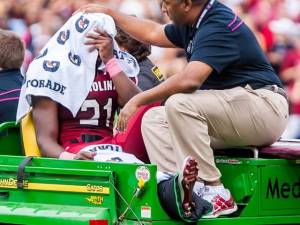
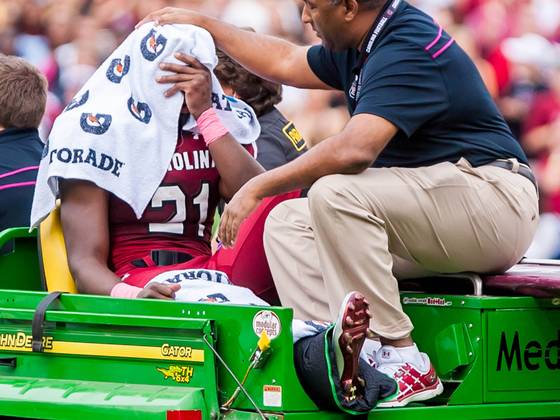
Do you know who I’m not mad at for this trade? James Harden. Before the OU game on Saturday, I spent the whole afternoon thinking about University of South Carolina running back Marcus Lattimore, who had just suffered a gruesome right knee injury. If you haven’t seen it, just think of Shaun Livingston’s knee injury from 5 years ago. Reports are coming out that Lattimore tore a couple ligaments and completely dislocated his kneecap. To make matters worse for Lattimore, he was coming back from a torn ACL in his left knee suffered the previous season. If Lattimore was a stock and NFL teams were the buyers, he would currently be considered a toxic asset.
In a profession where your best years are in your mid to late 20’s, your earning potential is contingent on 5-7 years of performance and luck. If you suffer an injury or get involved in a legal scandal, your earning potential will go down. You, as an athlete, cannot dictate what the market will pay for you. If the market wants to pay you max money, then that’s what they pay. If they want to pay you veteran minimum money, then that is what you will get paid. I don’t blame Harden for taking what the market gives him.

As I wrote in my Pippen/Westbrook column, Pippen consistently took less than his market value to keep the core of the Bulls team together. Where did that leave him? Broke (most of it his fault, but still) and bitter. Harden could have taken a couple million less than what the market had placed his value at, but why. While we like to moralize athletics into this great teaching tool where you sacrifice for the greater good, at the end of the day, its a business. If a player can’t perform anymore, the owner is going to let that player go and move onto the next able body. It’s a business and a player would be a fool to leave money on the table.

I’m the Oklahoma City Thunder blogger for the blogging network called Hoops Talk Nation through the website www.thebreakdownshow.com. I currently blog on there for free. But if ESPN, YahooSports, or CBSSports ever called to offer me a spot on their blogging network for cash, I would take it in a heart beat. While I love the opportunity that Audley Stephenson and Dave Mendonca have afforded me, I wouldn’t be able to turn down the possibility of blogging AND earning cash to do it. Regardless of how I fancy myself as a blog writer, I would never turn down the opportunity to move up on the pay scale.
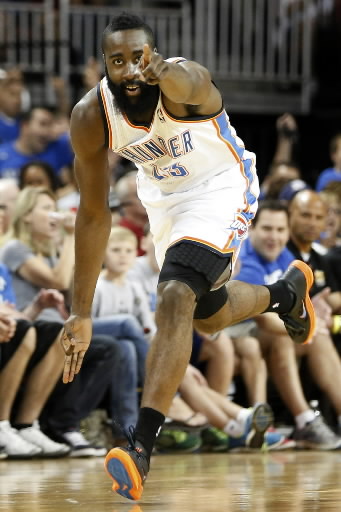
OKC fans should not hold this against James Harden. This is a business, and him turning down less money is a business decision. He is doing what he feels is best for himself and his family. Not unlike what we do everyday, but with less zeroes attached to it. Many will be mad for what they perceive was a lie from Harden with all the “sacrifice and brotherhood” talk. What did you expect from him? To come out and say, “I don’t give a shit what you think I’m worth. If the market says I’m a max player, I want max money!”

Being a fan is an emotional experience. When you mix emotion and money, you don’t make sound decisions. So, if you take the emotion out of the equation, you’d realize that James Harden did the same thing you and I would’ve done, which is to never leave 7.5% of a raise on the table.

The Trade and the Thunder

Well, what’s done is done. The NBA is not going to step in and rescind this trade, as Harden does not suffer from any pre-existing toe injuries or heart ailments. He is a Houston Rocket. And so are Daequan Cook, Cole Aldrich, and Lazar Hayward. We cannot worry about them anymore.

What we do have are two unique players and 2 roster spots to fill. I think Kevin Martin will slide in seamlessly into Harden’s role off the bench. His efficient scoring and knack for getting to the line will have Thunder fans wondering whether James Harden shaved his beard, lost some weight, and slightly bleached his skin. The real prize in this trade could be Jeremy Lamb. If, in an alternate basketball universe, the basketball DNAs of James Harden and Thabo Sefolosha were interwoven, the result could be a player like Lamb. A 6’5” shooting guard with a 7’0 wing span and the ability to knock down long jumpers and play in transition. If you thought the Thunder were good with the Sefolosha/Harden SG platoon, imagine if only one player supplied most of those needs. There’s still a lot of development that needs to take place, but the skill set is already in place.
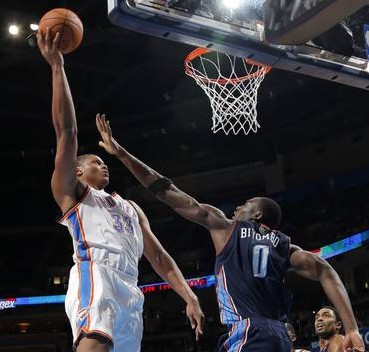
The open roster spots are a different story. The Thunder not only traded their 6th man of the year, but also their back up center, their designated 3-point specialist, and their designated end of the bench guy. While Hayward won’t be that difficult to replace, Aldrich and Cook could. I fully expect the Thunder to sign Daniel Orton to a minimum deal to compete with Hasheem Thabeet for back-up center minutes. The final roster spot is a bit of a mystery, though. Before training camp started, the Thunder signed Georgetown sharp shooter Hollis Thompson to a non-guaranteed 3 year contract. After playing in only 2 preseason games, he was one of the final roster cuts by the Thunder. They could sign him as a future replacement for Cook. Or, they could leave that roster spot open for future options, such as taking on a salary in a trade, or signing a veteran free agent (Derek Fisher, anyone?).

As for the core players, I’m curious to see how Nick Collison will react. He and Harden had one of the top 5 pick and roll combos in the league. Collison is one of the consummate professionals in the league and will be fine no matter what situation he is placed in. I think the onus of this transition will fall mainly on Russell Westbrook. If Westbrook continues to be consistent, as he was this preseason, then the Thunder should be fine. But if there was one player that helped Russell when he got into Honey Badger mode, it was Harden. Harden would take over the point guard duties and become the primary play-maker, especially at the end of games. That role now falls primarily in the hands of Westbrook, and to a lesser extent, Eric Maynor. While Maynor could fill the role of play-maker at the end of games, no defense will respect Maynor’s ability to drive and draw fouls like they did Harden’s. Martin could always be inserted at the end of games, but his play-making ability may be less than Westbrook’s.

How does this change affect the Thunder? They have never had to deal with a core-rattling trade like this one. The Jeff Green for Kendrick Perkins trade shook the tree, but it was necessary given that Green was out of position at the 4 spot and affecting the team’s post defense. This trade wasn’t necessary for anything on the floor. Instead, it was a financial deal the team made to avoid paying costs in the future. The biggest negative in all of this is that it happened 5 days before the first game of the regular season. There will be no preseason games to indoctrinate the new players. Only a couple practices and then on to the season. The only positive I see in this situation is that our biggest threat, the Los Angeles Lakers, are also having to work out chemistry issues, after bringing in 2 main cogs (Dwight Howard and Steve Nash) in the offseason. The Western Conference may come down to whoever vibes first.

I do think this affects us this season. These guys just went from going to the Finals, then to the Olympics, then through training camp and preseason thinking they were going to defend their Western Conference title without a hitch. Then, BOOM!!! Over a quarter of the team gone, with 2 new pieces coming back. This is a team that is used to consistency. This consistency is what fostered to current Thunder culture. Consistency leads to comfort. Comfort leads to confidence. If you were part of the culture, you were part of the brotherhood. Now a shred of that is gone. I do think it will take the team a while to adjust from this one. Has their championship window closed? No, it hasn’t closed, but somebody definitely threw a baseball through it. The Thunder may come out stronger in the end, but I think it will be a case of one step backwards, two steps forward.

 In Memoriam
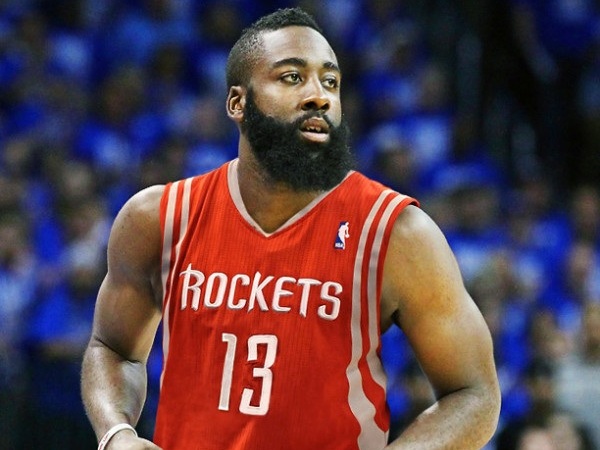
I will miss the Beard. Harden became a part of the fan culture. When you mentioned the characters on the team, you always had to mention Harden and his Beard. If the Thunder had a Teenage Mutant Ninja Turtles-like quartet, Harden was definitely Michaelangelo (the party dude!). I wish him nothing but the best in Houston. But if we are being honest, Harden was but a great role player. He scored when called upon, drove and drew fouls when needed, and made plays at will. But I never considered him to have the “it” to be The Man. Westbrook has that dogged “it” to be The Man. Durant is The Man. But Harden just seemed happy doing what needed to be done. So if Harden wants to see how his life will be post-Thunder, he need look no further than the man he was traded for.

It Was All A Dream

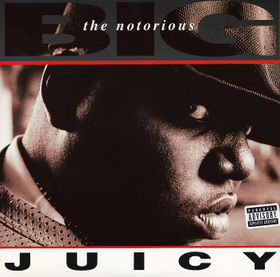
“It was all a dream…” The opening line to “Juicy”, one of the greatest rap songs ever written. Christopher “Notorious B.I.G” Wallace’s opening salvo into our collective consciousness was, perhaps, the greatest conveyment of a musical rags-to-riches story. Great things always have a way of starting off small. Facebook started off as a social network for only Ivy League students and had the word ‘the’ in its original title. Microsoft started off as two friends who were great computer programmers. The Oklahoma City Thunder started off as a 23 win franchise that was in the running to be the worst team in league history for much of the season. But, oh, how things have changed. 

From a fan’s perspective, this was a celebration of the Thunder’s first trip to the NBA Finals. From the outside, this just looked like the finality of a four year run that started off very slow, but has been on a uphill trek ever since. But from the inside, this wasn’t just about the last 4 years. That collective cheer that you heard from the Chesapeake Energy Arena on June 06, 2012 at about 10:30 PM was a roar of passion. Passion, not only for the team, but for the state. A roar for ourselves. Not for each collective ‘me’, but instead, for the collective ‘we’. 

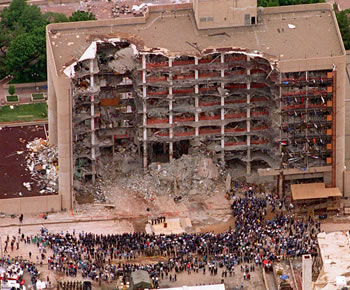
 When you are from Oklahoma, you always hark back to THAT day. April 19, 1995. The day innocence was ripped from the hearts of Oklahomans of all ages. The day we learned about evil and heartbreak. But, on April 20, 1995, we got up and started using a new vernacular. We started to live by words like RESILIENCY, COMMUNITY, SACRIFICE, TOGETHER, HUMILITY, HARDWORK. We knew the trek ahead was tough, but we knew it was a trek we would take together. 

If that wasn’t bad enough, 4 years later, the city was struck by what has been called the Monster of all tornadoes. An F5 tornado with multiple vortices, ripped through the southern part of Oklahoma City, destroying the suburb of Moore, Ok and the city of Bridge Creek, Ok. Once again, probably because of the hard lessons learned from the Murrah Building Bombing, we knew how to react to this tragedy and pulled together.  

City leaders, construction workers, politicians, and citizens all stepped up to the plate to improve the namesake city of the state. What was once a warehouse district was transformed into a sprawling entertainment district in the span of 20 years. With those improvements, came a 20,000 seat indoor sports arena originally known as the Ford Center. This would become the hub of our professional sports dream. 

Of course, with any dream, there are obstacles that stand in the way of achieving the ultimate goal. First, was the fact that we were the 44th largest TV market in the United States. While that sounds great in comparing it to the other 25,000 cities in the United States, that doesn’t bode well for any professional sports league looking for an expansion city. Secondly, was that fact that the professional sports leagues weren’t necessarily looking to expand at that time. The NBA last expanded in 2004, MLB in 1998, NFL in 2002, and the NHL in 2000. 

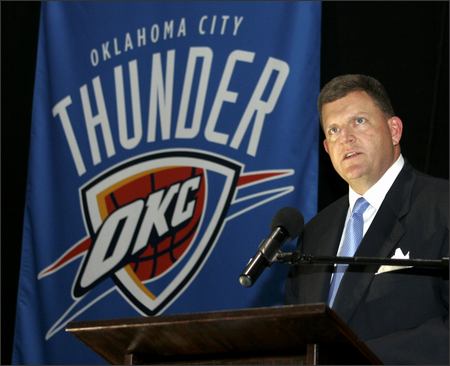
There’s a saying that goes, “When opportunities comes a’knocking, you better open the door.” When the tragedy of Hurricane Katrina happened in September 2005, the New Orleans Hornets were left with no place to play and hardly a populance to play for. Looking to lend a helping hand AND prove our worth as a big league city, Mayor Mick Cornett and city officials lobbied the NBA’s front office for the opportunity to host the Hornets for as long as necessary. While initially down playing the idea, the NBA decided to give Oklahoma City this opportunity of a lifetime and allow the Hornets to play at the Ford Center for what would eventually become 2 seasons. 

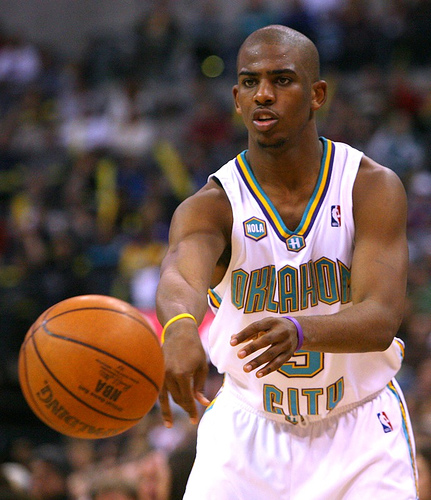
And Oklahoma City proved its worth, quickly growing a reputation as one of the loudest fan bases in the league for its adopted team. For those two seasons, the Hornets became synonymous with having a distinct home court advantage. It became OKC’s first foray into professional sports. Chris Paul won Rookie of the Year in his first season in OKC and David West became a burgeoning All-Star. Tyson Chandler became known as one of the best defensive big men in the league and Peja Stojakovic became known as one of the biggest free agency busts in his one season in OKC. And after two seasons, the music stopped. 

It was a bit disappointing when the Hornets left. Its like being in a 2-year relationship with someone that still had ties to their ex, and then being single again when your significant other goes back to their ex. We always knew the Hornets were going back to New Orleans, but the hope of them some how staying in OKC long-term was still in the back of most our minds. But this was no time to hold our heads down. Their was another opportunity to be had, and another team in the horizon. 

Regardless of what you think of the way OKC got the Thunder, the fact still remained that as of July 2008, the Seattle Supersonics ceased to exist and the Oklahoma City Thunder came into existence. Civic pride will make you argue the move until you are blue (Thunder blue, of course) in the face, but Oklahoma City had its team and it was time to show and prove. That first season was brutal, though. We knew we were getting a skeleton crew of a team with some young, unproven talent, but we didn’t know it was going to be this bad. 

The morning after another of our home losses, I called to the local morning sports talk radio show and just vented. I didn’t know if I could do this anymore. Living 90 miles from OKC and having to drive more than an hour each way, made driving back from the mounting losses excruciating. It’s almost like the team was stuck in a rut when it first got here and you had to wonder whether there wasn’t some karmic justice at play at how we had obtained the team. Thankfully, a coaching change and the general improvement of the young players led to a good finish and a hope for the next season. 

We all know what has happened the last two seasons. After a meteoric rise in their second season in OKC, the Thunder made the playoffs as an 8th seed and took the eventual champion Los Angeles Lakers to the brink of a 7th game in a riveting first round series. The team’s young stars (Kevin Durant and Russell Westbrook) went on to be the main components for a Team USA squad that won gold in the 2010 World Championships. In the next season, we finished with the 4th seed and made it all the way to the Western Conference Finals, losing in a close 5-game series to the eventual champion Dallas Mavericks. Suffice to say, expectations were definitely mounting.

Finally this year, in a season that was on the brink of not happening at all due to labor strife, the team exerted its dominance on most of the league and finished with the 2nd seed in the West. Two things became apparent as we marched towards this point. Number 1: This team was mature beyond its years and eschewed the notion that youth has to wait. Number 2: The home crowd was actually beginning to affect the play of the young Thunder. 

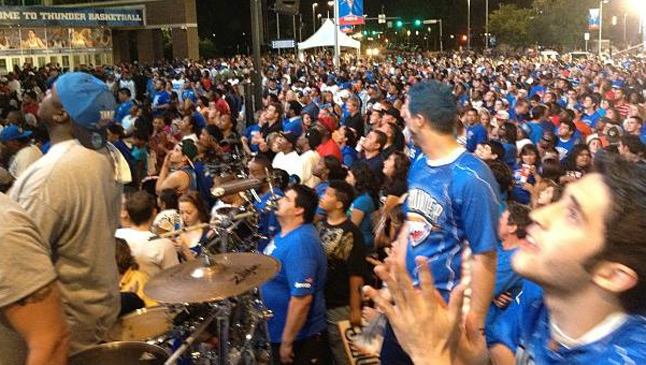
While last season, the Thunder players were the ones being criticized in the postseason, it was our turn, as fans, to be criticized this postseason. It started when the organization began playing games on the huge jumbotron TV outside of the stadium. What became famously known as Thunder Alley started as a small gathering (1000-2000) of fans that could not get tickets to the game, but wanted to experience, first-hand, the atmosphere of being at the playoff game. Eventually that small gathering turned into an all-out block party that some reports say reached as high as 10,000 + spectators in Thunder Alley. When you get that many people in a small space, bad things are bound to happen. Violence erupted after the clinching game of the 2nd round, and the postseason form of Thunder Alley was shut down. It is pretty sad when real fans have to suffer at the expense of a couple knuckleheads. Some people aren’t fortunate enough to be able to afford playoff tickets, but still want to be in the playoff atmosphere. 

Then there were the complaints that we actually wear our free t-shirts that the team supplies to each fan during playoff games. The travesty that fans would wear those shirts and cheer together as one. Who does that? Who cheers every great play and jeers every questionable call? I thought this was the norm for fans. I thought it was par for the course. But, just like everything else, we do things just a little different. We actually feel emotionally attached to our team. I saw grown men and women crying tears of joy for our trip to the Finals. People from the outside will never understand. As we venture into the unknown world of the NBA Finals, we will move forward the only way we know how: Together as one team. #TeamIsOne

Raising Russell Westbrook

I’ve never been the parent of a maturing teenager. My oldest is less than 10 years of age, so I have a few more years before I have to deal with hormones and rebellion. But as a newcomer to the 30 year old club, I still feel like I’m young enough to remember my teenage years, and remember the triumphs and pitfalls that my parents felt as I was coming up. I would figure that as a parent of a burgeoning adult, you would learn to take the good with the bad, and you would hope that for every bad decision, there would be a solution and a lesson learned. At the end of the journey, the ultimate goal would be to see a mature adult that is able to handle real life situations and is able to enjoy life to the fullest.

While extremely different, parenthood and fandom can also be very similar. Its takes time, money, and patience for the nourishment and development of both children and sports teams. While children usually mature in a linear chronological order, sports teams are constantly shifted and changed in an attempt to continually improve. Where the childhood of a kid may take between 18-21 years, the life of the core of a team usually never lasts more than 5 seasons. Teams like the San Antonio Spurs, whose core has been together for a decade plus, is the exception, not the rule.

Being a fan of the Oklahoma City Thunder, one of the things that have required the most patience has been the development of Russell Westbrook.  Westbrook is the rare case of a player that came into the league initially with no expectations, blossomed into a bonified superstar with high expectations, and has taken the brunt of criticism because he has fallen just shy of those high expectations.

Westbrook’s skill set has never been a problem. If anything, his development over the last four seasons has taken most of the league by surprise. When he came out of UCLA, he was viewed as a defensive specialist, probably comparable to fellow UCLA alum Arron Afflalo. His ceiling was definitely nowhere close to being a top 5 scorer in the league. But a lot like Michael Jordan in 1984, when the shackles of the college game were taken off, the other-worldly athleticism took over. And in the right system, those gifts manifested themselves into what you see in Westbrook today.

But just like the trials and tribulations a parent faces when they are raising a teenager, Russell Westbrook’s ascension into a Top 10 player has not been without pitfalls. The path to get to where Westbrook is today has made a bit more difficult by the fact that he plays one of the most important and difficult positions in the game: point guard. As the team’s main distributor, any weakness on the offensive end is immensely exposed because of the position’s high usage rate. Throughout his career, Westbrook’s propensity for turnovers has always been a crux to an otherwise spectacular arsenal. It’s usually what supporters and detractors, alike, point to when looking for flaws in Westbrook’s game.

As the team’s main distributor, a point guard’s main purpose is to manage the game and direct the team’s offense. The thinking is that this is made a lot easier if there are plenty of weapons out there on the floor. But what happens if you have the No. 1 offensive weapon in the game on the floor with you? Most point guards would relish that and pad their stats. As great a player as Magic Johnson was, he was made even better by playing with Kareem Abdul Jabbar, Michael Cooper, James Worthy, and Byron Scott. Same applies to John Stockton and Karl Malone. But what if you, yourself, are a Top 5 offensive weapon in the game also? The art of knowing when to pass and when to score is something that most point guards don’t have to think about. Westbrook had to learn the trickiest part of the trade, while learning how to play the position.

The thing that makes raising teenagers most difficult isn’t the mistakes or the bad decisions. Those are expected. You don’t learn to drive without hitting a couple curbs. It’s the rebellion and attitude associated with the mistakes. The, “I can do this by myself, leave me the hell alone” attitude. It’s a right of passage that most people go through; their need to experience life on their own, rules be damned. But when your attitude is on display for millions to see and for thousands to tweet about, it can make the progress of your development that much more difficult. When the national media senses any angle to make a story, they flock to it like sharks to blood.  

And that’s what happened in last season’s playoffs. You had the league’s leading scorer who is by all accounts, a media/NBA darling, and the non-conformist point guard who could care less about the media, on the same team. Success breeds attention, good and bad. Instead of focusing on one of the youngest teams in the league being in the conference finals, the media decided to focus on the fact that the point guard was taking shots late in close games, instead of passing it to the best scorer in the league. The players involved didn’t care. The coaches involved didn’t care. But the media ate it up and perception became most people’s reality.

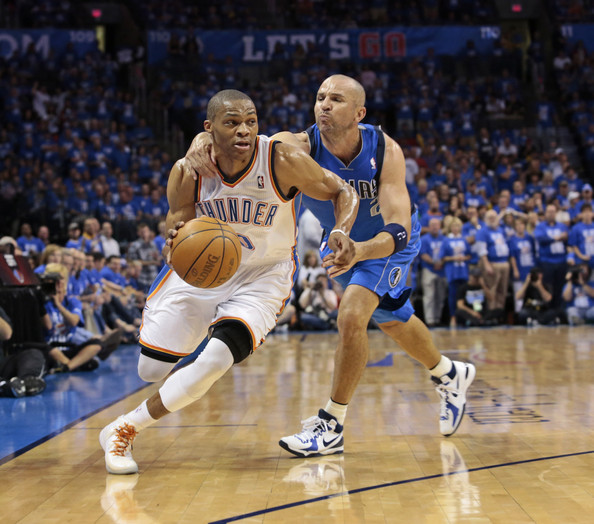
One of the triumphs of parenting is watching that child grow up to become a fully functional, independent adult. One of the triumphs of being a fan, is watching that young player finally take those steps to become that great veteran that teams need to win championships. Someone that, when the road gets tough, they create diamonds instead of wilting under the pressure. During the 4-game sweep of the Dallas Mavericks in the 2012 playoffs, Russell Westbrook finally became what we, as fans, were waiting for. He scored when he needed to (which was a lot in the first 2 games), managed the game, and protected the ball. He played lock down defense on Jason Terry and was a ball hawking free safety when ever it was needed.
But the biggest sign of his maturity (and that of the team, for that matter) was what happened in game 4 of the series. With the Thunder down by 13 entering the 4th quarter, the Thunder needed a spark on both ends of the floor. What had been a shooting clinic by the Mavericks guards in the 3rd quarter (5-7 FG overall (4-5 3ptFG)), turned into a dry well in the 4th quarter when Westbrook took his turn locking down the perimeter. Jason Terry, Jason Kidd, and Delonte West combined to go 1-6 FG in the 4th quarter. Also, Coach Scott Brooks, with the confidence that this would not affect Westbrook at all, decided to stick with the hot hand, and let James Harden run the point with Westbrook playing off the ball. What resulted was Harden getting 15 points and 3 assists in the 4th quarter, and propelling the Thunder to the victory.  

Sometimes, the most difficult kids to raise are the non-conformist. The ones that don’t allow peer pressure to dictate their paths in life. The ones that march to their own drum. The ones that stay introverted. It’s difficult to know what someone thinks or what makes them tick, if they never let it be known. That’s Russell. The media is still baffled by this guy and that makes them uncomfortable. But, what we are seeing on the court is a sight to behold. We are seeing the non-conformist point guard turning into the best point guard in the game, right before our eyes. And that, as a fan and supporter of the Thunder, makes me extremely proud.

The Thunder and the 2nd Seed

With San Antonio’s win over the Portland Trailblazers on Monday night, the Oklahoma City Thunder were assured of the No. 2 spot in the Western Conference. While it is disappointing that they stumbled in the last month of the season to fall to the 2nd spot, the fact still remains that this is progression in a positive direction. Three seasons ago they were challenging to become the worst team in league history. Two seasons ago they were a surprise 8th seed and took the eventual champion Los Angeles Lakers to 6 games in their 1st round matchup. And last season they were the 4th seed and made it to the Western Conference Finals where they lost to the eventual champs, the Dallas Mavericks. Progression from here on out will be measured by what happens in the playoffs.

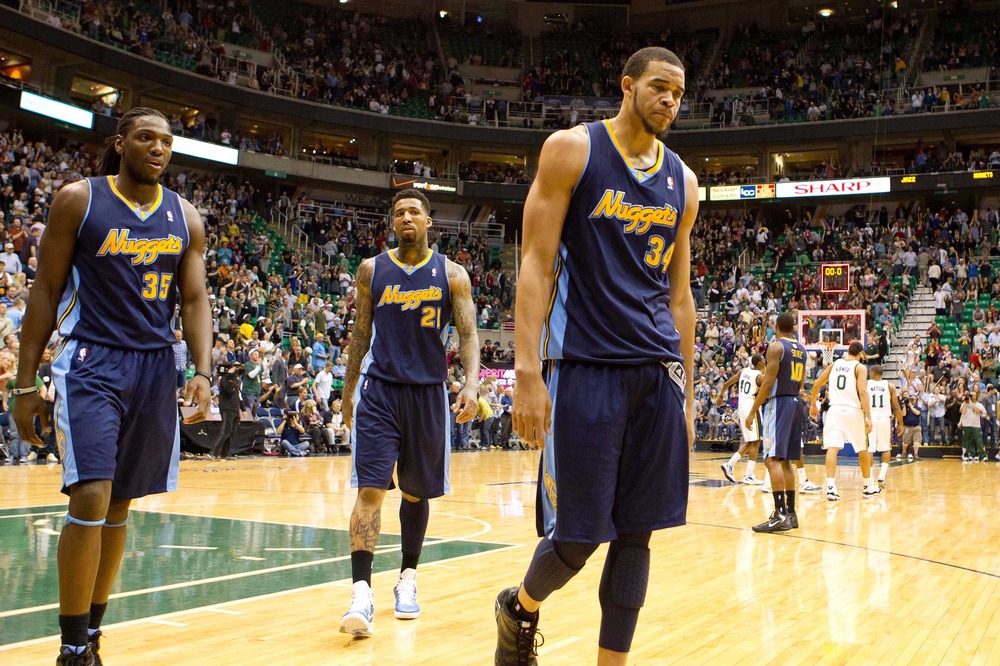
Now that the Thunder are set in their playoff seeding, it is time to look ahead and see how they match up with their potential opponents, both of whom are very familiar to the Thunder. The Denver Nuggets and Dallas Mavericks are both battling for the 6th seed. The Nuggets hold a ½ game lead over the Mavericks and have 2 games remaining, the first of which is against the Thunder, and the last of which is against the “nothing to lose” Minnesota Timberwolves. The Mavericks have one game remaining, on the road, against the Atlanta Hawks, who may still be battling the Orlando Magic for seeding. The Mavericks hold the tie breaker if the teams finish with identical records.

Denver

The Denver Nuggets have become the Thunder’s regular whipping boys these last two seasons. Including the playoffs, the Thunder are 9-2 in the teams’ last 11 meetings. When these two teams meet, points will definitely be scored as it features 2 of the top 3 scoring teams in the league. The Thunder’s rate of success against this team is surprising because the Nuggets have a deep collection of talent at all positions. They feature 6 players that average double figures and 4 other players that average at least 8.6 points per game. That’s 10 players that average at least 8 points per game! The crux to all the scoring, though, is that no one on the team averages more than 16.3 points per game. In crunch time, this team lacks a clearly defined offensive star to score that necessary bucket.

Defensively, the Nuggets are the 3rd worst team in the league, allowing 101.2 points per game. They are a lot like the SSOL (Seven Seconds Or Less) Suns of the early 00’s, focusing a lot of their energy on transition opportunities and increased offensive usage. With the acquisition of Javale McGee and the increased playing time of rookie Kenneth Faried, the Nuggets have become even more of a transition team. But when the Nuggets play another offensively potent team that plays good defense, such as the Thunder, the Nuggets eventually run out of gas in the 4th quarter. That’s been their M.O. in most games that they play against the Thunder.

Dallas

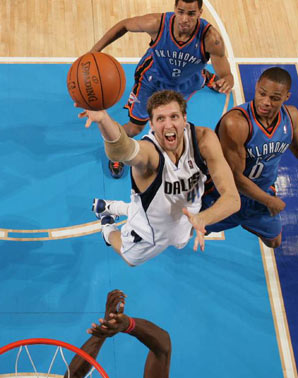
The defending champion Mavericks are a bit of an enigma this season. They lost their defensive anchor (Tyson Chandler), their offensive sparkplug off the bench (JJ Barea), and had a failed offseason acquisition (Lamar Odom). They have been consistently inconsistent this entire season, alternating winning streaks with losing streaks. The Mavs ended the Thunder’s season last year in the Western Conference Finals, defeating them in 5 games. This season has been a different story, though, with the Thunder winning the season series 3-1.

The Mavericks are still led by Dirk Nowitzki, but his scoring average has dipped this season from 23 points per game to 21.6 points per game. A lot of their core is a year older and a step slower. The young players (Rodrigue Beaubois, Ian Mahinmi, and Brendan Wright) are just now getting their feet wet and are playoff neophytes. This team is middle of the road in nearly every statistical category, but still has enough championship moxie to be considered dangerous. The defense has suffered with the departure of Chandler and DeShawn Stevenson, but is still in the top half of the league, allowing only 94.7 points per game.

So who do the Thunder want to face? They already dominated the Nuggets in the playoffs last season, and have continued that trend into this season. They were beat by the Mavs in 5 games last postseason, but held the lead in the 4th quarter in 3 of the 5 games, and have dominated the season series this year. Will we see a different Mavs team emerge in the playoffs? Will they be similar to the 1995 Houston Rockets team that won their second championship in a row as a 6th seed? The answer to both those question, in my opinion, is no. The Mavs team is a shell of what it was last season. They are building for the future (ahem, Deron Williams, ahem) by sacrificing a year of their present. The Thunder finish off both of these teams in 6 games tops. The real question becomes, who do the Mavs or Nuggets want to face; the Thunder or the Lakers?

Now It Feels Real

01 November 2011

Dear NBA (Players, Owners, David Stern, Billy Hunter, Derek Fisher, Adam Silver, et al.),

What the hell is going on? It’s November 1st and I am not watching NBA Basketball. I should be watching the on-going rivalry between the Oklahoma City Thunder and Los Angeles Lakers. I should be watching Dirk Nowitzki and the world champion Dallas Mavericks receive their well deserved championship rings during what was sure to be a raucous ring ceremony at home. Instead, I’ll probably go home and watch the new episodes of NCIS and NCIS:Los Angeles that I DVR’ed.

For the past 4 months we’ve been hearing about the lockout. BRI this. 50/50 split that. System issues. Hard caps. Soft caps. Flex caps. Decertification. Amnesty. Blah, blah, blah, blah, blah, blah. I feel that, in that time, I have actually become pretty proficient in labor law. I’ve explained the lockout to numerous people and have sounded more and more knowledgeable everytime I explain it. But its always felt like I was reading up on something that wasn’t real. Like I was reading a Hitchcock novel or something. You read it. You begin to gain some insight. But you never really process it as real. Well, I checked the future schedule for TNT, and it didn’t have any NBA basketball games on. It has officially become real.

So, there you go NBA. On a night where I, and most basketball fans (hardcore or fair-weather), should have been glued to our TV sets watching these 2 great games (plus one other game that we would’ve gotten on the free, beginning of the season preview of NBA League Pass), we are instead looking for alternatives. Tonight was the perfect night for an opener. No meaningful football games. The hype over LSU/Alabama still has not reached a frenzied state. The World Series is over. And I still can’t find a hockey game on cable or satellite TV to save my life. You had the slate all to yourselves……….and you blew it. You literally puked all over yourself in front of your hot prom date. Ben Stiller’s teenage character on ‘Something About Mary’ is literally laughing at how bad you blew it, and we know what he did to himself on prom night.

Let’s take a look at 10 storylines that would have dominated on Tuesday, November 1st 2011:

1. Dallas receiving their championship rings in their home/NBA opener with Mark Cuban hugging David Stern.

2. Will the Bulls continue their torrid run that began in the 2nd half of last season?

3. How will MVP Derrick Rose improve upon last season?

4. After years of epic playoff failure, how did Dirk Nowitzki spend this offseason. (He usually retreats back to Germany and engages in soul-searching.)

5. Will this be the year that age will finally begin to affect Kobe’s game, or will he find new ways to dominate? (On a related note, how will his new German-engineered plasma help his game?)

6. Can the Lakers get back on top for one final dynastic run?

7. Can the Thunder finally break-through and take the West?

8. Can Kevin Durant and Russell Westbrook play their games and succeed on the same team?

9. How has KD, through his streetball tour offseason, improved his game.

10. How will a completely healthy Kendrick Perkins help the Thunder?

11. How will the rebuilding Jazz look, with rookies Alec Burk and Enes Kanter being the new faces in town?

12. The awesomeness of seeing “World Peace” on the back of someone’s jersey…..especially when that someone is crazy Uncle Ron-Ron.

13. Bonus – How did Hasheem Thabeet perform?

That’s 13 story lines about 3 games on a Tuesday night. A TUESDAY NIGHT, for goodness sakes! What other awesome thing is there to do on a Tuesday night? I’m a basketball junkie, so I’ll come back whenever it does. But, those fringe fans (the ones that actually debate whether to watch the game or Dancing With The Stars), those are the fans that the NBA will continue to lose as we move forward in this lockout. I should have been watching my team play their rivals this evening. Instead, I’m reading an article about Kevin Durant and Lebron James planning an exhibition flag football game, while watching NCIS. This is not how I envisioned my Novemeber 1st evening when the schedule first came out in mid-July. Gentlemen, we have our first real casualty of this fight. Let’s end this and bring peace to the land.

Signed,

A fan (not that you care that much)