Mike Miller and the Thunder: Monkey Business

mike-miller-monkey-2

As newly minted free agent Mike Miller continues to ponder which team he’ll play for in the future, the decision, itself, may not have anything to do with basketball. The rumors are that Miller is looking for guaranteed years, a little bit more money, and playing time for a contender. But the answer to the decision of which team Miller plays for may actually lie in something more universal to all people: the ability to own a pet. More specifically, a pet of one’s choosing.

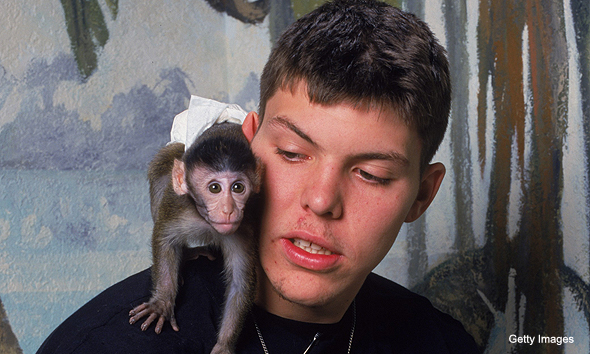
One of the quirks of Miller is that he used to own a Java Macque, which is a type of monkey. Sonny, as the monkey was called, was basically Miller’s first child. He had his own room, wore diapers, and was involved in child-like shenanigans. In a hilarious story, Miller describes how Sonny escaped the house and created a bit of a ruckus in the neighborhood,

“You would always put him in his room, and then we’d lock the door, and then we’d put the dogs out, and then we’d lock the front door. Well, he found out how to unlock doors, unlocked his door, went downstairs, let the dogs in the house and opened the front door. About an hour later we got a call from our neighbors, saying, ‘Your monkey is riding your dogs around the neighborhood.’…I said, ‘C’mon y’all, y’all got to get in the house.”

Unfortunately, Miller had to give Sonny up to a primate sanctuary when he started having his own children. Animals can be very protective/jealous and can pose a risk to small children. But with Miller’s children getting older, he may be thinking about getting a monkey (or any other exotic pet, for that matter) in the future. That may possibly factor into his decision for his future team.

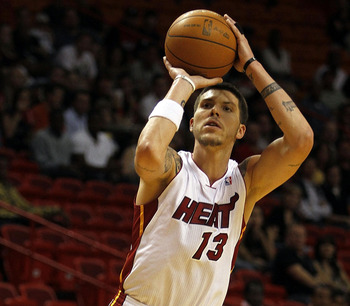
Charlotte Bobcats v Miami Heat

Every state has different laws when it comes to owning primates. Some states out right ban keeping primates as pets. With that in mind, here’s a look at the primate possession laws of the four states whose teams are bidding for Miller’s services. Continue reading Mike Miller and the Thunder: Monkey Business

Oklahoma City Thunder: Lessons from Summer School

okc summer league champs

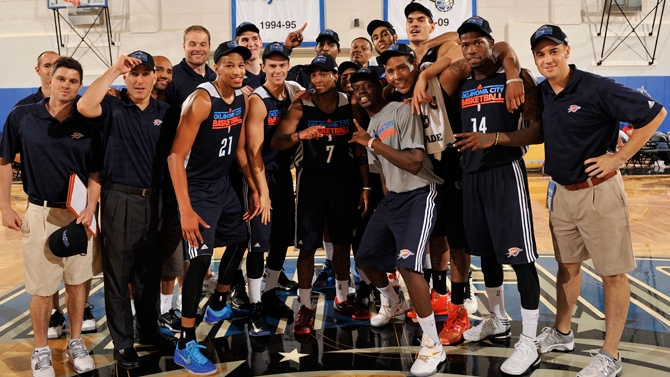
The Oklahoma City Thunder finished summer league with a 5-0 record, and were crowned champions of the first ever Orlando Summer League Championship. While it is cause for celebration, it’s important to remember that this is Summer League. A league where at least 50% of the participants will log as many minutes in the NBA as you and I. Regardless of talent level though, there were a lot of things to take from summer league. Here are a couple:

1. Reggie Jackson is ready to make The Jump. The Jump is the term for when a player starts to understand the nuances of the professional game and it slows down for them. Kevin Durant led the league in scoring his 3rd season, Russell Westbrook made it to his first All-Star Game and made 2nd Team All NBA in his 3rd season, and James Harden won 6th Man of the Year in his 3rd season. In his one full game in summer league, Jackson broke the Orlando Summer League record with 35 points, bringing the Thunder back from a 12 point 4th quarter deficit with 23 of those points coming in that final quarter. He completely dominated getting to any spot on the floor that he wanted. While I don’t expect a repeat performance during the NBA season, I do think that Reggie is ready to take that next step in his development. Continue reading Oklahoma City Thunder: Lessons from Summer School

Oklahoma City Thunder: Ballin’ on a budget

westbrookdurantibaka

Growing up, there were two things I was heavily into other than girls: hip-hop and basketball. I grew up in a time when hip-hop was having an internal war within itself. What started off as a rebellious outlet of expression for the poor and struggling turned into an over-expression of opulence and decadence. Hip-hop went from being mostly underground in the 80’s to completely mainstream in the 90’s. That entrance into mainstream pop culture led to many rappers getting rich quick. But as quickly as the money came, it left, leaving many rappers bankrupt and back to where they started.

During this same time period, many of my friends and I were just starting to work. And work means money management, right? Considering I have no idea where my teenage money went, I would say I did a poor job of managing my money. But it’s funny what sticks with you from your teenage years. One of my real good friends, Ryan Rivera, came up with a phrase that still resonates to this day, not only with myself, but also with my team, the Oklahoma City Thunder. The phrase was, “Ballin’ on a budget”.

Basically, it’s finding ways to live good without destroying your bank account or credit score. It’s not easy and it takes a lot of work. A person wanting to ball on a budget has to have patience and self control. The urge to “keep up with the Joneses” can completely destroy any plan to stay within a budget. Many people in the world live outside of their means in order to put on the face of success. Nice shiny things equates to success in the minds of many. Ballin’ on a budget also takes a lot of work. You can either go to Dillards and pay $80 for a Gucci shirt, or you can bargain hunt at Ross and pay $14.99 for the same or similar looking shirt. The work comes in looking for the right bargain. You almost have to become a hustler to succeed in this venture. Bargain deals may not be sexy, but they’ll get the job done with less overhead.

presti

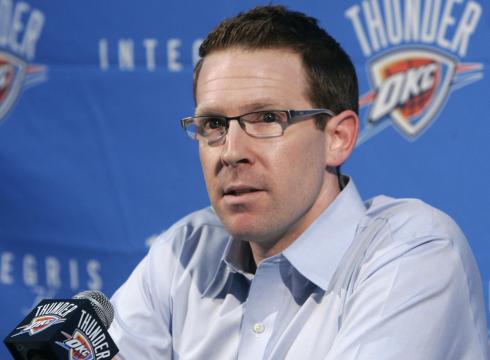
It’s the position where the Thunder find themselves at this juncture. With two trips to the Western Conference Finals, one trip to the NBA Finals, and one number 1 seeding in the Western Conference within the last 3 seasons, this team is definitely ballin’. But they’ve been doing it on a budget to this point. Thunder GM Sam Presti has built a championship contending team through great drafting, salary wheelings and dealings, and difficult decision making.

The current collective bargaining agreement has made things a bit difficult for small market teams that are toeing the line between being tax payers and non-tax payers. What was intended to be a punitive rule to defend against overspending by big market teams, has turned into another instance of “the more things change, the more they remain the same”. The Brooklyn Nets have gone into this offseason acting like a cancer patient that just won the lottery screaming YOLO! at everyone he sees. The Nets are projected to pay upwards of $80 million dollars in luxury tax this season, but they have an owner who seems hellbent on winning a title, no matter the cost. The Los Angeles Lakers, New York Knicks, and Miami Heat have also been consistent payers of the luxury tax for the past 3 seasons.

bird

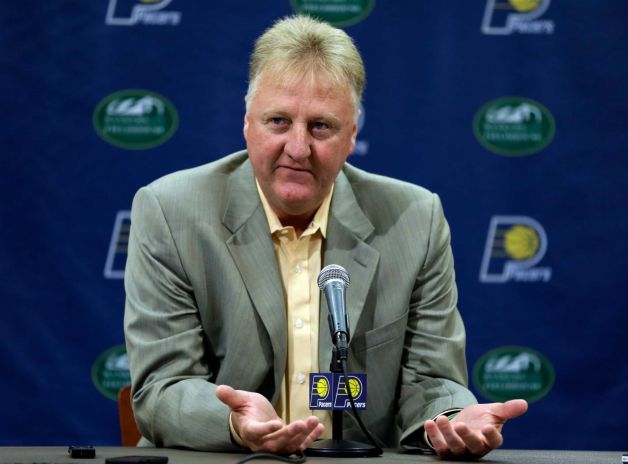
This brings up the difficult question: How are small market teams supposed to compete? In a recent interview with Darnell Mayberry of The Oklahoman, Indiana Pacers president Larry Bird made no qualms about the state of his team and how it compares to the Oklahoma City Thunder,

“Our owners went out and have done everything they could this year so we could be up close to the tax. We just can’t fight the tax. It’s always going to be a disadvantage for us. I feel bad for Oklahoma. They had a great team and they had to make a trade (James Harden trade). They were right there. But we’re going to have to do the same in the future. We’re always fighting an uphill battle with revenues. But that’s part of who we are. And we do the best we can with what we have.”

The key to competing in sports as a small market is to remain patient and look for the right deals. The goal of a big market team is to win at any cost. But the goal of a small market team is to remain consistently sustainable. Teams like the San Antonio Spurs, Pacers, and Thunder thrive on being able to compete year in and year out. I believe that’s part of the reason why the Spurs, who have won 4 championships since 1999, have never been able to repeat. They’ve remained consistently great, but have never been able to consistently spend like the bigger market teams to continuously improve their team on a yearly basis with no regard for payroll. There comes a point every couple of seasons where the Spurs have to retool with younger, less expensive players. Eventually those younger players gain the necessary experience to perform in pressure filled moment, but the team suffers in those “learning seasons”.

a thunder

That’s what I call last season for the Thunder. It was a learning season. After the Harden trade, the team didn’t really hit a consistent rhythm until the end of the season. And with all that, they still ended up with the No. 1 seed in the Western Conference and were probably a Russell Westbrook knee injury away from making it to a 3rd consecutive Western Conference Final. Next season will probably be another learning season, as the bench lost its leading scorer when Kevin Martin signed with the Minnesota Timberwolves. With many fans clamoring for the Thunder to make a move to replace the scoring lost by Martin’s departure, the team has remained steadfast in trusting the young players they already have. Reggie Jackson showed last year in the playoffs what he is capable of after replacing Westbrook when he went down with his injury. Jeremy Lamb has performed well in Summer League and is expected to be a key contributor off the bench next season. And centers Steven Adams and Daniel Orton have performed surprisingly well in Summer League as rim protectors and, dare I say, offensive threats.

To many, this may seem like a cheap move by the owners of the team. With how good the team looked at the end of the regular season, it seemed like they were a resigned Martin and another bench scorer away from being an even stronger contender than they were when they made it to the Finals. With Martin’s bird rights in hand and the full MLE at their disposal, many thought the Thunder were finally going to jump into the deep end of the pool and join the other tax-paying teams. Instead, they allowed Martin to go to Minnesota in a sign and trade (that netted the Thunder a $6.6 million dollar traded player exception) and haven’t touched any of their available pre-tax cap space, which comes out to about $1.28 million dollars. That’s at least enough to sign someone to the veteran minimum. While the pool of free agents has gotten significantly smaller since July1st, there are still viable players available for the taking. So the question becomes: What are the Thunder waiting for?

martin_wolves_lm1_130109

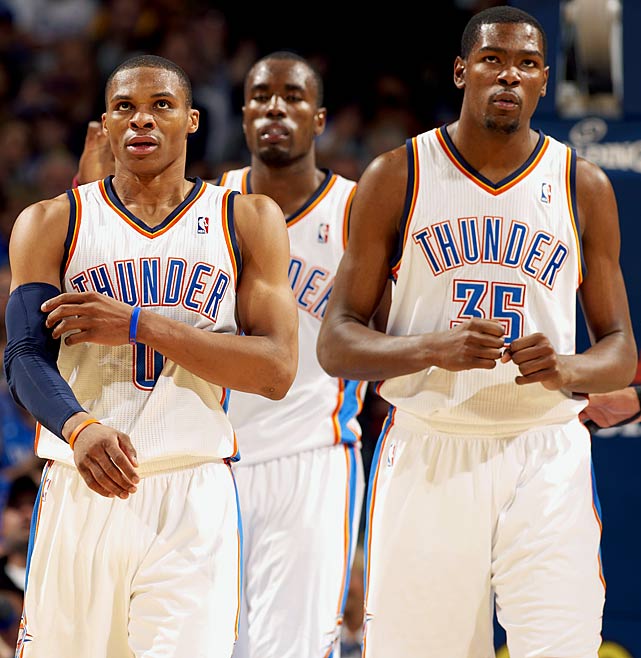
That is where the virtue of patience comes into play. For one thing, it’s only July. Many fans are panicking because of the moves made by other organizations, especially within the Western Conference. The Los Angeles Clippers resigned Chris Paul, traded for Jared Dudley and JJ Reddick, and hired a much better coach in Doc Rivers. The new “it” team, the Houston Rockets won the Dwight Howard sweepstake and landed a couple other veteran free agents. But, championships aren’t won in July; they are won in June. A team can stack a roster full of great players in July that may amount to nothing more than a first round exit the next April. Secondly, the organization has never said that they won’t pay the tax. They know that to be competitive, you may have to eventually pay the tax. But if you don’t have to pay the tax yet, why pay it? Along with more punitive luxury tax restrictions, the new CBA also instituted a repeater tax for teams that have paid the luxury tax for 3 consecutive seasons. With the escalating salaries of Kevin Durant, Russell Westbrook, and Serge Ibaka, the longer you can hold off on being a tax-payer, the more financially competitive you’ll be. And lastly, you still have Kevin Durant, Russell Westbrook, and Serge Ibaka. As long as those three guys are healthy, I think the Thunder have a fighter’s chance in any game.

The Thunder aren’t cheap. They’re just smart about how they manage their money. They already have a large percentage of the cap space allotted to the 3 players they deem the most important to the franchise. The reason the Thunder are perceived as cheap, though, is because they never had to “buy” any of those players in free agency. They drafted and developed them, and luckily, they turned out to be superstars. But sometimes, difficult decisions need to be made in order to maintain the financial flexibility that is tantamount to small market team success. That’s what happened in the Harden trade. The Thunder had 4 great players, but couldn’t pay 4 near max to max contracts. Ibaka helped the team by taking what is perceived to be a less than market value contract. Hoping that Harden would do the same, the Thunder drew a line in the sand, and said “here’s our final offer, take it or leave it”. When Harden rejected the offer, the team made the decision to move Harden to Houston. The situation was never a choice between Ibaka or Harden. But to make the numbers work, the team needed Harden to leave some money on the table, and for a young guy heading into his first foray into free agency, he just couldn’t do that.

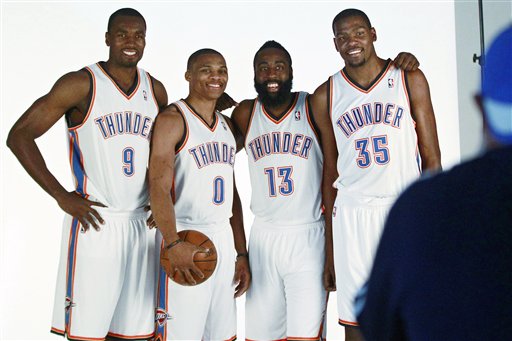
Serge Ibaka, Russell Westbrook, James Harden, Kevin Durant

Being a money conscious team is not sexy at all. Following a team that is run on the principles of patience and bargain shopping is not for the faint of heart. You watch other teams stack their teams with what you perceive to be good to great players, while you’re constantly having to hope that your players continue to improve in the offseason and that the veteran minimum center you signed actually can play the game of basketball. It’s a tough life, I know. But I wonder how Miami Marlins’ fans really feel about their two championships. The Marlins organization went all in for two runs at a title, and then completely dismantled the team after each title. While the feeling of winning a championship can never be replaced, I wonder what the feeling of watching your championship team be completely dismantled the following offseason feels like. Luckily, I don’t think I’ll ever have to know what that feels like.

2013 OKC Thunder Draft: A Postscript

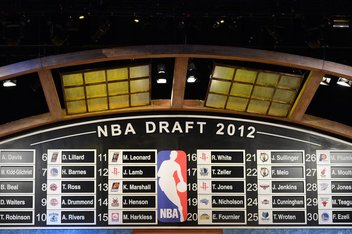
2013 NBA Draft

The NBA draft to me is a time of hope. Whether your team has the first pick or the last pick in the draft, there’s always a sense of optimism that the guy your team drafted is destined for great things. And that’s why I’ve always enjoyed the draft. When the Thunder started becoming one of the better teams in the league, their position on the draft board started rising into the late first round. Their draft position from the last 5 seasons went as followed: 4th (still as the Seattle Supersonics), 3rd, 18th, 24th, and 28th. Even with those high draft numbers though, we’ve been able to get good players late in the draft, namely Reggie Jackson and Perry Jones III.

Flash back to October 28th, 2012. As soon as the details of the James Harden trade came out, and I saw that we got a first round pick from what was almost guaranteed to be a lottery team (Toronto) and a 2nd round pick, which was almost guaranteed to be in the lower to mid 30’s (Charlotte), I started paying more attention than usual to the 2013 NBA draft. I would visit sites dedicated specifically to the draft (NBADraft.net and DraftExpress.com) and would study up on the prospects. I knew how to spell Giannis Adetokunbo before he Greek-a-nized his last name to Antetokounmpo.

For a team that was on the cusp of a championship the season before, the lottery pick could have been the final piece in the championship puzzle. While it is true that the Thunder gave up a big piece in Harden, having a possible lottery pick may have made finding his replacement a bit easier. Also, the possibility of drafting a good player on a rookie salary for, at least, 4 seasons is like manna from heaven for a team teetering on the luxury tax line.

Needless to say, when the Thunder were eliminated in the 2nd round of the playoffs, my focus quickly switched to the NBA draft. With two picks in the first round, No. 12 and 29, and one early pick in the second round, No. 32, in what was deemed to be a weak draft, my expectations were that we weren’t going to be using all the picks. By most accounts, the teams in the top 5 weren’t necessarily exalting the selection of prospects at the top of the board. I thought the Thunder were going to do something big (i.e. trade up or trade for good veteran player).

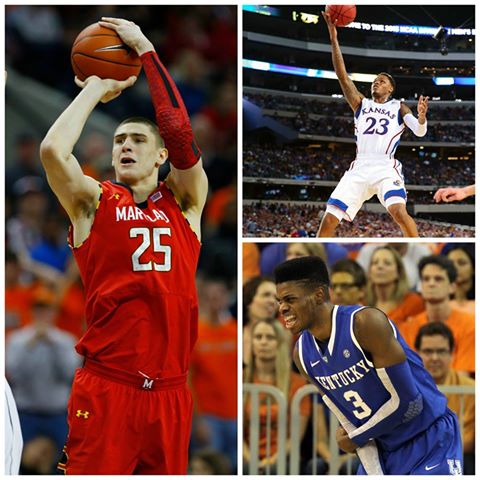
It’s a funny thing about expectations, though. They can sometimes cloud your vision. When the picks started coming in, and guys that I thought were high on the Thunder’s draft board (Alex Len, Nerlens Noel, Ben McLemore, and CJ McCollum) started dropping, I thought it was prime time to make a trade and move up. But as those players started getting drafted, and every “We have a trade,” from David Stern yielded nothing for the Thunder, I started to feel disappointment.
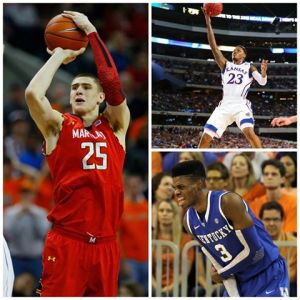
len, noel, mclemore

As the draft went along and we only made minor moves, I literally had a feeling of utter dejection about this draft. I mean, this was the “Harden redemption” draft. We were supposed to get ourselves a blue chip prospect to join with Jeremy Lamb in order to have a feeling of success when it came to the James Harden trade. And it didn’t necessarily have anything to do with the players we drafted. It just felt like we let a golden opportunity go by without even trying to do anything.

But, alas, a little bit of sleep and a little bit of retrospect usually puts things into perspective. The more I thought about the players we got in this draft, the more I liked it. First off, this was not your draft if you are into instant gratification. This was a developmental draft, just like the last two drafts for the Thunder have been developmental drafts (Jackson, Lamb, and Jones III). As I analyzed this draft, I saw that we obtained players that will greatly help us in the future.


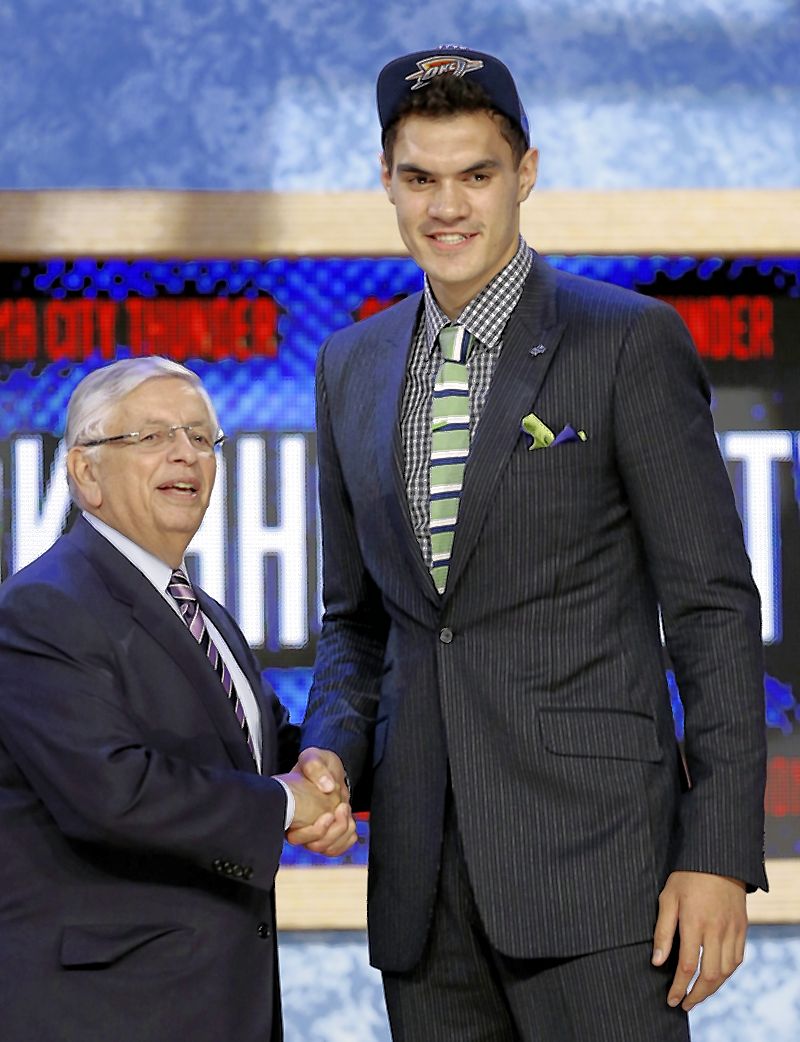
No. 12 – Steven Adams – C, University of Pittsburgh
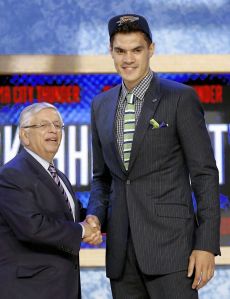
adams draft

The Thunder don’t necessarily have a good track record with it comes to centers. Since they’ve arrived in Oklahoma City, the Thunder have drafted two flame-outs and one Eurostash: Byron Mullens, Cole Aldrich, and Tibor Pleiss. The carryovers from the Seattle days (Mouhamed Sene, Robert Swift, and Johan Petro) were 21 feet of nothingness, and the current placeholder, Kendrick Perkins, just posted a negative PER in the playoffs. To say that the center position is a position of need is an understatement.

The 7 footer from New Zealand is a late bloomer, but has the tools to be successful in the NBA. He’s an athletic big man with quick feet known for his defense. He won’t be asked to contribute immediately and may spend a good deal of his rookie season in Tulsa playing for the Tulsa 66ers. With two of the top 10 players in the NBA in Kevin Durant and Russell Westbrook, the Thunder don’t necessarily need an offensive savant in the middle. What they do need is someone that can move around, play defense, grab rebounds, catch a pass, and finish when they are within 5 feet of the basket. I have no doubt that Adams will be able to do that.


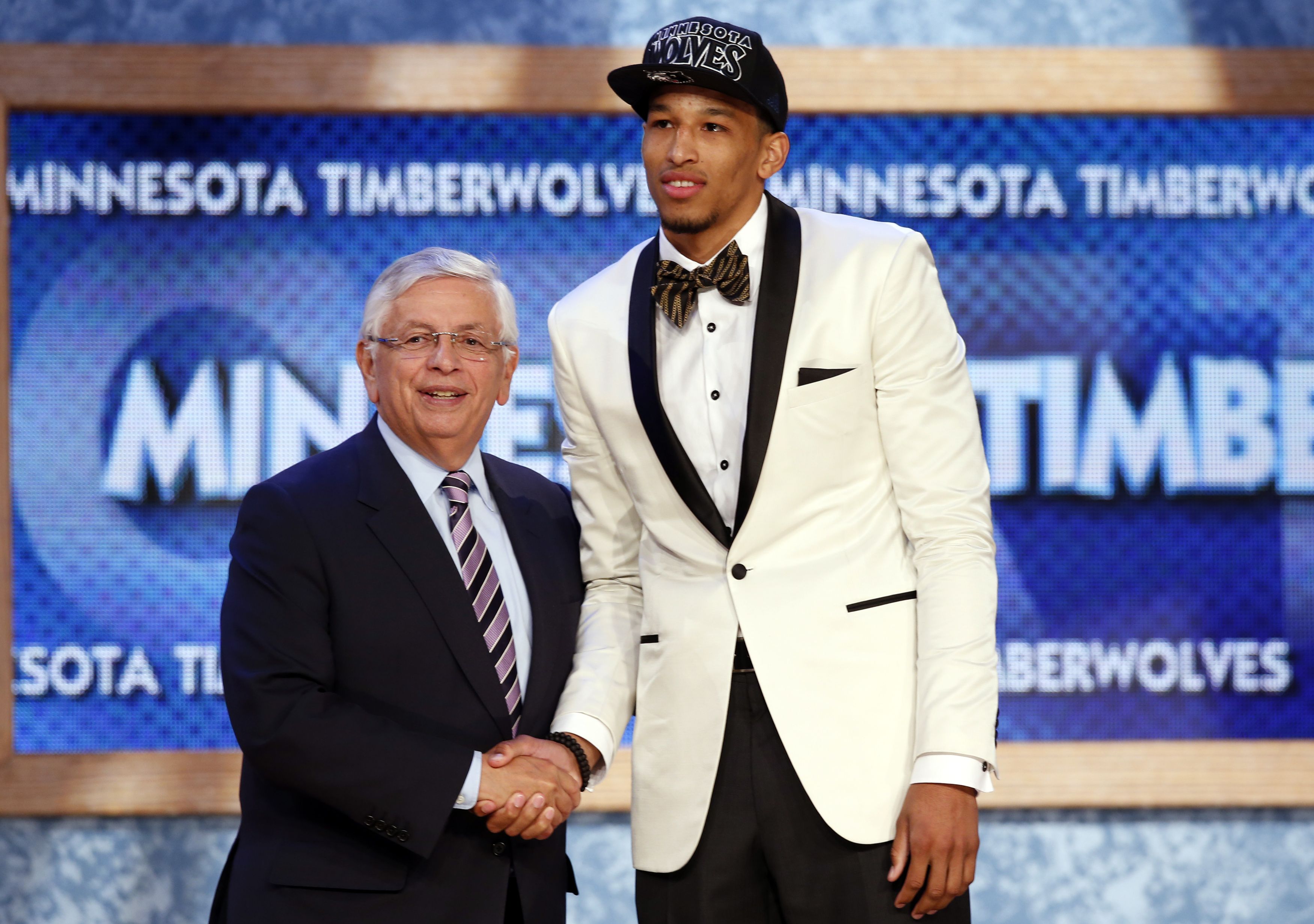
No. 26 – Andre Roberson – SF-PF, University of Colorado
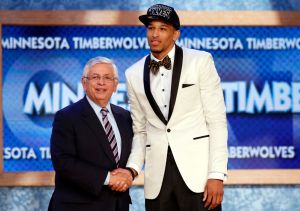
Roberson from the University of Colorado shakes hands with NBA Commissioner Stern after being selected by the Timberwolves as the 26th overall pick in the 2013 NBA Draft in Brooklyn

This pick was a bit of head-scratcher to me. Not necessarily the pick itself, but the fact that the Thunder moved up 3 spots (albeit just for cash) to make the selection. Roberson was creeping up on every mock drafts, but wasn’t in line to be picked in the first round. Every mock draft had him falling to the beginning of the second round. Why the Thunder felt the need to move up to grab him? We may never know. Being that he is a Kawhi Leonard-like player, maybe the Thunder caught wind that the San Antonio Spurs were looking to draft him with the 28th pick.

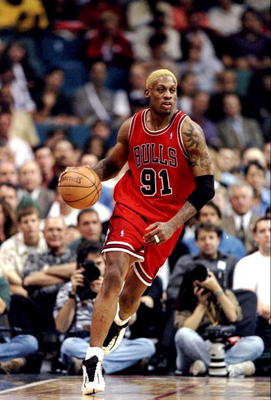
Roberson is a bit of an enigma. He’s 6’7, but has a 6’11 wingspan and was second in the NCAA in rebounding at 11.2 per game. Also, he’s one of the premier defenders in college. Those traits usually translate very well to the pro game. His offensive game is a different story. He struggles for consistency on the perimeter, but excels if he gets close to basket on dribble drives, cuts, and offensive put back. Because of this, he is often compared to Hall of Famer Dennis Rodman.
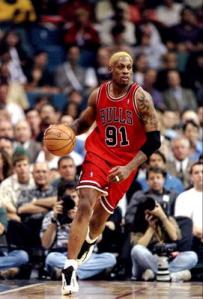
rodman

In a system and on a team that values players that can guard multiple positions, Roberson should eventually find a spot in the rotation as a defender. It wouldn’t surprise me if Roberson saw the most minutes with the Thunder of all the Thunder rookies.


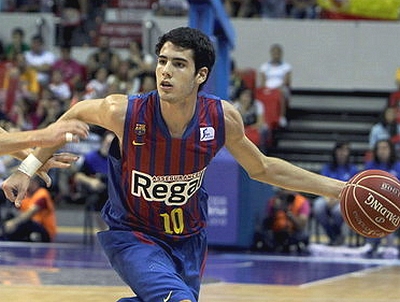
No. 32 – Alex Abrines – SG-SF, FC Barcelona (Spanish ACB League)
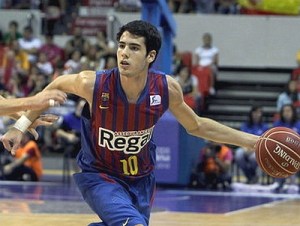
alex abrines

Abrines is a stash pick that will probably stay in Europe for 1-2 more seasons. He asked teams not to drat him late in the first round, as the guaranteed money would be less and he would probably have to fit some of the bill for his buyout. The Thunder took a chance and drafted him with the second pick of the second round. He is a smooth shooting wing player with a flair for the dramatic that many have compared to Rudy Fernandez and Drazen Petrovic.

At 19 years of age, Abrines will have to improve his game and strengthen his body before he’ll be able to compete in the NBA. The only negative for the Thunder is that Abrines is young enough to improve to the point where going the NBA would not make financial sense, causing him to stay in Europe for the rest of his professional career.


No. 40 – Grant Jerrett – PF, University of Arizona (selected by Portland, traded to Oklahoma City for cash considerations)
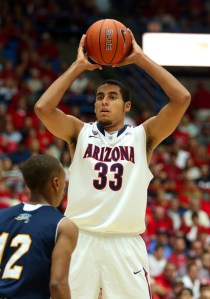
grant jerrett

Just when I thought there was no way we would draft three rookies to actually play on the team this upcoming season, the team goes and acquires a shooting big man in the 2nd round. At 6’10, Jerrett showed great potential as a shooter and as a stretch 4 in the NBA. At this point though, perimeter shooting is his only noticeable strength. Jerrett has a tool the team needs, but will need to put in a lot of work to make the opening day roster. He may be a Ryan Anderson-type player, but he may have benefited from another season in college. If his strengths don’t outweigh his weaknesses in Summer League and during the preseason, Jarrett, as a second rounder, is a good candidate to not make the team.
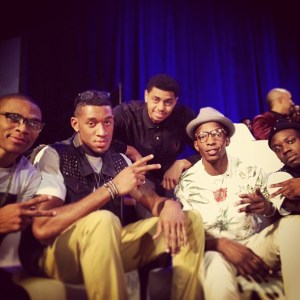
thunder team

Surprisingly, this draft said more about the players already on the team than those that were drafted. The team’s unwillingness to part with Jackson, Lamb, or Jones III to move up showed the confidence the team has in the young guys, and shows how the team values cohesiveness and development. With three rookies on the roster, look for the team to try to sign one or two veteran free agents to even out the youth on the bench.
Trains of Thought: Thunder and the 2013 Draft

NBA: NBA Draft

Approaching a draft, there are always differing trains of thought as to whom a team should choose. A team has to analyze what their needs are and if they can realistically draft a player that will fill said need(s). This is especially true if you are holding one of the lottery picks. Teams picking in these first 14 slots usually have a plethora of needs to address. But for a championship contending team like the Oklahoma City Thunder, who have many of the necessary cogs already in place, a pick in the lottery can be the final piece of the puzzle to get the team over the hump. 

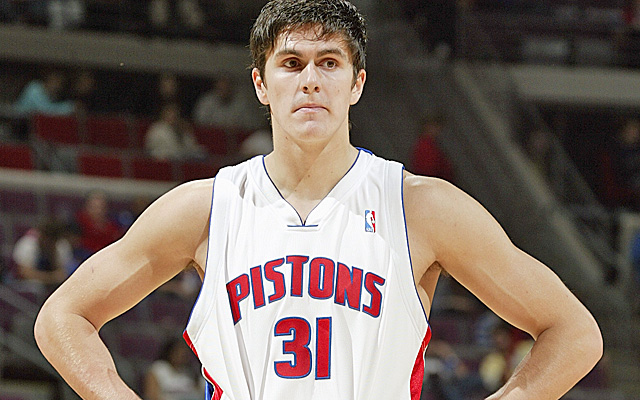
darko

Drafting a final piece is not always guaranteed to get a team over the hump, though. In the summer of 2003, the Detroit Pistons had just come off a trip to the Eastern Conference Finals and also held the No. 2 pick in the upcoming draft, which was loaded at the top. Easy pickings, right? Get the 2nd best player available and you should be set for the next 5 years. But success and good fortune can sometimes make you think you are smarter than you really are. In a draft where the Pistons could have chosen any of Carmelo Anthony, Dwayne Wade, or Chris Bosh, they instead decided to go with the experimental Euro-project named Darko Milicic. Even though the Pistons won the championship the next season, it had nothing to do with Milicic, who was famously tagged as the “human victory cigar” due to the bulk of his playing time coming at the end of blowout victories. The Pistons went on to lose in the NBA Finals in the next season and played in 3 consecutive Eastern Conference Finals after that. Add that up, and in a 6 year span, the Pistons played in 6 consecutive ECFs, went to the Finals twice, and won one championship. Nothing is guaranteed, but I think the number of championships would have increased if the Pistons had drafted one of the other players mentioned above. 

Granted, this draft is not as loaded as the 2003 draft was. But the Thunder find themselves in a position to draft a position of need, instead of having to pay for it through free agency or trade for it. There are probably two trains of thought for what type of the player the Thunder should draft with the 12th pick: either a defensive minded big man capable of developing some semblance of an offensive game or a scoring wing adept at making perimeter shots. In other words, either a replacement for Kendrick Perkins or a replacement for James Harden. The big man pick is more targeted towards future success, while the perimeter wing would be for more immediate results.

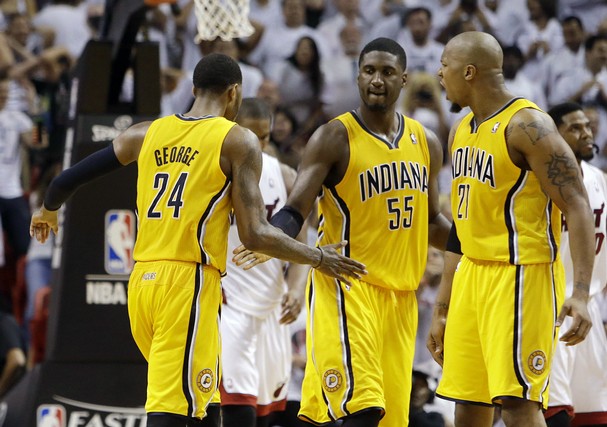
pacers

The conference finals and NBA Finals have given the Thunder a blueprint as to what they need for sustained success. In the Eastern Conference Finals, the Indiana Pacers showed what two competent big men can do against the Miami Heat. David West and Roy Hibbert gobbled up offensive rebounds and scored in the paint, almost at will. In the Finals, the San Antonio Spurs have shown that playing the same brand of basketball as the Heat (dribble penetration and 3-point shooting) can befuddle and frustrate them, especially if the opponent is hitting 3-pointers at a 45% clip.

Train of Thought No. 1 – Big Man

perk ii

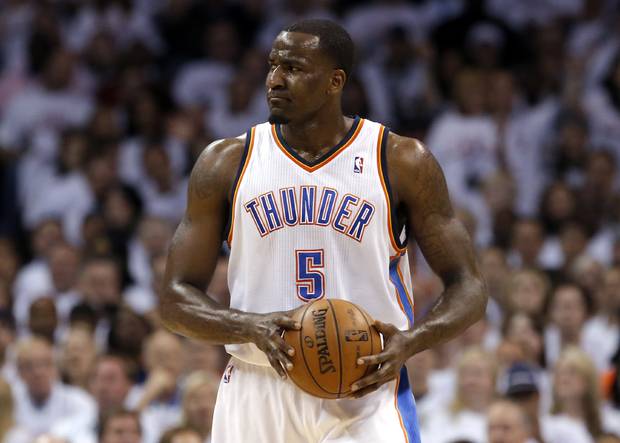
Everybody knows I love crazy uncle Perk (Kendrick Perkins). For a person who grew up on 90’s basketball, Perkins’ style of play harks back to that physical era. But, truth be told, he laid a complete goose egg in the playoffs this season. He surprisingly had a better run last post season when he played with a torn groin and a torn ligament in his wrist. That Perkins has no semblance of an offensive game is a known fact. But that is usually masked by constant attacking nature of Kevin Durant and Russell Westbrook. When Westbrook went out with his knee injury in the first round of the playoffs, that lack of an offensive game led to the further stagnation of an offense that was already compromised. It wasn’t just that Perkins couldn’t get the ball in the basket, it’s that he was a walking turnover. He had a negative PER in the playoffs and was a liability not just on the offensive end, but also on the defensive end. I didn’t even know negative PERs existed.

Needless to say, with 2 seasons left on Perkins’ contract, it may be time to start looking for his replacement sooner rather than later. Picking up a big man at this slot would be a pick for the future, as big men generally take longer to develop and no post player in this draft has that “ready to play now” look to them.

Before deciding what type of big man could be drafted, it’s important to see what is already in the cupboard. Besides Perkins, the other starter is Serge Ibaka, one of the most versatile power forwards in the NBA. In addition to leading the league in blocks for the 2nd consecutive season, Ibaka also has a deadly midrange game that occasionally stretches out to the 3-point line. His next stage of development should be to learn a post move or two. Off the bench, Nick Collison is a heady post player who plays good defense, can score inside, and can occasionally hit a midrange jumper. The only negative with Collison is that he is getting long in the tooth and starting to show signs of that. Hasheem Thabeet is an average center who is just now learning how to contribute 10-12 solid minutes per game. Perry Jones III is still in the initial stages of his development, but has the physical tools to become a solid contributor. And Daniel Orton is probably the odd man out in the game of big man roulette.

adams noel

Any post player selected will be drafted with the intent to eventually be the starting center. The Thunder tried that 3 seasons ago with Cole Aldrich, but he never panned out. If the Thunder’s system remains similar for the next 3-5 seasons, a player with Perkins’ toughness and defensive chops, but better offensive potential would probably be the selection. Players that fall in that category would be Alex Len, Steven Adams, Mason Plumlee, and Gorgui Dieng. If the Thunder decides to go for an offensive-minded big man, look for them to select Kelly Olynyk or Cody Zeller.

Train of Thought No. 2 – Perimeter Wing

harden

The Thunder have a little more flexibility here than with the center position. When the Thunder made the trade with Houston, they not only traded Harden, but also Daequan Cook. These floor spacers are very important when the bulk of your offense is dependent on two perimeter oriented players. The drive and dish becomes a lot more driving into defensive walls if the dishees aren’t reliable 3-point shooters, especially in the playoffs.

Seeing as the NBA is becoming more of a drive and dish league, having penetrators and 3-point shooters is tantamount to a team’s success. It used to be that if you had a great big man, you were almost guaranteed a deep playoff run. That began to change with the elimination of hand checking. Once that happened, it unshackled quick wing players to have a more prominent role in the offense. No longer were defenders able to keep quicker players at an arm’s length, thus eliminating their speed advantage. Now, defenses had to converge on the quicker players, which opened up shooters on the perimeter, especially on the 3-point line. And, as any kindergartener will tell you, 3 is more than 2 any day of the week.

Looking at the Thunder’s inventory when it comes to wing players, the Thunder already have two of the best dribble penetrators in the league, in Durant and Westbrook. Add to that Reggie Jackson, and the team has their fair share of attackers on the offensive end. What’s lacking on the team is the amount of shooters. Thabo Sefolosha has improved his 3-point shooting to the point where he’s effective, but his slow release make him a liability against teams with long defenders. Kevin Martin was, for the most part, an effective perimeter shooter, but his inconsistency and disappearing act in key games, proved to be a big problem for the Thunder. DeAndre Liggins is on the team for defensive purposes, and Jeremy Lamb was never given a chance to show his shooting chops on the NBA level, though he was very effective in the D-League.

ben-mclemore-dunk

There are two choices for where the team wants to go with this train of thought. One choice is an instant offense type player off the bench. If this is the way the Thunder may be leaning, then look for them to choose CJ McCollum or Shabazz Muhammad. If the Thunder are looking for more of a complete player to eventually take over the shooting guard spot, then the options become Ben McLemore, Victor Oladipo, and Kentavious Caldwell-Pope.

The Thunder will go into draft day with a couple players in mind and counter moves for each situation. In my opinion, the Thunder are extremely high on about 5 players: McLemore, Len, McCollum, Adams, and Oladipo. I think it’ll all be dependent on where the players fall. If McLemore or Len slip down to the 4-6 range, I think the Thunder will throw every possible trade, not involving Durant, Westbrook, or Ibaka, at those teams in that range.

The good thing is that the Thunder have options. Their high 2nd round pick affords them the possibility of obtaining an extra first round pick from a team looking to involve themselves in this year’s free agency. The ability to put a package together with multiple 1st round picks and young players can be very enticing to a team that is rebuilding. Soon enough, it’ll be draft day and Thunder GM Sam Presti will be able to put his plan into play.

The Thunder and the 32nd pick

draft pj 3

The Oklahoma City Thunder hold 3 draft picks in this upcoming draft. They have two in the first round, No.12 and 29, and one in the second round, No. 32.  While people are usually enamored by the first round picks, it’s the early second round picks (No. 31-35) that hold more value to teams. It’s an opportunity to grab first round talent without the constriction of a guaranteed contract. Here’s a list of notable players that have been drafted in the 31-35 range in the last 5 season: Nikola Pekovic, Mario Chalmers, DeAndre Jordan, Kyle Singler, Jeffery Taylor, Jae Crowder, Draymond Green. The difference in talent from the last 5 picks of the first round and the first 5 picks of the second round is infinitesimal.

For teams holding a slot in those first 5 picks of the 2nd round, it is an opportunity not only to draft a talented player, but also to procure a trade for an asset. The fact that a team can take a flyer on a player without having to offer a guaranteed contract, makes these picks more valuable than those in the lower end of the first round. These picks becomes doubly valuable before the beginning of a maddening free agency season. When teams vying for free agents want to clear cap space and/or not take on anymore guaranteed salary, they dump players and first round picks in exchange for high second round picks.

presti

Thunder general manager Sam Presti took advantage of this during the last frenzied free agency class, where he also owned the 32nd pick. We arm-chair GM’s love to talk about the would’ves, could’ves, and should’ves. But we have that beautiful thing called hind-sight in our back pockets. Real NBA GM’s don’t have that advantage, but those few great  GM’s have a little thing called foresight. While we focus on our team in the present tense, great GM’s look at the health of other franchises and plot how they can take advantage of their needs. Presti is great at this and seems to be on the prowl again in this draft.

On July 27th, 2009, the Thunder traded Damien Wilkins and Chucky Atkins to the Minnesota Timberwolves for Etan Thomas and 2 second round picks. Most people thought this was just one of those offseason trades where a team trades 2 bench players for another bench player. But the haul in that trade was actually the 2nd round pick that turned into No. 32 in the 2010 NBA draft.

Etan Thomas, Andrew Bynum

The 2010 offseason was known for one thing and one thing only….the summer of Lebron. That was the offseason where most of the bumper crop from the 2003 draft class was coming up on their 2nd extensions, while other players like Amare Stoudemire, Carlos Boozer, and Joe Johnson were also coming up on unrestricted free agency. If you were a team that believed in quick fixes, this was the summer for you. While a handful of teams were trying their hardest to unload as much salary as possible, the other teams were more than willing to take on decent players (salary) and first round picks.

The Thunder had assets galore in the 2010 draft with 3 picks in the first round (18, 21, and 26) and 2 picks in the second round (32 and 51). The consensus with most teams is that you don’t head into training camp with five rookies. So, the Thunder knew they had to wheel and deal to get what they wanted in this draft, which was a defensive minded big man and more assets. Their first move was to trade the 32nd pick to Miami for the 18th pick and Daequan Cook. Miami was looking to cut salary to position themselves for the summer of Lebron. The Thunder knew they couldn’t get what they wanted at 18, so they traded it to the Clippers for a future first rounder. They eventually traded up to the 11th pick where they picked Cole Aldrich. The future first rounder from the Clippers helped to facilitate the trade with the Boston Celtics for Kendrick Perkins at the trading deadline that following season.

benchmob

There are a lot of similarities between this offseason and the 2010 offseason. First off, the top tier in this free agency class includes some franchise players, such as Chris Paul, Dwight Howard, Andrew Bynum, and Josh Smith. Secondly, these free agents are available and willing to hear out every offer on the table. Thirdly, there are team already vying to dump salary and 1st round draft picks to clear cap space. And, fourthly, the Thunder have the 32nd pick.

The story behind the 32nd pick is akin to the story of Hebrews wandering in the desert for 40 years in the book of Exodus. A little bit of controversy, a little bit of disobedience, and finally back to where it ultimately needed to be. On December 19, 2011, the Thunder traded Byron Mullens to the Charlotte Bobcats for their unprotected 2013 2nd round pick. Simple, right? Wrong! When the Thunder traded for Perkins, they sent Nenad Krstic and Jeff Green to Boston along with that Clippers draft pick. Everything was going good until doctors discovered the following season that Green was suffering from an aortic aneurysm, would need immediate surgery, and would miss the entire 2011-12 season. Boston contended that Oklahoma City knew of this condition previous to the trade. On June 16, 2012, the NBA decided to give Boston the Charlotte pick as compensation for the Green debacle. On July 20, 2012, the Celtics traded the pick to the Houston Rockets as part of a three team trade for guard Courtney Lee. Finally, on October 27, 2012, the pick was sent back to Oklahoma City as part of the James Harden trade. I’ve joked that, to everyone outside of Oklahoma City, the trade between OKC and Houston will be known as the James Harden trade. But to the people in Oklahoma City, the trade will be known as the “reacquisition of the Charlotte 2nd round pick” trade.

Oklahoma City is in prime position to make a significant move to improve their team in this draft. The rumor mill is already rampant with teams wanting to dump salary and picks for a chance at one of the top tier free agents. Adrian Wojnarowski of Yahoo!Sports reported that Houston is looking to unload the No. 5 pick from last season’s draft, Thomas Robinson, in order to clear further cap space. Chad Ford of ESPN.com reported that the Dallas Mavericks were looking to trade away the No. 13 pick in order to avoid the $1.6 million cap hold that the pick carries. Also, Atlanta has picks 17 and 18, but are also looking to throw their hat in the free agency fray. There will be plenty of opportunities to nab a necessary piece on this draft day.

Chris Bosh, LeBron James, Dwyane Wade, Carmelo Anthony

Also, there is one more thing to look out for in this draft. There might be an epic free agency class coming up next offseason. Lebron James, Carmelo Anthony, Chris Bosh, and Dwayne Wade all have early termination options to become free agents in 2014. Add to that, the 2014 NBA draft is predicted to be a lot stronger than this draft class, and you have the perfect storm for further wheelings and dealings. Look for the Thunder to not only get what they need in this draft, but also to pick up assets for the 2014 draft. Let the madness begin!

Innocence Kept: The Thunder and the Moore tornado

kd tornado

Sports are a strange thing. One second it’s euphoria, ecstasy, and adrenaline all in one bundle. And then the next it’s heart break and sorrow. It’s almost like a drug. And while it’s entrenched in reality, it really isn’t reality. It’s entertainment. Its young men, paid millions of dollars, to do things with spherical objects that you and I wish we could do. For most of us, the entertainment ends when the final buzzer sounds. We either pump our chest up in victory, or slump our heads in defeat. And after a couple minutes, the feeling is over. We go back to our lives and move on.

But sometimes, sports and real life become intertwined due to circumstances beyond our control. We saw that, not too long ago, in the Boston Marathon bombing. Runners and spectators, alike, sprung into action to make the best out of an extremely chaotic situation. We saw the support on the hardwood from the Boston Celtics players and the support on the diamond from the Boston Red Sox players (especially David Ortiz). From 1700 miles away, it was inspiring and heart-warming to see that kind of support from the local pro athletes.

Then, May 20th happened. We, Oklahomans, have been through this before. The Murrah building bombing in 1995. The Moore tornado in 1999. And now, this tornado. We’ve mourned the losses of those killed, mended the hurt and wounded, and have rebuilt even stronger. But, we’ve never done it as a city that houses a professional team. In the grand scheme of things, that last statement doesn’t mean a hill of beans. We would still be doing the things that make us, us. We would still be getting involved in the recovery efforts, the humanitarian aid, and the volunteering, all while maintaining that great Oklahoma spirit.

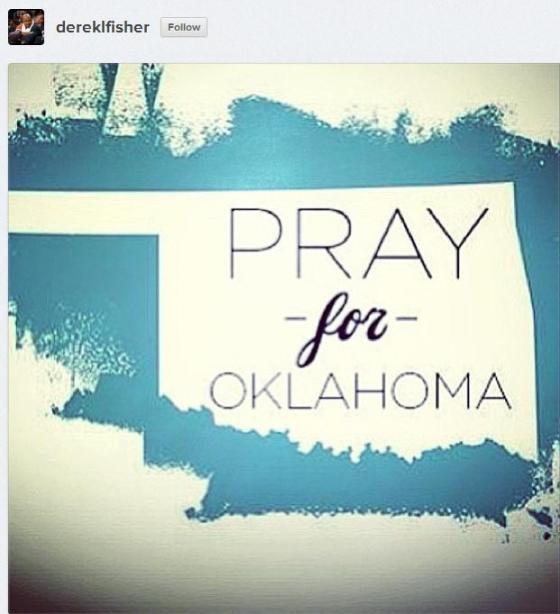
russ west instagram

We would have completely understood if the Oklahoma City Thunder players would have just tweeted their well wishes and disbelief about the disaster, donated a couple bucks here and there, and given us their support from afar. They were just starting their offseason after a disappointing post season run that included a season ending injury to one of their superstars. And the reality is that most athletes don’t live in the city where they play year round. After exit interviews, the players usually disperse to their various hometowns for their offseason. We wouldn’t have held it against them if they would’ve stayed away from the disaster zone.

There’s an understanding when it comes to the athlete/fan relationship. We, the fans, cheer the athletes on to no end, and, in return, the athletes acknowledge our fandom in their interviews and in social media. It becomes almost scripted when athletes mention their fans as being the best fans in their league or when they say that the crowd played a major role in their comeback. It’s something that the Oklahoma media, and the media, in general, loves to play up.

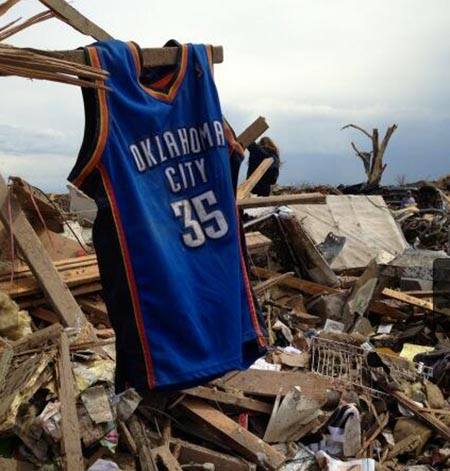
durant jersey torndao

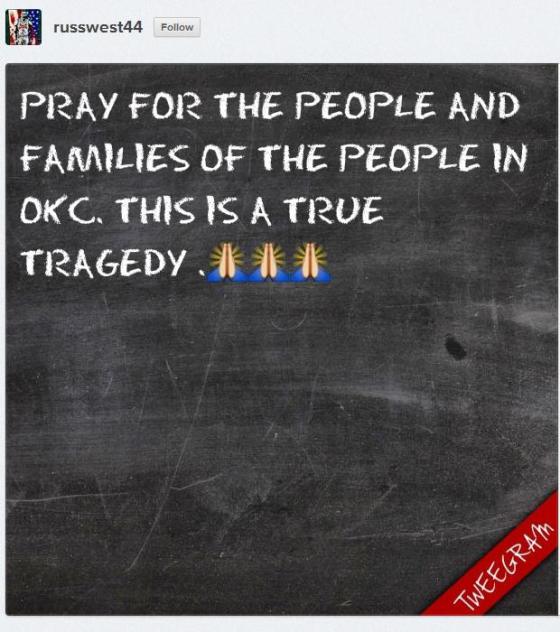
But in our darkest hour, though, there was a bit of a role reversal. The players came out and cheered us on. As soon as the enormity of everything became apparent, Kevin Durant, Russell Westbrook, Derek Fisher, Serge Ibaka, Perry Jones III, Nick Collison, and our old friend James Harden, were tweeting and instragramming their well wishes and prayers out to us. If it would have ended there, that would have been awesome. Then, Kendrick Perkins (you know, the player whose head a lot of OKC fans want on their amnesty plate) set up a donation spot at a local OKC store. And if it would’ve ended there, it would have been great.

d fish insta

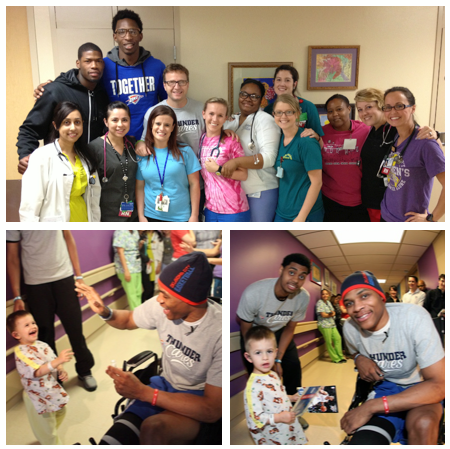
Then Durant stepped it up and donated $1 million dollars to the relief efforts. And Perkins donated $25K to help build future storm shelters. And Russell Westbrook, Hasheem Thabeet, DeAndre Liggins, Jeremy Lamb, and coach Scott Brooks visited OU Childrens’ Hospital to bring some rays of sunshine to children who had probably just witnessed their darkest hour. This spurred the Thunder organization and many of their corporate sponsors to donate millions of dollars in aid. If it would’ve ended there, that would have been the best.

thunder hospital

Then the guys actually started showing up in Moore and walking through the debris and rubble, lending support to those crestfallen by the tornado. You saw Kevin Durant walking around giving encouraging words to those that supported him. You saw Russell Westbrook hobbling around on crutches giving support to those that needed it, even if it was in verbal form. General manager Sam Presti walked around doing his part to help out. CoachBrooks, Thabeet, Thabo Sefolosha, and native son Daniel Orton could also be seen lending their support throughout Moore. Nike, through their association with Durant, agreed to donate a million dollars worth of merchandise to help in the healing process.

thunder tornado ii

And this is just what we’ve heard. Only the person giving actually knows what they have given. During many of the pregame videos in the past few years, the focus has always been about how the values of Oklahomans mesh with the values of the Thunder organization. Resiliency, Team, Together, Team is One, Community. I used to think those were just prompt words to make the team feel more “Okie-centric”. Words aimed at our civil subconscious to make us love the team more. But in the end, the players on the team have shown those values to be true amongst themselves and amongst the team.

thunder tornado

As a realist, I know that one day, someone on the Thunder will rip our innocence from us. Be it one of our players being charged in a criminal case or a long drawn out contract negotiation in which a superstar will want out of OKC and into a bigger market. That day will come. But for right now, these player have kept our innocence intact. These players have shown their Okie values to be true. We’ve been with them through thick and thin, and now, they have reciprocated that support in our darkest hour. In the athlete/fan relationship, that very rarely happens.

Text “REDCROSS” to 90999 for $10 donation to help tornado victims in Moore, Shawnee, and OKC

#Oklahoma STRONG!!!!

For the 2nd time in less than 15 years, another record setting tornado leveled the city of Moore, Oklahoma. Now is a time for mourning and reflection. Pray for the victims and their families. But, also remember, that we’ve been here before. We’ve faced many a tragedy in these last 20 years. We’ve overcome. We’ve triumphed. This will be no different. We are Oklahoma Strong!

pray-for-oklahoma-532x532

ok home

Text “REDCROSS” to 90999 for $10 donation to help tornado victims in Moore, Shawnee, and OKC

Exit Interviews: Thunder roster and outlooks

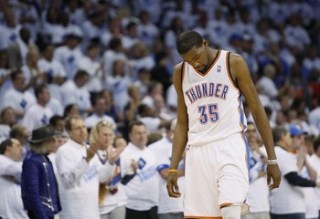
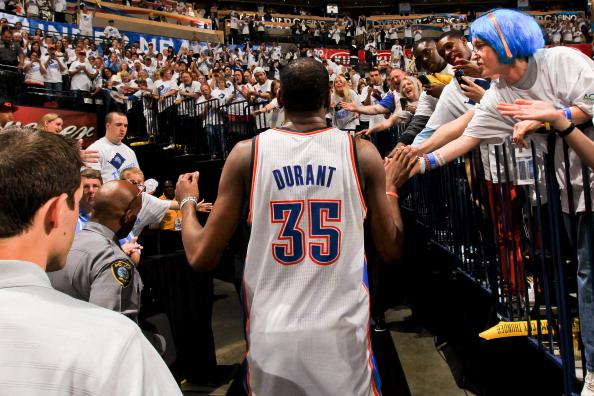
Oklahoma City Thunder forward Durant walks with his head down after a teammate fouled a Memphis Grizzlies player in Game 5 of their NBA Western Conference semi-final playoffs in Oklahoma City.

With Oklahoma City’s 84-88 loss to the Memphis Grizzles in Game 5 of the Western Conference Semi-finals, the Thunder find themselves in an unfamiliar place: out of the playoffs before the conference finals even begin. As everyone knows, the major cause of that early exit was the season ending knee injury to Russell Westbrook in Game 2 of the Thunder’s first round match up against the Houston Rockets. After dispatching those pesky Rockets in 6 games, The Thunder found themselves matched up against one of the best defensive teams in the league. Though every game was close, the Thunder eventually succumbed due to late game execution issues and an inability to find a consistent secondary scorer to pair with Kevin Durant.

Whenever a season ends, be it in mid-April at the conclusion of the regular season or mid-June at the conclusion of the NBA Finals, every team holds exit interviews with each player and coach on their team. Exit interviews serve two purposes: either to tell the person what to work on for the next season or to advise the person of their intentions in regards to extensions or standing on the team. With the Thunder’s ouster, it’s time to hold exit interviews with certain people on the team.

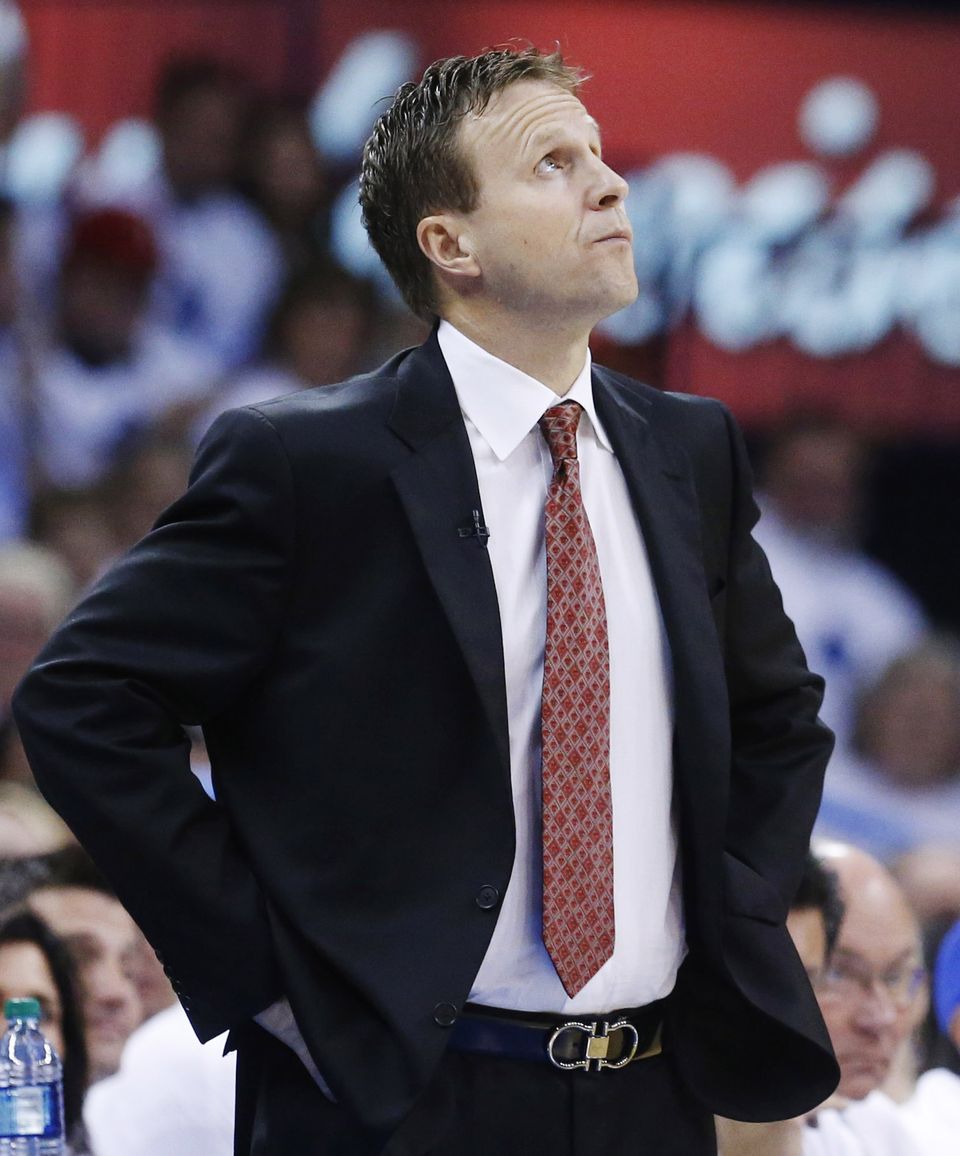
Scott Brooks – Head Coach

brooks

  • Season Record – 60 – 22 (.732)
  • Season Review – Amid an earth shattering trade at the beginning of the season, Brooks kept the Thunder ship afloat with his calm demeanor and positive approach to player management. He fostered the chemistry that eventually formed from a team in flux and guided the Thunder to the No. 1 seed in the Western Conference and the 2nd best record in the league. In the playoffs, though, after the loss of Westbrook, the simplistic formations on the offensive side of the ball played right into the Grizzlies hands. With them only having to control one superstar, the Grizzlies continuously harassed Durant while the offense looked completely out of sync at times.
  • Salary for 2013-14 – $4.0 million
  • View from the Front Office – This coach is a rock of stability. He’s never too high and never too low, which is a positive trait for such a young team (yes, they are still young). He always protects his players in the public and in the media and never resorts to “media-driven” motivation tactics. He’s improved every year in the regular season and, if not for a freak injury to one of his star players, probably would’ve kept on that upward plane. His stubbornness is both a gift and a curse though. It gives the players a sense of comfort and organization, but it also neuters the development of some of the younger players on the NBA stage.
  • Future Outlook – A team doesn’t show 4 consecutive years of improvement on talent alone. Brooks has had as much a hand in the Thunder’s ascension as has Durant and Westbrook. But, this postseason has knocked a little of the luster off Brooks’ shine. His lack of a contingency plan when Westbrook went down may foreshadow the beginnings of an ugly truth. The realization that Brooks has entrusted the lion’s share of the offense on 2 players, while never developing a fall-safe system in case one of the two got hurt may eventually be his downfall.

Ronnie Brewer – Guard/Forward

brewer

  • Season Averages (w/OKC) – 10.1 mins /0.9 pts /2.9 rebs /0.7 asts /0.6 stls /0.0 blks (14 games)
  • Season Review – The Thunder obtained Brewer from the New York Knicks in a trade deadline deal for a 2014 2nd round pick. When he was first acquired, I had visions of Brewer being a big wing defender to help against the likes of Lebron James. But Brewer never saw much playing time and played in only one postseason game.
  • Salary for 2013-14 – Unknown as player is an unrestricted free agent
  • View from the Front Office – Brewer is a great end of the bench option as a big wing defender. But, offensively, he was atrocious. The hitch on his jumper seems to have gotten worse and his offensive confidence seems to have been shot on the few opportunities he had out there on the floor for the Thunder. Through the tough times though, Brewer remained a consummate professional and said all the right things in public.
  • Future Outlook – Ronnie Brewer, we hardly knew ya. Unfortunately, we never got to see if the acquisition of Brewer would be helpful against the Lebrons of the world. I hope he got to see the Murrah Building Memorial and the Museum of Osteology, because I don’t think he’ll be back in Oklahoma City next season.  

Nick Collison – Forward/Center

collison randolph

  • Season Averages – 19.5 mins /5.1 pts /4.1 rebs /1.5 asts /0.6 stls /0.4 blks
  • Season Review – Collison was one of the stabilizing forces for the Thunder when the trade at the beginning of the season went down. He anchored the bench unit until Kevin Martin started feeling comfortable with his role, and even developed a great 2-man game with Martin along the way. Collison did what does best throughout the season: rebound, play smart defense, and provide a little bit of offense whenever necessary.
  • Salary for 2013-14 – $2.59 million
  • View from the Front Office – Though there are signs of slowing down, Collison is still performing at a high level for a back-up big man. Also, his decreasing salary is not a hindrance to the team’s cap structure. Has a future in coaching when his playing days are over with.  
  • Future Outlook – Collison is a main stay on the team. His small salary and production make him a must for a championship contending team that is hovering around the luxury tax line.

Kevin Durant – Forward

durant

  • Season Averages – 38.5 mins /28.1 pts /7.9 rebs /4.6 asts /1.4 stls /1.3 blks
  • Season Review – 50/40/90. That’s all you need to know about this season. Durant averaged career highs in assists, steals, and blocks, while decreasing his turnovers. He became amazingly efficient at scoring the basketball and could have averaged more points if he wanted to. Durant became more of a playmaker in the absence of James Harden and had the best season of his career.
  • Salary for 2013-14 – $18.77 million
  • View from the Front Office – The team couldn’t ask more from their superstar player. A scoring savant that wants to be great at all facets of the game. Has a work ethic that matches his scoring ability. Consummate professional and image conscious. A dream to have on your team.
  • Future Outlook – Durant (along with Westbrook) will continue to be the pillars upon which the team’s championship aspirations will rest upon. Durant has improved some facet of his game every year since he got into the league, and there’s no reason to think he won’t do that during this offseason. I will say this though: Kevin, you’ve had a crazy 18 months of basketball with hardly any break. Rest this offseason. Work on getting stronger, but give your body the break it deserves.

Derek Fisher – Guard

d fisher

  • Season Averages (w/OKC) –14.4 mins /4.1 pts /0.9 rebs /0.7 asts /0.6 stls /0.0 blks
  • Season Review – For the second consecutive year, Fisher joined the Thunder after the trading deadline to help provide a spark off the bench. While he had some rough stretches shooting the ball while working himself back into shape, he eventually found his stroke in the playoffs, which proved to be very helpful when Westbrook went down with his injury.
  • Salary for 2013-14 – Unknown as player is an unrestricted free agent
  • View from the Front Office – Veteran leadership and outside shooting. Those are the things that Fisher brings to the table. Undersized combo guard that can burn red hot or ice cold. Like most of the vets on the team, provides the team with a calming presence. Defensively capable, but age and lack of height can get the best of him at times.
  • Future Outlook – It would not surprise me one bit if history repeated itself for a 3rd time next season. The players seem to enjoy Fisher’s presence and he fills a niche for the team. I think a lot will be dependent on roster spot availability and how the young guys develop (Lamb, Liggins, Jackson, and any future draft pick).

Serge Ibaka – Forward/Center

NBA: Memphis Grizzlies at Oklahoma City Thunder

  • Season Averages – 31.1 mins /13.2 pts /7.7 rebs /0.5 asts /0.4 stls /3.0 blks
  • Season Review – Ibaka was asked to step up offensively after the Harden trade, and he did, averaging career highs in points, FG attempts, 3pt FG attempts, and rebounds. He became one of the best mid-range shooters in the game and also added a corner 3 to his burgeoning repertoire. He became the mid-range release valve in the Thunder’s offense that had been missing since the team traded away Nenad Krstic two seasons ago. Ibaka also continued his dominance as a paint protector and continued his development as a one on one post defender. Ibaka’s effort on the defensive end earned him All-Defense 1st Team honors.
  • Salary for 2013-14 – $12.5 million
  • View from the Front Office – One of the foundational players of the organization. He’s the superstar of defense and balances out the two offensive superstars on the team. A team-first guy as evidenced by taking less money on his extension than he probably would have gotten in free agency. As scary as it sounds, he is still developing and still learning the game.
  • Future Outlook – Again, one of the pillars of the franchise. He is the defensive yin to Durant and Westbrook’s offensive yang. Having signed his full extension, Ibaka should be a part of the Thunder’s future for the next 3-4 seasons. Hopefully he continues to develop his game, especially his post game and ability to create his own shot.

Reggie Jackson – Guard

allen jackson

  • Season Averages – 14.2 mins /5.3 points /2.4 rebs /1.7 asts /0.4 stls /0.2 blks
  • Season Review – After starting the season as the 3rd point guard on the roster, Jackson was sent to the Tulsa 66ers in December for a couple games of development. His per game averages for those 3 games: 28.0 points, 7.3 rebounds, and 8.3 assists on 60/36/100 shooting. Shortly after that stint, the Thunder brass decided that Jackson was ready to be the full time back-up point guard in place of the struggling Eric Maynor. Jackson played steadily throughout the year, showing glimpses of possibly becoming a great combo guard in the league. After Russell Westbrook went down in the 2nd game of the playoffs, Jackson took over and played well enough to keep the Thunder afloat.
  • Salary for 2013-14 – $1.33 million
  • View from the Front Office – When you have superstars making superstar money, you need good young players that are still on their rookie deals to contribute. That’s where Jackson comes into play. He, along with a couple of the other young Thunder players, will be the foundation of the bench and the gap fillers on the roster. How they continue to develop may determine how far the Thunder go in the future. Jackson proved during his run in the playoffs, that he is an effective pressure player, making clutch free-throws to ice games, but also young enough to make mistakes at critical times.
  • Future Outlook – If Jackson develops his jumper this summer, he could very well become a 6th man of the year candidate. Defensively, he has the ability to guard most guards in the NBA and will be an effective crunch-time player moving forward. Best case scenario is that Jackson becomes a Harden-type player off the bench.
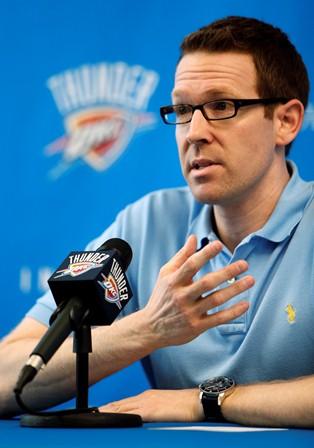
Perry Jones III – Forward

jones da iii

  • Season Averages – 7.4 mins /2.3 pts /1.6 rebs /0.3 asts /0.1 stls /0.2 blks (38 games)
  • NBADL Averages – 32.5 mins /14.3 pts /7.3 rebs /1.7 asts /1.2 stls /0.6 blks (15 games)
  • Season Review – A lottery talent that surprisingly dropped to the Thunder with the 28th pick, Jones was used sparingly on the Thunder’s roster this season, but was a major player with the Tulsa 66ers.
  • Salary for 2013-14 – $1.08 million
  • View from the Front Office – Tremendous athlete that dropped in the draft because of injury and motor concerns. A front court tweener that hasn’t yet found his niche in the league. Is he a stretch 4, a huge 3, or an undersized 5? A player that has amazing potential and upside, but needs to pick what he wants to be and start working on that. Part of the young core of the team that will make up the bulk of the bench.
  • Future Outlook – Jones will need to continue working on his mid-range jumper. He has the ability to make it, but needs to be more consistent. Also, needs to bulk up, as he is too skilled to just be a stretch 4. His motor issues may come into play in how much he wants to work on developing his game. According to Jones’ exit interview, he will be staying in Oklahoma City during the offseason to work with the Thunder’s staff on bulking up. I’m sure the organization and player in tune in how they want Jones to develop.

Jeremy Lamb – Guard

lamb_second_rr1_130415

  • Season Averages – 6.4 mins /3.1 pts /0.8 rebs /0.2 asts /0.1 stls /0.1 blks (23 games)
  • NBADL Averages – 32.8 mins /21.0 pts /5.3 rebs /3.0 asts /1.2 stls /0.8 blks (21 games)
  • Season Review – Lamb was one of the players sent over from Houston in the Harden trade. Although he did not get many minutes with the Thunder, he was, arguably, the MVP of the Tulsa 66ers.
  • Salary for 2013-14 – $2.11 million
  • View from the Front Office – Probably the key component for the Thunder in the Harden trade. His development as an outside shooter and wing defender could determine whether this trade was a success. Good outside shot already. Very athletic. Has the tools to be a good to great defender. Needs to add bulk. Part of young core of bench players.
  • Future Outlook – Lamb’s development is extremely important to the franchise’s continuation of success. Has the skill set to be a starting 2-guard in the NBA. Needs to work this summer on consistently making his outside shot, as that will be his role on this team moving forward.

DeAndre Liggins – Guard/Forward

d liggs

  • Season Averages – 7.4 mins /1.5 pts /1.4 rebs /0.4 asts /0.5 stls /0.1 blks (39 games)
  • NBADL Averages – 34.2 mins /11.6 pts /6.9 rebs /4.3 asts /1.7 stls /0.4 blks (19 games)
  • Season Review – Liggins was a long shot to make the roster at the beginning of training camp, but showed enough defensively to be given the final roster spot. He was used primarily as a wing defender with the Thunder and also spent significant time with the Tulsa 66ers. In the playoffs, Liggins was used as a perimeter defender in the Houston series.
  • Salary for 2013-14 – Unknown – Conflicting reports whether Liggins’ contract was only for one season or whether the Thunder can opt into any team option years. Liggins most likely is an unrestricted free agent.
  • View from the Front Office – With the paradigm shift on offensive philosophy changing quickly in the NBA (lane penetration and 3-point shooting), having a young wing defender that can develop some semblance of an offensive game is a plus. Liggins showed a developing offensive game with his corner 3 and ability to drive.
  • Future Outlook – If Liggins is a free agent, he would be one of my top priorities in the offseason. He can be signed for cheap and will provide some defensive stability for the 2nd unit. Has the skill set, with the Thunder organization, to be a starting SG in the Thabo Sefolosha mold. Must develop a consistent 3-point shot and get a little bit stronger.

Kevin Martin – Guard/Forward

k martin zbo

  • Season Averages – 27.7 mins /14.0 pts /2.3 rebs /1.4 asts /0.9 stls /0.1 blks
  • Season Review – Martin was one of the players acquired in the Harden trade. After being a starter with free reign for most of his career, Martin had to adjust to coming off the bench with the Thunder. He was basically put in the Harden role and was expected to produce quick offense once he entered the game. He struggled with consistency in his new role. As the season went on, though, he seemed to assimilate a little better, and was being more consistent by the end of the season. In the playoffs, his inconsistency proved to be a detriment in the absence of Westbrook.
  • Salary for 2013-14 – Unknown as player is an unrestricted free agent.
  • View from the Front Office – Martin was brought in to be a stop gap for Harden’s role on the team. Great shooter that struggles with consistency at times. Used to be able to draw fouls in bunches earlier in his career, but now resorts to strictly being a spot-up shooter. Tends to disappear when his shot is not falling. His game can be predicted with what happens with his first couple of shots. Struggles defensively. Can be a great piece off the bench, but asking price may be too high.
  • Future Outlook – I was on the Kevin Martin contract extension bandwagon earlier this season, but his offensive inconsistencies and defensive struggles, coupled with his probable mid to high asking price (probably starting at $6 million and up), have me thinking that other options may be a better way to go. For what Martin gives the team, the Thunder may be able to find a cheaper replacement that may be as consistent of a shooter, while being better defensively.

Daniel Orton – Center

d orton

  • Season Averages – 8.0 mins /2.5 pts /2.0 rebs /0.3 asts /0.3 stls /0.2 blks (13 games)
  • NBADL Averages – 28.2 mins /12.5 pts /7.8 rebs /1.9 asts /1.1 stls /2.2 blks (29 games)
  • Season Review – Brought in after the Harden trade to fill in a roster spot, Orton has played sparingly with the Thunder, spending most of the season with the Tulsa 66ers.
  • Salary for 2013-14 – Unknown. A lot like Liggins’ contract situation, there are conflicting reports as to whether Orton’s contract was only for one season or whether the Thunder can opt into any team option years. Orton most likely is an unrestricted free agent.
  • View from the Front Office – Developmental project that will take time. Has shown flashes of being able to play some minutes in the NBA. Big, strong frame that can clear space. Has to learn how to use that frame to get rebounds and play positional defense without fouling. Needs to be more offensively aggressive, as his size . Injury prone.
  • Future Outlook – Depending on who and how many the Thunder draft, Orton may be candidate to come back as that last big off the bench. A little bit more time in the D-League will do nothing but help his development. He seems to be close to putting it all together and being a small time contributor on this team.

Kendrick Perkins – Center

gasol perk

  • Season Averages – 25.1 mins /4.2 pts /6.0 rebs /1.4 asts /0.6 stls /1.1 blks
  • Season Review – Perkins does what he does. Rebound. Defend the paint. Intimidate opponents. He had his ebbs and flows throughout the season, but was still an integral part of a 60 win team. In the playoffs, though, came into question as he was a liability in the Houston series and was partially ineffective in the Memphis series.
  • Salary for 2013-14 – $8.48 million
  • View from the Front Office – Stingy post defender. Struggles offensively due to general immobility caused by prior injuries and natural slowness. Surprisingly, guards wing players well in short periods of time on pick and roll switch outs. High basketball IQ, especially defensively and in the post. Great teammate and veteran.
  • Future Outlook – Probably gets saved from the amnesty clause due to the fact that it makes no sense, financially, to cut a player that you’ll still have to pay, and that still has some value. Perkins’ skills have steadily declined every season he has been in OKC. I believe Perkins will still be the starting center come the first game of 2013-14, but his minutes will be severely reduced throughout the season depending on match-ups.

Thabo Sefolosha – Guard/Forward

Thabo Sefolosha, Tony Allen

  • Season Averages – 27.5 mins /7.6 pts /3.9 rebs /1.5 asts /1.3 stls /0.5 blks
  • Season Review – Sefolosha was a lot more aggressive offensively this season, averaging 3.2 three point shot attempts per game, making them at a 42% clip. He also shot a career high 48% overall, while scoring his highest full season scoring average since arriving in Oklahoma City. Sefolosha’s bread and butter, though, is as a premier wing defender, and he excelled at that again this season.
  • Salary for 2013-14 – $3.9 million
  • View from the Front Office – One of the better wing defenders in the league. Long, but strong enough to bang with some of the bigger wings in the NBA. Improved 3-point shooter. Good ball handler that can make mistakes in the open floor. Consummate professional.
  • Future Outlook – Sefolosha is in the final year of his contract. He has value as a wing defender, and may be a tradable asset in the near future. While I would love to sign Sefolosha to an extension, it may make more sense, financially, to go with one of the younger options that are waiting in the wings (Liggins or Lamb).

Hasheem Thabeet – Center

hash zbo

  • Season Averages – 11.7 mins /2.4 pts /3.0 rebs /0.2 asts /0.5 stls /0.9 blks
  • Season Review – Coming into the season, Thabeet was thought to be battling it out with Cole Aldrich for the back-up center position. After the Harden trade, Thabeet was given the reigns to the back-up center position, and performed surprisingly well. A draft bust as the 2nd overall pick in the 2009 NBA draft, Thabeet has shined in his chance at redemption, focusing on defense and rebounding.
  • Salary for 2013-14 – $915,852
  • View from the Front Office – Defensive minded big that has finally figured out how to play in the NBA. Strong-willed, as others would have probably folded when the word “bust” was used to describe their career. Uses his height and length well. Offensively challenged, but has good hands and can produce offensively, if put in the right position. Lack of lateral movement can lead to foul trouble. Has the ability to start if he can stay out of foul trouble.
  • Future Outlook – Thabeet has been a surprising success. While he will never live up to his No. 2 selection, he has the ability to carve out a long career as a back-up, and possibly, starting, center in the NBA. Now that he has gotten used to the speed of the game on the defensive side of the ball, it is time for him to work on his offensive skill set. He already has good hands, and for a center, that’s half the battle.

Russell Westbrook – Guard

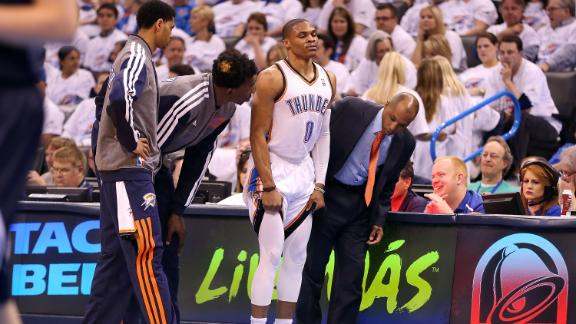
rw hurt

  • Season Averages – 34.9 mins /23.2 pts /5.2 rebs /7.4 asts /1.8 stls /0.3 blks
  • Season Review – Westbrook’s value to this team was never more prevalent than when he missed most of the postseason due to a knee injury. The offense sputtered, the points in transition went drastically down, and the defenses keyed in entirely on Kevin Durant. Westbrook had a great regular season, and for stretches of time, was the best player in the league. This one man fast break constantly kept defenses on their heels and keyed one of the most prolific offenses in the NBA. His assist numbers went up, while his turnovers went down. And he averaged a career high in rebounds.
  • Salary for 2013-14 – $14.69 million
  • View from the Front Office – Electric athlete. One of the fastest players with the ball from end to end in the world. Explosive leaper that would like nothing more than to dunk on someone’s head. One of the quickest first steps, but also has the ability to stop on a dime and make mid-range jumpers. Gets a lot of elevation on his jump shots. Drafted as a defensive stopper, but gambles a lot at times, to the detriment of the defense. Improving 3-point shooter. Not very media friendly, but not mean-spirited, either.
  • Future Outlook – As Sam Presti stated in his exit meeting with the press, Westbrook and Durant are the “caretakers of the organization” and the “drivers of our culture”. I think both relish that role, especially Westbrook. He is the heart of the team, and how he goes, so does the team.

Memphis Grizzlies v Oklahoma City Thunder - Game Five

Even though the playoff exit was a lot sooner than most of us expected, the future is indeed bright for this team. Take away the reckless dive at Westbrook’s knee by Patrick Beverly, and this team is likely playing against the San Antonio Spurs in the Western Conference Finals. But, as they say, injuries are a part of the game. It’s a sentiment that could probably be echoed in Oakland (David Lee), Los Angeles (Kobe Bryant), and Chicago (Derrick Rose, Luol Deng, Kirk Heinrich, etc). Thankfully, Westbrook’s injury isn’t one that should affect him in the future. With the assets obtained in the Harden trade, it will be up to Thunder GM Sam Presti to make use of the toys he has to work with.
Enjoying the Storm: Westbrook and Reality

westbrook injury

There’s a saying for any situation in life. Believe me, I know. My mother has spouted off at least 85% of those sayings to me, all in Spanish. When the news came down that Russell Westbrook would be having surgery to repair a lateral meniscus tear, I went through the 5 stages of grief pretty quickly:
  • Denial – I thought it was a joke. I mean, the man played on the injury the entire 2nd half of game 2 and racked up 29 points. One time I ripped a hang nail from my finger and was out of commission for 3 days. You’re telling me this man tore a shock absorber in his knee and was able to play 24 more minutes of playoff basketball successfully? There’s no way he would be needing surgery.
  • Anger – Damn you Patrick Beverly. Yes, the “play on the ball before a timeout” play is one that a lot of players, Westbrook included, make to the tune of a 0.00000001% success rate. But injuries very rarely happen on those plays, especially surgery-requiring injuries. The fact that he completely launched his  body into a defenseless Westbrook was reckless and inexcusable. So, again, damn you Patrick Beverly.
  • Bargaining – After realizing that this upcoming surgery was not a joke, I started bargaining on Westbrook’s knee. I figured since he played on the injury, it must not be that bad. So, if it wasn’t that serious, maybe he’ll have surgery and come back in 12 days, like Crazy Uncle Ron Ron (Metta World Peace). I figured, at worst, he’d be out for 2-4 weeks. My logic was that if we could somehow push our 2nd round opponent to more than Game 5 or actually make it to the Western Conference Finals, then maybe there was a chance that Westbrook may come back to play for the Thunder this postseason. As you can tell, there was a lot of maybe’s in my bargaining session.
  • Depression – When the news came out after the surgery that Westbrook would be out for the entire playoffs, this was when “basketball fan” depression set in. The Thunder had battled all season long, not only to garner the Number 1 seed in the West, but also to exorcise the demons that remained from the James Harden trade. And now, against Harden and the Houston Rockets in the first round of the playoffs, to have it all disintegrate on a reckless, stupid play, was completely and utterly disheartening.
  • Acceptance – Almost immediately after hearing that Westbrook would be out for the remainder of the playoffs, and after the depression wore off, I accepted that Russell Westbrook would not be walking through those doors in a jersey this season. It was after I accepted this fact that my mindset on this team changed. It was no longer championship or bust. Now it was about getting better and hardening our will for future success. Would I love to see a historic championship run this season? Of course, but the basketball analyst/realist in me knows, that without Westbrook, the mountains that are the San Antonio Spurs and Miami Heat just got a lot higher to overcome.

thunder starters

Once I had gone through my stages of grief, I started thinking about some of those sayings and how they apply to this current team. The first one that comes to mind is, “when life gives you lemons, make lemonade.” I’ve always wondered how this team would react to a serious injury to either Kevin Durant or Westbrook. The Thunder have been beyond blessed when it has come to the health of their players, especially the starters. Since March 14th 2011, to include the regular season, the postseason, and the first 2 games of this postseason, the starters for the Thunder have played in 96.8% of those games together. That’s unheard of in the NBA. And none of the injuries have ever been serious. Now, the team is having to regroup on the fly due to an injury to their Iron Man.

reggie jax

From a player development standpoint, though, this is not a bad thing. What better way to cut your teeth than in the NBA playoffs? Reggie Jackson has steadily progressed in the last two seasons from a wide eyed rookie using his off arm to protect his dribble in traffic to leader of the bench unit on a championship caliber team. The time he is getting as a starter will have the same effect on his confidence as when Durant, Westbrook, and Harden all played in the Olympics. The “knowing that you belong” aspect of professional sports is often overlooked, but is very important in a young player’s maturation process.

Moving Jackson over to starting point guard also opens up a spot in the rotation for another bench player. Playing against a team that relies heavily on small ball lineups, pick-n-rolls, and 3-point shooting, DeAndre Liggins has done his job extremely well in his allotted minutes. Used mainly as a perimeter defender, Liggins has averaged 10 minutes per game and is a +11 combined in the two games since Westbrook’s injury. He’s disrupted the Rockets’ rhythm on PnR’s, has jumped out on the shooters, and has been surprisingly good on the defensive boards. This real time experience in the playoffs can do wonders for a player’s confidence moving forward. As the team (hopefully) moves ahead in these playoffs, it will be interesting to see whether any of the other young, seldom used bench players (Jeremy Lamb, Perry Jones III, Daniel Orton) will contribute any meaningful minutes. The “next man up” motto holds very true for the Thunder in these playoffs.

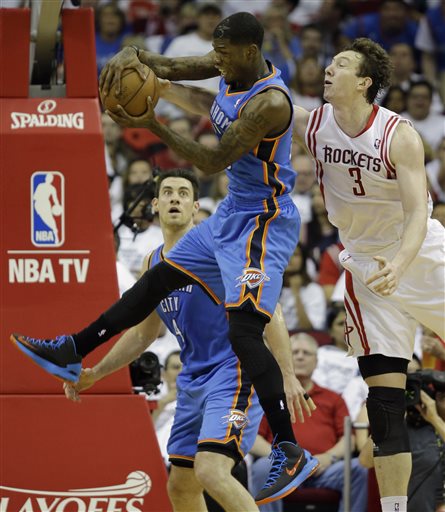
DeAndre Liggins, Omer Asik

As the Thunder continue battling in the playoffs, another saying comes to mind: A journey of a thousand miles begins with a single step. Just because one of your best players goes down, doesn’t mean that you stop playing. Look at the Golden State Warriors. David Lee goes down with a torn hip flexor in game 1 of their series against the Denver Nuggets and the team (especially Steph Curry and Jarrett Jack) responds to give them a commanding 3-1 series lead. Kevin Durant knows what’s ahead of him. He knows that from now on he will be Option A, B, and sometimes C for the Thunder. He knows that defenses will key on him with not only their best perimeter defender, but also with a 2nd and, possibly, 3rd defender. He knows this, and he’s ready. Players like Durant train for this moment their entire lives.  There was a time, six years ago, when Durant couldn’t even bench press 185 pounds. Now, he’s ready to carry, not just a team, but an entire city on his back.

durant

The last quote that comes to mind when I think of this Westbrook situation is, “after the storm, comes the calm.” The storm was the Westbrook injury and the chaos that ensued. But from this experience, I believe the team will be stronger, smarter, and hungrier. Players know that championship windows can close as quickly as they open. A snap of a ligament here, a tweak of a back there, or the stupidity of an over-zealous bench player, and your franchise could be set back a decade. The Thunder now know this. They won’t forget the fragility of championship opportunities. Though the expectations have been lessened, the excitement has not. It’s a new world out there just waiting to be explored.