Tag Archives: Sam Presti

Scoreboard Watching (2014 edition)

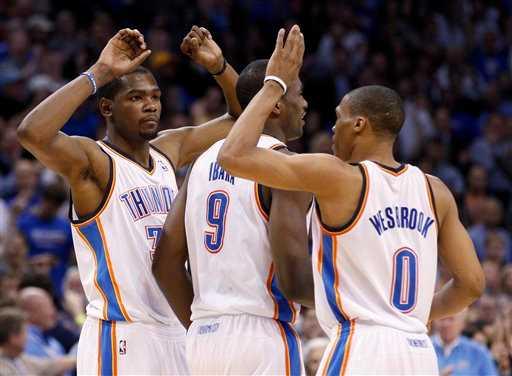
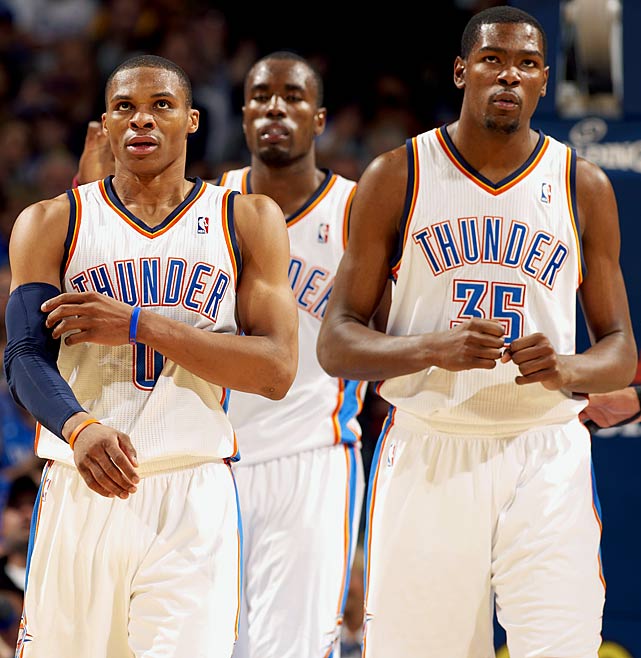
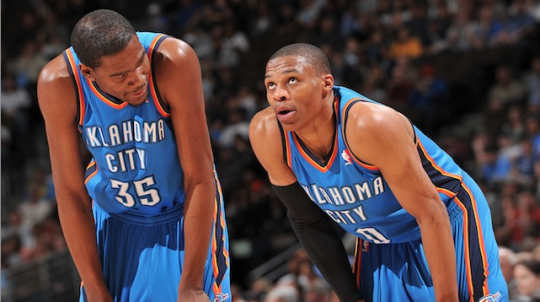
durant westbrook thunder

If you are a fan of a team, you’re always aware of your team’s games. But, sometimes, if you are wholly invested in one team, you tend to miss what out on what is going on around the rest of the league. Last season, I wrote a similar article concerning the other teams Thunder fans should be looking out for as that season closed (namely the San Antonio Spurs and Toronto Raptors). In a vacuum, a fan should only be worried about their team. But, in reality, with playoff positioning and/or draft positioning at stake, watching how other teams perform at the end of the season can add some drama to a point in the season where drama is sometimes lacking. This season, there are 5 teams Thunder fans needs to be paying attention to than can affect their near future.

1. San Antonio Spurs

  • Why it matters: The No. 1 seed in the Western Conference (and in the league) is at stake.
  • Team’s outlook: Currently 59-16 (1st in West), with 4 road games and 3 home games remaining.
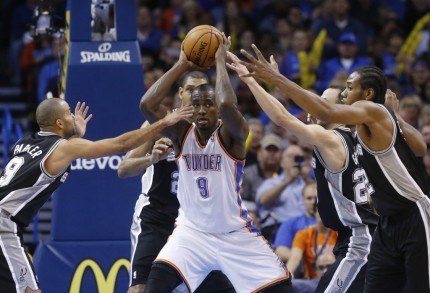
Serge Ibaka

This is very reminiscent to what happened last season. This time though, it seems like the Spurs are far enough ahead to not have to worry about the Thunder chasing down the No. 1 seed from behind. The Spurs are currently on a roll, coming into the Thunder game having won 19 in a row, and hold a 4 game lead over the Thunder. With their penchant to rest starters late in the season, the Thunder still have a slight chance to catch the Spurs. But it seems like a foregone conclusion that the Spurs will head into the playoffs with the No. 1 seed in the West. One thing to remember is that if San Antonio does stumble, the Thunder own the tie-breaker over them.

2. Dallas Mavericks

  • Why it matters: The Thunder own the Mavericks’ first round pick if it is outside the Top 20.
  • Team’s outlook: Currently 44-31, (7th in the West) with 5 road games and 2 home games remaining

The Thunder got this draft pick in the Harden deal from Houston. There are two factions when it comes to this pick. Those that want the pick this season (slotted to be in the 21-23 range) and those that want the pick to go all the way until 2018, when it becomes unprotected. It will all depend on if Dallas make the playoffs or not. If they make the playoffs, they’ll be one of the top 10 teams in the league, thus garnering a pick in the 21-30 range, which transfers over to the Thunder. If they don’t make the playoffs, the Mavericks will pick in the lottery and will keep the pick.

The Mavericks are battling with the Memphis Grizzlies and the Phoenix Suns for the last two seeds in the Western Conference playoff race. Of the remaining games between the 3 teams, the Mavericks face the harder road with their opponents having a .525 winning percentage combined. But the road will not be easy for either one of the 3 teams because, NEWSFLASH!, they all play in the Western Conference. That being said, the Mavericks had their opportunity to put some distance between themselves and the other two teams, but flubbed an 8 game home stand to the tune of going 4-4. Luckily, all three teams play each other in the final week of the season.

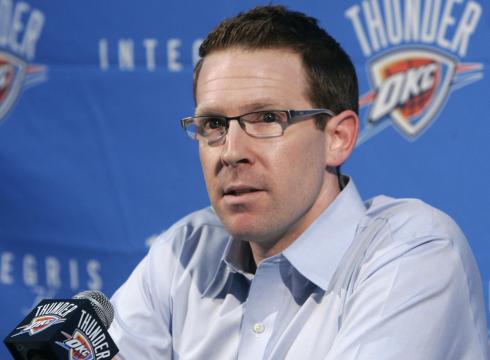
I’m torn as to what I want to do with this pick. Part of me thinks that Thunder GM Sam Presti, with two draft picks late in the first round, could package those to move up a couple slots and get a shooter like Nik Stauskas of Michigan. But part of me also wants to see what happens if this pick actually reaches 2018 unprotected. Unless Dirk Nowitzki goes on Tim Duncan’s offseason training program, I see his effectiveness, and that of the Mavs, steadily going down in these next couple of seasons. And hopefully, they completely bottom out in the 2017-18 season.

3 and 4. Indiana Pacers and Miami Heat

  • Why it matters: The only teams that matter in the Eastern Conference
  • Teams’ Outlooks – With a virtual tie for the Eastern Conference top spot, these two teams meet one last time on April 11th. Indiana currently leads the season series 2-1.
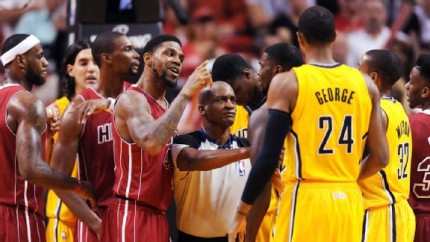
heat pacers

With a 2.5 game lead over these two teams in the league standings, the Thunder are in control to maintain home court advantage against any of the East’s top teams if they meet in the NBA Finals. The major issue here is whether the Pacers will give Miami a run for their money and make the Eastern Conference Finals somewhat competitive. While Miami has been surging in the last 10 games, going 7-3, the Pacers have been doing the exact opposite, going 7-10 in their last 17 games.

The jump from being a good team to becoming an elite team is the hardest jump to make in the NBA. Not only do you have to start positioning your role players correctly, but your star players have to start taking that next step. For Indiana, a combination of questionable in-season moves and lack of player progression has slightly slowed that progression from good team to elite team. The mid-season trade that sent Danny Granger to the Philadelphia 76ers for Evan Turner and Lavoy Allen has yet to bear fruit. And the mid-season signing of Andrew Bynum can probably be deemed a failure due to a reoccurrence of knee issues for the center. In addition, Paul George and Roy Hibbert have failed to significantly improve from where they were in the beginning of the season. With this recent slide, rumors of infighting and selfishness have begun to sneak into the vernacular that describes the Pacers. The mental aspect of making the jump from a good team to an elite team is the hardest thing for a young team to grasp, and its currently showing with these Pacers.

The reason this matters to the Thunder is because the Western Conference playoffs are going to be a gauntlet. The first round match-ups will be formidable and the series will only get tougher from there. If Miami is able to skip through the East playoffs easily, and get some rest in the process, that could spell trouble for the team that comes out of the West, regardless of who it is.

5. New York Knicks

  • Why it matters: The Denver Nuggets own the Knicks’ pick for this draft
  • Team’s Outlook – Currently 33-43 (8th in the East), with 3 road and 3 home games remaining.

Looking towards the future at division rivals, the team that has the best chance of getting better quickly is the Denver Nuggets. The Nuggets suffered a myriad of injuries this season that prevented them from ever making a run at the playoffs. But with many of those players coming back next season and a potential lottery pick, the Nuggets are in position to get back to their winning ways. If the Knicks make the playoffs, their pick moves down to the No. 15 slot. But if the Knicks miss the playoffs, Denver will be slotted to pick in the 7-9 range, while also having the potential of getting a top 3 pick.

Seeding doesn’t seem to affect the Thunder that much. They know they can beat the Spurs in San Antonio, if necessary. Their main goals to finish this season are to stay ahead of the LA Clippers, Miami Heat, and Indiana Pacers, and to get/remain healthy. As the season rolls to a close, it’ll be interesting to keep a vested interest in these 5 teams, as their outcomes all have the potential of affecting the Thunder in the near future.

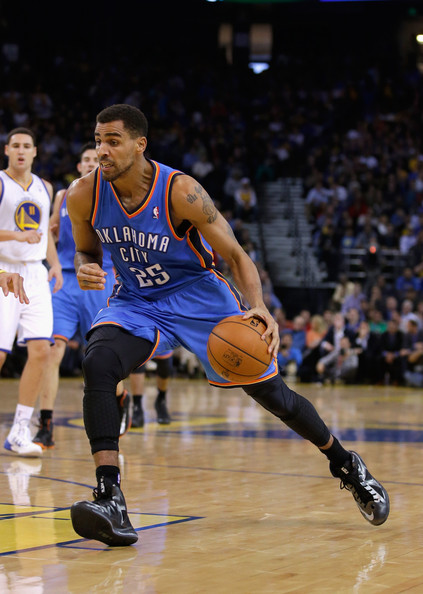
The Thunder and the Trading Deadline (2014 Edition)

thabo sefolosha thunder

Heading into the season, the Oklahoma City Thunder were in the unfamiliar position of being a title contender, while also having a war chest worth of assets that would make any team in rebuild mode jealous. Most championship contending teams have an experienced core that was obtained by trading away assets. But the James Harden trade from the beginning of last season gave the Thunder some cap flexibility and assets to play with heading into this season. They have a veteran on an extremely cap friendly expiring contract (Thabo Sefolosha), young players with potential on rookie scale contracts (Reggie Jackson, Jeremy Lamb, and Perry Jones), an extra draft pick (Dallas’ protected 1st rounder), and two sizable Traded Player Exceptions.

They have everything necessary to make a monster trade. But two important questions come to mind when a team nears the trade deadline. The first question is “What does the team need?”. Every team has weaknesses that can be addressed via a trade. The important thing when it comes to addressing weaknesses is what does the team have to offer and what is the team willing to give up. Those two things may seem to be the same, but are entirely different. For example, the Heat can address any of their weaknesses by trading Chris Bosh. But in reality, the Heat will, instead, choose to make a smaller deal or stand pat.  Which leads to the second question, “Does the team need to make a trade?”.

When a team has the best record heading into the All Star break, while also missing their 2nd best player for much of the first half of the season, the above question becomes a valid one. Much of the Thunder’s success can be attributed to the chemistry the team has cultivated over the years. Making a trade now, especially one where a rotational player is traded, could have it’s consequences.

Two things have to be weighed when contemplating a trade: how the trade affects you currently and how the trade can affect you in the future. The reality with the Thunder is that they will be toeing the tax line for the foreseeable future. With Kevin Durant, Russell Westbrook, and Serge Ibaka on max (or near max) deals, finding bargains will be the rule of the land. Anything that includes extra salary and extra years will probably be nixed.
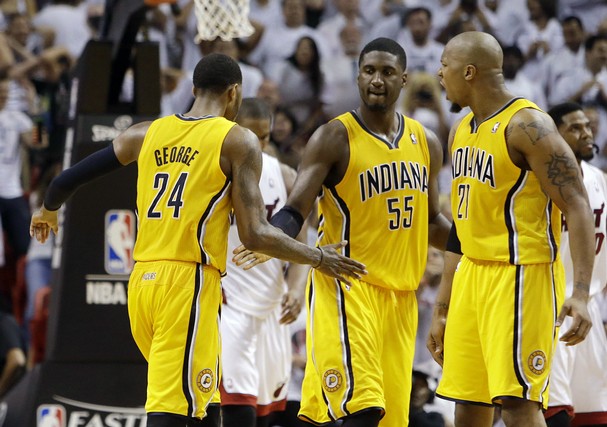
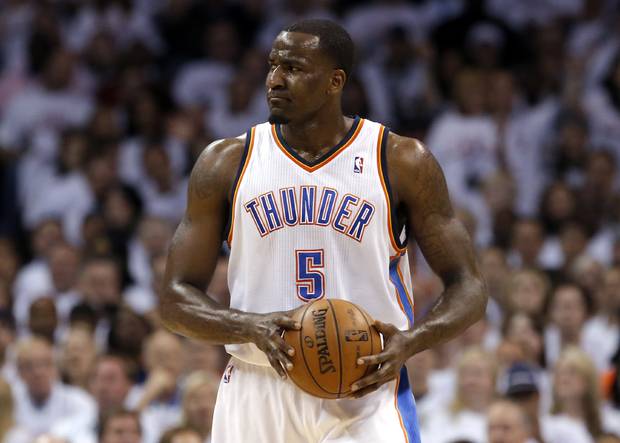
durant ibaka westbrook thunder

Another thing to factor is the fact that the Thunder have assets that are not currently on the roster, but could come into play as early as next season. Tibor Pleiss, the Thunder’s 2nd round Eurostash from 2010, could possibly join the team next season. Another possible roster spot could go to Grant Jerrett next season. The stretch 4 out of Arizona was acquired by the Thunder in the 2nd round of last year’s draft. His rights are still owned by the Thunder as he develops in Tulsa under the guise of the Thunder D-League team.

Also, the team will have to decide if obtaining a player will have any impact on future roster moves, such as extending Jackson and/or Sefolosha. Only the front office knows what they plan to do with those two players, but their futures will probably have a bearing on what the Thunder do this season at the trade deadline.

In the end, the first question asked comes into play. What, exactly, do the Thunder need? They head into the All-Star break with the best record in the league. They are top 5 in offense (ppg), offensive rating, defensive rating, and rebounds. They are top 10 in points allowed and 2nd in margin of victory. And they have done this with their All-Star point guard  missing more games than he’s played. So, what exactly, does this team need? It’s like asking the guy who has everything what he wants for Christmas.

jones jackson lamb ibaka durant westbrook thunder

I can only see two areas of need for this team: 3-point shooting and point guard depth. If there is a player that could supply both while not minding being the 11th or 12th man on this team, then I’m all for it. Only problem is there aren’t many players like that. Point guards with the ability to shoot usually find their ways into line-ups.

So where does that leave us? I think the Thunder will stand pat as far as their current roster is concerned. Realistically, their most available assets are two empty roster spots, a $2.3 million trade exception, Hasheem Thabeet ($1.2 million this season), two future 2nd rounders from the Ryan Gomes trade, and possibly their own first rounder for this upcoming draft (slotted to be in the 28-30 range). I think the Thunder will attempt to get a shooter with their trade exception, possibly CJ Miles of the Cleveland Cavaliers or Anthony Morrow of the New Orleans Pelicans. Then I think they’ll sign Royal Ivey for the rest of the season once his season is done in China.

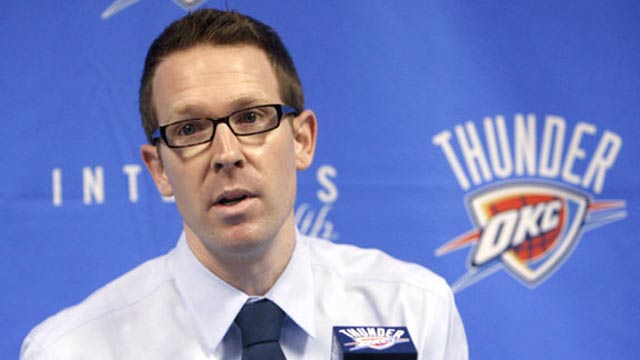
sam presti thunder

The Thunder don’t have to do much tinkering. Their biggest acquisition may be the return of Russell Westbrook from injury. They have enough roster flexibility to adapt to any style thrown at them. And they have enough experience to get through any rough patch. As long as health does not become a factor, they should finish the regular season out in the same fashion they went into the All Star break. But somewhere, deep in the recesses of my mind, I imagine Sam Presti reading this article, letting out a diabolical laugh, and calling up Adam Silver to put his stamp of approval on a 12 team, 38 player trade involving 25 draft picks, 13 Euro-stashes, and $21 million dollars worth of cash considerations right at the trade deadline.

Trade Talk and the Importance of Jeremy Lamb

Utah Jazz v Oklahoma City Thunder

The trading deadline in the NBA may be February 20th, 2014, but the date that gets a lot of the movement started is December 15th, 2013. That is the date when most free agents who signed in the offseason become eligible to be traded. As that date approaches, the inevitable trade chatter starts to ramp up. If you are a team that holds many desirable assets such as good, young players on rookie pay scales, multiple first round picks, and expiring contracts, then your name is bound to show up in a lot of the trade talk.

And that is where the Oklahoma City Thunder currently find themselves. With young bench players on rookie scale contracts that are performing surprisingly well and a couple of semi-attractive expiring contracts (namely Kendrick Perkins and Thabo Sefolosha), that trade chatter has already started to rev up about the Thunder. Sam Amico of Fox Sports Ohio had the following quip on his NBA Notes from December 9th:

Multiple league sources have said the Oklahoma City Thunder are willing to deal second-year guard Jeremy Lamb if they can find a more experienced (and consistent) player to come off the bench. Lamb has already been traded once – from the Rockets as part of the James Harden deal before last season.

Then Bill Simmons on NBA Countdown suggested that the Thunder should trade Lamb, Perkins, and 2 first round picks to the Orlando Magic for Arron Afflalo. Now this would usually be seen as conjecture on the part of a media pundit, but a lot of fans around the country see Simmons as something of an NBA savant who is the end all/be all when it comes to NBA information/predictions.

Adding fuel to the trade talk fire, Reggie Jackson, who has been performing almost at ‘Harden as a 6th man’-like levels throughout the season, recently signed with powerhouse sports agency CAA. This is the same agency that represents Dwayne Wade, Tony Parker, Chris Paul, and Carmelo Anthony to name a few, and also partners with Roc-Nation, who represents Jackson’s teammate Kevin Durant. Did I mention that Jackson has a possible extension looming this offseason? Scary thought, especially when we all remember what happened the last time a great Thunder bench player was up for an extension.

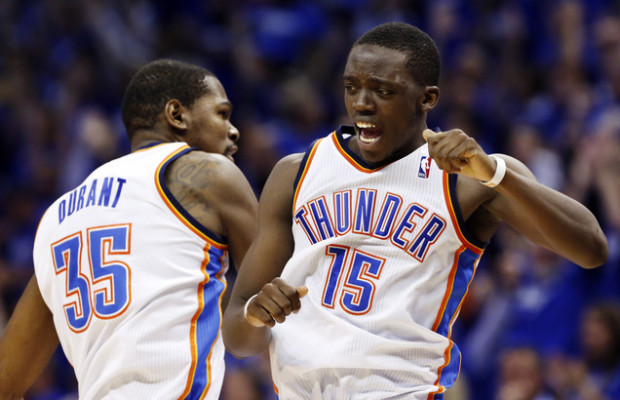
Kevin Durant, Reggie Jackson

Whenever these trade talks start to ratchet up in December, it’s always important to remember the previous 3 months when there were hardly any trade talks. That period from September through November is usually reserved for roster building and evaluation. Yes, big trades do happen during that time frame, as we saw with the Harden trade last season, but those types of transactions are usually reserved for February, June, and July. When the trade talk is quietest amongst media members is actually when the trade talk is loudest amongst GMs. It is during this roster building and evaluation period that GMs try to gauge the interest of the “tradeable” assets on their rosters. It is when the posturing and positioning of “GM chess” occurs.

When you hear phrases like “multiple league sources”  or “an Eastern/Western Conference GM said”, just know that the news coming from that report may not be current. Take for example Jeremy Lamb, who was a very attractive asset heading into this season. The Thunder probably did their due diligence in June during the NBA draft to see if there was anything of value that they could get for Lamb. Also, during the preseason, when Lamb was struggling with his shot, there was probably some probing by Thunder GM Sam Presti to see if anyone would bite in return for an experienced bench player. But that was when Lamb was an unknown commodity, not only on the court, but also to other teams. But now, after averaging 10.5 points and 2.5 rebounds on 53% FG shooting and 39% 3pt FG shooting over the past 12 games while playing good defense, Lamb is not only a known commodity, but also a key component for a championship contending team. While the rumors of the Thunder shopping Lamb may be true, they may also be 3-6 months old.

jeremy lamb thunder 2

If you follow the Thunder and are familiar with their salary cap structure, then you would know that they value production at a low cost. The ability to take one player and flip him into 2 or 3 players of great value while preserving their cap space was one of the main reasons the Thunder traded James Harden. Could history repeat itself with Reggie Jackson? That will be the most pressing issue for the Thunder moving forward. But, while there are similarities between the Harden/Jackson comparisons, there are also differences. The Thunder are a lot better equipped to handle a contract extension for Jackson now, than they were when it was time for Harden to be extended. By the time Jackson’s extension kicks in, Sefolosha, Perkins, and, (God forbid) Nick Collison’s contracts will all be expired. That’s almost $15 million in available salary to play with. The good thing is, Jackson won’t command a max or near max contract. When I think of Jackson, I don’t think of a top 5 player at his position. Two years ago, you could argue that Harden was the 3rd best shooting guard in the league, even if he was coming off the bench. You can’t say the same about Jackson at this point in his career. Also of note is that Harden was traded in the offseason, not in the middle of the season. The Thunder wouldn’t dare trade Jackson during the season when he is arguably their 4th best player. If anything, they’ll Harden-ize him during the offseason.

Which brings me back to Lamb. This is why it is completely asinine to think that the Thunder would want to trade Lamb. His most important asset to the Thunder at this moment is as an insurance policy. If the Thunder decide to either trade Sefolosha before the deadline or allow him to walk in the offseason, they can feel comfortable in the fact that they have a player in Lamb capable of starting for them either after the deadline or into next season. If the Thunder decide to trade Jackson in the offseason, they know that they have a player that can provide offense off the bench and can play with the starters during crunch time. In the grand scheme of things, Lamb may be the piece that makes other moves possible.

The Thunder and the 66ers: Paying Dividends

lamb tulsa 66ers thunder

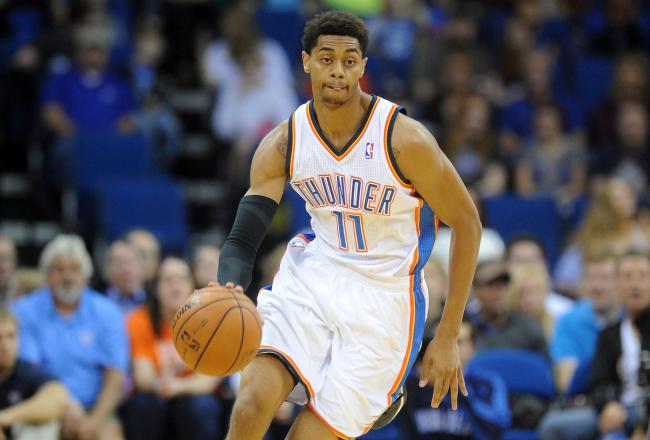
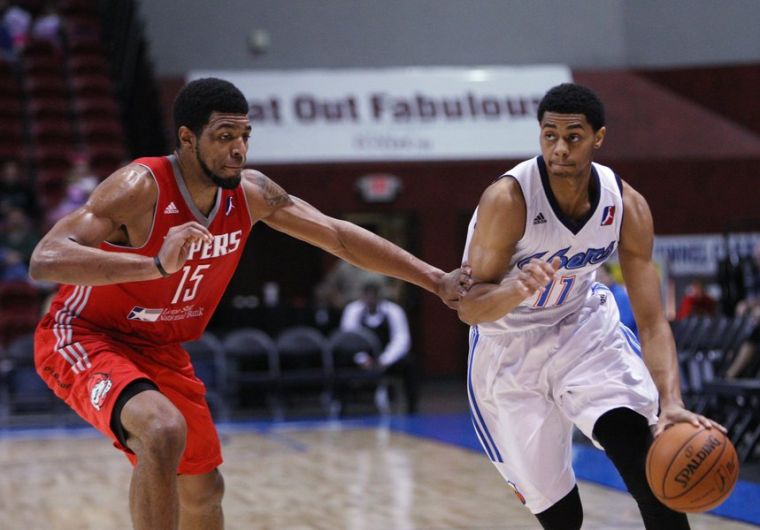
Last season I wrote about the Oklahoma City Thunder’s extensive use of their D-League affiliate, the Tulsa 66ers. After the Harden trade, the Thunder found themselves in the peculiar position of being a contending team, while also having a handful of players that they needed to develop. In the Harden trade, they received a good stopgap in Kevin Martin and an apt apprentice in Jeremy Lamb. The Thunder used Martin as their 6th man off the bench, and he performed serviceably for them, notching averages of 14.0 ppg and 2.3 rpg on 43% 3pt shooting. The wild card in the trade was Lamb, the rookie out of Connecticut who was the 12th pick in the 2012 NBA draft.

Lamb was used in spot duty throughout the season, but spent most of his time in Tulsa where he averaged 21 points, 5.3 rebounds, 3 assists, and 1.2 steals per game in 21 games. There is no doubt that that experience helped Lamb in his transition to be a major cog off the bench for the Thunder this season.

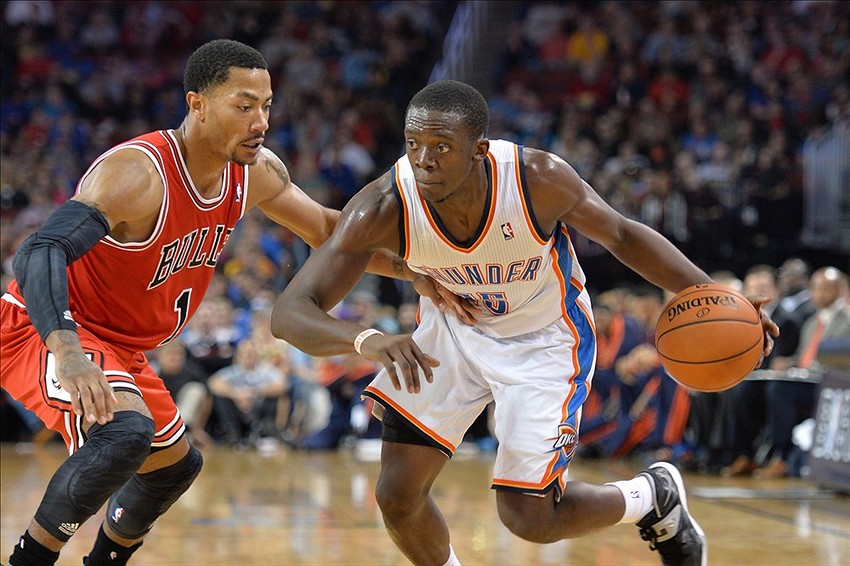
Reggie Jackson spent only 3 games in the D-League last season, but he made his mark known. His per game averages for those 3 games were an astounding 28 points, 7.3 rebounds, and 8.3 assists on 60% FG shooting and 36% 3-pt FG shooting. After that 3 game stint, Jackson went on to get the majority of the back-up point guard minutes on the team and eventually led to Eric Maynor being traded to the Portland Trailblazers. That move paid dividends when Russell Westbrook went down in the second game of the 2013 NBA playoffs. Jackson performed well in his first foray as an NBA starter. Even though the Thunder lost in the 2nd round of the playoffs, Jackson provided enough of a steady hand that the Thunder knew, regardless of how the Kevin Martin negotiations went in the offseason, that they had a true 6th man already under contract.

jackson rose bulls thunder

While Jeremy Lamb was an unknown heading into the season, it was known that he would be part of the rotation. What wasn’t known was how Perry Jones III would fit into the equation. Would he be in the rotation? Would he be shuffled back and forth between Tulsa and Oklahoma City? What is known is the Jones was a combination of size, speed, and athleticism that is unparalleled in the league, outside of Kevin Durant and Paul George. A 6’11 hybrid that can possibly play every position not named point guard.

The key to Jones’ success is if he ever learns how to harness all the raw talent and ability into something feasible on the basketball court. Early returns this season have proven inconclusive. He has shown flashes of being a good rotation player, but also gets caught doing a lot of floating on the floor. Also, due to the rotation, he may be the odd man out at the moment. A little bit of extra seasoning in the D-League may be beneficial to Jones. Not necessarily an entire season’s worth, but maybe 10 games in 3-4 game stints would do wonders for this development. Continue reading The Thunder and the 66ers: Paying Dividends

5 for 5: The Rivalries

harden sefolosha durant thunder rockets

5 for 5: The Longest Shortest Season  |  5 for 5: Tragedies, Courtrooms, and Beginnings  |  5 for 5: The Run  |  5 for 5: The Thunder’s Godfather

This past season, the Oklahoma City Thunder completed their 5th season in the state of Oklahoma. In a world dominated by round numbers, getting to the midway point is always a cause for celebration. In any relationship, you look back at key moments that made it possible to arrive at certain anniversary marks. In the next few weeks heading into training camp, I’ll be looking at 5 defining moments that made it possible for the Thunder to not only roar into the Plains, but also to do it in winning fashion.

For the third part in this series, I wanted to focus on the rivalries. Sports are only as good as the competition they incite. Playing driveway basketball against your kids when they are 5 years of age can quickly get boring (although palming misdirected shots in midair like you’re Serge Ibaka can be entertaining for at least an hour or so). But, try playing your kids when they are 18 years old and have had 12 years of playing experience. Then it becomes an entirely different ballgame.

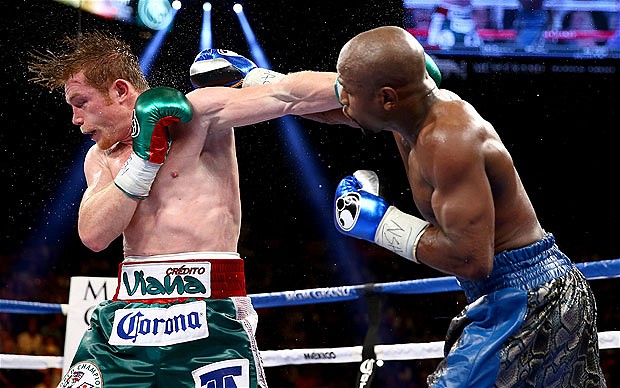
When it comes to competition, I’ve always looked at the career of Floyd Mayweather Jr. with a sliver of disappointment. That he’s a great boxer with arguably the best defense in the history of boxing is without question. The issue that I’ve had with his career has been the level of competition of his opponents. Now, I’m not saying that falls squarely on Mayweather. The guys in his weight classes have not been particularly consistent in the past decade. He’s also “luckily” scheduled the right fights at the right times, choosing to fight boxers that were either on the downward slide of their career (Oscar De La Hoya and Shane Mosley) or fighters that were too inexperienced to compete with him at the time of their fight (Canelo Alvarez and Victor Ortiz). He’s never had that one opponent that defined him. Mike Tyson had Evander Holyfield. Arturo Gatti had Mickey Ward. Mayweather has…… (and therein lies the problem with his career).

mayweather alvarez boxing

If fans are the life blood of sports, then rivalries are the engines that keep them running.  You naturally root against your opponent because they are competing against you and you want to win. Pretty simple concept. But if you add something more to that competitive fire, it can act like an accelerant, creating an even bigger blaze. Rivalries, and the differing reasons for them, can be that spark. When it comes to the Thunder, I’ve categorized their rivals under 4 different categories.

1. Regional Foes

Geography and competition are probably the easiest ways to breed a rivalry. Whether it’s an intracity game between two high schools or a game between professional sports teams 200 miles apart, that desire to be superior to those closest to you is an innate characteristic of the human psyche. Even if the two teams aren’t on equal footing at the time of the game, the rivalry aspect of the game often lends it to be a close affair. Continue reading 5 for 5: The Rivalries

5 for 5: The Longest Shortest Season

thunder western conference champs

5 for 5: Tragedies, Courtrooms, and Beginnings | 5 for 5: The Rivalries  |  5 for 5: The Run  |  5 for 5: The Thunder’s Godfather

This past season, the Oklahoma City Thunder completed their 5th season in the state of Oklahoma. In a world dominated by round numbers, getting to the midway point is always a cause for celebration. In any relationship, you look back at key moments that made it possible to arrive at certain anniversary marks. In the next few weeks heading into training camp, I’ll be looking at 5 defining moments that made it possible for the Thunder to not only roar into the Plains, but also to do it in winning fashion.

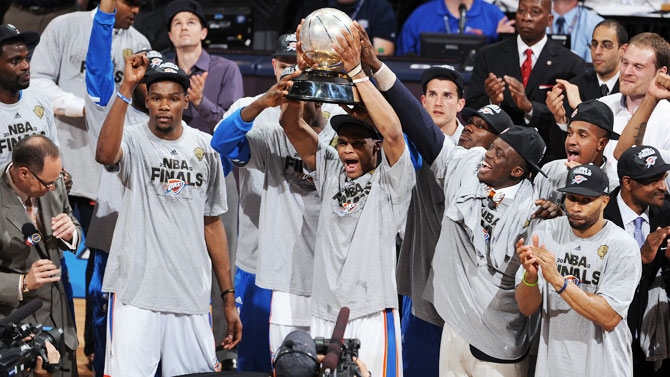
The first part of this series focused on the beginnings of the Thunder organization in Oklahoma  City. For the second part of the series, I want to focus on what was the apex for these first five years of Thunder basketball, the 2012 NBA Finals. For a little comparative perspective, there are 9 NBA teams (in their current city/team format) that have never reached the NBA Finals. The Toronto Raptors, Atlanta Hawks, Sacramento Kings, Memphis Grizzlies, Charlotte Bobcats, Minnesota Timberwolves, Los Angeles Clippers, Denver Nuggets, and New Orleans Hornets/Pelicans have never tasted the fine champagne of a conference championship. I’m excluding the Brooklyn Nets from the list because they’ve only been in Brooklyn for one season and went to the Finals as the New Jersey Nets twice. The proximity of Brooklyn, NY to Newark, NJ (about 15 miles apart) negates a huge change of fan base because of distance. I’m also excluding the Washington Wizards because they made it to the Finals as the Bullets, but decided to change the team’s name in 1997 due to the negative connotation between actual bullets and WashingtonDC being mentioned in the 90’s as the murder capital of the US.

The road to the Finals that season was like the Grateful Dead’s greatest hits album; that is to say a long, strange trip. To begin with, it was a season that almost never was. Although this lockout never reached the DEFCON 4 levels the ’98-‘99 lockout did, it was still nerve-wracking to watch every labor meeting end with the two sides having separate press conferences to disparage the other side. It was like watching your parents, after a nasty divorce, arguing over your custody.

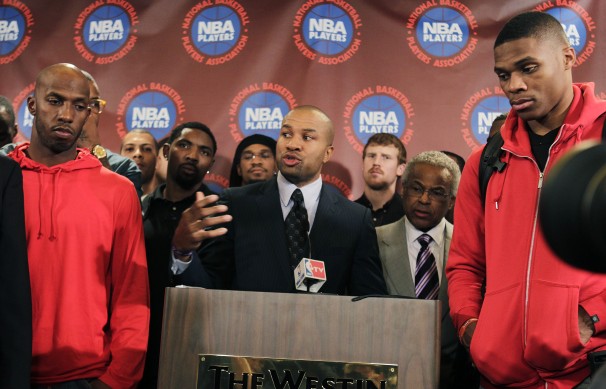
nba lockout

When you are a fan of a team that is drastically improving and just entering the prime of its championship window, the last thing you want is a work stoppage. Anything that cuts into a year of your team’s development when you are close to becoming a perennial contender is the ultimate of detriments. The chemistry built from the previous seasons basically gets thrown out the window if players are allowed to sit for 15-18 months with no access to team coaches or trainers. Not to mention, the veteran players would be a year older and there would be a ton of questions regarding roster moves.

But alas, on November 26th, 2011, after months of hearing about BRI, luxury tax, hard caps, and mid-level exceptions, cooler heads prevailed and an agreement was reached between the NBA and the players’ union. Instead of playing an entire 82 game schedule, the regular season would be trimmed to 66 games with the first day of the season beginning on Christmas. If seeing your team in the NBA Finals is Christmas in June, then seeing the NBA come back from a lockout was, literally, Christmas on Christmas. Continue reading 5 for 5: The Longest Shortest Season

Mike Miller and the Thunder: Monkey Business

mike-miller-monkey-2

As newly minted free agent Mike Miller continues to ponder which team he’ll play for in the future, the decision, itself, may not have anything to do with basketball. The rumors are that Miller is looking for guaranteed years, a little bit more money, and playing time for a contender. But the answer to the decision of which team Miller plays for may actually lie in something more universal to all people: the ability to own a pet. More specifically, a pet of one’s choosing.

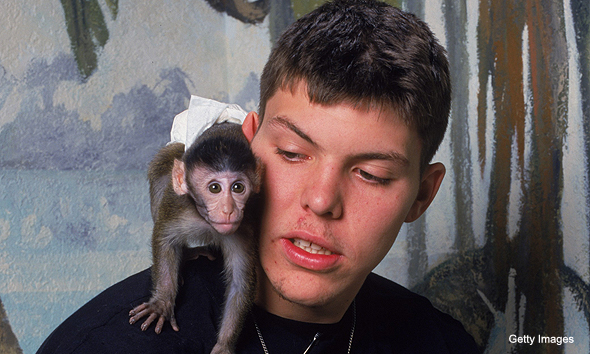
One of the quirks of Miller is that he used to own a Java Macque, which is a type of monkey. Sonny, as the monkey was called, was basically Miller’s first child. He had his own room, wore diapers, and was involved in child-like shenanigans. In a hilarious story, Miller describes how Sonny escaped the house and created a bit of a ruckus in the neighborhood,

“You would always put him in his room, and then we’d lock the door, and then we’d put the dogs out, and then we’d lock the front door. Well, he found out how to unlock doors, unlocked his door, went downstairs, let the dogs in the house and opened the front door. About an hour later we got a call from our neighbors, saying, ‘Your monkey is riding your dogs around the neighborhood.’…I said, ‘C’mon y’all, y’all got to get in the house.”

Unfortunately, Miller had to give Sonny up to a primate sanctuary when he started having his own children. Animals can be very protective/jealous and can pose a risk to small children. But with Miller’s children getting older, he may be thinking about getting a monkey (or any other exotic pet, for that matter) in the future. That may possibly factor into his decision for his future team.

Charlotte Bobcats v Miami Heat

Every state has different laws when it comes to owning primates. Some states out right ban keeping primates as pets. With that in mind, here’s a look at the primate possession laws of the four states whose teams are bidding for Miller’s services. Continue reading Mike Miller and the Thunder: Monkey Business

Oklahoma City Thunder: Ballin’ on a budget

westbrookdurantibaka

Growing up, there were two things I was heavily into other than girls: hip-hop and basketball. I grew up in a time when hip-hop was having an internal war within itself. What started off as a rebellious outlet of expression for the poor and struggling turned into an over-expression of opulence and decadence. Hip-hop went from being mostly underground in the 80’s to completely mainstream in the 90’s. That entrance into mainstream pop culture led to many rappers getting rich quick. But as quickly as the money came, it left, leaving many rappers bankrupt and back to where they started.

During this same time period, many of my friends and I were just starting to work. And work means money management, right? Considering I have no idea where my teenage money went, I would say I did a poor job of managing my money. But it’s funny what sticks with you from your teenage years. One of my real good friends, Ryan Rivera, came up with a phrase that still resonates to this day, not only with myself, but also with my team, the Oklahoma City Thunder. The phrase was, “Ballin’ on a budget”.

Basically, it’s finding ways to live good without destroying your bank account or credit score. It’s not easy and it takes a lot of work. A person wanting to ball on a budget has to have patience and self control. The urge to “keep up with the Joneses” can completely destroy any plan to stay within a budget. Many people in the world live outside of their means in order to put on the face of success. Nice shiny things equates to success in the minds of many. Ballin’ on a budget also takes a lot of work. You can either go to Dillards and pay $80 for a Gucci shirt, or you can bargain hunt at Ross and pay $14.99 for the same or similar looking shirt. The work comes in looking for the right bargain. You almost have to become a hustler to succeed in this venture. Bargain deals may not be sexy, but they’ll get the job done with less overhead.

presti

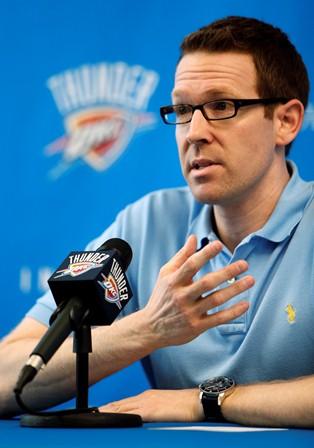
It’s the position where the Thunder find themselves at this juncture. With two trips to the Western Conference Finals, one trip to the NBA Finals, and one number 1 seeding in the Western Conference within the last 3 seasons, this team is definitely ballin’. But they’ve been doing it on a budget to this point. Thunder GM Sam Presti has built a championship contending team through great drafting, salary wheelings and dealings, and difficult decision making.
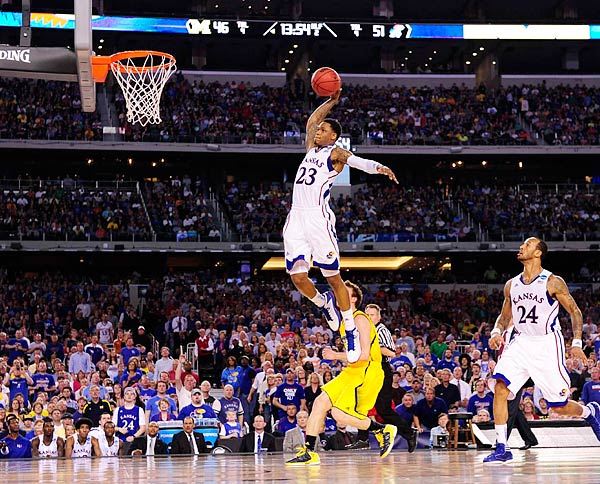
The current collective bargaining agreement has made things a bit difficult for small market teams that are toeing the line between being tax payers and non-tax payers. What was intended to be a punitive rule to defend against overspending by big market teams, has turned into another instance of “the more things change, the more they remain the same”. The Brooklyn Nets have gone into this offseason acting like a cancer patient that just won the lottery screaming YOLO! at everyone he sees. The Nets are projected to pay upwards of $80 million dollars in luxury tax this season, but they have an owner who seems hellbent on winning a title, no matter the cost. The Los Angeles Lakers, New York Knicks, and Miami Heat have also been consistent payers of the luxury tax for the past 3 seasons.

bird

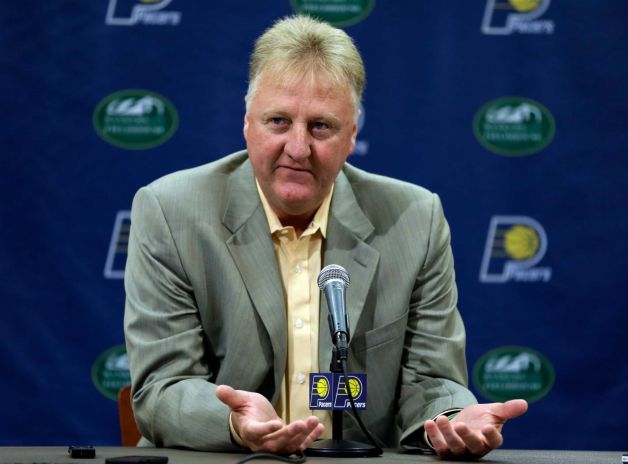
This brings up the difficult question: How are small market teams supposed to compete? In a recent interview with Darnell Mayberry of The Oklahoman, Indiana Pacers president Larry Bird made no qualms about the state of his team and how it compares to the Oklahoma City Thunder,

“Our owners went out and have done everything they could this year so we could be up close to the tax. We just can’t fight the tax. It’s always going to be a disadvantage for us. I feel bad for Oklahoma. They had a great team and they had to make a trade (James Harden trade). They were right there. But we’re going to have to do the same in the future. We’re always fighting an uphill battle with revenues. But that’s part of who we are. And we do the best we can with what we have.”
The key to competing in sports as a small market is to remain patient and look for the right deals. The goal of a big market team is to win at any cost. But the goal of a small market team is to remain consistently sustainable. Teams like the San Antonio Spurs, Pacers, and Thunder thrive on being able to compete year in and year out. I believe that’s part of the reason why the Spurs, who have won 4 championships since 1999, have never been able to repeat. They’ve remained consistently great, but have never been able to consistently spend like the bigger market teams to continuously improve their team on a yearly basis with no regard for payroll. There comes a point every couple of seasons where the Spurs have to retool with younger, less expensive players. Eventually those younger players gain the necessary experience to perform in pressure filled moment, but the team suffers in those “learning seasons”.

a thunder

That’s what I call last season for the Thunder. It was a learning season. After the Harden trade, the team didn’t really hit a consistent rhythm until the end of the season. And with all that, they still ended up with the No. 1 seed in the Western Conference and were probably a Russell Westbrook knee injury away from making it to a 3rd consecutive Western Conference Final. Next season will probably be another learning season, as the bench lost its leading scorer when Kevin Martin signed with the Minnesota Timberwolves. With many fans clamoring for the Thunder to make a move to replace the scoring lost by Martin’s departure, the team has remained steadfast in trusting the young players they already have. Reggie Jackson showed last year in the playoffs what he is capable of after replacing Westbrook when he went down with his injury. Jeremy Lamb has performed well in Summer League and is expected to be a key contributor off the bench next season. And centers Steven Adams and Daniel Orton have performed surprisingly well in Summer League as rim protectors and, dare I say, offensive threats.

To many, this may seem like a cheap move by the owners of the team. With how good the team looked at the end of the regular season, it seemed like they were a resigned Martin and another bench scorer away from being an even stronger contender than they were when they made it to the Finals. With Martin’s bird rights in hand and the full MLE at their disposal, many thought the Thunder were finally going to jump into the deep end of the pool and join the other tax-paying teams. Instead, they allowed Martin to go to Minnesota in a sign and trade (that netted the Thunder a $6.6 million dollar traded player exception) and haven’t touched any of their available pre-tax cap space, which comes out to about $1.28 million dollars. That’s at least enough to sign someone to the veteran minimum. While the pool of free agents has gotten significantly smaller since July1st, there are still viable players available for the taking. So the question becomes: What are the Thunder waiting for?

martin_wolves_lm1_130109

That is where the virtue of patience comes into play. For one thing, it’s only July. Many fans are panicking because of the moves made by other organizations, especially within the Western Conference. The Los Angeles Clippers resigned Chris Paul, traded for Jared Dudley and JJ Reddick, and hired a much better coach in Doc Rivers. The new “it” team, the Houston Rockets won the Dwight Howard sweepstake and landed a couple other veteran free agents. But, championships aren’t won in July; they are won in June. A team can stack a roster full of great players in July that may amount to nothing more than a first round exit the next April. Secondly, the organization has never said that they won’t pay the tax. They know that to be competitive, you may have to eventually pay the tax. But if you don’t have to pay the tax yet, why pay it? Along with more punitive luxury tax restrictions, the new CBA also instituted a repeater tax for teams that have paid the luxury tax for 3 consecutive seasons. With the escalating salaries of Kevin Durant, Russell Westbrook, and Serge Ibaka, the longer you can hold off on being a tax-payer, the more financially competitive you’ll be. And lastly, you still have Kevin Durant, Russell Westbrook, and Serge Ibaka. As long as those three guys are healthy, I think the Thunder have a fighter’s chance in any game.

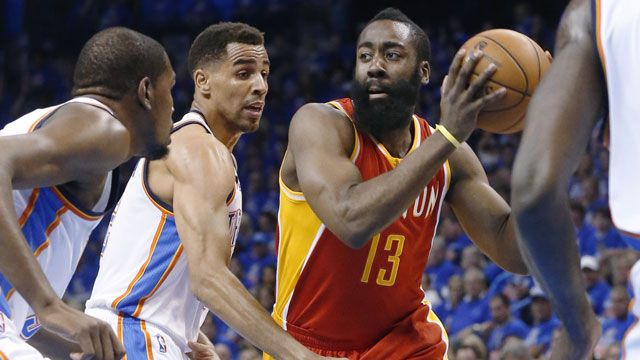
The Thunder aren’t cheap. They’re just smart about how they manage their money. They already have a large percentage of the cap space allotted to the 3 players they deem the most important to the franchise. The reason the Thunder are perceived as cheap, though, is because they never had to “buy” any of those players in free agency. They drafted and developed them, and luckily, they turned out to be superstars. But sometimes, difficult decisions need to be made in order to maintain the financial flexibility that is tantamount to small market team success. That’s what happened in the Harden trade. The Thunder had 4 great players, but couldn’t pay 4 near max to max contracts. Ibaka helped the team by taking what is perceived to be a less than market value contract. Hoping that Harden would do the same, the Thunder drew a line in the sand, and said “here’s our final offer, take it or leave it”. When Harden rejected the offer, the team made the decision to move Harden to Houston. The situation was never a choice between Ibaka or Harden. But to make the numbers work, the team needed Harden to leave some money on the table, and for a young guy heading into his first foray into free agency, he just couldn’t do that.

Serge Ibaka, Russell Westbrook, James Harden, Kevin Durant

Being a money conscious team is not sexy at all. Following a team that is run on the principles of patience and bargain shopping is not for the faint of heart. You watch other teams stack their teams with what you perceive to be good to great players, while you’re constantly having to hope that your players continue to improve in the offseason and that the veteran minimum center you signed actually can play the game of basketball. It’s a tough life, I know. But I wonder how Miami Marlins’ fans really feel about their two championships. The Marlins organization went all in for two runs at a title, and then completely dismantled the team after each title. While the feeling of winning a championship can never be replaced, I wonder what the feeling of watching your championship team be completely dismantled the following offseason feels like. Luckily, I don’t think I’ll ever have to know what that feels like.

Trains of Thought: Thunder and the 2013 Draft

NBA: NBA Draft

Approaching a draft, there are always differing trains of thought as to whom a team should choose. A team has to analyze what their needs are and if they can realistically draft a player that will fill said need(s). This is especially true if you are holding one of the lottery picks. Teams picking in these first 14 slots usually have a plethora of needs to address. But for a championship contending team like the Oklahoma City Thunder, who have many of the necessary cogs already in place, a pick in the lottery can be the final piece of the puzzle to get the team over the hump. 

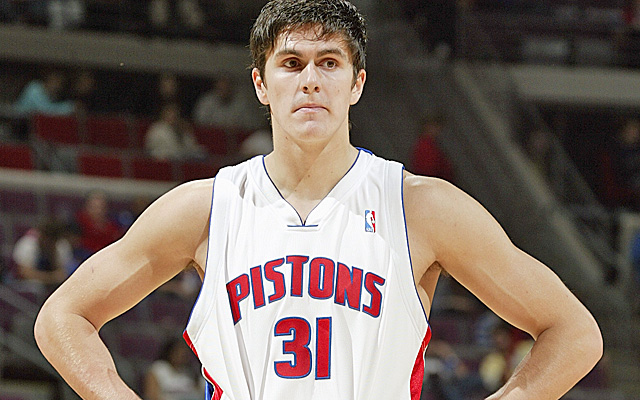
darko

Drafting a final piece is not always guaranteed to get a team over the hump, though. In the summer of 2003, the Detroit Pistons had just come off a trip to the Eastern Conference Finals and also held the No. 2 pick in the upcoming draft, which was loaded at the top. Easy pickings, right? Get the 2nd best player available and you should be set for the next 5 years. But success and good fortune can sometimes make you think you are smarter than you really are. In a draft where the Pistons could have chosen any of Carmelo Anthony, Dwayne Wade, or Chris Bosh, they instead decided to go with the experimental Euro-project named Darko Milicic. Even though the Pistons won the championship the next season, it had nothing to do with Milicic, who was famously tagged as the “human victory cigar” due to the bulk of his playing time coming at the end of blowout victories. The Pistons went on to lose in the NBA Finals in the next season and played in 3 consecutive Eastern Conference Finals after that. Add that up, and in a 6 year span, the Pistons played in 6 consecutive ECFs, went to the Finals twice, and won one championship. Nothing is guaranteed, but I think the number of championships would have increased if the Pistons had drafted one of the other players mentioned above. 

Granted, this draft is not as loaded as the 2003 draft was. But the Thunder find themselves in a position to draft a position of need, instead of having to pay for it through free agency or trade for it. There are probably two trains of thought for what type of the player the Thunder should draft with the 12th pick: either a defensive minded big man capable of developing some semblance of an offensive game or a scoring wing adept at making perimeter shots. In other words, either a replacement for Kendrick Perkins or a replacement for James Harden. The big man pick is more targeted towards future success, while the perimeter wing would be for more immediate results.

pacers

The conference finals and NBA Finals have given the Thunder a blueprint as to what they need for sustained success. In the Eastern Conference Finals, the Indiana Pacers showed what two competent big men can do against the Miami Heat. David West and Roy Hibbert gobbled up offensive rebounds and scored in the paint, almost at will. In the Finals, the San Antonio Spurs have shown that playing the same brand of basketball as the Heat (dribble penetration and 3-point shooting) can befuddle and frustrate them, especially if the opponent is hitting 3-pointers at a 45% clip.

Train of Thought No. 1 – Big Man

perk ii

Everybody knows I love crazy uncle Perk (Kendrick Perkins). For a person who grew up on 90’s basketball, Perkins’ style of play harks back to that physical era. But, truth be told, he laid a complete goose egg in the playoffs this season. He surprisingly had a better run last post season when he played with a torn groin and a torn ligament in his wrist. That Perkins has no semblance of an offensive game is a known fact. But that is usually masked by constant attacking nature of Kevin Durant and Russell Westbrook. When Westbrook went out with his knee injury in the first round of the playoffs, that lack of an offensive game led to the further stagnation of an offense that was already compromised. It wasn’t just that Perkins couldn’t get the ball in the basket, it’s that he was a walking turnover. He had a negative PER in the playoffs and was a liability not just on the offensive end, but also on the defensive end. I didn’t even know negative PERs existed.

Needless to say, with 2 seasons left on Perkins’ contract, it may be time to start looking for his replacement sooner rather than later. Picking up a big man at this slot would be a pick for the future, as big men generally take longer to develop and no post player in this draft has that “ready to play now” look to them.

Before deciding what type of big man could be drafted, it’s important to see what is already in the cupboard. Besides Perkins, the other starter is Serge Ibaka, one of the most versatile power forwards in the NBA. In addition to leading the league in blocks for the 2nd consecutive season, Ibaka also has a deadly midrange game that occasionally stretches out to the 3-point line. His next stage of development should be to learn a post move or two. Off the bench, Nick Collison is a heady post player who plays good defense, can score inside, and can occasionally hit a midrange jumper. The only negative with Collison is that he is getting long in the tooth and starting to show signs of that. Hasheem Thabeet is an average center who is just now learning how to contribute 10-12 solid minutes per game. Perry Jones III is still in the initial stages of his development, but has the physical tools to become a solid contributor. And Daniel Orton is probably the odd man out in the game of big man roulette.

adams noel

Any post player selected will be drafted with the intent to eventually be the starting center. The Thunder tried that 3 seasons ago with Cole Aldrich, but he never panned out. If the Thunder’s system remains similar for the next 3-5 seasons, a player with Perkins’ toughness and defensive chops, but better offensive potential would probably be the selection. Players that fall in that category would be Alex Len, Steven Adams, Mason Plumlee, and Gorgui Dieng. If the Thunder decides to go for an offensive-minded big man, look for them to select Kelly Olynyk or Cody Zeller.

Train of Thought No. 2 – Perimeter Wing

harden

The Thunder have a little more flexibility here than with the center position. When the Thunder made the trade with Houston, they not only traded Harden, but also Daequan Cook. These floor spacers are very important when the bulk of your offense is dependent on two perimeter oriented players. The drive and dish becomes a lot more driving into defensive walls if the dishees aren’t reliable 3-point shooters, especially in the playoffs.

Seeing as the NBA is becoming more of a drive and dish league, having penetrators and 3-point shooters is tantamount to a team’s success. It used to be that if you had a great big man, you were almost guaranteed a deep playoff run. That began to change with the elimination of hand checking. Once that happened, it unshackled quick wing players to have a more prominent role in the offense. No longer were defenders able to keep quicker players at an arm’s length, thus eliminating their speed advantage. Now, defenses had to converge on the quicker players, which opened up shooters on the perimeter, especially on the 3-point line. And, as any kindergartener will tell you, 3 is more than 2 any day of the week.

Looking at the Thunder’s inventory when it comes to wing players, the Thunder already have two of the best dribble penetrators in the league, in Durant and Westbrook. Add to that Reggie Jackson, and the team has their fair share of attackers on the offensive end. What’s lacking on the team is the amount of shooters. Thabo Sefolosha has improved his 3-point shooting to the point where he’s effective, but his slow release make him a liability against teams with long defenders. Kevin Martin was, for the most part, an effective perimeter shooter, but his inconsistency and disappearing act in key games, proved to be a big problem for the Thunder. DeAndre Liggins is on the team for defensive purposes, and Jeremy Lamb was never given a chance to show his shooting chops on the NBA level, though he was very effective in the D-League.

ben-mclemore-dunk

There are two choices for where the team wants to go with this train of thought. One choice is an instant offense type player off the bench. If this is the way the Thunder may be leaning, then look for them to choose CJ McCollum or Shabazz Muhammad. If the Thunder are looking for more of a complete player to eventually take over the shooting guard spot, then the options become Ben McLemore, Victor Oladipo, and Kentavious Caldwell-Pope.

The Thunder will go into draft day with a couple players in mind and counter moves for each situation. In my opinion, the Thunder are extremely high on about 5 players: McLemore, Len, McCollum, Adams, and Oladipo. I think it’ll all be dependent on where the players fall. If McLemore or Len slip down to the 4-6 range, I think the Thunder will throw every possible trade, not involving Durant, Westbrook, or Ibaka, at those teams in that range.

The good thing is that the Thunder have options. Their high 2nd round pick affords them the possibility of obtaining an extra first round pick from a team looking to involve themselves in this year’s free agency. The ability to put a package together with multiple 1st round picks and young players can be very enticing to a team that is rebuilding. Soon enough, it’ll be draft day and Thunder GM Sam Presti will be able to put his plan into play.

The Thunder and the 32nd pick

draft pj 3

The Oklahoma City Thunder hold 3 draft picks in this upcoming draft. They have two in the first round, No.12 and 29, and one in the second round, No. 32.  While people are usually enamored by the first round picks, it’s the early second round picks (No. 31-35) that hold more value to teams. It’s an opportunity to grab first round talent without the constriction of a guaranteed contract. Here’s a list of notable players that have been drafted in the 31-35 range in the last 5 season: Nikola Pekovic, Mario Chalmers, DeAndre Jordan, Kyle Singler, Jeffery Taylor, Jae Crowder, Draymond Green. The difference in talent from the last 5 picks of the first round and the first 5 picks of the second round is infinitesimal.

For teams holding a slot in those first 5 picks of the 2nd round, it is an opportunity not only to draft a talented player, but also to procure a trade for an asset. The fact that a team can take a flyer on a player without having to offer a guaranteed contract, makes these picks more valuable than those in the lower end of the first round. These picks becomes doubly valuable before the beginning of a maddening free agency season. When teams vying for free agents want to clear cap space and/or not take on anymore guaranteed salary, they dump players and first round picks in exchange for high second round picks.

presti

Thunder general manager Sam Presti took advantage of this during the last frenzied free agency class, where he also owned the 32nd pick. We arm-chair GM’s love to talk about the would’ves, could’ves, and should’ves. But we have that beautiful thing called hind-sight in our back pockets. Real NBA GM’s don’t have that advantage, but those few great  GM’s have a little thing called foresight. While we focus on our team in the present tense, great GM’s look at the health of other franchises and plot how they can take advantage of their needs. Presti is great at this and seems to be on the prowl again in this draft.

On July 27th, 2009, the Thunder traded Damien Wilkins and Chucky Atkins to the Minnesota Timberwolves for Etan Thomas and 2 second round picks. Most people thought this was just one of those offseason trades where a team trades 2 bench players for another bench player. But the haul in that trade was actually the 2nd round pick that turned into No. 32 in the 2010 NBA draft.

Etan Thomas, Andrew Bynum

The 2010 offseason was known for one thing and one thing only….the summer of Lebron. That was the offseason where most of the bumper crop from the 2003 draft class was coming up on their 2nd extensions, while other players like Amare Stoudemire, Carlos Boozer, and Joe Johnson were also coming up on unrestricted free agency. If you were a team that believed in quick fixes, this was the summer for you. While a handful of teams were trying their hardest to unload as much salary as possible, the other teams were more than willing to take on decent players (salary) and first round picks.

The Thunder had assets galore in the 2010 draft with 3 picks in the first round (18, 21, and 26) and 2 picks in the second round (32 and 51). The consensus with most teams is that you don’t head into training camp with five rookies. So, the Thunder knew they had to wheel and deal to get what they wanted in this draft, which was a defensive minded big man and more assets. Their first move was to trade the 32nd pick to Miami for the 18th pick and Daequan Cook. Miami was looking to cut salary to position themselves for the summer of Lebron. The Thunder knew they couldn’t get what they wanted at 18, so they traded it to the Clippers for a future first rounder. They eventually traded up to the 11th pick where they picked Cole Aldrich. The future first rounder from the Clippers helped to facilitate the trade with the Boston Celtics for Kendrick Perkins at the trading deadline that following season.

benchmob

There are a lot of similarities between this offseason and the 2010 offseason. First off, the top tier in this free agency class includes some franchise players, such as Chris Paul, Dwight Howard, Andrew Bynum, and Josh Smith. Secondly, these free agents are available and willing to hear out every offer on the table. Thirdly, there are team already vying to dump salary and 1st round draft picks to clear cap space. And, fourthly, the Thunder have the 32nd pick.

The story behind the 32nd pick is akin to the story of Hebrews wandering in the desert for 40 years in the book of Exodus. A little bit of controversy, a little bit of disobedience, and finally back to where it ultimately needed to be. On December 19, 2011, the Thunder traded Byron Mullens to the Charlotte Bobcats for their unprotected 2013 2nd round pick. Simple, right? Wrong! When the Thunder traded for Perkins, they sent Nenad Krstic and Jeff Green to Boston along with that Clippers draft pick. Everything was going good until doctors discovered the following season that Green was suffering from an aortic aneurysm, would need immediate surgery, and would miss the entire 2011-12 season. Boston contended that Oklahoma City knew of this condition previous to the trade. On June 16, 2012, the NBA decided to give Boston the Charlotte pick as compensation for the Green debacle. On July 20, 2012, the Celtics traded the pick to the Houston Rockets as part of a three team trade for guard Courtney Lee. Finally, on October 27, 2012, the pick was sent back to Oklahoma City as part of the James Harden trade. I’ve joked that, to everyone outside of Oklahoma City, the trade between OKC and Houston will be known as the James Harden trade. But to the people in Oklahoma City, the trade will be known as the “reacquisition of the Charlotte 2nd round pick” trade.

Oklahoma City is in prime position to make a significant move to improve their team in this draft. The rumor mill is already rampant with teams wanting to dump salary and picks for a chance at one of the top tier free agents. Adrian Wojnarowski of Yahoo!Sports reported that Houston is looking to unload the No. 5 pick from last season’s draft, Thomas Robinson, in order to clear further cap space. Chad Ford of ESPN.com reported that the Dallas Mavericks were looking to trade away the No. 13 pick in order to avoid the $1.6 million cap hold that the pick carries. Also, Atlanta has picks 17 and 18, but are also looking to throw their hat in the free agency fray. There will be plenty of opportunities to nab a necessary piece on this draft day.

Chris Bosh, LeBron James, Dwyane Wade, Carmelo Anthony

Also, there is one more thing to look out for in this draft. There might be an epic free agency class coming up next offseason. Lebron James, Carmelo Anthony, Chris Bosh, and Dwayne Wade all have early termination options to become free agents in 2014. Add to that, the 2014 NBA draft is predicted to be a lot stronger than this draft class, and you have the perfect storm for further wheelings and dealings. Look for the Thunder to not only get what they need in this draft, but also to pick up assets for the 2014 draft. Let the madness begin!