Tag Archives: Milwaukee Bucks

Milwaukee Bucks vs. Oklahoma City Thunder preview (Game 82 of 82)

bucks russ

  • When: Wednesday, 17 April 2013 at 7:00 PM CST
  • Where: Chesapeake Energy Arena, Oklahoma City, OK

The final regular season mission has been completed. While we didn’t obtain home court advantage throughout the playoffs, we did earn home court advantage throughout the Western Conference playoffs. This accomplishment has earned us the right to treat the final regular season game like a preseason game. Limited minutes for the regulars and heavy minutes for the young guys at the end of the bench.

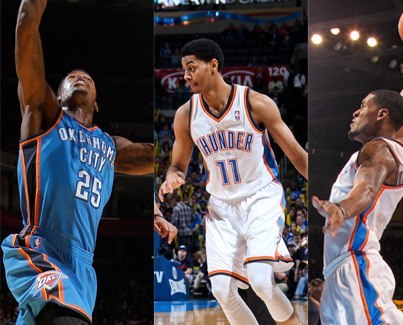
Other than a feather in the cap, the Milwaukee Buck have nothing to gain by winning this game, either. I wouldn’t be surprised if their regulars got plenty of rest also. The game may turn into something similar to a D-League All-Star game with all the young guys out there. Reggie Jackson, Jeremy Lamb, Perry Jones III, Daniel Orton, and DeAndre Liggins may give a glimpse to what the Thunder bench may look like next season. The Thunder won the last meeting against the Bucks using a 19-2 run in the 4th quarter to erase a 5 point deficit.

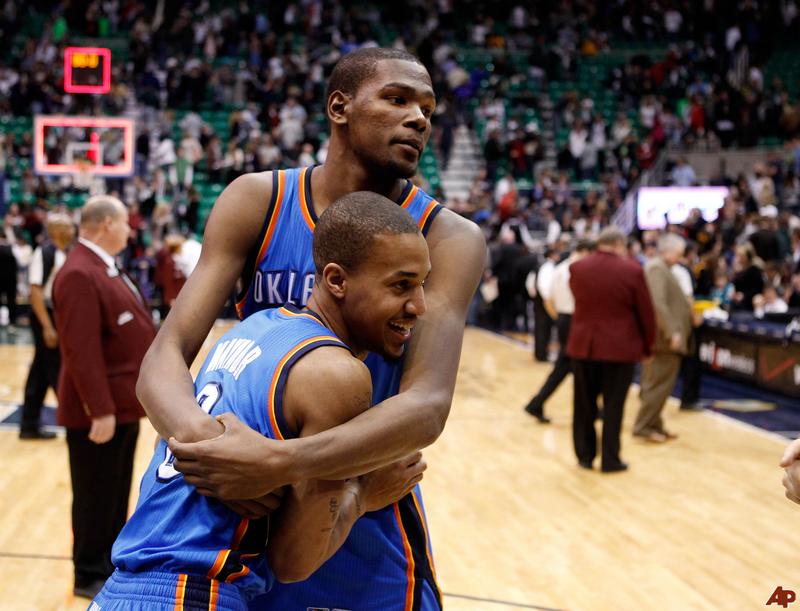
Kevin Durant, Larry Sanders

Fun note: If Carmelo Anthony sits out the New York Knicks’ final game as expected, Kevin Durant would need to score 70 points to win the scoring title. While this type of selfishness is not indicative of Durant’s character and team first approach, this wouldn’t be the first time that a guy of Durant’s moral ilk goes all Finding Nemo seagulls (Mine!Mine!Mine!) on an opponent to win a scoring title. Hall of Famer David Robinson of the San Antonio Spurs scored 71 points on the final day of the 1993-94 season to capture the scoring title from Shaquille O’Neal.

mine

Probable Starting Lineups

Milwaukee Bucks

  • PG – Brandon Jennings
  • SG – Monta Ellis
  • SF – Luc Richard Mbah a Moute
  • PF – Ersan Ilyasova
  • C – John Henson

Oklahoma City Thunder

  • PG – Russell Westbrook
  • SG – Thabo Sefolosha
  • SF – Kevin Durant
  • PF – Serge Ibaka
  • C – Hasheem Thabeet

3 Keys to the Game

1. Come out of the game healthy – Some of the guys on the team are already suffering from, what I like to call, grind of the season injuries. Kendrick Perkins is suffering from a strained hamstring, Kevin Martin is suffering from a sore back, and Derek Fisher is suffering from a sore foot. Whatever the outcome of this game is, I don’t want to add anymore names to that list.

brookies

2. Preview of next season’s bench mob – There should be plenty of time to go around for the Thunder’s D-League All-Stars. Jeremy Lamb, Perry Jones III, Reggie Jackson, DeAndre Liggins, and Daniel Orton should all get substantial minutes in this game. I fully expect a poster dunk from Jones III in this game.

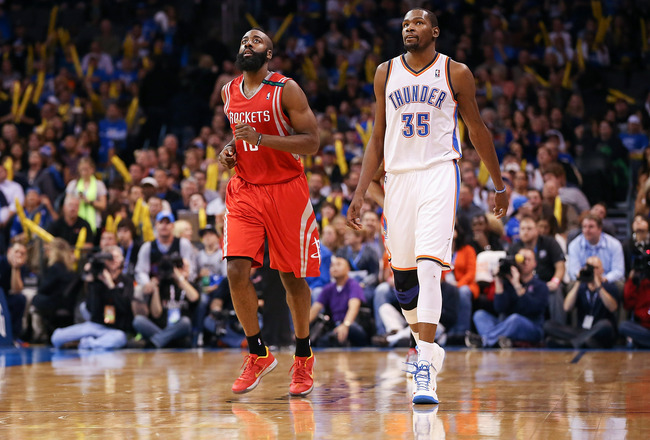
kd_harden_return

3. Appreciate this regular season – This has been one of the most trying, but also, one of the most rewarding seasons in the Thunder’s history. To lose one of your main components in a core-shattering trade 4 days before the first game of the season had to weigh heavily on the returning group of players who were itching to get back to the NBA Finals for redemption. But they adapted, learned, and improved to the point where they had their best regular season since they became the Thunder, and got the No. 1 seed in the Western Conference, to boot. Thunder Up, indeed!

The Final Push: Impact of OKC’s next 5 games

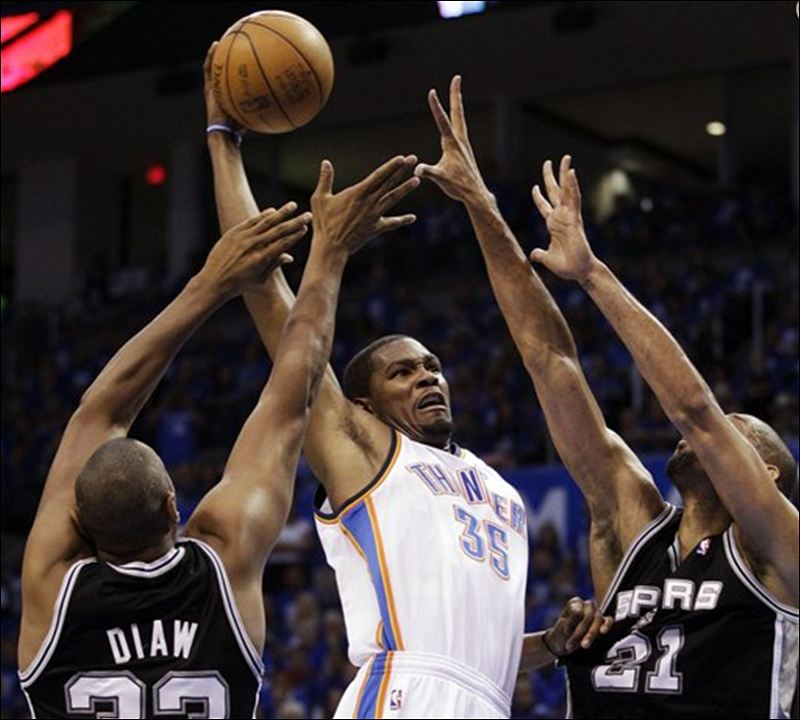
Spurs-Thunder-Basketball-Kevin-Durant

If the goal of the regular season is to get home court advantage throughout the playoffs, then this is probably the most important stretch of the season for the Oklahoma City Thunder. With their win over the Portland Trailblazers and San Antonio’s loss to the Houston Rockets last night, the Thunder find themselves 1.5 games back of the Spurs for first place in the Western Conference. These next two weeks may be the most critical for the Thunder in their quest for home court advantage in the Western Conference playoffs.

Any time you’re playing catch-up, you always need a little help from the team that’s ahead of you. Luckily for the Thunder, the Spurs play an incredibly difficult slate of games before their meeting with the Thunder on April 4th. The Spurs next five games look like this: vs. Denver, vs. Los Angeles Clippers, vs. Miami, at Memphis, and vs. Orlando. While 4 of those 5 games are at home, the combined winning percentage of these five teams is .623. San Antonio is very good at home, but this stretch comes at a time when the Spurs play 6 games in 9 nights (to include the Thunder game). With San Antonio’s propensity for resting it’s veterans during these types of stretches, there’s not a lot of wiggle room in the schedule for the Spurs to do that without risking a game or two.

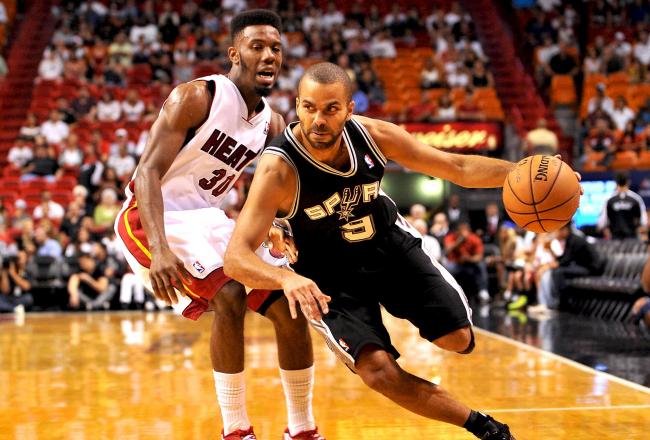
parker

The Thunder, on the other hand, play 3 games in 4 nights beginning Wednesday: at home against Washington, and then a double dip on the road on back to back nights against Minnesota and Milwaukee.  The combined winning percentage of these three teams is .406. Not exactly the gauntlet that San Antonio has to face during that same time period. After that short road trip, the Thunder get four days off before their game against the Spurs. While the Thunder will be well rested, the Spurs will be playing their 4th game in 5 nights. After the Spurs game, though, the Thunder will hop on a flight to Indianapolis to face the Pacers the next night. 

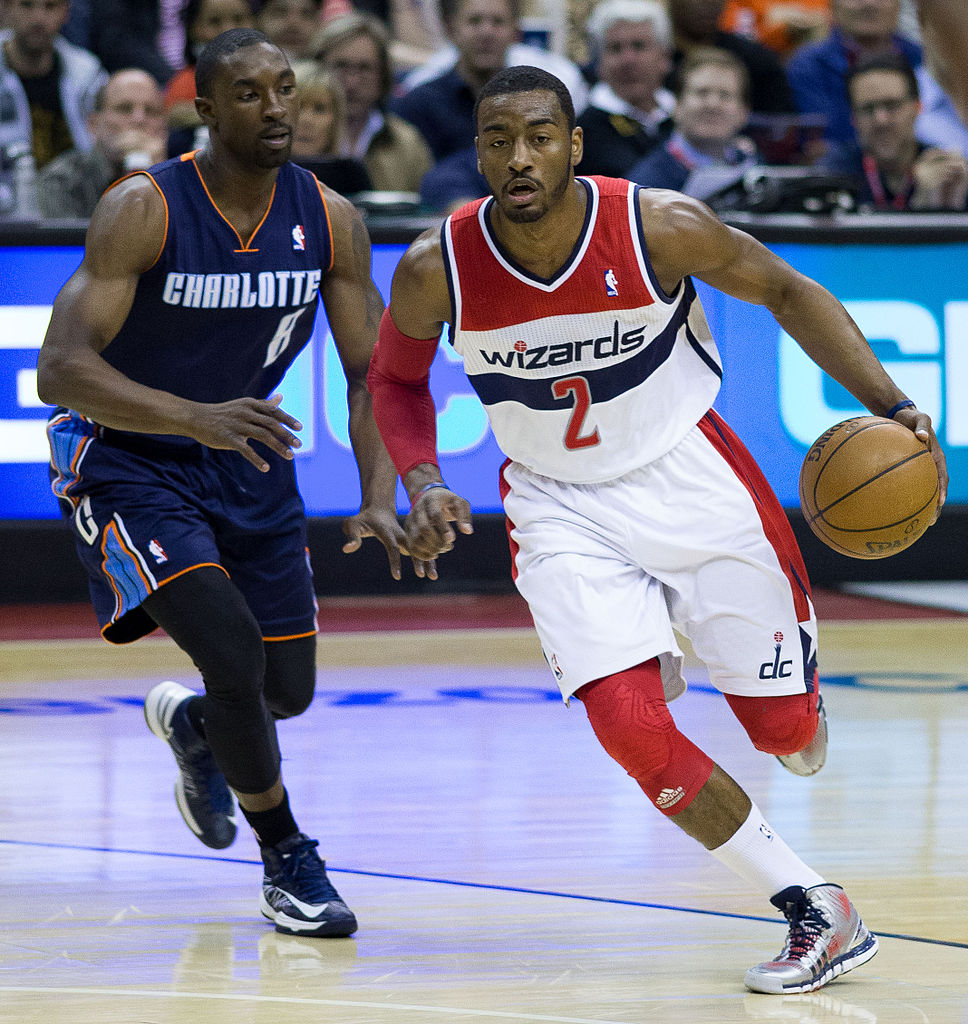
The key word in the next 10 days will be focus, sprinkled with a little bit of luck. The Thunder should win their next 3 games easily. But the Thunder have been known to play down to the level of their competition, especially on the road. Even the game at home against the Wizards will be fraught with caution, as John Wall has completely recovered from the knee injury that caused him to miss the first 33 games of the season. In his last 9 games, Wall is averaging 25 points, 9.3 assists, and 2 steals per game, while leading the Wizards to a 6-3 record over that time against some stiff competition. The Timberwolves always give the Thunder problems, especially in Minnesota, regardless of who is on the active roster. And Milwaukee is chock full of players that can go off for 30+ points at any time (Monta Ellis, Brandon Jennings, JJ Redick, Ersan Ilyasova).

John wall

All this is before they actually play the Spurs. The Thunder had an opportunity to take over first place from the Spurs two weeks ago, but decided to fall asleep at the wheel in the 2nd quarter of that game and never recovered. The Spurs are offensively great where the Thunder are defensively weak (dribble penetration and 3-point shooting). The Thunder have the ability to beat the Spurs, as shown in last season’s Western Conference Finals, but usually have to catch a couple jabs to mouth before they wake up. Hopefully, the Thunder comes into this game with a winning streak and the Spurs are coming off a loss or two.

The most important game in this whole stretch may be the Indiana game. If the Thunder accomplish their goal and take over first place after the Spurs game, they still have to regroup and come back the next night against one of the toughest teams in the league. This is where their focus comes into play. It would be a shame for the Thunder to gain control of the conference one night, and then give it away because of the lack of focus the next night. Trap games are usually reserved for games before rivalry games, but this may be a case of a post-trap game.

Serge Ibaka, Kevin Martin, Russell Westbrook

The Thunder needs to live by their creed of “one game at a time,” and treat every game with utmost importance for here on out. Do they need San Antonio to possibly lose a game or two? Yes. But that becomes a moot point if the Thunder doesn’t take care of their own business. In a time where it seems like every elite team is streaking and peaking, Oklahoma City has some how managed to tread water long enough to position itself into possibly getting the top spot in the West. Do the Thunder need to win the West to advance to the Finals? They didn’t need it last season when they were the number 2 seed and still beat San Antonio in the Western Conference Finals. But, this is a different team, whose role players seem to respond a lot better at home than on the road. For that reason alone, the Thunder should be making every possible push to get home court advantage throughout the Western Conference playoffs. It’s all about staying focused from here on out.

Kevin Martin’s Future with the Thunder

martin_thunder

One of the biggest decisions facing the Oklahoma City Thunder this offseason is whether or not to keep Kevin Martin past this season. Martin was the other big name in the blockbuster deal that sent James Harden to the Houston Rockets a couple days before the 2012-13 season began. Martin was brought in to maintain the scoring provided by Harden off the bench and has nearly matched Harden’s bench output from last season when Harden was the NBA’s 6th Man of the Year. Though he has struggled at times this season in his new role, especially in home/road splits, Martin has performed well enough to be an integral part of the Thunder, who are once again, championship contenders.

People tend to think of contract negotiations, exclusively, as an offseason event. But the chess pieces that are the “Kevin Martin negotiations” have been shuffling around the chess board all season long. There are always two sides to any negotiation, but there are so many variables that influence the final decision. Those variables are the chess pieces the Thunder and Martin have been playing around with for the entire season. In this article, I’ll look at some of those variables and see how they will influence the upcoming negotiations between these two parties.

Kevin Martin’s chess pieces

Background – Martin comes from Zanesville, OH, which has a population of about 25,000 people. He has maintained very close ties to that community and is constantly involved in community events (basketball camps, 3-on-3 tournaments, etc.) during the offseason. With that said, it doesn’t seem that big city lights have the same effect on Martin as it does with many other players in the NBA. He started his career in one of the smaller markets in the NBA (Sacramento), and then played in one of the bigger markets in Houston. A community like Oklahoma City probably reminds Martin a lot more of Zanesville than a city like Houston would.

zaneville

Personality – If Russell Westbrook’s personality can be described as hyperactive and intense, then Martin’s can be described as cool, calm, and collective. I don’t think I’ve ever seen a player who touches the ball so much, have so little emotion. It’s not hard to imagine Martin committing a turnover and reacting by saying, “Darn,” in little more than a whisper while jogging to the other end of the floor. And I’m not necessarily saying that’s a bad thing either. On a team full of emotionally charged players (Westbrook, Kevin Durant, Kendrick Perkins, Serge Ibaka), it’s good to have players on the opposite end of the emotional spectrum to balance things out.

Also, Martin’s personality traits are more conducive to accepting a bench role, instead of wanting to be the man. Martin tried that for 9 seasons in Sacramento and Houston with mixed results. He had good stats (21.5 ppg from 2006-2012), but his teams were never good enough to make the playoffs. In an interview with Hoopsworld in late December, Martin stated, “…I’m so happy right now and being with these guys has given me an extra pep in my step. It’s just fun being here. It’s a great organization and great guys. I’m happy right now.” The burden of carrying a team can be pretty daunting, and statements like this lends to me think that Martin is happier being a contributing player on a successful team, than being the man on a mediocre team.

Community-oriented – Martin is known as one of the most affable and approachable players in the league. He is heavily involved in the community in his hometown and even won the 2008 Oscar Robertson Triple Double Award, which is a community involvement award given out annually by the Sacramento Kings. If there’s one thing the Thunder organization places utmost importance on, it’s community involvement. Most players do community activities because the League relegates that they have to. But, Martin is one of those players that truly enjoys being involved in the community.

martin community

On record – When Oklahoma City first got a team, one of the things that detractors hung their hats on was that players weren’t going to want to play or stay in OKC. That the players would skip town at the first opportunity, or never even consider OKC in free agency. In an interview with Marc Stein of Yahoo! Sports in late January, Martin put it on record, saying, “This summer, hopefully everything works out here. I haven’t said that too often. But I will put it out there; hopefully I have found a home in the NBA. I love playing with this group of guys. The organization is great to me. The community has been great to me. It’s the happiest I have been during my NBA career.” While many Thunder fans may take that statement with a grain of salt, after James Harden basically said the same thing in the offseason, there’s an air of wisdom and experience in Martin’s statement that makes it sound more believable.

Production – The trade in late October sent one of the best bench units in the league into complete disarray. Gone from the team were Harden, who was the reigning 6th Man of the Year, Cole Aldrich, who was thought to be the team’s back-up center, and Daequan Cook, who was their situational 3-point shooter/floor spacer. In addition to that, the back-up point guard position was shaky at best, with Eric Maynor coming off of an ACL injury and Reggie Jackson still learning how to play point guard in the NBA. In essence, the Thunder got rid of 4 bench players for one bench player (Martin) and one project player (Jeremy Lamb).
kevin-martin-thunder

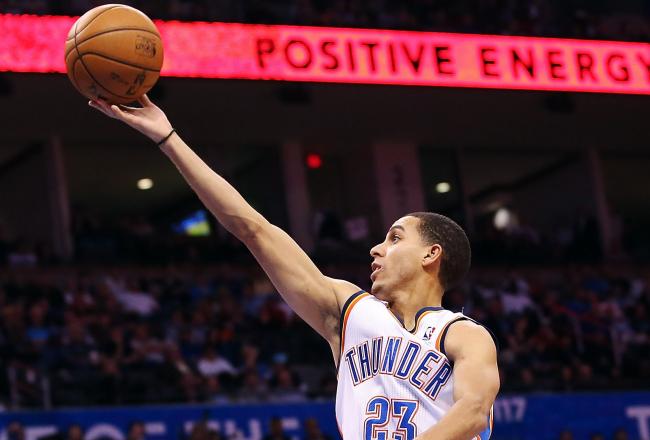
It’s taken a little bit more than half of the season, but the bench seems to have solidified itself into a stable outfit. Martin is one of the league leaders in bench scoring, averaging 14.5 points per game. He’s assumed the role of 3-point specialist (43%) and floor spacer when he’s on the floor with Durant and Westbrook, especially late in games. And he’s begun to develop a chemistry with Nick Collison that is akin to the chemistry Collison and Harden had together.

Thunder’s chess pieces

Leverage – The player Martin was shipped with to Oklahoma City in the James Harden deal may ultimately be the reason Martin becomes expendable. Since the moment he donned a Tulsa 66ers jersey, rookie Jeremy Lamb has been lighting up the D-League to the tune of 21.1 points, 5.4 rebounds, 3.3 assists, and 1.1 steals per game in 16 games. While success in the D-League doesn’t always equate to success in the NBA, Lamb has flashed the tools to be a consistent scorer/shooter at the NBA level.
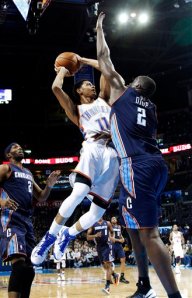
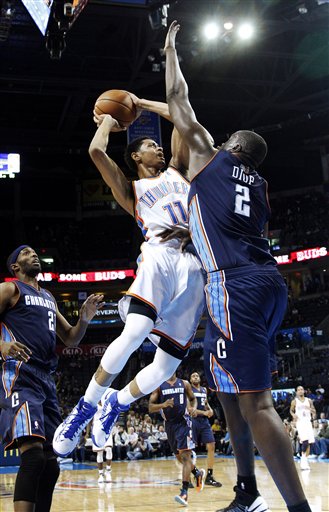
Jeremy Lamb, DeSagana Diop

Comparable players – These are four players (and their salaries) that are comparable to the role that Martin plays on the Thunder.

  • Jamal Crawford – Los Angeles Clippers (4 years / $21.35 miillion)
  • JJ Redick – Milwaukee Bucks (1 year / $6 million)
  • Jason Terry – Boston Celtics (3 years / $15.675 million)
  • Ray Allen – Miami Heat (2 years / $6.32 million)

All of these players are perimeter oriented bench scorers who are average to below average defenders playing for playoff teams.

Home vs. road splits – It’s no secret that players usually play better at home than on the road. There’s the familiarity factor of the arena, the fact that you get to sleep in your own bed, and the boost from the home crowd. As a bench player, Martin is needed to supplement the offense when the starters (namely, Durant and Westbrook) are out of the game. This is very important on the road, especially in the playoffs. Here’s a look at Martin’s home/road splits through the first 61 games of the season:

  • Home – 16.1 ppg on 47.9% FG, 50% 3ptFG, and 92.2% FT
  • Road – 12.7 ppg on 41.3% FG, 35.6% 3ptFG, and 86.7%FT

That’s a 21% drop off in scoring (and noticeable drops in every shooting percentage) outside of the friendly confines of Chesapeake Energy Arena. This may become a factor in the playoffs as the Thunder move forward.

CBA and luxury tax – This may be the biggest hindrance in keeping the Thunder from resigning Martin. Starting next season, the Thunder will have $54.19 million allocated to 4 players (Durant, Westbrook, Serge Ibaka, and Kendrick Perkins). That leaves about $16 million in pre-luxury tax cap space for 11 roster spots. While the Thunder may have to eventually get into the luxury tax to stay competitive, they will try to stave it off for as long as possible.

Prediction

A lot still remains to be seen concerning Martin and the Thunder. While Martin has performed well in the regular season for his career, he’s never been overtly tested in the playoffs. The last time Martin was on a team that made the playoffs, his teammates included Ron Artest, Bonzi Wells, Shareef Abdul Rahim, Mike Bibby, and Corliss Williamson. While he performed well in that one playoff series, it still remains to be seen how Martin will perform as the team advances in the playoffs.
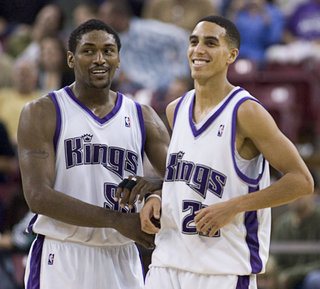
artest martin

Martin seems to be getting more acclimated with his role off the bench. He’s developed a 2-man game with Nick Collison that defenses have to respect. And his ability to space the floor has opened up driving lanes for back-up pg Reggie Jackson. Martin also seems to be getting more used to his role as a shooter/floor spacer late in games with Durant and Westbrook on the floor.

When the Thunder acquired Martin before the season, I think they had every intention on keeping him and seeing how things played out throughout the season. Even though his $12.5 million expiring contract may have been a valuable commodity at the trading deadline, Martin’s name was never mentioned in any trade rumors leading up to the deadline. One of the reasons why the transition from Harden to Martin has been mostly seamless is because Martin provides a lot of the same production that Harden did. He’s an efficient shooter and a good scorer, who’s always looking to attack the defense. That’s a rare commodity to have when a team can rest its starters and still keep the defense on their heels with its second unit. While the trade brought big changes to the roster, the Thunder never had to change any of their game planning because of the similarities in the styles of play of Harden and Martin.
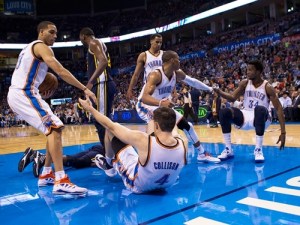
team

Martin, for his part, seems to be genuinely happy in Oklahoma City. I think there are several reasons for his happiness that may work in the Thunder’s favor in resigning Martin. First off, the pressure of being “the man” on the team is no longer on Martin. While Martin is a good scorer, I don’t think he ever embraced being the No.1 guy on a team. Some players are meant to be alpha males, while others are meant to be great role players. Martin seems to fall in the second category. Secondly, he’s playing on a championship contending team. I don’t know how Martin feels about his legacy, but playing for championships tends to enhance your legacy as a player. Thirdly, Martin may actually increase his longevity in the role that he is currently playing. Martin has always been known to be injury prone, playing in over 60 games only 5 times in his 10 year career (to include this season). Coming off the bench on a championship contender, Martin is playing the least amount of minutes since his 2nd season. And he’s going to the FT line a lot less, meaning that he is not driving or putting his body in harm’s way.

The most important factor in all of this is money. How much is Martin willing to sacrifice, and how much are the Thunder willing to offer? Every championship team has an elite bench scorer or a combination of capable bench scorers. I’m sure that even Martin knows he’s not worth the $12.5 million he’s currently getting paid. If the Thunder offer Martin anything comparable to what Jamal Crawford or Jason Terry are making, will he take that offer? Or will he jump at an offer from another team desperate for a shooting guard (Utah, Minnesota, Dallas) that will likely be substantially more than what the Thunder can offer? Another option for the Thunder is Jeremy Lamb. Is Oklahoma City willing to go into next season with Jeremy Lamb and Reggie Jackson as the main components of their bench unit?
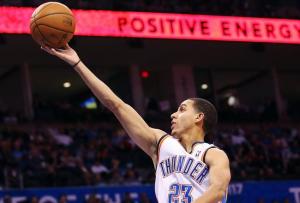
fingerroll martin

I think the Thunder see Martin as their firepower off the bench for the next few seasons. If they were willing to go into the luxury tax for Harden, you can be sure that they’ll keep Martin at a much lower price. My prediction is that Martin will sign a contract comparable to what Jason Terry got (possibly 3 years/ $16.5 million) in the offseason. Martin seems like a mature person that realistically knows his strengths and his weaknesses. He knows that this as a great opportunity to play on a team, and in situations, that matter. In the end, I think he’ll choose legacy and longevity over money.
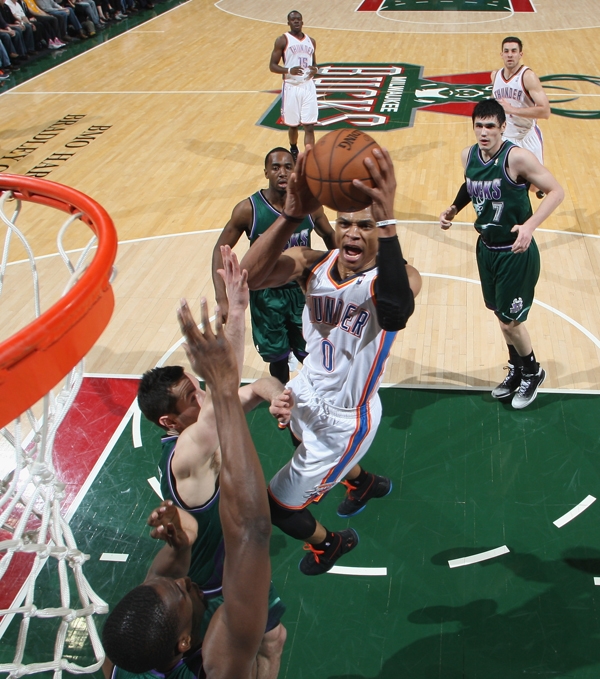
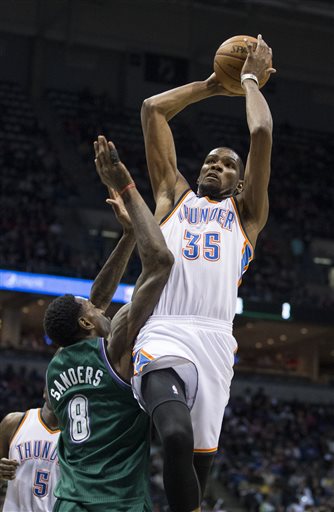
The OKC Thunder and their trade deadline moves

presti-sam

After so much speculation and rumor, this was just about the most anti-climactic trading deadline ever. Other than the Sacramento Kings unloading Thomas Robinson in a “scratch your head” trade to Houston, most teams played it safe and kept their assets. This is probably the first visible sign of how the new CBA will affect how teams view their assets moving forward.  The name of the game is cap space and most teams stuck with what they had instead of taking on salary and risk.

The Oklahoma City Thunder were a microcosm of the trading deadline, itself. The Thunder had one player who was a virtual lock to get traded, in Eric Maynor. The rumors were that teams were interested in Maynor as a solid back-up point guard, but were unwilling to unload a first round pick in exchange for him, which was the asking price from the Thunder. Then on Wednesday, a big rumor sprang up involving the Thunder and the Phoenix Suns. In the proposed trade, Phoenix would send Marcin Gortat and PJ Tucker to the Thunder for Kendrick Perkins, Jeremy Lamb, and a 1st rounder. Though the rumor died down as the day went along, it gained a little bit of momentum late Wednesday when Perkins was a late scratch in the Thunder’s game because of a knee sprain. By Thursday, though, the deal was all but dead. In the end, the Thunder traded Maynor, kept the asset train rolling, and obtained a veteran lock-down defender for virtually nothing.

Deal 1 : Oklahoma City sends Eric Maynor to the Portland Trailblazers for a $2.35 million trade exception and the rights to Georgios Printezis

Eric_Maynor_20130221145500_320_240

One of the greatest things in the world is receiving an extension to a deadline. The Thunder were facing the possibility of losing Maynor for nothing this offseason. While the Thunder didn’t receive the 1st round pick they were initially looking for, they did receive an asset that could help them immensely in the future. The trade exception is actually a little more than Maynor’s actual salary. In essence, the Thunder got a 1 year reprieve on Maynor’s expiring contract, without having a live body taking up a roster spot.

For a player that many fans thought wouldn’t garner anything of value, the Thunder made the best of the situation and got themselves a valuable asset. With possibly 3 draft picks (2 first rounders and a 2nd rounder) in the upcoming draft, look for Oklahoma City to put a package together to get something of high value on draft night.

georgios-printezis-olympiacos-piraeus-eb12-42058

As for Georgios Printezis, he’s a 6’9” PF that currently plays for Olympiacos in the Euroleague. His game is similar to that of Luis Scola of the Phoenix Suns, but with a little more range on his jumper. He is best known for hitting the game winning shot in the Euroleague finals against CSKA Moscow. The 28 year old recently signed a 3 year extension with Olympiacos that will probably keep him in Europe for the rest of his career.

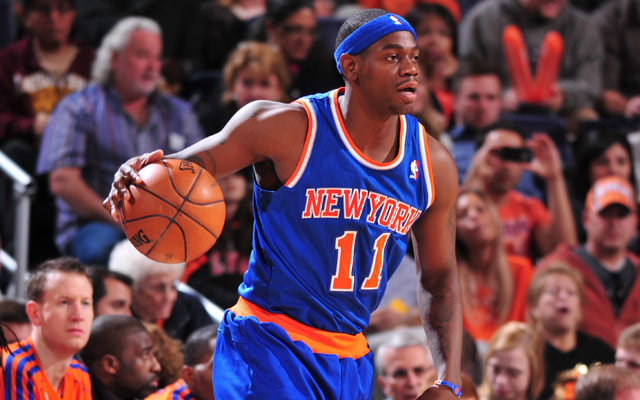
Deal 2: Oklahoma City receives Ronnie Brewer from the New York Knicks for a 2014 2nd round pick.

One of Sam Presti’s tenants is that he never deals for a player with just one team in mind. When he dealt for Kendrick Perkins, many people thought he did that with only the Los Angeles Lakers (who had Andrew Bynum and Pau Gasol) in mind. But the entire Western Conference is full of skilled big men, especially the playoff teams. Teams like Memphis (Marc Gasol and Zach Randolph), Utah (Al Jefferson and Paul Millsap), San Antonio (Tim Duncan and Tiago Splitter), and the Los Angeles Clippers (DeAndre Jordan and Blake Griffin) all pose a threat on the inside to the Thunder.

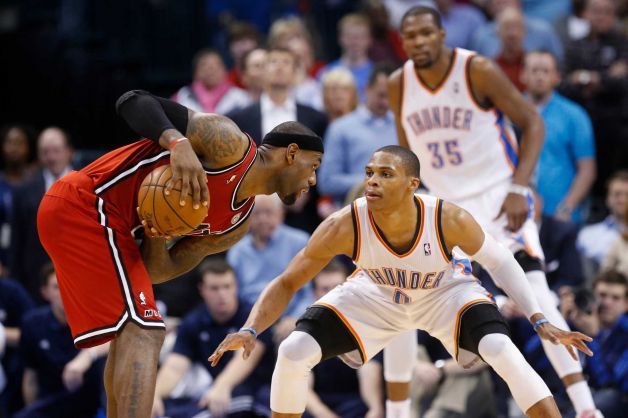
With our recent struggles against the Miami Heat, many Thunder fans were clamoring for a big wing defender like Luc Richard Mbah a Moute of the Milwaukee Bucks or Jared Dudley of the Suns to be that mythical being called a “Lebron stopper”. The truth is, when you play a team that plays inside/out like the Heat or the Spurs, a big wing defender is tantamount when it comes to recovering on 3-point shooters. Players like Tony Parker, Manu Ginobili, Dwayne Wade, and James are great at dribble penetrating, breaking down a defense, and finding the open guy on the perimeter. While the Thunder already have a great perimeter defender in Thabo Sefolosha, an extra set of long arms and active hands would not hurt.

02212013_ronnie_brewer

The New York Knicks, in an effort to slash some payroll and open up a roster spot, were looking to unload one of their perimeter defenders. The early rumor was that they were trying to trade Iman Shumpert for an offensively minded guard like Orlando’s  J.J. Reddick. Instead, the Knicks made Brewer available and the Thunder swung the deal for him. Brewer is regarded as one of the toughest big wing defenders in the league. He’ll be especially helpful to Kevin Martin and the bench unit as their best wing defender. Also, if necessary, in small ball line-ups, Brewer can be put in at SF or SG to help on the defensive end.

An added bonus is that Brewer’s salary is nearly half of what Maynor’s was ($2.3 million for Maynor compared to $1.2 million for Brewer). That saved money could be used to get a veteran free agent for the final roster spot, similar to what the Thunder did in obtaining Derek Fisher last season.

okc lbj

Overall, I think these moves made the Thunder slightly better in the present and made them even more dangerous on the draft/trade front in the future. Whether Brewer proves to be of any use is still to be seen. But it’s better to have a player like that on your team than on your opponent’s team. With the more punitive luxury tax looming next season, many teams will be looking to dump some salary in the offseason. With all their assets they’ve accrued, the Thunder should feel pretty good about themselves as we move forward under the guise of this new CBA.

The Eric Maynor Sweepstake

bench maynor

With Eric Maynor’s DNP-CD on Wednesday night, in a blowout of the Denver Nuggets, it was quite apparent that his run with the Oklahoma City Thunder is over. Ten months after suffering a torn right ACL, Maynor’s athleticism and confidence seemed to be wavering to the point that 2nd year guard Reggie Jackson took over sole possession of the back-up point guard duties on the team 25 games into the season. While Maynor’s numbers were never that impressive, his command of the 2nd unit (and sometimes, the 1st unit) showed he had the potential to run his own team.

Back about two years ago, Maynor was being hailed at the best back-up point guard in the league. He led one of the best benches in the league, along with James Harden and Nick Collison. In hindsight, though, it seems that a lot of Maynor’s success was due in large part to James Harden. The former Thunder guard is now the 4th leading scorer in the NBA, with a 26.3 points per game average. The skills that he is currently exhibiting now as a Houston Rocket, were on full display during his first 3 seasons in the league, the last of which culminated with the NBA’s 6th Man of the Year award.

dal_g_thunder_bench_b1_600

Maynor’s game was never dependent on athleticism. He was a prober that constantly tried to find the open man or an open lane, and rarely turned the ball over. After the knee injury, though, what little athleticism Maynor did have was sapped, as was his confidence. Maynor began to drive less and shoot more, leading to career lows in FG% (30%) and assists per game (2.1). Though he was never touted for his defense, that part of Maynor’s game suffered greatly after the injury. He was constantly getting beat off the dribble, which led to either leads dwindling or deficits increasing. After 24 games, the Thunder decided to try Reggie Jackson as their primary back-up point guard. Though not the floor general that Maynor is, Jackson’s athleticism and physical tools lend him to be a better defender and more of a driving threat on offense.

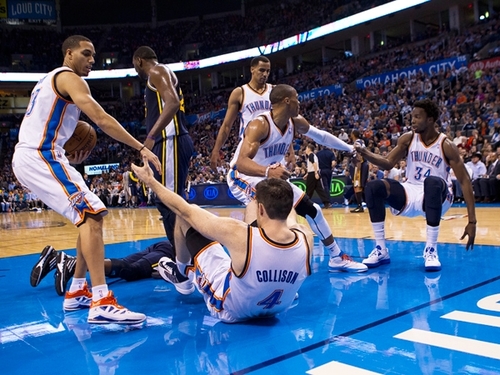
Reggie Jackson, Markeiff Morris

Being that Maynor is a free agent after this season, the Thunder would still like to get some value for him before the trading deadline. Maynor can still play the game, and maybe a change of scenery will help get his confidence back. Maynor’s value may not be that high, but the Thunder can package him with any number of assets to get a necessary piece to their championship puzzle. The Thunder are loaded with picks (Toronto’s top 3 protected, Dallas’s top 20 protected, and Charlotte’s 2013 2nd rounder) and young talent (Jeremy Lamb, Perry Jones III, DeAndre Liggins, and Daniel Orton) that would be very attractive in a deal. I, for one, am not in favor of dealing Lamb, Jones, or Liggins. With the current cost of the top half of the roster, the Thunder will need good, cheap talent to stay in championship contention.

That would leave Maynor and Orton, plus the picks, as the only tradable assets I see on the roster. Being that the only feasible need I see for the Thunder is another bench scorer, hopefully a 3/4 tweener, I’ve decided to become armchair GM for the day, and see what moves I can come up with. Move over Sam Presti, my shine is too bright for the both of us.

Disclaimer: All moves have been approved on ESPN’s NBA Trade Machine. Any move involving Daniel Orton would need to get done after January 31st.

Deal 1

  •  Houston get Eric Maynor and the Thunder’s 2014 2nd rounder.
  • Oklahoma City gets Royce White and the rights to either Sergio Llull or Furkan Aldemir.

furkan

Why Houston makes the deal – Houston is loaded with PnR-reliant guards in Jeremy Lin, James Harden, and Toney Douglas. If a defense knows how to defend the PnR effectively, it cuts off the Rocket’s first plan of attack. Having a traditional point guard would be a change of pace for the Rockets and will allow them to exploit other facets of their offense, such as Omer Asik’s post game and Chandler Parson’s 3 point shooting. Also, Houston gets rid of a headache in White. The verbal/social media sparring that has gone on between White and the Rockets is well documented concerning his mental health.

Why Oklahoma City makes the deal – While this eschews the notion of obtaining a bench scorer now, having the rights to either Llull or Aldemir would be a steal. Llull is the premier combo guard in Euroleague and would fit immediately into the Thunder’s rotation. Aldemir is great on the boards and would really help the Thunder in the post. Presti would probably tell White to stay at home and would negotiate a buy-out with his agent.

Deal 2

  • Milwaukee gets Eric Maynor, Daniel Orton, and the Mavericks top 20 protected pick.
  • Oklahoma City gets Mike Dunleavy

Why Milwaukee makes the deal – Milwaukee will be in a state of flux after the season. Their top two point guards, Brandon Jennings and Beno Udrih, are both free agents, though Jennings is restricted. The Bucks have been on record as saying they will retain Brandon Jennings, no matter what. A large enough extension would make retaining Udrih, currently making $7.8 million, nearly impossible. A cheap replacement like Maynor, who would sign for far less, would be more feasible. They could test drive Orton for half a season as all of their true centers are also free agents at the end of the season. The draft pick is just a sweetner.

mike-dunleavy-jr

Why Oklahoma City makes the deal – Mike Dunleavy would immediately have an impact on the 2nd team as a scorer and shooter. The dribble and drive ability of Jackson would open up even more with Dunleavy and Kevin Martin on the floor together.

Deal 3

  • New Orleans gets Eric Maynor and the Thunder 2013 draft pick
  • Oklahoma City gets Al-Farouq Aminu

Why New Orleans makes the deal – With Ryan Anderson, Anthony Davis, and Robin Lopez on the front line, Aminu becomes the odd man out. His inconsistent play has been a source of ire from the Hornet’s fan base. A veteran point guard would help this young roster out and an extra first rounder will help in the Hornet’s rebuilding process.

aminu

Why Oklahoma City makes the deal – Aminu is exactly the type of player that the Thunder covet. A 3/4 tweener with possible upside and a long wingspan (7’3!!). In the right system, he could be a valuable contributor off the bench.

Deal 4

  • Phoenix gets Eric Maynor, Daniel Orton, the right to swap either of their lottery picks (theirs or the Lakers’) lottery picks if it benefits the Suns, and the Thunder’s 2013 pick.
  • Oklahoma City gets Jared Dudley

Why Phoenix makes the deal – Let’s face it. Phoenix is rebuilding and is not interested in long-term role player contracts. Dudley still has 2 years at $4.25 million guaranteed after this season, plus a player option for the same amount. Phoenix could flip Dudley for a young center, a possible better lottery pick, and a late first rounder.

dudley

Why Oklahoma City makes the deal – The Thunder get a great role player with a good contract for the next 2-3 seasons. Plus, a player like Dudley has value and can possibly be flipped for other assets.

Deal 5

  • Cleveland gets Eric Maynor and Dallas top 20 protected pick.
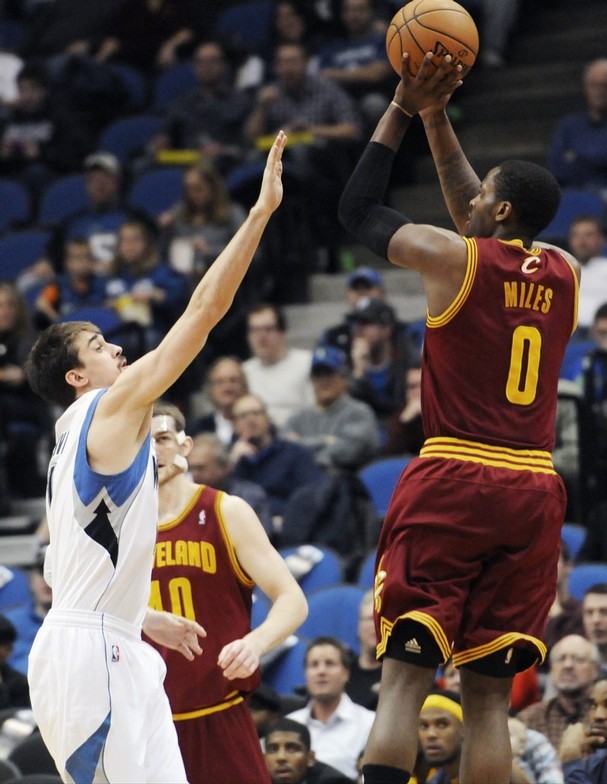
  • Oklahoma City gets CJ Miles

cj miles

Why Cleveland makes the deal – It isn’t the Anderson Varejao deal, but Cleveland still gets a future first rounder for a role player that’s a free agent after this season. Plus, Maynor could dispense some veteran wisdom onto Kyrie Irving.

Why Oklahoma City makes the deal – The Thunder get a good role player that can shoot and stretch the floor. Plus, they don’t give up much.

kevin-durant-eric-maynor-2011-2-6-0-1-11

As a fan, I would hate to see Maynor go. He’s grown with this team and was a big part of its development. But, as we’ve seen with the Jeff Green and Harden trades, it is also a business in which every team is trying their hardest to get better. If a move can be made, and it is advantageous to the team, then it’s a deal that must be made. When the inevitable happens, I wish Maynor nothing but the best. He’s been a consummate professional and has a long career ahead of him.

Possibility of NBA players hooping overseas

The NBA players and owners currently find themselves in a labor dispute, in which the owners locked the players out on July 1st. This is your basic negotiating ploy by the owners to bleed the players until they finally succumb to “poverty” and come back to the negotiating table with less of a leg to stand on. It happens in every labor dispute where players are locked out. The players, especially mid-tier players and below (aka the majority), eventually run out of revenue streams and plead with the union head to try and strike a deal, regardless of how bad it is. But what happens if the revenue stream doesn’t stop for some of those players? What happens if a small contingent of those players happen to find an alternate source of income that can supplement them through the “tough” times? This is the owners’ worst nightmare and something that no ownership group in any of the 4 major US sports has ever faced.

One of the major differences in this lockout and the ’99 lockout is the availability of leagues that offers comparable salaries and unique fringe benefits. The only drawback to those perks is the fact that the leagues are located throughout Europe and Asia. In an effort to keep up with the popularity of the NBA, basketball leagues throughout Eurasia have flourished with an organized govererning body (FIBA) and leagues and owners that are awashed with money. David Stern’s masterplan as NBA commissioner (globalization of his product), may now become one of his biggest nightmares in this labor dispute.
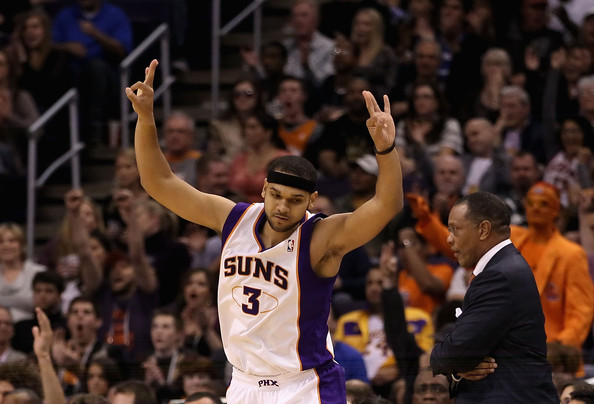
Globalization of Basketball

Blame it on one of the owners at the negotiating table. Michael Jordan’s meteoric rise in popularity coincided with many world events that brought American culture to the forefront on many foreign lands. The end of the Cold War, the advent of the internet and affordable satellite TV, and global capitalism all came together at the right time to foster an environment where the star of someone could shine brightest. Michael Jordan became the right guy at the right time and the NBA piggy-backed off of that. Then the Dream Team happened.

David Stern made sure to capitalize on the popularity of the Dream Team, and capitalize he has. While baseball remains a popular sport around the world, it is still mainly focused in the US, Latin American, and Japan. Hockey doesn’t really appeal to anyone who lives below the 50º N line on the map. And football, while extremely popular here, has never really taken off anywhere outside of the US. With its visible players, cheap equipment (trash can and paper, if necessary), ability to be a team sport or an individual activity, and uptempo pace, Stern has taken advantage of a product that can, and has, appealed to many. On top of that, most teams now have at least one foreign born player, with some of those players being bonafied superstars. And, add to that the fact that the NBA has taken advantage of technology and social media, in a way that no other sport has, and you have the makings of a global sport.

The globalization of the sport has a trickle down effect on other industries as well. With more and more foreigners wanting to buy their favorite player’s products, it was only a matter of time before companies
starting sending their product pushers over for promotional tours. We’ve seen Kevin Durant start making annual pilgrimages to China to promote his products. We’ve seen Kobe Bryant, Dwight Howard, and Dwayne Wade all make trips abroad to promote their products. We’ve seen the NBA send players over as goodwill ambassadors to impoverished areas (Basketball Without Borders). We’ve seen preseason contests between NBA teams and Euroleague teams, and we’ve seen preseason and regular season games played abroad. While this has been good for the brand, it has also taken away the isolationist advantage that owners once held on American players.

The Boogeyman isn’t that scary anymore

While there have been some great American players that have played overseas (Bill Bradley, Mike D’Antoni), most American players are overseas for one of two reasons; either they weren’t good enough to play in the NBA, but good enough to play overseas, or the money overseas was too good to pass up. In the past, American players did not go overseas because they wanted to play overseas. They went because it was the best option.

Brandon Jennings completely changed the game with his decision to forgo his freshman year in college, and instead, play in the Euroleague with Italian club Lottomatica Roma. After that one season, he was
drafted in the top 10 and has gone on to have a successful NBA career. During his time in Italy, he was not taken to a back alley and beaten by punks who were speaking a language he did not understand. He was not taken advantage of by foreign swindlers looking to make a quick buck. Instead, he was treated like any other rookie player and had to earn his playing time. He earned $1.65 million (tax-free!!) in salary AND was given $2 million by UnderArmour to promote their product overseas. And he was all of 19 years old.

With the advent of social media, 24/7 news, the Travel Channel, and easier accessibility, the world that used to seem so big 10 years ago, has now gotten exponentially smaller. The veil of secrecy that covered some places has now been lifted by this basketball globalization. This generation of players was raised in a smaller world, technologically speaking. Those encyclopedia pictures of some obscure land from the past, are now live satellite feeds on YahooMaps. They haven’t been influenced by the Cold War to fear anything across the Atlantic and Pacific Oceans. Instead, they have been influenced by the Dream Team and their foreign teammates to explore the possibilities.

And look at what some of these teams are offering. Millions of dollars tax free. Free living quarters. Chauffeurs. Access to top chefs. Partial ownership in the team while there. It’s a plethora of abundance. Of course, players like Sonny Weems and Jannero Pargo aren’t being offered this entire deal, but players like Deron Williams, Dwight Howard, Kevin Durant, Kobe Bryant, etc, would definitely be offered this deal. And those players would take it. Players with little, to no, baggage (i.e. wife, kids, etc) would love this opportunity. Players with families would treat it as a regular season, but a little further away. Its already known that some players don’t live where they play, especially if they are year to year veterans.

You don’t think Deron Williams spoke to ex-teammate Mehmet Okur or to ex-NBA great Allen Iverson about Turkey before making his decision to sign with Turkish club Beşiktaş? You don’t think that Kevin Durant and his people have developed contacts in China with his annual trips down there? Can you imagine how big KD would be in China if he played a couple games there with one of their clubs? While he plays in the one of the NBA’s smaller markets, in OKC, that wouldn’t really matter if he had a billion supporters in China. He’d be guaranteed the starting small forward in the All Star Game for the next 15 years. There’s already been chatter about Dwight Howard playing overseas if the lockout starts taking games away. He would conquer a market that Shaq never did, and you know he’d enjoying rubbing that into the Diesel’s face. The possibilities are all there. The fear that used to permeate their view of the world is no longer there. Deron Williams was the first domino to fall. Who will be next?