Tag Archives: Kobe Bryant

Westbrook and The Boost

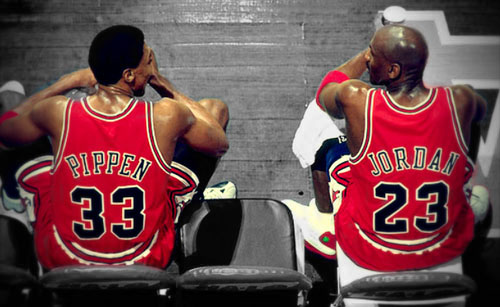
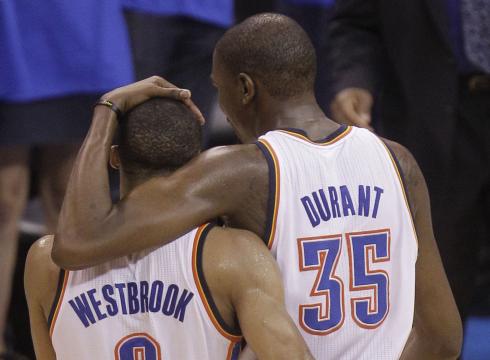
This past week, Russell Westbrook signed with Jordan Brand, after being with Nike for the first 4 years of his career. While Westbrook has carved out his own following of fans, he’s always been known as Kevin Durant’s sidekick. The Robin to Durant’s Batman. This generation’s ultimate second banana. There hasn’t been a sidekick this good since Scottie Pippen. But, Pippen never received the boost in popularity that Westbrook is about to receive.

What qualifies for a sidekick? A sidekick has to be a rookie or a very young player that is brought in after the primary player is established to specifically fill the needs the team is missing. Another qualification is that the pairing has to be together for 5+ seasons. For example, Scottie Pippen was obtained by the Chicago Bulls in a draft day deal, while already having an established superstar in Michael Jordan. Russell Westbrook was drafted by the Seattle Supersonics (Oklahoma City Thunder) after they already had an established young star in Kevin Durant. Anfernee Hardaway almost made it to great sidekick status, but injuries and Shaquille O’Neal’s departure to the Los Angeles Lakers negated that possibility. The Lebron James/Dwayne Wade/Chris Bosh mash-up wouldn’t qualify as sidekicks because they were all alpha males on their respective teams before they joined forces. Kobe Bryant and the aforementioned O’Neal made a great duo, but they were brought onto the Lakers the same year and often quibbled over who was the alpha male. 

To understand the road Westbrook is on, it is important to see what happened to Pippen throughout his career. When Pippen first started college at the University of Central Arkansas, he was a 6’1” walk-on that needed to moonlight as the team’s manager to pay his tuition costs. After 3 more collegiate seasons, a 7 inch growth spurt, and consensus All-NAIA player honors, Pippen was drafted with the 5th overall pick in the 1987 NBA draft to the Seattle Supersonics (who subsequently traded him to the Chicago Bulls). The scouting report on him read as follows:

  • 7’4” wingspan and a 41” vertical
  • Strong outside, but needs work inside
  • Not bad driving to the hoop, but doesn’t look to drive
  • Good foul shooter
  • Can make a three
  • Terrific passer at that position
  • Won’t give you much of anything on the offensive glass, and is a so-so defensive rebounder
  • Excellent defensively and a disruptive force in the passing lanes
  • Good ball handler, but commits a ton of turnovers
  • Could start on most teams

Not necessarily the sexiest of scouting reports for someone who would eventually become one of the top 50 players in league history. While Pippen built his legacy on defense, he was also an apt offensive player, becoming the archetype for the point forward position. During his prime (1989-1999), Pippen had per game averages of 19.1 points, 7.1 rebounds, 5.9 assists, 2.2 steals, and 0.9 blocks. Not necessarily the offensive prowess that Larry Bird possessed, but with a stat line like that, Pippen should have been heralded as his generation’s defensive Larry Bird. Instead, he was teamed up with arguably the greatest player of any generation in Michael Jordan. There usually isn’t a lot of spotlight left when you are playing with the greatest. Ask 100 people who the lead singer of Aerosmith is, and most will answer Steven Tyler. Ask them who the drummer is, and not many will know the answer.

Pippen’s play on the court should have spurred him to more shoe deals, more advertisement contracts, and more widespread popularity. And yet, when his career was all said and done, you couldn’t help but wonder whether Pippen got everything that was owed to him. There were the stories of how Pippen felt he wasn’t getting paid what he deserved (which he wasn’t). There were the rumors that he felt slighted being outside of the limelight, when he provided so much to the team. While he did have his own shoe line (the PIPs) from Nike, they only lasted about two series. So, needless to say, not many companies bought into Scottie Pippen.

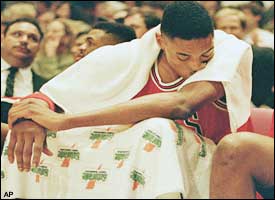
It wasn’t Jordan’s fault, though. Most of the blame lies squarely on Pippen. He didn’t have the same tact with the media that Jordan did. He was dismissive and defensive at times with reporters. Then there were the crunch time situations. Those critical times in games that live in lore and become mythologized. It’s not that Pippen didn’t perform well during those times. On the contrary, he performed great during crunch time. But he’s instead remembered for the times he quit on his team in the most critical of moments. There was the time he sat out Game 7 of the 1990 Eastern Conference Finals against the Detroit Pistons with a migraine headache. The Bulls eventually lost that game. Probably the most damning, though, was the one where he sat out the final 1.8 seconds of Game 3 of the 1994 Eastern Conference Semifinals against the New York Knicks because Phil Jackson drew up a play for Toni Kukoc to take the final shot, instead of Pippen. To make matters worse, Kukoc actually hit the game winner. This one was the most damaging because it came at a time when the Bulls were his team due to Jordan’s hiatus into baseball. When you are known to quit on your team during crucial periods, your popularity takes a big hit.

Which brings us to the best sidekick of this generation, Oklahoma City Thunder guard Russell Westbrook. Like Pippen, Westbrook was not highly decorated coming out of college. Like Pippen, Westbrook was drafted by a team that already had a young star in Kevin Durant. Like Pippen, Westbrook is seen as not being very media friendly. Coincidentally, Durant, much like Jordan, is viewed as a media favorite. And, while not by his own doing, Russell was also involved in a critical game snafu, when Thunder coach Scott Brooks sat an ineffective Westbrook for the entire 4th quarter of Game 2 of the 2011 Western Conferences Finals.

But, not everything is negative when it comes to Pippen and Westbrook. Both of these players are insanely loyal to their teams and teammates. Pippen had a couple opportunities to seek greener pastures during the championship run, but decided to sign for less to stay with the Bulls. Westbrook could have done the same last season, but decided to sign for the allowable max. Both players are highly competitive, with possible chips on their shoulders from being labeled second bananas. Both players are very team oriented, as evidenced by them sacrificing a little of their own games to coexist with two great players. The good severely outweighs the bad when it comes to Westbrook and Pippen, but the bad usually has more advertising power.

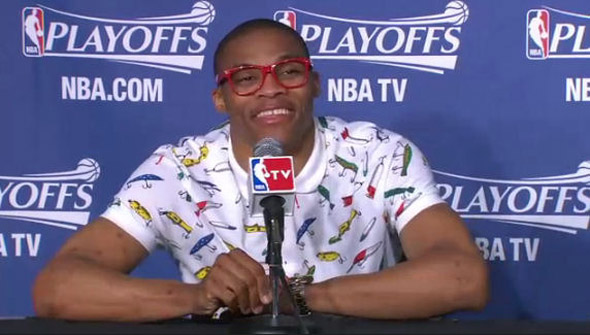
Which is why I found the signing of Westbrook to Jordan brand to be a bit ironic. Not ironic in the sense that he doesn’t deserve it. But ironic in the sense that a move like this will probably propel Westbrook into superstar territory, as far as media exposure goes. Into a territory that Scottie Pippen unfortunately never reached. With an endorsement team that includes Carmelo Anthony, Derek Jeter, Chris Paul, and Michael Jordan, himself, Russell Westbrook will have plenty of opportunity to expand his brand. He already has a slogan in place (WhyNot?), and already has a following outside of basketball because of his unique fashion sense. In a way, Jordan is helping this generation’s top sidekick become what his sidekick should have become.

Alternate Reality – Dream Team vs. 2012 Team USA

In collaboration with Akeli Jackson of DYST Media, Steve Person of Hooptalk365.com and Jon Midget of SLCDunk.com.
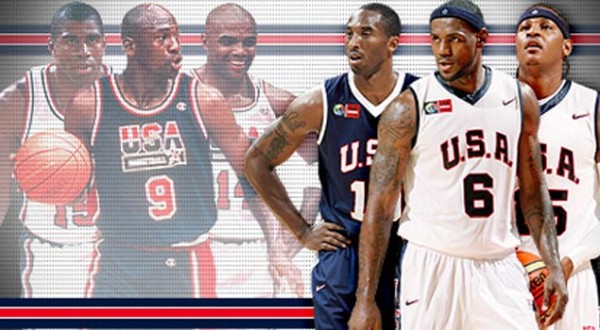
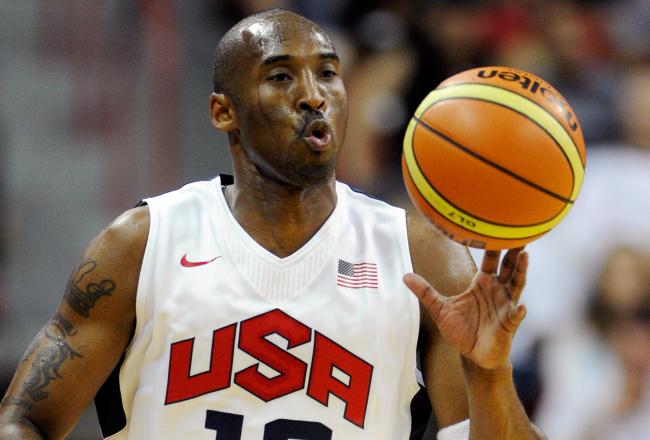
The debate has been raging all summer long about which team is better: the 1992 Dream Team or the 2012 US Men’s Olympic basketball team. Members from both teams have spoken publically and most have said that the Dream Teamers would be the victors. But the tally hasn’t been 100% on the side of the Dream Teamers. Kobe Bryant, in an interview, stated, “If you’re asking me, ‘Can you beat them one game?’ Hell yeah, we can beat them in one game. You didn’t ask me if we could beat them in a 7-game series. In one game, we can beat them. No question about it.” This discussion was presented for each of the subsequent “Dream Team” teams after the ’92 team, but the discussion usually died down pretty quickly. For some reason, though, the debate for the 2012 team has lingered on longer than it did for any of its predecessors. Maybe it’s Twitter, where the in your face, non-stop commentary sometimes leads to a paradigm shift in thought, even if it’s just for a moment. Maybe, people see a 2012 team that is loaded with a combination of great players and potential great players. Sadly, though, these types of debates usually remain as they are….figments of our statistical imagination. 
 

Fortunately, I have more money than I know what to do with. So I decided to call a buddy of mine who works at an anti-aging clinic. He told me he would be able to revert the older Dream Teamers back to their 1992 form using hormone replacement and gene therapy. Of course, the players on the ’92 squad would have to agree with this. So, that’s where their ego and my money came into play. I got all the players from the Dream Team to sign on by offering them $10 million each and telling them that the 2012 team would wipe the floor with them. Christian Laettner even asked my buddy if he had anything that would bring his “Duke-swag” back. My buddy told him he didn’t have anything to cure failed potential. Surprisingly, Larry Bird required the least amount of work. His body is basically in the same physical shape now as it was then. Unfortunately, the anti-aging clinic didn’t have anything to bring Chuck Daly back from the after-life, so Lenny Wilkens, who was an assistant on the Dream Team, agreed to be the coach. The fine folks at Coachella kindly declined when we asked them if they could have Hologram Chuck Daly walk back and forth on the Dream Team sideline. 


After 2 weeks of intense anti-aging therapy, and a month of “training camp”, the Dream Team was looking like its old self again. Magic Johnson was passive-aggresively talking trash, Larry Bird was sinking flat footed 3 pointers, and Michael Jordan was dunking on Patrick Ewing. The game was set up to happen the night before the gold medal game of this year’s Olympics. Only a few writers were privy to the game. Everyone who was witness to the game was CIA-scanned for electronic devices, meaning no photos or video of the game would ever exist. The 4 writers who were invited were each assigned a quarter to write about in detail. No one was allowed to release any information until after the gold medal game. This, is what transpired: 

Pre-Game 

The game would be played using a mixture of FIBA and NBA rules. The quarters would be 10 minutes in length to maximize the athletic potential of all the participants in the game. The FIBA 3-point line would be used, and the painted area used was the standard rectangular NBA format. Players wouldn’t be able to touch the ball on the rim like in international play. It would be counted as a goaltend, if the ball is touched while still on the rim. A team would have 8 seconds to bring the ball up past the half court line. The style of refereeing would be more international, allowing the players to be a little bit more physical on the perimeter and on the inside. The officials would be Ken Mauer, Dan Crawford, and Dick Bavetta. And, finally, a game like this wouldn’t be right without the use of an official David-Stern signed, NBA Spalding ball.  

One of the most amazing sights to see on a basketball court are the pre-game antics of the different players. Some have customary handshakes and dances that they do. Some have a specific routine of stretching and warming up. One thing that stood out while watching these two teams warm up was the gawking and wide-eyed fandom that was apparent on the 2012 team’s side of the court. It is easy to think of athletes as robotic in nature, while forgetting that they were once young fans wanting to be like they hardwood idols. Especially when their idols are on the other side of the court with their deity-like skills on hand for display. But, just as quickly as they were star-struck, they were just as quickly snapped back into reality by Kobe Bryant, and, surprisingly, by Russell Westbrook. The Dream Team squad was all business on their end. 

The referees called out the captains of each team (Johnson and Bird for the Dream Team and Bryant and James for Team USA). The Dream Team was in their classic whites and the 2012 squad in their new look blues. They all shook hands, the referees explained their expectations of the game, and each team went to their sidelines. Game time!!! 

1st Quarter

 Coach Lenny Wilkens trotted out Magic Johnson, Michael Jordan, Patrick Ewing, Scottie Pippen, and Charles Barkley as his starting five. Coach Mike Krzyzewski countered with Chris Paul, Kobe Bryant, Tyson Chandler, Lebron James, and Carmelo Anthony. And, just like that, 10 of the greatest basketball players were on the court exchanging pleasantries and shaking hands. Chandler and Ewing would be jumping at center court. Bavetta tossed the jump ball, and it is controlled by Ewing. Both teams started off by missing their first shot attempts. On the Dream Team’s 2nd trip down the floor, Kobe snuck into the passing lane and intercepted a pass from Pippen to Jordan leading to a breakaway dunk by Lebron James. The first two points were officially on the board. On their next trip down, Magic Johnson found Ewing on a no-look bounce pass for an and-1 layup. The teams exchanged makes and misses pretty consistently for the first 5 minutes. 

After a timeout, Wilkens substituted Larry Bird and David Robinson for Pippen and Ewing. For Team USA, their first substitutions saw Kevin Durant and Deron Williams coming in for Chris Paul and Carmelo Anthony. On the first trip down for Team USA after the timeout, Durant made a 3 pointer off an offensive rebound from Chandler. Barkley gave Durant a shoulder check as he turned to go to the other side of the floor. Durant pushed Barkley and both players were given a double technical. On the next possession, Pippen, playing point guard, found Michael Jordan on the baseline for a jumper. 12-11 Dream Team at the half way point of the 1st quarter. After a Deron Williams layup, the Dream Team went on a 10-2 run, with Larry Bird supplying two 3-pointers and Tyson Chandler picking up his 2nd foul during that run. 

After a run-stopping timeout, Coach K trotted out a line of Kevin Durant, Carmelo Anthony, Kevin Love, Deron Williams, and Russell Westbrook. Wilkens brought in Bird, Karl Malone, Robinson, John Stockton, and Clyde Drexler. Anthony and Malone exchanged buckets in the next two possessions. On the next Team USA possession, Westbrook lost possession of the ball, which was stolen by Stockton, who found a streaking Drexler for an easy 2. Another turnover, this time, by Kevin Love, led to a mid-range jumper by Malone. 28-17 Dream Team, with under two minutes left in the quarter. After a missed jumper by Durant, the Dream Team brought the ball up the court looking to add to their double digit lead. Stockton passed it to Bird, who is wide open for a corner 3, but missed it, leading to a transition 3 by Carmelo Anthony. On the next Dream Team possession, Williams poked the ball from Robinson as the shot clock expired, which led to a thunderous (pun intended) dunk by Westbrook on the other end. After a Stockton miss, Williams brought the ball up for the final possession of the quarter. Durant got the ball above the 3-point line, dribbled a little while jabbing towards the basket, and let loose a 28-foot dead on three that splashed through the net as time expires. 28-25 Dream Team, after one quarter. 

2nd Quarter 

The Dream Team came out to begin the 2nd quarter with Stockton, Drexler, Mullin, Bird, andEwing. Team USA squad went with Deron Williams, Kobe, Durant, Lebron, and Love. Team USA took advantage of the Dream Team’s limited defense, and scored on their first four possessions. However, the Dream Team extended their lead at the same time with three from downtown: two from Bird and one from Mullin. 

On the Dream Team’s fourth possession, Lebron nearly steals the ball by knocking it out of Ewing’s hands, but it goes out of bounds instead. In a surprising display,Ewing thumped his chest several times, telling everyone in a loud voice, “I am a WARRIOR!” over and over. Mullin looks stunned for a moment as he wonders what his team would actually be like if Ewing really were a (GoldenState) Warrior. The Dream Team inbounded it toEwing, who immediately shows off his WARRIOR-ness by throwing up a running 18-foot fadeway that clanks off the rim (he was, admittedly, intimidated by the perpetual shut-down defense of Kevin Love). 

Still, the Dream Team led 37-33 as Team USA calls a timeout. 

Out of the timeout, The Dream Team came out with the same lineup. The 2012’ers let Lebron rest a bit and replaced him with Carmelo. Williams drove past Stockton to get an and-1. Stockton, one of the better defenders in NBA history, takes it personally, scowls, and on the next inbounds, rushes up the court and dropped a pull-up 3 right in Deron’s face. Realizing that Carmelo had Bird and Mullin taking turns “guarding” him, the 2012 squad goes to him on the next three trips down the court, with Carmelo hitting a 2 and a 3 (and having a missed 3 tipped in by Love). During that same time frame, the Dream Team goes on a bit of a cold streak from the field, and Team USA takes the lead 41-40, prompting the Dream Team to call a timeout.

One of the most amazing things to witness in a game like this is the interactions in the timeout huddle. While Team USA was all high-fives and laughs, it was all business in the Dream Team huddle. Lenny suggested putting in Laettner, but nobody even blinked. The players all knew they were old enough and wise enough to be coaches themselves. They noticed the 2012 squad trotting out Paul, Williams, Carmelo, Lebron, and Love. In response, Pippen tells Wilkens he’ll guard Carmelo so “they won’t have to worry about him touching the ball again”. Jordan says he and Stockton can take Paul and Williams. One of the funnier moments was when the Dream Teamers decided to put David Robinson in on Love, knowing that the Admiral would completely take advantage of the shorter, less athletic Love. The only person left to guard was Lebron, so they decided that, even though he can’t match LeBron’s total athleticism, the Mailman is the guy who can best match his speed and strength. So in came Malone. 

On the first play, Pippen ran Carmelo through a beautiful “elbows-out-I’m-going-to-send-you-to-the-floor-weeping” screen set by Stockton. Anthony gets up a little wobbly and goes back to the bench, replaced by Durant. Pippen smiles. 

At this point in the game, the Dream Team asserted themselves offensively and defensively. They continuously went inside to the Admiral, who routinely dunked it, probably wondering whether it was Kevin Love or a fruit fly he felt along the way. On the defensive side of the court, Chris Paul could barely make it past midcourt with Jordan hounding him. Paul passed to Deron Williams, who was being bumped and maimed by Stockton. Williams probably began to wonder why his team only had four guys on the court since he could not find Durant under that Pippen defensive blanket.   

On Team USA’s next possession, Williams found Love with a nifty pass. Unfortunately David Robinson shoved the layup down Love’s throat. It seemed for a moment, while Love looked at Robinson in awe, that he was wondering if he was looking at a Greek God incarnate, or just the most ripped athletic specimen to ever walk the earth. Fortunately, Lebron wasn’t as impressed with Robinson’s physique, as he picked up the loose ball and put in the score. 

The Dream Team continued to put on an offensive clinic in the next few possessions, going inside to David Robinson and running the 2012 defenders through a series of cuts and screens that sends everybody on Team USA into at least one Stockton screen. Chris Paul and Deron Williams, taking the brunt of the physicality, start to vehemently complain about the screens. As a writer, it’s crazy when the crowd noise is taken out of the equation and you can hear almost every conversation on the court. In response to the complaining about the screens, Dick Bavetta told the two 2012 guards, “Hey, if you want to try to knock down guys 50 to 100 pounds heavier than you 10 to 12 times every game, I’ll let you do it too.” Paul and Williams suddenly realized they were nowhere as tough as the guy with the short shorts.   

On the other end of the floor, Paul and Williams were getting picked apart by Jordan’s defense and Durant was made to seem like he didn’t even exist on the floor anymore. Love kept looking to the bench, wondering why Coach K hadn’t noticed that David Robinson has 5 more inches and 8 times the athleticism on him. Lebron, realizing that he is only player that can do anything at this moment, begins to try to take over the game. He got past Malone on a couple of occasions, but the veteran power forward either stripped Lebron or knocked him off balance on his jumpers. 

In all, it was a 16-6 run by the Dream Teamers that put them up 56-47 with two minutes to go in the half. 

Time out for Team USA.   

The 2012 team put in their small ball line-up for the final two minutes of the half: Chris Paul, Deron Williams,Kobe, Durant, and Lebron. The Dream Teamers decided to show the young guys that they can also go fast AND big at the same time. They trotted out Magic, Jordan, Pippen, Barkley, and the Admiral.

 After the timeout, the 2012 squad looked to take advantage of their small ball lineup, especially at point guard with Magic being in the game. Heading into the game, one of the main headlines was the Kobe vs. Michael matchup. How would the player most compared to Jordan fare against him? In a couple words, not very well (in the first half, at least). Kobe tried to challenge Jordan in the final two minutes, but instead ended up costing his team.Kobe went 0-2 with two turnovers during that time-span.

 Those turnovers and missed jumpers allowed the Dream Team to basically turn every defensive possession into a fast break opportunity. Magic was at his “Showtime” best, setting up Jordan, Pippen, and Robinson for dunks. On the final possession of the half for Team USA, Pippen deflected a Deron Williams pass that ended up in the hands of Charles Barkley who had a full head of steam with 5 seconds left. The only person back for the 2012 squad was Lebron, but even he realized that he’d rather fight another day than try to challenge Barkley with a full head of steam. Two-handed slam, buzzer, and that was the 1st half. 66-51 Dream Team.  

 3rd Quarter

 Coming out of halftime, the 2012 squad looked to get back in the groove, down by 15. Coach K decided at halftime to throw caution to the wind and go with a more assertive lineup to combat these NBA greats. He turned the reigns of point guard over to Lebron, with Kobe alongside in the backcourt, Durant and Carmelo on the wings, and Chandler in the post. The Dream Team decided to start the 2nd half with Stockton, Jordan, Pippen, Malone, and Ewing in the paint.

 Again, one of the great things about eliminating the crowd noise is that you can hear the different conversations going on between the players and coaches. At the scorer’s table, Jordan walked up to Kobe and tells him, “You may be able to sit at many players’ tables, but you still can’t sit at my table, rook.” Kobe, in turn, responded, “We’ll see about that. I still got a couple years left”, while he powdered his hands. On the sideline, Ewing, looking as refreshed as someone with a jersey soaked in sweat could look, barked at Chandler, saying “this my paint, you ready to bang?” Chandler responded with a smirk as Dick Bavetta handed him the ball. Chandler passed it toKobe and the second half began. 

With Lebron controlling the ball at point, Team USA jumped out on a 6-0 run. On their first two possessions, on what looked like to be the same play, Lebron found a wide open Anthony who connected on back to back 3’s. Kack kaack!! “String music” yelled Carmelo. Jordan, disgusted by Pippen’s defensive effort, screams at his Bulls teammate, “get your man, Scottie!!!” Immediate timeout called by Coach Wilkens in an attempt to get the Dream Team’s focus back. The run, got the 2012 squad within single digits early in the 3rd quarter. 

After the timeout, the Dream Team makes the necessary defensive adjustments. The two teams continue to battle back and forth throughout the quarter. Jordan would score, then Lebron would respond. The two teams began to trade baskets in an offensive display like none other. The 2012 squad continued to hang close, only down by 9 points. On the next possession, Kobe swiped the ball from Stockton with a chance to cut the lead to 7, but inexplicably dribbled the ball off his knee. From that point on, the Dream Team turned up their defensive intensity, which seemed to stifle Team USA’s offensive production in the middle of the 3rd. Jordan was all on top of Kobe, giving him a real headache. When Kobe drove left, Jordan was there. When Kobe drove right, Jordan was there. It was his Airness at his defensive best. Malone and Ewing were being savages in the paint, giving Chandler and Carmelo more than they could handle. But no one was stopping Durant, who kept the 2012 team treading water with a couple jumpers. The 2012 team remained down by 9, midway through the 3rd quarter, heading to an officials’ timeout. 

The two teams made line up changes and exchanged baskets and misses for the next 3 minutes. With only a minute and a half left in the 3rd, the lead for the Dream Team was still 9, at 82-73. Lebron knew if something was going to happen, it had to happen now. One of the things that he learned in his championship season was to pick and choose when to take over, especially on a team full of superstars. It was go time. He knew it. Coach K knew it. Everyone on that 2012 bench knew it. After exchanging misses, Lebron drove to the basket using his strength to get an and-1 lay-up after a hard foul by Malone. After sinking the free-throw, Lebron blocked a last second shot attempt by Jordan to end the quarter. As the clock expired, both team walked to their respective sides knowing that the 4th would be a pure dogfight. With three quarters in the books, the Dream Team led 90-84.

 4th Quarter 

At the beginning of the 4th stanza, both teams decided to rest their main guys knowing that in order to win this dog fight, sustaining energy for the long haul was absolutely paramount.  The Dream Team entered the quarter with Stockton, Mullin, Drexler, Malone, and Robinson, while Team USA countered with Williams, Westbrook, Iguodala, Carmelo, and Love.  Team USA wasted their first two possessions on ill-advised 3-pointers by Russell Westbrook, while the Dream Team played much more efficient basketball, getting two easy buckets inside from Karl Malone. With that, the Dream Team took back control of the game, pushing their lead to 10, 94-84, a minute and a half into the fourth quarter. 

On their next possession, Iguodala lets a tipped pass get by his finger tips out of bounds, leading to a turnover. On their way back to the other side of the court, Barkley gets up off the bench and starts barking at Carmelo, “You can’t hold the Mailman!” Carmelo looked back, replying, “Don’t talk too soon Chuck, still a long way to go.” Not even a minute later, Williams was able to strip the ball from Drexler while he was driving to the basket, leading to a 3 on 1 fast break which Williams converted to a layup to cut the lead down to 8. With that, Coach K got off the Team USA bench with two clinched fists in the air, signaling for a full court press. Realizing that Stockton was the only legitimate ball handler on the court for the Dream Teamers, Coach K put Westbrook, and his ravenous ball pressure skills on Stockton, while the other four Team USA defenders went into heavy man to man denial mode. Westbrook’s defensive pressure works as Stockton picked up his dribble near midcourt. Chris Mullin comes to the half court as a pressure release as Stockton passes the ball, but Iguodala is a half second quicker in the passing lane, leading to a fast break opportunity for TeamUSA. Iguodala got the ball to Westbrook, who penetrated to the basket only to have his shot rejected by David Robinson, who came from the other side of the court. Kevin Love (as always) was in the right position to corral the loose ball, drop step, and finish a layup to bring Team USA within 6 points, 94-88. 

With 8 minutes and some change left in this heavyweight matchup, Dream Team coach Lenny Wilkens inserts Scottie Pippen in place of Mullin, while Coach K completes the chess match by substituting Durant and Paul for Iguodala and Williams. Before play begins, Krzyzewski calls Love over and whispers a brief 2-3 second order into his ear, to which Love gives a nod of agreement. After the teams exchange misses, the Dream Team was looking to utilize their advantage in the post. Stockton brings the ball up and passes it to Drexler on the wing. Drexler takes one dribble to the right, but passes it to Pippen who is coming off a Malone screen. Pippen zips a pass into the post to Robinson who has positioned himself for a quick shot. The Admiral goes up for a 3-foot hook shot, but is immediately fouled by Love. Coach K’s message to Love was to foul Robinson on his next shot attempt and make him earn those points due to the fact that Robinson was a 59% FT shooter in the ‘92 Olympics. The plan works as Robinson misses both free throws. Carmelo grabs the rebounds, dribbles up past the half court line as Coach K calls timeout with Team USA down 6. The coach knows that the next few minutes could be very important and wants to discuss strategy with the team.

 And so it begins……. 

6:43 left and both teams bring back their heavy hitters. The Dream Team 5 consists of Magic, Jordan, Barkley, Malone, and Ewing, while Team USA counters with Lebron, Kobe, Durant, Carmelo, and Chandler.

 As expected, Jordan comes out of the timeout hitting a 2 pointer off a flare screen by Barkley, which, in the NBA, would’ve been illegal, but since the refs are allowing a more physical game, it was allowed to happen. On Team USA’s next possession, Lebron, using Kobe as a decoy, was able to complete a give and go in which Lebron backdoors Magic for the 3 point play, giving Team USA a chance to cut the lead to 5.  Lebron completes the 3-point play with the free throw and cuts the lead to 96-91 with 5:44 to go in the 4th quarter.

 After a failed possession by each team, and a costly turnover by Chandler in the post, the Dream Team has the ball with 3:37 to go. Kobe gets a ticky tack foul called on him, as he slightly bumps Barkley while attempting a double team. Barkley looks at Kobe and yells, “I know you’re not double-teaming me with the guy that is guarding Michael!” Barkley gets the ball out of bounds and gets it to Jordan, who raises up for a 17 ft jumper that bounces off the back of the rim. Durant grabs the rebound and quickly gets the ball out to Kobe. Kobe gets the ball up the court and quickly passes to Lebron who finds Durant trailing on the play for a wide open 3….good!  Team USAonly down two, 96-94, much to the dismay of Coach Wilkens. 

 With 2 minutes to play, Coach Wilkens makes what is perhaps the coaching move of the game. He substitutes Pippen for Barkley, whose defensive lapses on the perimeter had cost the Dream Team most their lead. That move pays dividends as the defensive pressure from Jordan and Pippen limits Kobe to 1-4 shooting in the final 2 minutes, and keeps the ball out of Lebron’s hands by double teaming him every time he caught the ball in the perimeter. On the offensive end, the veteran leadership of the Dream Team took over. Magic Johnson showed poise in running the point, managing the shot clock, and finding Karl Malone for two back breaking 20 footers as the shot clock was expiring. The perimeter-oriented offense of Team USA proved to be their demise as they could not get anything easy going late in the game. When the final buzzer sounded, it was 100-96, Dream Team.

 Both teams hugged and congratulated each other like it was the end of a hard fought playoff series. All the Dream Teamers were grabbing their younger counterparts and dispelling small nuggets of wisdom. And, of course, the Team USA members were all ears, soaking it all in like sponges. At center court, Michael Jordan hugged Kobe Bryant and talked with him for about a minute. What was said? Only those two know. But I would bet it would have something to do with respect and love for the game, for these two teams exemplify what being a basketball player and being a basketball team is to us fans. In a game that would seem only to occur in the imagination, this was an incredible display of basketball at its finest.
Round 2: Lakers vs. Thunder

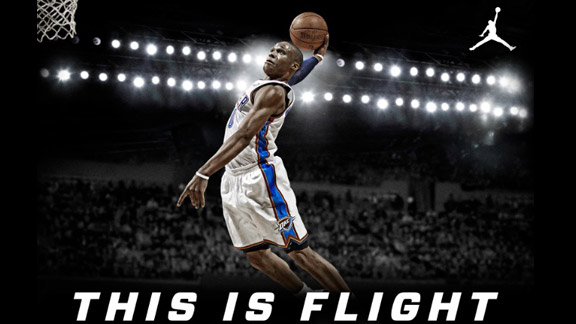
Redemption road. First it was the defending champions Dallas Mavericks. Now it’s the Los Angeles Lakers. The two teams that have knocked the Oklahoma City Thunder from the playoffs the last two postseasons. The two teams that have gone on to win the championship after they dispatched the Thunder. Oklahoma City did what they had to do in the first round, sweeping the Mavericks in a hard fought first round battle. Now, after a week of rest, they await the Lakers who defeated the Denver Nuggets in a surprising 7 game first round series.

If you want to know what this series will be like, go to your local city gym and observe the basketball court for about 3 hours. You’ll usually find at least one game pitting teenagers (ages 16-22) versus middle aged men (ages 35+). You’ll see the teenagers try to use their athleticism, but the middle aged guys will usually counter with smart basketball and mid-range jumpers. The game usually ends up being close and competitive. The Lakers, of course, are the middle aged guys and the Thunder are the teenagers.

The Thunder won the season series 2-1 in what has turned out to be one of the most contested matchups during the regular season. In the first matchup, in Oklahoma City, the Thunder turned a tight game in the first half into a blowout in the second half, taking the game 100-85. Kevin Durant had one of his better all-around games scoring 33 points on 12/22 shooting, grabbing 4 boards, and dishing out 6 assists. In the second meeting, in Los Angeles, the Lakers held a big lead in the first quarter, but got outscored 84-63 the rest of the way, losing 102-93. Russell Westbrook led the way this time around with 36 points and 5 assists. The 3rd game, also in Los Angeles, was known more for a body part than for a game. Aside from the whole ‘Metta World Peace’s elbow to the side of James Harden’s head’ incident, this was actually a really close game and the Lakers needed overtime to defeat the Thunder 114-106. The real story in this game was the Thunder’s inability to get going offensively in the second half once Harden was sidelined with the concussion.

The Opponent

The Los Angeles Lakers come into the game having won a hard fought 7 game series against the up-start Denver Nuggets. Six of the seven games were played without Metta World Peace, who was serving his 7 game suspension following the elbowing incident against the Thunder. Everyone knows the engine that still pushes the Lakers is Kobe Bryant, who averaged 29 points per game in their 1st round series. Most importantly though, Bryant called out his teammates for their lackadaisical effort following their performance in Game 6. The two teammates he was probably referring to the most after Game 6 were Pau Gasol and Andrew Bynum, who both were very inconsistent in the Denver series, interspersing great games with horrible games. Ramon Sessions had an average series in his first tryst into the playoffs, perhaps showing the signs of someone who hasn’t consistently started in the league. The bench, which  has been shortened to three players, is probably the weakest one left in the playoffs. Matt Barnes, Steve Blake, and Jordan Hill all have the ability to provide good minutes, but due to the short bench, can be overused and therefore rendered less effective.

Keys to the series:

1)      How healthy is Kendrick Perkins? The Thunder have said all the right things regarding Perkins’ condition. But sometimes, with a muscle like those around the hips, its takes longer for them to heal completely. It’s one of those muscles that you don’t think about at all unless it gets hurt. With the amount of lateral movement involved in basketball, one can only hope that the hip strain is completely healed and doesn’t rear its ugly head anymore in the playoffs. Look for plenty of pick and rolls involving Andrew Bynum early in Game 1.

2)      Who guards Russell Westbrook? The Lakers got their Kevin Durant defender back in Metta World Peace. But their biggest issue has always been defending Russell Westbrook. Put a slower guard on Westbrook, and he blows right by them and does his damage in the paint. Put a smaller guard on him, and he’ll post them up. Look for Ramon Sessions to start the game guarding Westbrook. But as was seen in the Denver series, quick guards can get by Sessions pretty consistently. Look for the Lakers to regularly deploy hedge defenders towards Westbrook, especially the player guarding Sefolosha. Or look for Bryant to take on the task of guarding Westbrook himself.

3)      Remember that Metta World Peace is the Lakers’ 4th best player, at best. A lot will be made about World Peace’s first game in OKC since “The Elbow”. But the focus of the game needn’t not be on the man formally known as Ron Artest. World Peace will be on his “best” behavior and will not do anything to jeopardize the Lakers’ chances. Will he push, grab, annoy, and attempt to intimidate? Does the sun rise in the East? Of course he will do all that. But the Thunder need not involve themselves in revenge plots and try to take cheap shots at World Peace. What MWP is doing in the media is classic instigation techniques. Hopefully the Thunder players don’t take the bait.

4)      How will the extended rest affect the Thunder? In the 9 days since the Thunder last played, France elected a new president, another underwear bombing plot was foiled, Portugal got rid of four holidays due to cost cutting measures, new data leads scientists to believe that the Maya really didn’t think the world would end in 2012, and President Barack Obama supported gay marriage. That’s a very long time to not be playing any type of competitive basketball. You can practice all you want, but you’ll never be able to replicate the intensity of a real game against a real opponent. The Thunder had a 3 day rest between the first and second round last year, and looked completely flat in the first game of their second round matchup against the Memphis Grizzlies. A rest this long is completely new territory for the young Thunder and may be a factor early in the series.

5)      Which Lakers team shows up? The Lakers will be all-in in this series. It’s Kobe’s nature to be completely tuned-in to every game he plays, whether it’s a pre-season game against the Washington Wizards or a Finals game against the Boston Celtics. It’s Andrew Bynum and Pau Gasol that can sometimes suffer from bouts of Adult OnSet Attention Deficit Disorder (AOADD). Against the Nuggets, both these players shut it down in Games 5 and 6, thinking that the will of the Nuggets would wilt and they would have an easy road to the second round. But in this series, both these players know what’s at stake and will be fully focused. Metta World Peace won’t be the MWP of earlier this season. He’ll be playing like Ron Artest from Queensbridge. And that could be a game-changer. The wild card for the Lakers may be Ramon Sessions. If for any reason he shrinks in the pressure of the playoffs, the Lakers may be in trouble.

Conclusion:

This series will be a hard fought battle in which home court advantage will win out. Thunder in 7.

Top NBA Teams and Senior-itis

Ahh, yes. April. That time of year where the memories of Spring Break start to fade, and the doldrums of the final quarter of school starts to set in. This is when high school seniors start to really feel the effects of senior-itis. It’s this same disease that is beginning to affect some of the better teams in the NBA. For those teams that have already sewn up spots to the NBA’s Big Dance, this affliction is making them act like 8 years olds on a road trip. “Are we there yet?”

When it comes to this time of years, teams are in one of 4 modes. They are either completely out of the playoff hunt, fighting (realistically) for a playoff spot, fighting to move up in the playoff standings, or fighting off boredom from having clinched a playoff spot so early in the 2nd half of the season.  Of the 30 teams in the NBA:

  • 11 are completely out of the playoffs: Charlotte, Washington, New Orleans, TTFKATSK (the team formerly known as the Sacramento  Kings), Cleveland, Toronto, Golden State, New Jersey, Detroit, Minnesota, and Portland.
  • 7 are realistically fighting for playoff spots: Utah, Phoenix, Milwaukee(all currently out), Philadelphia, New York, Denver,  and Houston (all currently in).
  • 8 are securely in the playoffs and jockeying for positioning: Dallas, Memphis, LA Clippers, LA Lakers, Orlando, Atlanta, Boston, and Indiana.
  • 4 teams are entrenched in the playoffs and fighting for the top two spots in their respective conferences: Chicago and Miami (East) and Oklahoma City and San Antonio (West).

Of the 4 teams at the top,Chicago is trying to battle through injuries and maintain the best record in the league.San Antonio is blitzing anyone in their way and trying to take the top spot in the West. And apparently, OKC and Miami (to the enjoyment of all the fans not in Chicago or San Antonio) are ready to meet in the Finals, and are acting like it’s a forgone conclusion. But, honestly, for these four teams, is there anything to worry about besides injuries at this point in the season?

These four teams are treading water at this point in the season. Chicago is 4-3 since April started. Miami and OKC are both 5-4. And San Antonio, riding the hot hand, is 6-2. Are these records indicative of any shortcomings that decided to pop up in the final month of the season?

In Chicago’s losses this month, it is quite apparent that they need Derrick Rose to be completely healthy for their playoff run. But, perhaps, more importantly, the health of Rip Hamilton is of great importance to the offense. While Rose is the end all, be all of the offense, Hamilton provides a great release valve if the defense collapses too much on Rose. Getting those two healthy at this point of the season is the best thing that could have happened to the team. It’s almost like they got a trade deadline acquisition in Hamilton, who is just now starting to pay dividends on the team. The greatest positive to come out of the injury plagued seasons of Rose and Hamilton, is that the bench players have had to contribute and have done so in above average fashion.

In Miami’s losses this month, a lot of the problems that surfaced last season are starting to resurface this season. It’s the Big 3 and no one else on that team. The Big 3 moniker has taken a bit of a hit this season with injuries to Dwayne Wade, but the production from the role players that was so evident in the beginning of the season, has begun to decline to the detriment of the team. The size issue that was a problem last season is still a problem for the Heat. They got Ronny Turiaf after the trading deadline, and while it is a slight improvement over Joel Anthony, the move didn’t really register too much on the Richter scale. The big man rotation of Chris Bosh, Udonis Haslem, Anthony, and Turiaf does give the Heat a bit more flexibility as compared to the big man rotation last season (Zydrunas Ilgauskas, Juwan Howard, Bosh, Anthony, and an injury-recovering Haslem). The point guard position has been slumping for the last month and a half. Mario Chalmers has only been shooting 30% from 3-point territory since March 1st, after shooting about 48% from there in the first 2 1/2 months of the season. Norris Cole has hit the rookie wall and is not producing like he was in the beginning of the season, even being relegated to the bench in favor of James Jones, who is just now starting to find his shooting stroke. But, in the end, this team still has Lebron James and Dwayne Wade, and when those two are clicking, this team is still very difficult to defeat.

The Spurs have begun to streak after finally getting all their pieces back from injury. Its no coincidence that their 11 game win streak coincided with Manu Ginobili finally getting his rhythm back after being in and out of the lineup with a myriad of injuries for most of the season. The young players (Kawhi Leonard, Tiago Splitter, Gary Neal, Danny Green, and James Anderson) all know their roles and play them to a tee. This team is a well-oiled machine that is just now starting to hit its stride. The team still relies heavily on its trio of veterans, but Coach Popovich has made sure to limit their minutes in the regular season. The addition of veterans Stephen Jackson and Boris Diaw will help during their post-season run. This, in my opinion, is probably the most dangerous team heading in the playoffs.

The Thunder’s last 10 games have exhibited the same errors that have been plaguing them the entire season. They are 6-4 in those games, but those errors become very evident in the losses. Stagnant offense always hinders this team in the beginning of games. The team even has a punt play to start nearly every game: giving the ball to Kendrick Perkins in the low post. It very rarely ends in points for the Thunder. In their 4 losses in this 10 game run, the Thunder score an average of 22.3 points in the first quarter. In the 6 wins, that number jumps up to 27. That’s nearly a 5 point difference, which, in an NBA quarter, is a huge difference. Another stat that hinders the team in their losses is the number of turnovers. In that same 10 game span, they are averaging 16.5 turnovers per game in their losses, and 14 per game in their wins. That difference of 2.5 turnovers can, hypothetically, be equated to an extra 7 points for the other team. Which, again, in the NBA, is a game-changing amount.  Defensively, the team still has trouble with the pick and roll and guard penetration.

The good news for all these teams is that there is nothing new that can be labeled a negative. The deficiencies and errors that they have been exhibiting all season, are the same things that are afflicting them now. Even with all these issues, these teams are still the top 4 teams in the league and the leading contenders to win the championship. Are there darkhorses on the fringes that could slip in? Of course. The Los Angeles Lakers are starting to show some diversity in their offense with Andrew Bynum finally taking charge in the absence of Kobe Bryant. The Memphis Grizzlies are one of the deepest teams in the league, with 2 All-star caliber post players (Marc Gasol and Zach Randolph) and an All-star caliber wing (Rudy Gay). And the Boston Celtics will give it all they got for what appears to be their swan song together.

The thing about senior-itis is that, eventually, everyone graduates and moves on to the next level. In that next level is where your skills and abilities come out in full force. Some end up in college, some in a job, and some at home on the couch. In this crazy season, anything can happen. But if the playoffs play out anything like the regular season, then these 4 teams should be the cream that rises to the top.

The Anatomy of a Dunk

Dunks happen every day on the basketball court. There’s a 10 foot rim and a lot of tall men. So there are going to be many instances within the flow of the game where these tall men jump up and push the ball through the cylindrical rim. It’s the easiest shot on the court. Most of the time there is no one in the way between the dunker and the rim. But sometimes, in that special moment, you get a situation where the dunker is challenged by someone to prevent them from pushing the ball through the rim. If the dunker succeeds, then he is awarded two points.

But every once and a while, a dunk happens that completely shatters any modicum of normalcy. It adds a blast of color to a black and white slate. It’s a series of actions that in that instant, completely empowers the dunker, while absolutely emasculating the victim. Everybody who attempts to block a dunk knows there’s a chance they might get dunked on. But, in these instances, the psychological impact that is expounded on the victim is so much, that they lose themselves for a little and forget what its like to be themselves.

There have always been 2 elements to every play in basketball. You have the scorer and the defender. But when this type of play happens, you have to encapsulate all the reactions from everyone on the floor, in the arena, and in the viewing audience to get of complete understanding of what exactly took place. The anatomy of the dunk encompasses so much more than the two players involved in the play. You have the reactions from the teammates of the dunker and from the teammates of the victim. You have the reaction of the fans in the stadium. And then you have the reaction of the opposing fans.

These dunk usually become synonymous with a point in time. It could become someone’s seminal play as their career begins to ascend.  It could be the decisive play in a playoff series that completely changes the outlay of that series. When a play like this happen, fans remember them. If the moment has future ramifications, people remember it even more.

Off the top of my head, I can only remember about 5 core-rattling dunks in my life.

In chronologic order:

  1. 1)      1991 Playoffs – Michael Jordan over Patrick Ewing
  2. 2)      2000 Olympics – Vince Carter over Frederick Weis
  3. 3)      2007 Playoffs – Baron Davis over Andrei Kirilenko
  4. 4)      November 2010 – Blake Griffin over Timofey Mozgov
  5. 5)      January 2012 – Blake Griffin over Kendrick Perkins

1991 NBA Playoffs –Chicago Bulls vs.New York Knicks

This is Michael Jordan at the height of his popularity. Tongue wagging, wearing the Number 5’s. Defending his first title. And here were these “bully on the block” upstarts from New York causing trouble and trying to build their own dynasty. They had their enforcer by the name of Patrick Ewing who patroled the paint and protected the rim. When these two forces met, it would change the course of this series and possibly the course of these two players’ careers.

The first thing you notice is the sick spin cycle move that Jordan puts on Charles Oakley and John Starks. I’m going this way, then, NOPE!, I’m going back towards the basket. Next thing I notice is the great screen by Horace Grant. One common theme in these dunks is that the victim is either screened or late in getting to the dunker. As the dunk is coming, you see Jordan and Ewing contiuously rising. But at one point, that bitch named Gravity takes a hold of Ewing, and he starts coming back down to Earth, while MJ is still rising. Then….BAAAAAMMMM!!!!!! And-1.

The Bulls bench doesn’t really react that greatly. Either they got to see that all the time (it being Jordan and all) or they were just tired of constantly cheering for the greatest ever. Just ask the Vice President whether his hands and glutes get a workout every State of the Union Address, having the get up and clap every 5th word. Hubert Davis, of the Knicks, reacted like his children just got eaten by wolves. Horace Grant decided that the shoes weren’t making him “like Mike” so he decided to slap the butt of Mike. And poor Patrick Ewing decided to shove an invisible man.

You love when these dunks happen on the road. You have that, “OOOOOOOOOO” sound from they crowd where they love the play, but feel bad that it was their guy that got posterized. Nowhere better for that to happen than in Madison Square Garden.

2000 Olympics – United States vs. France

Everyone knows the knock on Vince Carter. Great player who had to tools to be an all-time great player. But, he never played with the necessary determination to be one of the greats. He was okay with just being good. But for one summer, he became a beast. He literally took on the attitude that he was not going to be fucked with. He became the shooting guard version of Kevin Garnett. And then he got a steal in the open court against France with only 7’2″ Frederick Weis between him and the basket. James Bond, Jack Bauer, and Jason Bourne together couldn’t have fixed this international incident.

First off Frederick, you’re 7’2″. If you’re going to be in a poster, at least attempt to block the shot. The whole, “I’m going to stand here and take a charge” thing doesn’t really work out too well when the guy in front of you just won the NBA Slam Dunk competition in resounding fashion 6 months earlier. Read the scouting reports Weis! Secondly, other than the time they interviewed him after winning a title, this is the only other time I’ve ever seen KG not know what the hell to do with himself. Its almost like he said to himself, “I’ve got to match Vince’s intensity, so I’m going to chest bump-push him and show him my war face. Then I’m going to mean-mug the already wounded Frederic Weis.” It was classic KG. Thirdly, look at Vince’s face after the dunk. And then go look any picture of the rap group Onyx (especially Sticky Fingaz) and tell me Vince wouldn’t have been a perfect 4th member at that time. “SLAAAAMMMM! Duuh Duuh Duh Duuh Duuh Duuh Let the boys be boys!!!!” And lastly I love the reaction by French guard Laurent Sciarra. He was literally scared for his life and trying his hardest not to get into Vince’s bubble of unkempt rage. The man doesn’t even want to make eye contact with Carter.

As for the fans, they loved it. International fans love when Americans abuse them. They may not say it out loud, but there’s a reason they come out to see the best in the world. As you can tell in the video, even the French announcers love it.

Side note:  I think Vince Carter is the modern day Samson. When he grows his hair out, he becomes one of the best basketball players on the planet. But when he shaves it, he becomes just a good to great player. Who’s his Delilah?

2007 NBA Playoffs – Utah Jazz vs Golden State Warriors

After upsetting League MVP Dirk Nowitzki and the No. 1 seeded Dallas Mavericks in the first round, the Golden State Warriors were riding on cloud-9 heading into their 2nd round matchup with the Utah Jazz. The Bay Area was buzzing with Warriors fever and ORACLE Arena was a house of horror for visitors. After losing the first two games of the series in Utah in close fashion,  the Warriors returned home for their turn in this tango. The house was rocking with the Warrior faithful wearing their golden “We Believe” t-shirts. The Dub’s were up by 20 with 3 minutes to go and looking to put this puppy away. A jump shot or lay-up would have sufficed, but a self esteem-shattering dunk is just what The City ordered.

First thing I notice about this dunk is the crowd. As a season ticket holder for the Oklahoma City Thunder, I can honestly say that this crowd, and the one in Portland, are the only crowds that can compete against OKC’s. Good job Dub’s fans. Secondly, as Baron rises up for the dunk, it almost seems like his body and Kirilenko’s body become one. Almost like Baron is South America and Andrei is Africa and they are finally joined once again. Then the dunk happens and all hell breaks loose. Baron shows us that when he cares, he has a flat belly. And the fan at 0:30 seconds finally has an orgasm for the first time in his life. And Mikeal Pietrus does the internation sign for, “I need a wave cap”. And Matt Barnes walks away and shows some fans what his head would look like with a faux-hawk. And Dick Bavetta shows us how he seduced Charles Barkley. It honestly looked like a club that Stefon talks about on one of his SNL skits (You gotta be an SNL fan to get this one).

I love the reaction that the teammates of the victim have. They usually look away from both parties. They don’t want to feed into the fire that burns in the now powerful dunker. But they don’t want to completely deflate their brethren by letting them know they just saw that. Either way, its comedic gold at its finest.

November 2010 – New York Knicks vs. Los Angeles Clippers

We know this won’t last. In a couple season, the post game will develop and the knees will start to hurt a little bit from all the jumping. Once the game develops, the need to jump over people will cease to exist, as the player will play both with his mind and with his body. But until then, hot damn this guy can dunk!!!!!!! He was already on the map, but this one put one of those bold, capital stars next to his name. He was not only on the map; he was to be recognized now.

My first thought, after discussing the Baron Davis dunk, is why do Americans hate Russians? They have beautiful women who become spies, and they make Vodka. What more can you ask for? All kidding aside, whether this was a dunk or not is irrelevant. He gets high enough to just throw the ball into the hoop from a parallel angle. He supplied the arc of the ball, instead of releasing it and letting gravity determine the arc of the ball. Funniest thing about this is the reaction from the ref near the Knick’s bench. He did a pelvic thrust that a porn star would be proud of. Another reaction that teammates of the victim have is that they just stand in place and hardly move. And that’s exactly what Amare Stoudemire, Wilson Chandler, and Landry Fields did. The Knick’s bench actually did a pretty good job of containing the basketball fan within them. All except Kelenna Azubuike, who was inactive, but still had a Tourette Syndrome moment next to Ronny Turiaf.

It can’t be forgotten that Timofey Mozgov actually added fuel to his own fire. When Griffin’s weight was on him, Mozgov pushed him off and in the process, propelled Griffin even higher into the stratosphere to make it look even more impressive. Elevator going up. You know you’ve arrived for all the wrong reasons when you last name is synonymous with being climbed over and dunked on.

One thing I am extremely disappointed in is the crowd’s reaction. I don’t know if they didn’t realize what happened, or didn’t look up from their smart phones in time to see the play, but the react from the crowd is pathetic. You will see this play in the pantheons of great dunks and 95% of you fools are still sitting down. Shame on you Clippers fans. You surely won’t get a chance to redeem yourself from this one…..

January 2012 – Oklahoma City Thunder vs. Los Angeles Clippers

Oooops, spoke entirely too soon. In the NBA, with the greatest players in the world, you are bound to see great dunks night in and night out. I know I can’t forget Kirk Snyder’s dunk over Von Wafer in which he leaped over him Vince Carter-style. I saw it live and still count it as one of my all time favorite plays. But some players feast on doing this all the time. Names that come to mind are Dominique Wilkins, Jordan, Carter, Kobe Bryant, Lebron James, and Griffin. And sadly, it happened to my team, against my starting center.

As you can tell, I’ve been thinking about this dunk a lot. It was the prompt that made me start writing this article. It was almost identical to the Mozgov dunk, in that Griffin when up against a defender that pushed him up instead of over. I must say that this dunk was a bit more impressive though. Griffin actually reaches the rim, albeit with only a couple fingers.

But what I found completely interesting was Perkins’ reaction. In most plays, Perk will either be jacking his jaw at the refs or at his teammates or at the opponent. Or he’ll be putting on that Perkins Scowl. After this play, NOTHING. Just a face that says, “I admit defeat in this battle, but the war still continues.” As a big man, you’re destined to get dunked on from time to time. But you don’t expect to get posterized.

As far as the atmosphere, good job by the Thunder bench to not ever react at all to the dunk. I don’t know whether they say Griffin assault Perkins or whether they say paint dry. Way to at least support your man, Thunder bench. The Thunder that were on the floor did the customary “don’t look at the two involved in the play and don’t hardly move from where you’re at” bit. But, I do have to give props to the Clippers fans. They did what you are supposed to do after a great play. They stood up and applauded and acted a little bit happy. Baby steps, I guess.

Seeds of Discord

There are two reasons for sending out a state of the union letter. The first reason is to inform your constituents of your progress and where you stand as a whole. This is the reason the President holds a State of the Union address at least 2 – 3 times a year. It allows the citizens to be a part of the process/progress. The second reason to send out a State of the Union letter to quell any feelings of discord or doubt. The back to back letters sent out by union President Derek Fisher and Executive Director Billy Hunter on consecutive days should be seen as more of a plead for unity than an informational guide to the progress/process of the labor negotiations.

 In surprising fashion, the most important person in these labor negotiations has become FOXSports.com columnist Jason Whitlock. His article about Derek Fisher’s backdoor wheelings and dealings has sent the player’s union into a damage control frenzy. Stephen A. Smith has also said that what Whitlock wrote in his article is basically true. If anything, even if this story is not entirely true, there still is some truth to it. Unfortunately, the seeds of discord have already been spread and the damage has been done.

Within the past 24 hours, the divide between players has become very evident. This morning, Boston Celtics free agent Glen “Big Baby” Davis tweeted , “Take the 51% man and let’s play.” Houston Rockets swingman Terrance Williams tweeted, “Hey @TheNBPA Let’s play BALL enough with the stare off”. Recent reports have said that Derek Fisher and Kobe Bryant have both indicated that they would take a 50/50 split. On the other side of things, Oklahoma City Thunder big man Nazr Mohammed tweeted, “Since I have @NBA & @NBA_Labor’s ear…Why can’t y’all come up to 52.5% since we already gave in 100’s of millions & on system issues?” A later tweet by Mohammed stated, “Don’t know what the percentage will be but I’m willing to #StandUnited with my union cuz players b4 me did it when I was a rookie. #OnlyFair”.

Another thing that lends credence to the fact that there may be discord among Fisher and Hunter is what’s at stake for both of them. Hunter’s legacy is on the line as this seems to be his last hurrah as union Executive Director. He may be reelected to lead the union into their next labor negotiations in 6 – 10 years, but with how much the union has given up in these negotiations, that does not seem so certain. Hunter is trying to get the best deal possible (52.5%) to lessen the blow the owners are trying to place on the players. On the other hand, Derek Fisher is still a player, and at the bottom of his core, probably wants to do everything possible to get this thing done and play ball. Fisher is on his last leg as far as his playing career is concerned and the Lakers are still one of the favorites to contend for a championship.

It is pretty fascinating to see the middle to lower tier younger players start to bite their nails at the prospect of missing paychecks, while the older veteran players (who have, more than likely, been saving up for this day) are pressuring all the players to stay united and stay the course. Add to that, the dialoging in the media by the NHL players who suffered through a lost season and a lost season’s worth of pay, while coming out on the other side of the lockout in a much worse position than when the lockout started.

The cracks and fissures are starting to become chasms. The quiet whisper of discord is starting to become a booming roar. Eventually the person with the most money, usually wins the battle. The owners are billionaires whose income is not solely dependant on the ownership of their teams. The players, on the other hand, are completely dependent on the paycheck that comes from playing the game of basketball. The most important meeting of this labor negotiation has yet to occur. Many people think the most important meetings of this labor negotiation happened within the last two weeks. The truth is that the most important meeting of these labor negotiations will come on Thursday, when the players’ union meets to discuss their next plan of attack.

Now It Feels Real

01 November 2011

Dear NBA (Players, Owners, David Stern, Billy Hunter, Derek Fisher, Adam Silver, et al.),

What the hell is going on? It’s November 1st and I am not watching NBA Basketball. I should be watching the on-going rivalry between the Oklahoma City Thunder and Los Angeles Lakers. I should be watching Dirk Nowitzki and the world champion Dallas Mavericks receive their well deserved championship rings during what was sure to be a raucous ring ceremony at home. Instead, I’ll probably go home and watch the new episodes of NCIS and NCIS:Los Angeles that I DVR’ed.

For the past 4 months we’ve been hearing about the lockout. BRI this. 50/50 split that. System issues. Hard caps. Soft caps. Flex caps. Decertification. Amnesty. Blah, blah, blah, blah, blah, blah. I feel that, in that time, I have actually become pretty proficient in labor law. I’ve explained the lockout to numerous people and have sounded more and more knowledgeable everytime I explain it. But its always felt like I was reading up on something that wasn’t real. Like I was reading a Hitchcock novel or something. You read it. You begin to gain some insight. But you never really process it as real. Well, I checked the future schedule for TNT, and it didn’t have any NBA basketball games on. It has officially become real.

So, there you go NBA. On a night where I, and most basketball fans (hardcore or fair-weather), should have been glued to our TV sets watching these 2 great games (plus one other game that we would’ve gotten on the free, beginning of the season preview of NBA League Pass), we are instead looking for alternatives. Tonight was the perfect night for an opener. No meaningful football games. The hype over LSU/Alabama still has not reached a frenzied state. The World Series is over. And I still can’t find a hockey game on cable or satellite TV to save my life. You had the slate all to yourselves……….and you blew it. You literally puked all over yourself in front of your hot prom date. Ben Stiller’s teenage character on ‘Something About Mary’ is literally laughing at how bad you blew it, and we know what he did to himself on prom night.

Let’s take a look at 10 storylines that would have dominated on Tuesday, November 1st 2011:

1. Dallas receiving their championship rings in their home/NBA opener with Mark Cuban hugging David Stern.

2. Will the Bulls continue their torrid run that began in the 2nd half of last season?

3. How will MVP Derrick Rose improve upon last season?

4. After years of epic playoff failure, how did Dirk Nowitzki spend this offseason. (He usually retreats back to Germany and engages in soul-searching.)

5. Will this be the year that age will finally begin to affect Kobe’s game, or will he find new ways to dominate? (On a related note, how will his new German-engineered plasma help his game?)

6. Can the Lakers get back on top for one final dynastic run?

7. Can the Thunder finally break-through and take the West?

8. Can Kevin Durant and Russell Westbrook play their games and succeed on the same team?

9. How has KD, through his streetball tour offseason, improved his game.

10. How will a completely healthy Kendrick Perkins help the Thunder?

11. How will the rebuilding Jazz look, with rookies Alec Burk and Enes Kanter being the new faces in town?

12. The awesomeness of seeing “World Peace” on the back of someone’s jersey…..especially when that someone is crazy Uncle Ron-Ron.

13. Bonus – How did Hasheem Thabeet perform?

That’s 13 story lines about 3 games on a Tuesday night. A TUESDAY NIGHT, for goodness sakes! What other awesome thing is there to do on a Tuesday night? I’m a basketball junkie, so I’ll come back whenever it does. But, those fringe fans (the ones that actually debate whether to watch the game or Dancing With The Stars), those are the fans that the NBA will continue to lose as we move forward in this lockout. I should have been watching my team play their rivals this evening. Instead, I’m reading an article about Kevin Durant and Lebron James planning an exhibition flag football game, while watching NCIS. This is not how I envisioned my Novemeber 1st evening when the schedule first came out in mid-July. Gentlemen, we have our first real casualty of this fight. Let’s end this and bring peace to the land.

Signed,

A fan (not that you care that much)

The Future Economics of the Lockout

When the owners first started complaining, we were in the beginning of a recession. You started to hear the whispers from the owners that big changes were needed about 3 seasons ago. And the players actually played along with that and actually stated that, “Yes, in this economy, some concessions would need to be made on their parts.” But, I’m pretty sure, their thinking was that by the time the players and the owners actually had to start negotiating (basically 3 years later) that the economy would have been fixed (or at least recovering) by then.

Fast forward to where we are now, and there are actually rumblings that we are entering an even worser recession. So instead of things improving, economically, they will probably begin to get worse for us fans in terms of disposable income. As an owner, if I see that the same system is being kept in place, and I want to stay competitive and get into or stay in the black, I may have to increase ticket prices. And that’s where this starts to affect me, as a John Q. Public fanatic.

You can talk about smart spending (in terms of a team) all you want. But, if you are completely honest with your self, you’ll know that we (the Thunder) got extremely lucky. Portland and OKC basically had the same formula. Tank for a couple seasons. Trade away horrible contracts for draft picks. Try to get lucky in the draft. We picked KD and Russ. They picked Oden and Roy. A couple knee surgeries later, and we are on the brink of becoming dynastic and Portland is on the brink of becoming one of those middle of the road teams (good enough to lose in the first round, but not bad enough to get a significant draft pick).

My question is, should Portland fans have to pay for the bad luck that has been bestowed on their team. Fans eventually tire of middle of the road teams. Once that happens, then those season ticket numbers start to decrease. Once that happens, an owner may be forced to increase ticket prices to meet his/her bottom line. Remember, this could have been OKC’s fate in some alternate universe.

Are you willing to continue paying (paying more) for a system that is broken? Do you know how much quicker Portland could bounce back, if they could’ve either cut Roy/Oden or restructured their deals? And remember, I’m not asking this because I necessarily want to see Portland become elite. I’m asking this because it could easily happen to OKC. As a small market team, you need to ride the highs for as long as possible and stay out of the middle to the lows for as long as possible. In this current system, a tweak of a knee here or a tweak of a back there, and we may be in the same boat.

Oh, and here’s one more thing about this recession talk. Its affecting the whole world, especially Europe. And that’s where it becomes bad for the players. There’s no other league in the world that can offer what the NBA offers. There are rumors that Kobe is looking to sign in Italy for $6.5 million. Do you know how much Kobe made last season? $25 million. And if you sign in China, you have to stay there for the entire season. So, while the “we can play and get paid overseas” thing sounded like a game-changer for the players, its actually enhancing the owners’ position.

So while I may love the NBA and may miss the game if some of the season is missed, I want a deal that keeps ticket prices as low as possible. I haven’t gotten a raise in 3 years at my job. If, for any reason, the owners were forced to hike up ticket prices in the near future, I’m screwed. If the owners and players were really progressive thinkers, they would sign a deal that tilts in the owners’ favor for the first half of the deal, and then tilts back in favor of the players towards the back end of the deal, with the option to revisit the results in the middle of the deal.

Possibility of NBA players hooping overseas

The NBA players and owners currently find themselves in a labor dispute, in which the owners locked the players out on July 1st. This is your basic negotiating ploy by the owners to bleed the players until they finally succumb to “poverty” and come back to the negotiating table with less of a leg to stand on. It happens in every labor dispute where players are locked out. The players, especially mid-tier players and below (aka the majority), eventually run out of revenue streams and plead with the union head to try and strike a deal, regardless of how bad it is. But what happens if the revenue stream doesn’t stop for some of those players? What happens if a small contingent of those players happen to find an alternate source of income that can supplement them through the “tough” times? This is the owners’ worst nightmare and something that no ownership group in any of the 4 major US sports has ever faced.

One of the major differences in this lockout and the ’99 lockout is the availability of leagues that offers comparable salaries and unique fringe benefits. The only drawback to those perks is the fact that the leagues are located throughout Europe and Asia. In an effort to keep up with the popularity of the NBA, basketball leagues throughout Eurasia have flourished with an organized govererning body (FIBA) and leagues and owners that are awashed with money. David Stern’s masterplan as NBA commissioner (globalization of his product), may now become one of his biggest nightmares in this labor dispute.

Globalization of Basketball

Blame it on one of the owners at the negotiating table. Michael Jordan’s meteoric rise in popularity coincided with many world events that brought American culture to the forefront on many foreign lands. The end of the Cold War, the advent of the internet and affordable satellite TV, and global capitalism all came together at the right time to foster an environment where the star of someone could shine brightest. Michael Jordan became the right guy at the right time and the NBA piggy-backed off of that. Then the Dream Team happened.

David Stern made sure to capitalize on the popularity of the Dream Team, and capitalize he has. While baseball remains a popular sport around the world, it is still mainly focused in the US, Latin American, and Japan. Hockey doesn’t really appeal to anyone who lives below the 50º N line on the map. And football, while extremely popular here, has never really taken off anywhere outside of the US. With its visible players, cheap equipment (trash can and paper, if necessary), ability to be a team sport or an individual activity, and uptempo pace, Stern has taken advantage of a product that can, and has, appealed to many. On top of that, most teams now have at least one foreign born player, with some of those players being bonafied superstars. And, add to that the fact that the NBA has taken advantage of technology and social media, in a way that no other sport has, and you have the makings of a global sport.

The globalization of the sport has a trickle down effect on other industries as well. With more and more foreigners wanting to buy their favorite player’s products, it was only a matter of time before companies
starting sending their product pushers over for promotional tours. We’ve seen Kevin Durant start making annual pilgrimages to China to promote his products. We’ve seen Kobe Bryant, Dwight Howard, and Dwayne Wade all make trips abroad to promote their products. We’ve seen the NBA send players over as goodwill ambassadors to impoverished areas (Basketball Without Borders). We’ve seen preseason contests between NBA teams and Euroleague teams, and we’ve seen preseason and regular season games played abroad. While this has been good for the brand, it has also taken away the isolationist advantage that owners once held on American players.

The Boogeyman isn’t that scary anymore

While there have been some great American players that have played overseas (Bill Bradley, Mike D’Antoni), most American players are overseas for one of two reasons; either they weren’t good enough to play in the NBA, but good enough to play overseas, or the money overseas was too good to pass up. In the past, American players did not go overseas because they wanted to play overseas. They went because it was the best option.

Brandon Jennings completely changed the game with his decision to forgo his freshman year in college, and instead, play in the Euroleague with Italian club Lottomatica Roma. After that one season, he was
drafted in the top 10 and has gone on to have a successful NBA career. During his time in Italy, he was not taken to a back alley and beaten by punks who were speaking a language he did not understand. He was not taken advantage of by foreign swindlers looking to make a quick buck. Instead, he was treated like any other rookie player and had to earn his playing time. He earned $1.65 million (tax-free!!) in salary AND was given $2 million by UnderArmour to promote their product overseas. And he was all of 19 years old.

With the advent of social media, 24/7 news, the Travel Channel, and easier accessibility, the world that used to seem so big 10 years ago, has now gotten exponentially smaller. The veil of secrecy that covered some places has now been lifted by this basketball globalization. This generation of players was raised in a smaller world, technologically speaking. Those encyclopedia pictures of some obscure land from the past, are now live satellite feeds on YahooMaps. They haven’t been influenced by the Cold War to fear anything across the Atlantic and Pacific Oceans. Instead, they have been influenced by the Dream Team and their foreign teammates to explore the possibilities.

And look at what some of these teams are offering. Millions of dollars tax free. Free living quarters. Chauffeurs. Access to top chefs. Partial ownership in the team while there. It’s a plethora of abundance. Of course, players like Sonny Weems and Jannero Pargo aren’t being offered this entire deal, but players like Deron Williams, Dwight Howard, Kevin Durant, Kobe Bryant, etc, would definitely be offered this deal. And those players would take it. Players with little, to no, baggage (i.e. wife, kids, etc) would love this opportunity. Players with families would treat it as a regular season, but a little further away. Its already known that some players don’t live where they play, especially if they are year to year veterans.

You don’t think Deron Williams spoke to ex-teammate Mehmet Okur or to ex-NBA great Allen Iverson about Turkey before making his decision to sign with Turkish club Beşiktaş? You don’t think that Kevin Durant and his people have developed contacts in China with his annual trips down there? Can you imagine how big KD would be in China if he played a couple games there with one of their clubs? While he plays in the one of the NBA’s smaller markets, in OKC, that wouldn’t really matter if he had a billion supporters in China. He’d be guaranteed the starting small forward in the All Star Game for the next 15 years. There’s already been chatter about Dwight Howard playing overseas if the lockout starts taking games away. He would conquer a market that Shaq never did, and you know he’d enjoying rubbing that into the Diesel’s face. The possibilities are all there. The fear that used to permeate their view of the world is no longer there. Deron Williams was the first domino to fall. Who will be next?