Tag Archives: Spain

Summer League: Hope Springs Eternal

One of my favorite things about the offseason is Summer League. Everything is so optimistic during this time of year. That late 2nd rounder you got from another team for cash considerations? Of course he’s going to become a 3-time All Star for you. The combo guard you took with the 27th pick? You’d be crazy not to think he’s isn’t going to average 20 ppg this upcoming season. The 2nd year player who sat at the end of the bench all of his rookie season, and was the team’s honorary “human victory cigar”? Yep, he’s going to make the leap. Everything about Summer League is based on potential and hope.

In reality though, 80% of the players in Summer League will never get a whiff of the NBA. If you follow your team as voraciously as I do, you’ll learn the players’ names and then forget them just as quickly when Summer League ends. The only ones that stick in my mind are the ones that actually make the team, and the ones that end up with the Thunder’s D-League team, the Tulsa 66ers. And it truly is a shame, because for 99% of us fans, these players are just advancing to a point in their basketball careers that we could only dream of advancing to. There really are some good basketball players in Summer League, but like any other situation in life, if they are not cultivated in the right system, they go to waste. 

That’s why I love cheering for the Thunder during Summer League. This is a team that takes pride in cultivating players and rewarding them for their hard work and dedication. In 2011, Robert Vaden, our 2009 2nd round pick, was signed to play the final week of the season and was added to the playoff roster for the Thunder. Did he ever play an actual game for the Thunder? No, but he got to practice with the team, sit on the bench in a suit,  and cash a couple paychecks signed by Clayton Bennett and David Stern. Last season, our 2nd round pick from 2010, a little known forward from Florida State named Ryan Reid was signed at the beginning of the season. He actually played in a couple games and averaged 1.6 points. 
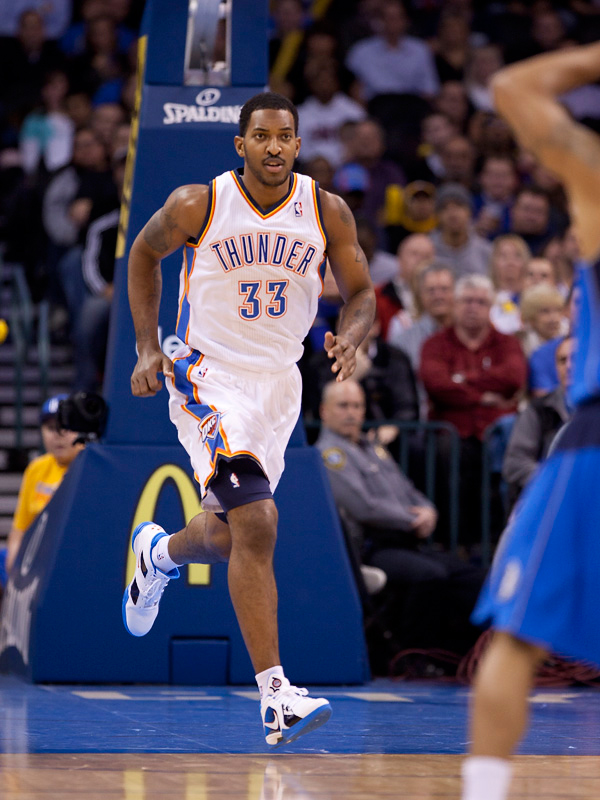
This year’s squad features a guy the team is grooming to become the back-up center (Cole Aldrich), a guy they are grooming to possibly become the back-up point guard one day (Reggie Jackson), a guy who could be an asset if injuries ravage the team (Lazar Hayward), and a rookie they are grooming to possibly become a rotational big someday (Perry Jones III). These players are locks to be on the opening day roster, barring any trades. They are in town to either sharpen their skills or test new skills. 

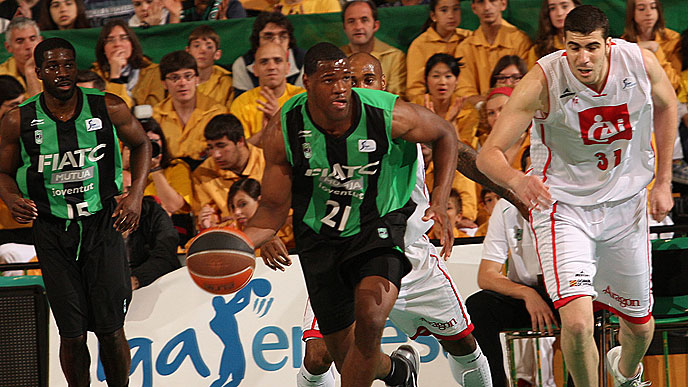
The other guys, the ones I like to call the Fringers, are usually just on the outside looking in. Back on the Thunder squad is Ryan Reid, trying to make it back to the NBA after being cut in the middle of last season to make room for seasoned veteran Derek Fisher. Another guy battling for a roster spot is Latavious Williams. This athletic forward made a bit of history in 2009, becoming the first high schooler to be drafted straight out of high school into the NBA Developmental League. The next season, when he became eligible to be drafted into the NBA, he was selected by the Miami Heat in the 2nd round, and was immediately traded to the Thunder. After playing one more season in the D-League, Williams signed to play for FIATC Joventud in Spain last season, winning Most Spectacular Player of the ACB League. Another player trying to get back into the league is Morris Almond, who is something of an NBDL superstar, but has never quite put it all together in the NBA. Basically, 3 guys possibly battling for one roster spot. 
Then, there are the Dreamers. The guys we should all be cheering for, because they remind us of our short lived hoop dreams. Kent Bazemore, Dwight Buycks, Marquez Haynes, John Holland, James Mays, Gary McGhee, and Garrett Temple. Remember those names, because you probably won’t hear of them ever again. Is there a chance some of them will make it as end of the bench guys in the league? Sure. And they’ll probably have a great story to tell about their journey to the NBA. But for the most parts, these guys will fade into overseas and D-League rosters. 

Such is the life of most professional basketball players. Always remember, that professional doesn’t just mean NBA. The players that play in the Philippines for pay are also considered professionals. As are the ones that play in Iran. And the ones in Mexico. The road in the journey to do something you love isn’t always paved in gold and silver. And it very rarely is a straight line. So I commend and salute the Fringers and the Dreamers for doing what they love, even if the road is full of potholes and roadblocks. So keep on hooping, gentlemen, because if many of us were given that opportunity, we’d be doing the same thing.

Possibility of NBA players hooping overseas

The NBA players and owners currently find themselves in a labor dispute, in which the owners locked the players out on July 1st. This is your basic negotiating ploy by the owners to bleed the players until they finally succumb to “poverty” and come back to the negotiating table with less of a leg to stand on. It happens in every labor dispute where players are locked out. The players, especially mid-tier players and below (aka the majority), eventually run out of revenue streams and plead with the union head to try and strike a deal, regardless of how bad it is. But what happens if the revenue stream doesn’t stop for some of those players? What happens if a small contingent of those players happen to find an alternate source of income that can supplement them through the “tough” times? This is the owners’ worst nightmare and something that no ownership group in any of the 4 major US sports has ever faced.

One of the major differences in this lockout and the ’99 lockout is the availability of leagues that offers comparable salaries and unique fringe benefits. The only drawback to those perks is the fact that the leagues are located throughout Europe and Asia. In an effort to keep up with the popularity of the NBA, basketball leagues throughout Eurasia have flourished with an organized govererning body (FIBA) and leagues and owners that are awashed with money. David Stern’s masterplan as NBA commissioner (globalization of his product), may now become one of his biggest nightmares in this labor dispute.

Globalization of Basketball

Blame it on one of the owners at the negotiating table. Michael Jordan’s meteoric rise in popularity coincided with many world events that brought American culture to the forefront on many foreign lands. The end of the Cold War, the advent of the internet and affordable satellite TV, and global capitalism all came together at the right time to foster an environment where the star of someone could shine brightest. Michael Jordan became the right guy at the right time and the NBA piggy-backed off of that. Then the Dream Team happened.

David Stern made sure to capitalize on the popularity of the Dream Team, and capitalize he has. While baseball remains a popular sport around the world, it is still mainly focused in the US, Latin American, and Japan. Hockey doesn’t really appeal to anyone who lives below the 50º N line on the map. And football, while extremely popular here, has never really taken off anywhere outside of the US. With its visible players, cheap equipment (trash can and paper, if necessary), ability to be a team sport or an individual activity, and uptempo pace, Stern has taken advantage of a product that can, and has, appealed to many. On top of that, most teams now have at least one foreign born player, with some of those players being bonafied superstars. And, add to that the fact that the NBA has taken advantage of technology and social media, in a way that no other sport has, and you have the makings of a global sport.

The globalization of the sport has a trickle down effect on other industries as well. With more and more foreigners wanting to buy their favorite player’s products, it was only a matter of time before companies
starting sending their product pushers over for promotional tours. We’ve seen Kevin Durant start making annual pilgrimages to China to promote his products. We’ve seen Kobe Bryant, Dwight Howard, and Dwayne Wade all make trips abroad to promote their products. We’ve seen the NBA send players over as goodwill ambassadors to impoverished areas (Basketball Without Borders). We’ve seen preseason contests between NBA teams and Euroleague teams, and we’ve seen preseason and regular season games played abroad. While this has been good for the brand, it has also taken away the isolationist advantage that owners once held on American players.

The Boogeyman isn’t that scary anymore

While there have been some great American players that have played overseas (Bill Bradley, Mike D’Antoni), most American players are overseas for one of two reasons; either they weren’t good enough to play in the NBA, but good enough to play overseas, or the money overseas was too good to pass up. In the past, American players did not go overseas because they wanted to play overseas. They went because it was the best option.

Brandon Jennings completely changed the game with his decision to forgo his freshman year in college, and instead, play in the Euroleague with Italian club Lottomatica Roma. After that one season, he was
drafted in the top 10 and has gone on to have a successful NBA career. During his time in Italy, he was not taken to a back alley and beaten by punks who were speaking a language he did not understand. He was not taken advantage of by foreign swindlers looking to make a quick buck. Instead, he was treated like any other rookie player and had to earn his playing time. He earned $1.65 million (tax-free!!) in salary AND was given $2 million by UnderArmour to promote their product overseas. And he was all of 19 years old.

With the advent of social media, 24/7 news, the Travel Channel, and easier accessibility, the world that used to seem so big 10 years ago, has now gotten exponentially smaller. The veil of secrecy that covered some places has now been lifted by this basketball globalization. This generation of players was raised in a smaller world, technologically speaking. Those encyclopedia pictures of some obscure land from the past, are now live satellite feeds on YahooMaps. They haven’t been influenced by the Cold War to fear anything across the Atlantic and Pacific Oceans. Instead, they have been influenced by the Dream Team and their foreign teammates to explore the possibilities.

And look at what some of these teams are offering. Millions of dollars tax free. Free living quarters. Chauffeurs. Access to top chefs. Partial ownership in the team while there. It’s a plethora of abundance. Of course, players like Sonny Weems and Jannero Pargo aren’t being offered this entire deal, but players like Deron Williams, Dwight Howard, Kevin Durant, Kobe Bryant, etc, would definitely be offered this deal. And those players would take it. Players with little, to no, baggage (i.e. wife, kids, etc) would love this opportunity. Players with families would treat it as a regular season, but a little further away. Its already known that some players don’t live where they play, especially if they are year to year veterans.

You don’t think Deron Williams spoke to ex-teammate Mehmet Okur or to ex-NBA great Allen Iverson about Turkey before making his decision to sign with Turkish club Beşiktaş? You don’t think that Kevin Durant and his people have developed contacts in China with his annual trips down there? Can you imagine how big KD would be in China if he played a couple games there with one of their clubs? While he plays in the one of the NBA’s smaller markets, in OKC, that wouldn’t really matter if he had a billion supporters in China. He’d be guaranteed the starting small forward in the All Star Game for the next 15 years. There’s already been chatter about Dwight Howard playing overseas if the lockout starts taking games away. He would conquer a market that Shaq never did, and you know he’d enjoying rubbing that into the Diesel’s face. The possibilities are all there. The fear that used to permeate their view of the world is no longer there. Deron Williams was the first domino to fall. Who will be next?