Category Archives: Trade Talk

Trade talk involving the Thunder.

2016 Oklahoma City Thunder Trade Prospectus

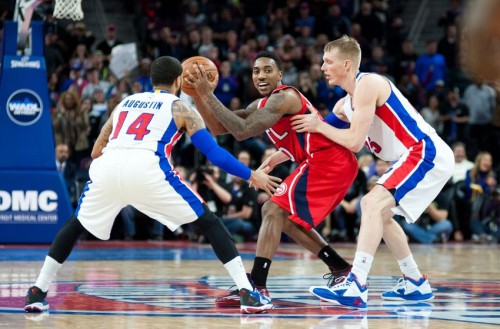
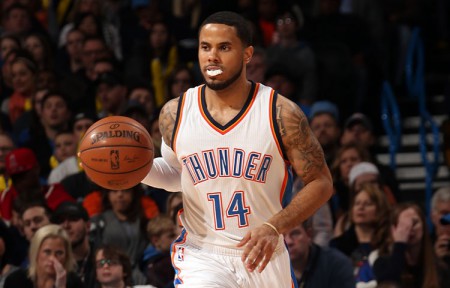
dj augustin thunder

With a couple days left before the trading deadline, the Oklahoma City Thunder sit with the third best record in the NBA, and are 1 of 3 teams with at least 40 wins at the All-Star break. That would usually be great for most years. But this season, the two teams with better records than the Thunder are 1) in the same conference and 2) on historic win paces. Any move the Thunder make during the trade deadline will be with these two teams in mind.

As currently constructed, the Thunder are better equipped to deal with the San Antonio Spurs than the Golden State Warriors. They match up well position for position, and have the athleticism to give the Spurs problems. The Warriors on the other hand, present a different set of problems for the Thunder. Their penchant for scoring from the outside has baffled every team in the league. The Thunder have a habit of letting teams beat them from the outside, but for some reason, they have defended the Warriors reasonably well over the past two seasons.

When it comes to trades, its always about what a team needs and what a team is willing to offer. The Thunder were extremely busy before and during the trade deadline last season, acquiring Dion Waiters, Enes Kanter, Steve Novak, DJ Augustin, and Kyle Singler. All five players are still on the roster this season, with Kanter and Singler signing multiyear extensions in the offseason. In addition to the players the Thunder gave up to acquire that quintet, they also gave up two first round picks in the process. Those first rounders are lottery protected and likely will be honored within the next three years if the Thunder can keep their core together. With all that said, here’s a look at a couple of the assets the Thunder have in tow.

Assets

1. Serge Ibaka

Trading Ibaka this season is highly unlikely. He’s the third cog in the Thunder’s Big 3 and has been there from the beginning of the run. But while Kevin Durant and Russell Westbrook  have expanded their games to become two of the best players in the league, Ibaka, for all his tools, has never been able to consistently put it all together. Be it the low basketball IQ or the fact that Ibaka may not be as young as his counterparts, the time for Ibaka on the Thunder may be numbered. While he hasn’t necessarily been injury-prone throughout his career, he does appear to be slowing down. His rebound and block numbers are the lowest they’ve been since his rookie season. His overall FG% is under 50% for the 2nd straight season, after starting off his first 5 seasons above the median line.

In addition, three factors are working against Ibaka remaining in the current position he is in after this season. First, the style of play in the current NBA has negated the need for a shot blocker. Remember when the Lakers, Celtics, Magic, and Spurs were the class of the NBA in the late 2000’s and early 2010’s? It was all because of the big man position. Andrew Bynum, Pau Gasol, Dwight Howard, Kevin Garnett, and Tim Duncan were all extremely influential in their teams’ runs to the Finals during that period in time. The Thunder, trying to get to that position of power, decided to trade Jeff Green and Nenad Krstic to the Celtics for Kendrick Perkins. Not only did the trade give the Thunder a defensive post player, but it also opened the door for Ibaka to become the premier shot-blocker in the league. Well, those days are gone. The pace and space NBA has basically eliminated the need for a premier post defender. Elite wing defenders are where the money is now.

Secondly, in keeping with the fact that the NBA is changing, so too have positions changed. The traditional view of power forwards and centers no longer works in this new NBA. In its stead, successful teams are now starting to trot out bigger small forwards to play the power forward position. What a team may lose on the block, it may gain on the offensive end with more 3’s and transition buckets. Kevin Durant began his career as an oversized two guard, but eventually settled into his more natural position of small forward when Scott Brooks became the Thunder’s head coach. Through the years, the natural progression of an athlete’s body has allowed Durant to get a little bit thicker as he has aged. That increase in weight has allowed Durant to not only play in the post more as an offensive player, but also to better defend post players on the other end of the floor. Shifting Durant to PF permanently wouldn’t be that big of a jump for the Thunder. He’s already leading the team in rebounding and is second on the team in blocks per game at 1.2.

Thirdly, Steven Adams has become the prototypical post player for this new NBA. Someone who is athletic enough to patrol the entire paint, but also strong enough to play the enforcer role. He’s younger and more mobile than Ibaka, and he comes at a much cheaper price, for now. That’s where the decision will come into play after this season. Adams still has one more year left on his rookie deal after this season, but the Thunder have first dibs on an extension after this season. Adams will likely command a salary upwards of $12 million. Ibaka comes up for free agency the same year Westbrook does. If the Thunder are able to keep both Durant and Westbrook, they’ll be no way they can also keep Ibaka and Adams.

Again, I’m not saying it’ll happen this season. But Ibaka’s $12.25 million dollar salary may be useful if a jackpot deal pops up. And if that deals becomes availalbe, the team may think long and hard about trading Air Congo.

2. Expiring Contracts (DJ Augustin and Steve Novak)

The Thunder have a couple expiring contracts that may come into play during the trade deadline. DJ Augustin and Steve Novak are both on the final year of their deals, while Dion Waiters is on the final guaranteed year of his rookie contract. If Waiters is traded, the team he is traded to will have the right to match any offer Waiters is given in the offseason. But Waiters plays a big role on the Thunder as a multifaceted guard and will likely remain in that role throughout the season.

The Thunder are in a bit of a precarious situation with Augustin. His $3 million dollar salary may be useful in a trade, but the Thunder have to make sure they get a veteran point guard either via trade or as a buy-out signee. If the Thunder trade Augustin without getting another another veteran point guard, they risk heading into the postseason with rookie Cameron Payne as their only other option behind Russell Westbrook. While Payne has been good, the Warriors’ game showed that the postseason lights could a little too bright at this moment for the first year player out of little Murray State. The Thunder may just keep Augustin around as the veteran third string point guard.

Novak, on the other hand, is almost guaranteed to be moved by the deadline. His $3.75 million dollar contract is big enough to fetch a player of value for the Thunder. But also, the Thunder may just trade him to a team that needs salary in order to have an empty roster spot for a buy-out candidate, such as Joe Johnson or Kevin Martin.

3. Mitch McGary

The second year big man showed a lot of promise in the offseason and preseason. But a concussion in the preseason kept him out of the final week of practice heading into the season opener, and he has yet to find his footing in the rotation this season. McGary may be the Thunder’s most attractive asset as a young big on a cheap rookie scale contract. But that may also be the reason the Thunder keep him.

4. Multiple 2nd rounders and trade exceptions

This year, the Thunder have their own 2nd rounder and, likely, Charlotte’s 2nd rounder, which is protected for picks 56-60. In addition, the Thunder still have their 2nd round pick for 2017 and Memphis’ 2nd rounder for that year also (protected 31-35, unprotected in 2018). Second round picks are good filler for trades involving players that bring little to nothing to the table. For example, if the Thunder trade Steve Novak to the Trailblazers as a salary dump, then attaching a 2nd round pick will probably make it worth the Blazer’s while to take on Novak’s salary for the last 2 months of the season.

In addition to the 2nd round picks, the Thunder also have two trade exceptions. The Jeremy Lamb trade exception is worth $2.13 million and the Luke Ridnour trade exception is worth $2.85 million. While those amounts are relatively small, if a team is looking to unload one of their younger players without taking on salary, a trade exception may be the way to go.

5.  Alex Abrines

The Thunder own the rights to the 22 year old Spanish guard who is currently averaging 8 points per game on 41% shooting from 3-point territory for one of the premier teams in Europe, FC Barcelona. He is signed through 2019, but has a buyout clause. He lacks the athleticism to be a regular rotation player in the NBA, but would be a good addition as a 3-point specialist (a la Anthony Morrow) for a team that may need perimeter scoring in the future.

For as good as the Thunder have been this season, they still have holes that can be filled to further contend with the top teams in the league. Here’s a look at some of the areas of the need the Thunder could possibly fill.

Targets

1. 3 and D player

In this new NBA, the premier role player is that of a 3 and D wing. The Thunder have about 4 players in their rotation that masquerade as 3-and-D wings. The only problem is that those that are good at 3-point shooting (Anthony Morrow) struggle on defense, and those that excel at defense (Andre Roberson and Kyle Singler) struggle at consistently hitting their perimeter shots. The only player on the roster that qualifies as a viable 3-and-D wing is Dion Waiters, and he is great at neither.

Keeping up with the Warriors and Spurs of the league necessitates a team to have players that can be effective on both ends of the floor. The two players most commonly associated with the Thunder for this position are PJ Tucker of the Phoenix Suns and Courtney Lee of the Memphis Grizzlies. Both players are in the $5.5 million dollar range and could be had for an expiring and either McGary or Josh Huestis.

Some other surprising candidates may be Mirza Teletovic of the Phoenix Suns ($5.5 million) and Ben McLemore ($3.16 million) of the Sacramento Kings. Thunder GM Sam Presti has a habit of running misdirection plays where everyone in the media thinks he’s going one way, but he ends up going an entirely different direction (think last year with the Brook Lopez/Enes Kanter trade deadline happenings). While Teletovic is a bit too big to be a wing, he does bring the “3” part of the equation with him. He would allow the Thunder to stay big, while going small (Teletovic at 3, KD at 4, and Serge/Adams/Kanter at 5). McLemore would fall in line as a Presti reclamation project. The third year guard has never lived up to his No. 7 draft selection and has seemingly fallen out of favor in Sacramento. He came into the league as a player that could possibly be a good 3-and-D wing. Unfortunately, he has been inconsistent on both ends of the floor. McLemore could be a good replacement for Waiters if he bolts for greener pastures in the offseason.

Another name to watch out for is Victor Oladipo of the Orlando Magic. This one would probably require Serge Ibaka to move the needle enough for Orlando to make that trade. This one is likely not to occur this season.

2. Veteran Back-up Point Guard

If the Thunder plan to use DJ Augustin’s expiring contract in any of their trades, they would also need to obtain a veteran back-up point guard to buffer any of the inexperience Cam Payne would bring to the playoffs. A couple options are Michael Carter-Williams of the Milwaukee Bucks and Darren Collison of the Sacramento Kings. Carter-Williams is a big point guard that is a triple-double threat every time he steps on the floor. But his inconsistent jumper and being turnover prone continue to affect his play on the court. In addition, there are rumors that MCW isn’t really the easiest guy to get along with in the locker room. These are probably all reasons why the former Rookie of the Year could possibly end up on his third team in three years.

Darren Collison has been one of the best back-up point guards in the league. If Sacramento is indeed having a fire sale and looking to build for next season, then Collison may be one of the players that could be had from them. Unfortunately for the Thunder, he has another year left on his contract after this one. The Thunder really like Payne and getting Collison could stunt his development into next season.

3. Empty Roster Spot/Lower Tax Bill

The Thunder may eschew taking on another player in favor of just trading one or both of their expiring contracts in a salary dump to open up roster spots. Empty roster spots can be very valuable during this time of year. The buy-out market begins once the trading deadline has passed. Players like Joe Johnson, Kevin Martin, and Andrea Bargnani are a few of the names mentioned that will likely be bought out after the trade deadline. While none of those players would likely be a regular rotation player for the Thunder, they could be great in a specialist role off the bench. In addition, the Thunder have a couple players on their D-League team that could have some value to the Thunder. JP Tokoto has been good as a wing for the Blue, averaging 12.4 points, 4.8 rebounds, and 2.2 assists per game. Tomislav Zubcic, who was a late addition to the Blue roster from his native Croatia, has been averaging 8 points on 42.6% shooting from deep this season.

In addition, the Thunder currently sit about $12.4 million dollars over the luxury tax line. It’s a given they will pay the tax for a second straight season. But being that much over would mean the Thunder would have to pay out about $22 million. If they can lower their bill, it would be that much less the Thunder  has to pay out to the rest of the teams that aren’t over the luxury tax.

While the Thunder don’t seem to have the assets to do something big, if they feel this is the right time to pull the trigger on something, they may do it. Durant’s upcoming free agency and the fact that the Thunder are in the thick of things as far as contention goes, may sway them to do something outside the ordinary. As is the case usually with the trade deadline, all everyone is waiting for is for the first domino to fall.

Sifting through the rubble: A Thunder trading deadline postscript

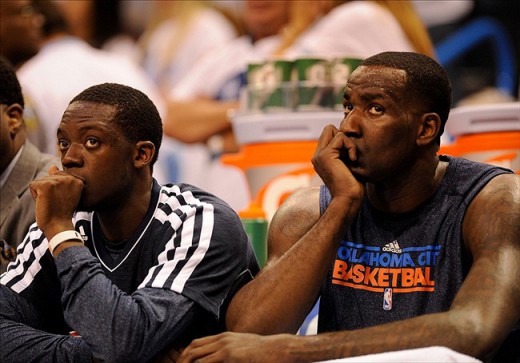
jackson perkins thunder

From the time I woke up on February 19th to about 1:30 PM CST, I was almost certain that a certain Brooklyn Nets 7-footer would be a member of the Oklahoma City Thunder. Speculation was abound that the Thunder and Nets had rekindled talks revolving around Brook Lopez, Kendrick Perkins, and Reggie Jackson. All the information leading up to about 12:30 PM CST was that it was basically a done deal and that the Nets were awaiting Oklahoma City’s approval. Then the chatter stopped.

Trades usually come at you one of two ways. The first way is like the trade in which the Thunder acquired Dion Waiters. It comes at you in an instant and you barely have time to react. The second way is like the Brook Lopez (non)trade. You hear the rumors and speculation leading up to the trade, and usually it gets done after that. But sometimes, the chatter stops prompting one of two thoughts: either the teams are working on the specifics of the deal or the deal has completely fallen through. In the case of Brook Lopez, it was the latter.

The rumors started that the Thunder were doing their due diligence and were looking at all their options. Around 1:45 PM CST, Adrian Wojnarowski tweeted that Reggie Jackson had been traded to the Detroit Pistons. Apparently the Jackson move was the linchpin that was holding everything back in the league. Once Jackson was dealt, all hell broke loose. About 30 players were traded in a 10 minute span leading to the trading deadline. The trade deadline literally napalmed the entire league. And these weren’t end of the bench players. These were former All-Stars, talented players on rookie deals, a former Rookie of the Year, and game-changers. This trade deadline was definitely worth it.

When all the dust settled, four new players were slated to be in Thunder uniforms, while four others became former Thunder players. Here’s an overview of the two deals the Thunder made at the deadline.

Deal 1:

  • Oklahoma City received Enes Kanter and Steve Novak from Utah and DJ Augustin, Kyle Singer, and a 2019 2nd round pick from Detroit.
  • Utah received Kendrick Perkins, Grant Jerrett, the draft rights to Tibor Pleiss, and a 2017 lottery protected 1st round pick from Oklahoma City and a 2017 2nd round pick from Detroit.
  • Detroit received Reggie Jackson

The Jackson deal was actually a 3 team deal that also involved Kendrick Perkins and little used rookie forward Grant Jerrett. Jackson let his intentions be known at the end of last season and at training camp this season, that his main goal was to be a starter in the league. With Russell Westbrook in tow and Oklahoma City’s penchant for starting defensive minded, normal sized SG’s, the Thunder were never in a position to acquiesce to Jackson’s demands. As the trading deadline drew closer, Jackson’s agent, Aaron Mintz, asked the team to trade his client. From all the accounts, the locker room chemistry between Jackson and his teammates (specifically Kevin Durant and Westbrook) was reaching a boiling point of which there would be no returning from. The Thunder had to get a deal done and Detroit (and Utah) offered them the best deal in terms of known commodities.

dj augustin kyle singler pistons

I will say this. It was kind of hard to see Perkins go. On a team full of hares, Perkins was the tortoise. I know he was the bane of a lot of Thunder fans’ existences, but his effects on the team will be felt for years to come. He was the big brother on the team and he relished that role. When the younger players (to include Durant and Westbrook) had a bad day, they would usually turn to Perkins for advice. He was the protector of the inner sanctum. Only team members and a select few were allowed in their locker room (I’m looking at you, Joakim Noah). He made the team better defensively (don’t argue, just look up the stats), and toughened them up. Did he have his flaws? Of course. But he also personified the qualities that you and I take into our 9 to 5’s, and I for one, appreciated it.

Deal 2:

  • Oklahoma City received a protected 2016 2nd round pick from New Orleans.
  • New Orleans received Ish Smith, the draft rights to Latavious Williams, a 2015 protected 2nd round pick from Oklahoma City, and cash considerations.

The Thunder made this move to clear a roster spot for the incoming new players. The Thunder could have waived Smith, but his salary would have counted towards their final salary number of the team. With the team already being over the luxury tax, they didn’t want to add to the total amount they would have to pay to the league. Instead, New Orleans stepped in and took on Smith, who was subsequently waived.

When I look at the players the Thunder acquired, one word resonates in my mind: balance. This is the most balanced team the Thunder has ever yielded. You could argue that the 2011-12 team that made it to the NBA Finals was more balanced, but this team is more experienced. In the end, the Thunder lost a good player in Jackson and a team leader in Perkins, but got back so much more in depth and balance. The Thunder got back a true back-up point guard that can shoot, two sharp-shooters, and an offensively adept center that is only 22 years of age. In short, the Thunder got better.

Trade Winds – Oklahoma City and trade rumors

perkins jackson thunder

The Oklahoma City Thunder have never been known to be big players at the trade deadline. In their 6 previous seasons in OKC, the Thunder rescinded one blockbuster deal (Tyson Chandler in 2009), used the pieces from the rescinded trade to salvage another one (Thabo Sefolosha in 2009), made another blockbuster deal in 2011 (Nenad Krstic and Jeff Green to Boston for Kendrick Perkins and Nate Robinson in 2011) and acquired Ronnie Brewer from the New York Knicks for a 2nd round pick in 2012. Talk about living dangerously with that last one!

But this season seems different. The Thunder were already a part of a January mini-blockbuster trade that involved 3 teams, 4 players, and a first round pick that netted the Thunder Dion Waiters. And the Thunder still have enough assets to make another deal or two before Thursday’s trade deadline.

First off, what assets do the Thunder have?

  • The Untouchables – Kevin Durant, Russell Westbrook, Serge Ibaka, Steven Adams, Andre Roberson, Mitch McGary, Nick Collison, Anthony Morrow, and Dion Waiters.
  • Can be had for the right price – Reggie Jackson ($2.2 M) and Kendrick Perkins ($9.4 M)
  • Have at it, Philly – Jeremy Lamb ($2.2 M), Perry Jones ($1.13 M), Ish Smith ($861 K), and Grant Jerrett ($816 K)
  • Filler – 2015 2nd round pick and the draft rights to Tibor Pleiss, Alex Abrines, Josh Huestis, and Semaj Christon.

What do the Thunder need?

Outside shooting – The Thunder’s 3-point shooting percentage is a paltry 32.5%, good for 25th in the league. That percentage also ranks the lowest (by about 4 spots) of any teams that is currently slated in a playoff spot (to include New Orleans). The Thunder make about 7.4 3-pointers per game, which is tied for 15th in the league and ranks them ahead of only New Orleans and Memphis for Western Conference teams that in the playoff race. If that shooter can also be a plus on the defensive end, then that’s even better.

Interior scoring – The Thunder have never had a bona fide interior scorer. Someone they can dump the ball off to in the paint and know there’s a high percentage an easy shot will come out of it. The Thunder are tied with 2 other teams for 17th in the league in Point Per Shot (pps). What this means is that the Thunder are in the lower half of the league in getting easy baskets.

Luxury tax relief – The Waiters trade pushed the Thunder about $2.2 million dollars over the luxury tax line. Luckily, the Thunder have never been over the tax line and are in no risk of having to pay any repeater tax. The Thunder may be willing to remain above the tax line this season, or they could just as easily went to get back under the tax line before the deadline is over with.

5 Possible Deals the Thunder may make (All trades have been fact-checked with ESPN’s NBA Trade Machine)

1. Thunder gets Brook Lopez / Brooklyn gets Kendrick Perkins, Jeremy Lamb, and Grant Jerrett 

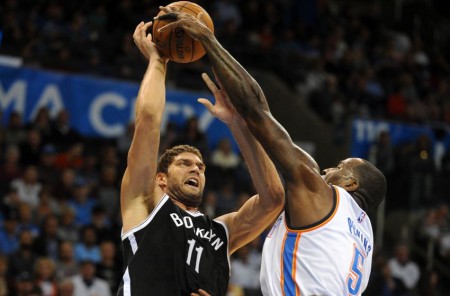
lopez perkins nets thunder

This deal was already hinted at about three weeks ago. The Thunder appeared ready to make the deal, but the Nets hesitated, probably wanting to see if they could get a better deal. The Thunder get their interior presence (albeit an injury prone one with a player option for $16.7 million next season). Brooklyn gets what they are desperately coveting: luxury tax relief and an acceleration to rebuilding. The Nets are looking for a combination of expiring contracts, young players, and picks. But no one in the league is really looking to give up financial flexibility for a big man that is injury prone and due to make that much money next season.

2. Thunder gets Enes Kanter and Jeremy Evans / Utah gets Kendrick Perkins, Jeremy Lamb, 2015 2nd round pick

If the Thunder are looking for an offensive big man, Kanter may be a cheaper option than Brook Lopez. In addition, the Thunder get some luxury tax relief in the process. Utah gets a veteran big man with an expiring contract to mentor Gobert and Favors and a young wing that needs playing time to blossom.

3. Thunder gets one of either Arron Afflalo/Wilson Chandler, Darrell Arthur, and Memphis’ 2015 first round pick / Denver gets Kendrick Perkins, Reggie Jackson, and Jeremy Lamb

With Denver looking to build for the future, everyone on the team, save for Jusuf Nurkic and Gary Harris is likely on the table. OKC would love to get a 2-way wing that can either come off the bench, or immediately start if necessary. The Thunder have already experienced what happens in the playoffs when teams lay off their offensively challenged players and pack the paint. A long wing with the ability to knock down a jumper would be a great commodity to have moving forward. Denver would probably love to add Jackson to their young core. Jackson has been through playoff battles and appears eager to lead his own team.

4. Thunder gets Ian Mahimi and George Hill / Indiana gets Kendrick Perkins and Reggie Jackson

The Thunder get a more defensive minded back-up point guard with playoff experience that has knocked down big shots in the past. In addition they get a big that can give you something on the offensive end of the floor. Indiana gets a point guard that can, not only create for himself, but also create for others. In addition, they get a big with a $9 million dollar expiring contract.

5. Thunder gets under the luxury tax line, a Traded Player Exception, and a heavily protected 2nd rounder / Philadelphia gets any of Jeremy Lamb, Perry Jones or Kendrick Perkins

The luxury tax. Why pay if you don’t have to? Philadelphia is about $13 million dollars under the the salary cap floor. If they want to avoid pay it, they may be willing to take on a player or two.

Final option (and highly likely):

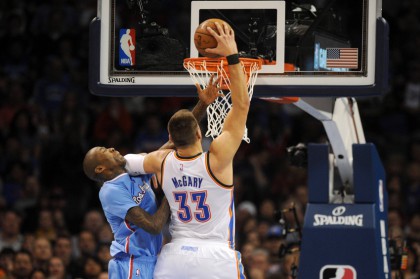
NBA: Los Angeles Clippers at Oklahoma City Thunder

Stay put. Yeah, its an extremely boring option. But the Thunder, as currently constructed, are a championship contending team. Take away the injuries to the key players, and you have a team that would likely be in the thick of the Western Conference elite. They have a good mix of offense and defense, and only now appear to be putting it all together. Plus, Mitch McGary may be offensive big man the Thunder have been looking for. He’ll have his missteps in this his rookie season. But the kid oozes potential and brings a completely different dynamic to the team. It’ll be a crazy 24-48 hours from here on out. It could be a roller coaster or it could be a drive to the local Wal-Mart. Just make sure you buckle up.

Thunder trade Hasheem Thabeet to the Philadelphia 76ers

Hasheem Thabeet, Maalik Wayns

The Oklahoma City Thunder traded center Hasheem Thabeet (along with cash considerations) to the Philadelphia 76ers on Tuesday. In return, the Thunder received a protected 2nd round pick (likely highly protected) and a $1.4 million dollar Traded Player Exception as the 76ers are severely under the cap and didn’t need to send the Thunder a player back. The 76ers will likely to waive Thabeet.

The Thunder like to go into the season with at least one roster spot available. This allows them more flexibility for possible trades or to sign a disgruntled veteran for a late season playoff run after the trade deadline. The Thunder had until the 1st of September to do something with Thabeet, as his salary would have become fully guaranteed after that date.

I don’t usually care too much about third string players, but Thabeet was a great locker room presence and the ultimate team guy. His positive attitude rubbed off on anyone he met and he performed well enough on the court whenever he was called upon. I will always the remember the ejection that was rescinded 5 minutes later in James Harden’s first game back in Oklahoma City as a member of the Houston Rockets. Best wishes on your future endeavors Hash.

Kevin Love/Andrew Wiggins: Tread Carefully, Cleveland

love wiggins

The Cleveland Cavaliers have made every right decision this summer. They drafted Andrew Wiggins, won the LeBron James sweepstakes, and have begun to assemble a supporting cast similar to the one James had in Miami (even with the same players). But all those decisions were basically made for them. There was hardly any strategy involved in making those decisions.

When Joel Embiid injured his foot a week before the draft, the decision of whom to choose was parred down to Wiggins and Jabari Parker. With Parker doing everything possible to get drafted by Milwaukee (bad workout for the Cavs, back channel gossip that he didn’t want to go to Cleveland), the choice was made even easier for the Cavs. Of course, it WAS Cleveland with the first pick. There was always the possibility they would over think it and select Jusuf Nurkic with the number 1 pick. But with a selection this easy, they was hardly anything they could do to get it wrong.

The next step was to try and convince James to come back home. After getting to four straight NBA Finals on a veteran-laden team, the Heat were starting to crumble under the weight of how they were structured. The value of their aging veterans was diminishing, one of the Big 3 was starting to break down, and the Thor-like hammer of the CBA was finally starting to take its toll on the team. With James asking for his worth and requesting the full max, the Heat were at a financial crossroads in terms of what they could surround James with. Wade and Bosh wanted to come back, but weren’t going to take steep pay cuts to make it happen. With only Norris Cole and Shabazz Napier under contract, the Heat would be really hurting if they brought back the Big 3 with market-level contracts.

James, now more mature and savvy than he was four years ago, began to see the writing on the wall. When asked why he sometimes passes the ball in late game situations, James usually answers that he always makes the right basketball play. If ever there was an opportunity to not only right his most wrong, but also make the right basketball play, this would be it. With Kyrie Irving, Anderson Varejao, a stable of young, relatively cheap players, and salary cap flexibility in the fold, Cleveland was beginning to look like the right choice. After hashing out any old grudges between himself and Cav’s owner Dan Gilbert, James signed with Cleveland for 2 years, with a player option after the first year. Again, a decision that was made for the Cavs by James.

kevin love lebron james

With James signed in, Cleveland went from being a punchline to being a destination city in NBA circles. Almost immediately, James’ ex-teammates like Mike Miller and James Jones joined the fray, with Ray Allen contemplating to make the same jump. Free agent decisions are always made by front offices, but with James in the mix, these decisions have basically been made for them. This has basically been the story of Cleveland’s offseason.

But now comes the big decisions. Cleveland as currently constructed is a young, up and coming team with the best player in the NBA. Think of the 2010 Oklahoma City Thunder with a 3rd year Kevin Durant, a 2nd year Russell Westbrook, and rookies James Harden and Serge Ibaka….Now add 2010 Kobe Bryant to that team. It would have been a dynamic mix that would’ve won 52-56 games in the regular season, but would’ve probably floundered in the later stages of the playoffs due to the inexperience of most of the core of that team. And therein lies the decision for the Cavs: do they cultivate the pieces they have around LeBron for the long haul or do they make a big splash now while the pieces are in place?

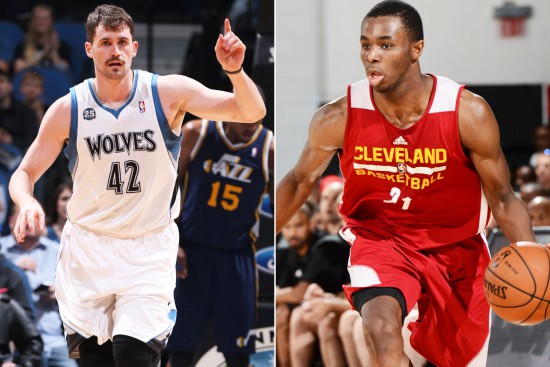
On Thursday, after weeks of denying that he was available, sources stated that Cleveland would be willing to include Wiggins in a deal for Kevin Love. A trio of Irving, James, and Love would immediately be one of the best trios in the league. But the question for Cleveland becomes, “What else would you have to give up for Love?” And therein lies the difficulty of the decision.

Any trade for Love would have to involve more pieces than Wiggins, due to Love’s $15.7 million dollar salary. This is where the decision making will come into play for the Cavaliers. The Timberwolves have already been down this road before. In 2007, they traded All-NBA power forward Kevin Garnett to the Boston Celtics for Al Jefferson, Ryan Gomes, Gerald Green, Sebastian Telfair, Theo Ratliff, and 2 first round picks. Of all the players traded for Garnett, only Ratliff was over the age of 24 at the time of the trade. The number of the players involved in this trade was largely due to Garnett’s $22 million dollar salary at the time. Any trade for Love will be on a smaller scale due to him having a smaller salary than Garnett at the time of his trade from Minnesota. But the blueprint of the trade will likely be very similar.

Cleveland Cavaliers v San Antonio Spurs

Any team that trades a superstar wants three things in return: a large expiring contract, young talent with potential, and future draft picks. Cleveland is flush with young assets that have loads of potential. Wiggins, Anthony Bennett, Tristan Thompson, and Dion Waiters have all shown flashes, while still being on their rookie contracts. In the last three seasons, Anderson Varejao’s name has appeared repeatedly on two lists: the players that will potentially be traded at the trade deadline list and the injured list. Varejao will once again be on the “players that may be traded at the trade deadline” list with his expiring $9.7 million salary. And, the Cavs also have all the draft picks for the foreseeable future, plus a first rounder from Miami.

Say what you will about LeBron and loyalty, but if you are one of his guys, he’ll do everything in his power to keep you by his side. He did that with his closest friends, who are now his agent and top advisors. The only 2 players he ever had that kind of relationship with was Zydrunas Ilgauskas and Varejao. You can bet that Cleveland will try everything in its power to keep Andy in a Cavs uniform this season. So that leaves the Cavs trading two or, even three of their young players to Minnesota. And that’s where it gets perilous.

Trading your young core for a proven superstar is a great plan for the present. The combination of three extremely talented players with a veteran supporting cast has been a winning formula for the past 7 seasons. Boston and Miami have ridden that formula to be participants in 6 of the last 7 NBA Finals, with 3 championships coming out of that. The only problem is that it isn’t a sustainable formula. Superstar salaries eventually rise, veteran players get older and less effective, and the CBA eventually wins over time. Three years into the experiment, you’re right back to square one. And that’s if everyone stays relatively healthy.

It’s just so strange though, because Cleveland has been down this road before. Last time around, Cleveland tried, at every turn, to surround LeBron with what they thought was the necessary talent to lead Cleveland to a championship. That led them to a bloated salary cap situation in which they were constantly cutting their nose to spite their face to retool and rebuild their team. Now that they have a team loaded with potential and a sustainable cap situation, they want to turn around and do it again. It needs to be brought up that Kevin Love has played the same amount of playoff games as Andrew Wiggins, Kyrie Irving, and Tristan Thompson. While Love is proven, he’s also still unproven when it matters most. That Cleveland is putting so much stock on someone who is so unproven should not only scare LeBron, but also Cleveland.


The Thunder and the Trading Deadline (2014 Edition)

thabo sefolosha thunder

Heading into the season, the Oklahoma City Thunder were in the unfamiliar position of being a title contender, while also having a war chest worth of assets that would make any team in rebuild mode jealous. Most championship contending teams have an experienced core that was obtained by trading away assets. But the James Harden trade from the beginning of last season gave the Thunder some cap flexibility and assets to play with heading into this season. They have a veteran on an extremely cap friendly expiring contract (Thabo Sefolosha), young players with potential on rookie scale contracts (Reggie Jackson, Jeremy Lamb, and Perry Jones), an extra draft pick (Dallas’ protected 1st rounder), and two sizable Traded Player Exceptions.

They have everything necessary to make a monster trade. But two important questions come to mind when a team nears the trade deadline. The first question is “What does the team need?”. Every team has weaknesses that can be addressed via a trade. The important thing when it comes to addressing weaknesses is what does the team have to offer and what is the team willing to give up. Those two things may seem to be the same, but are entirely different. For example, the Heat can address any of their weaknesses by trading Chris Bosh. But in reality, the Heat will, instead, choose to make a smaller deal or stand pat.  Which leads to the second question, “Does the team need to make a trade?”.

When a team has the best record heading into the All Star break, while also missing their 2nd best player for much of the first half of the season, the above question becomes a valid one. Much of the Thunder’s success can be attributed to the chemistry the team has cultivated over the years. Making a trade now, especially one where a rotational player is traded, could have it’s consequences.

Two things have to be weighed when contemplating a trade: how the trade affects you currently and how the trade can affect you in the future. The reality with the Thunder is that they will be toeing the tax line for the foreseeable future. With Kevin Durant, Russell Westbrook, and Serge Ibaka on max (or near max) deals, finding bargains will be the rule of the land. Anything that includes extra salary and extra years will probably be nixed.

durant ibaka westbrook thunder

Another thing to factor is the fact that the Thunder have assets that are not currently on the roster, but could come into play as early as next season. Tibor Pleiss, the Thunder’s 2nd round Eurostash from 2010, could possibly join the team next season. Another possible roster spot could go to Grant Jerrett next season. The stretch 4 out of Arizona was acquired by the Thunder in the 2nd round of last year’s draft. His rights are still owned by the Thunder as he develops in Tulsa under the guise of the Thunder D-League team.

Also, the team will have to decide if obtaining a player will have any impact on future roster moves, such as extending Jackson and/or Sefolosha. Only the front office knows what they plan to do with those two players, but their futures will probably have a bearing on what the Thunder do this season at the trade deadline.

In the end, the first question asked comes into play. What, exactly, do the Thunder need? They head into the All-Star break with the best record in the league. They are top 5 in offense (ppg), offensive rating, defensive rating, and rebounds. They are top 10 in points allowed and 2nd in margin of victory. And they have done this with their All-Star point guard  missing more games than he’s played. So, what exactly, does this team need? It’s like asking the guy who has everything what he wants for Christmas.

jones jackson lamb ibaka durant westbrook thunder

I can only see two areas of need for this team: 3-point shooting and point guard depth. If there is a player that could supply both while not minding being the 11th or 12th man on this team, then I’m all for it. Only problem is there aren’t many players like that. Point guards with the ability to shoot usually find their ways into line-ups.

So where does that leave us? I think the Thunder will stand pat as far as their current roster is concerned. Realistically, their most available assets are two empty roster spots, a $2.3 million trade exception, Hasheem Thabeet ($1.2 million this season), two future 2nd rounders from the Ryan Gomes trade, and possibly their own first rounder for this upcoming draft (slotted to be in the 28-30 range). I think the Thunder will attempt to get a shooter with their trade exception, possibly CJ Miles of the Cleveland Cavaliers or Anthony Morrow of the New Orleans Pelicans. Then I think they’ll sign Royal Ivey for the rest of the season once his season is done in China.

sam presti thunder

The Thunder don’t have to do much tinkering. Their biggest acquisition may be the return of Russell Westbrook from injury. They have enough roster flexibility to adapt to any style thrown at them. And they have enough experience to get through any rough patch. As long as health does not become a factor, they should finish the regular season out in the same fashion they went into the All Star break. But somewhere, deep in the recesses of my mind, I imagine Sam Presti reading this article, letting out a diabolical laugh, and calling up Adam Silver to put his stamp of approval on a 12 team, 38 player trade involving 25 draft picks, 13 Euro-stashes, and $21 million dollars worth of cash considerations right at the trade deadline.

Trade Talk and the Importance of Jeremy Lamb

Utah Jazz v Oklahoma City Thunder

The trading deadline in the NBA may be February 20th, 2014, but the date that gets a lot of the movement started is December 15th, 2013. That is the date when most free agents who signed in the offseason become eligible to be traded. As that date approaches, the inevitable trade chatter starts to ramp up. If you are a team that holds many desirable assets such as good, young players on rookie pay scales, multiple first round picks, and expiring contracts, then your name is bound to show up in a lot of the trade talk.

And that is where the Oklahoma City Thunder currently find themselves. With young bench players on rookie scale contracts that are performing surprisingly well and a couple of semi-attractive expiring contracts (namely Kendrick Perkins and Thabo Sefolosha), that trade chatter has already started to rev up about the Thunder. Sam Amico of Fox Sports Ohio had the following quip on his NBA Notes from December 9th:

Multiple league sources have said the Oklahoma City Thunder are willing to deal second-year guard Jeremy Lamb if they can find a more experienced (and consistent) player to come off the bench. Lamb has already been traded once – from the Rockets as part of the James Harden deal before last season.

Then Bill Simmons on NBA Countdown suggested that the Thunder should trade Lamb, Perkins, and 2 first round picks to the Orlando Magic for Arron Afflalo. Now this would usually be seen as conjecture on the part of a media pundit, but a lot of fans around the country see Simmons as something of an NBA savant who is the end all/be all when it comes to NBA information/predictions.

Adding fuel to the trade talk fire, Reggie Jackson, who has been performing almost at ‘Harden as a 6th man’-like levels throughout the season, recently signed with powerhouse sports agency CAA. This is the same agency that represents Dwayne Wade, Tony Parker, Chris Paul, and Carmelo Anthony to name a few, and also partners with Roc-Nation, who represents Jackson’s teammate Kevin Durant. Did I mention that Jackson has a possible extension looming this offseason? Scary thought, especially when we all remember what happened the last time a great Thunder bench player was up for an extension.

Kevin Durant, Reggie Jackson

Whenever these trade talks start to ratchet up in December, it’s always important to remember the previous 3 months when there were hardly any trade talks. That period from September through November is usually reserved for roster building and evaluation. Yes, big trades do happen during that time frame, as we saw with the Harden trade last season, but those types of transactions are usually reserved for February, June, and July. When the trade talk is quietest amongst media members is actually when the trade talk is loudest amongst GMs. It is during this roster building and evaluation period that GMs try to gauge the interest of the “tradeable” assets on their rosters. It is when the posturing and positioning of “GM chess” occurs.

When you hear phrases like “multiple league sources”  or “an Eastern/Western Conference GM said”, just know that the news coming from that report may not be current. Take for example Jeremy Lamb, who was a very attractive asset heading into this season. The Thunder probably did their due diligence in June during the NBA draft to see if there was anything of value that they could get for Lamb. Also, during the preseason, when Lamb was struggling with his shot, there was probably some probing by Thunder GM Sam Presti to see if anyone would bite in return for an experienced bench player. But that was when Lamb was an unknown commodity, not only on the court, but also to other teams. But now, after averaging 10.5 points and 2.5 rebounds on 53% FG shooting and 39% 3pt FG shooting over the past 12 games while playing good defense, Lamb is not only a known commodity, but also a key component for a championship contending team. While the rumors of the Thunder shopping Lamb may be true, they may also be 3-6 months old.

jeremy lamb thunder 2

If you follow the Thunder and are familiar with their salary cap structure, then you would know that they value production at a low cost. The ability to take one player and flip him into 2 or 3 players of great value while preserving their cap space was one of the main reasons the Thunder traded James Harden. Could history repeat itself with Reggie Jackson? That will be the most pressing issue for the Thunder moving forward. But, while there are similarities between the Harden/Jackson comparisons, there are also differences. The Thunder are a lot better equipped to handle a contract extension for Jackson now, than they were when it was time for Harden to be extended. By the time Jackson’s extension kicks in, Sefolosha, Perkins, and, (God forbid) Nick Collison’s contracts will all be expired. That’s almost $15 million in available salary to play with. The good thing is, Jackson won’t command a max or near max contract. When I think of Jackson, I don’t think of a top 5 player at his position. Two years ago, you could argue that Harden was the 3rd best shooting guard in the league, even if he was coming off the bench. You can’t say the same about Jackson at this point in his career. Also of note is that Harden was traded in the offseason, not in the middle of the season. The Thunder wouldn’t dare trade Jackson during the season when he is arguably their 4th best player. If anything, they’ll Harden-ize him during the offseason.

Which brings me back to Lamb. This is why it is completely asinine to think that the Thunder would want to trade Lamb. His most important asset to the Thunder at this moment is as an insurance policy. If the Thunder decide to either trade Sefolosha before the deadline or allow him to walk in the offseason, they can feel comfortable in the fact that they have a player in Lamb capable of starting for them either after the deadline or into next season. If the Thunder decide to trade Jackson in the offseason, they know that they have a player that can provide offense off the bench and can play with the starters during crunch time. In the grand scheme of things, Lamb may be the piece that makes other moves possible.