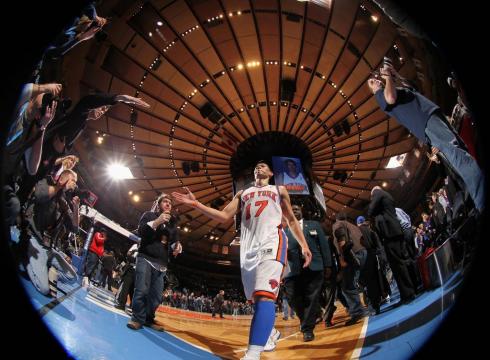
Ever since Linsanity gripped the nation about a week and a half ago, people have been trying to find a similar situation to compare the phenomenon to. Its human nature to take something new and try to relate to something that has already occurred. Prior knowledge is one of our most important tools, but it can be clouded by our insistence on recency.
So when Jeremy Lin started dropping 25 points per game and leading the New York Knicks on a 5 game winning streak, people were hard-pressed to find a comparable variable. So, naturally, people looked in the direction of the last phenomenon, which was Tebow-mania. Which is a little strange, because the two phenomenon could not be anymore different. The only thing connecting them is the hype.
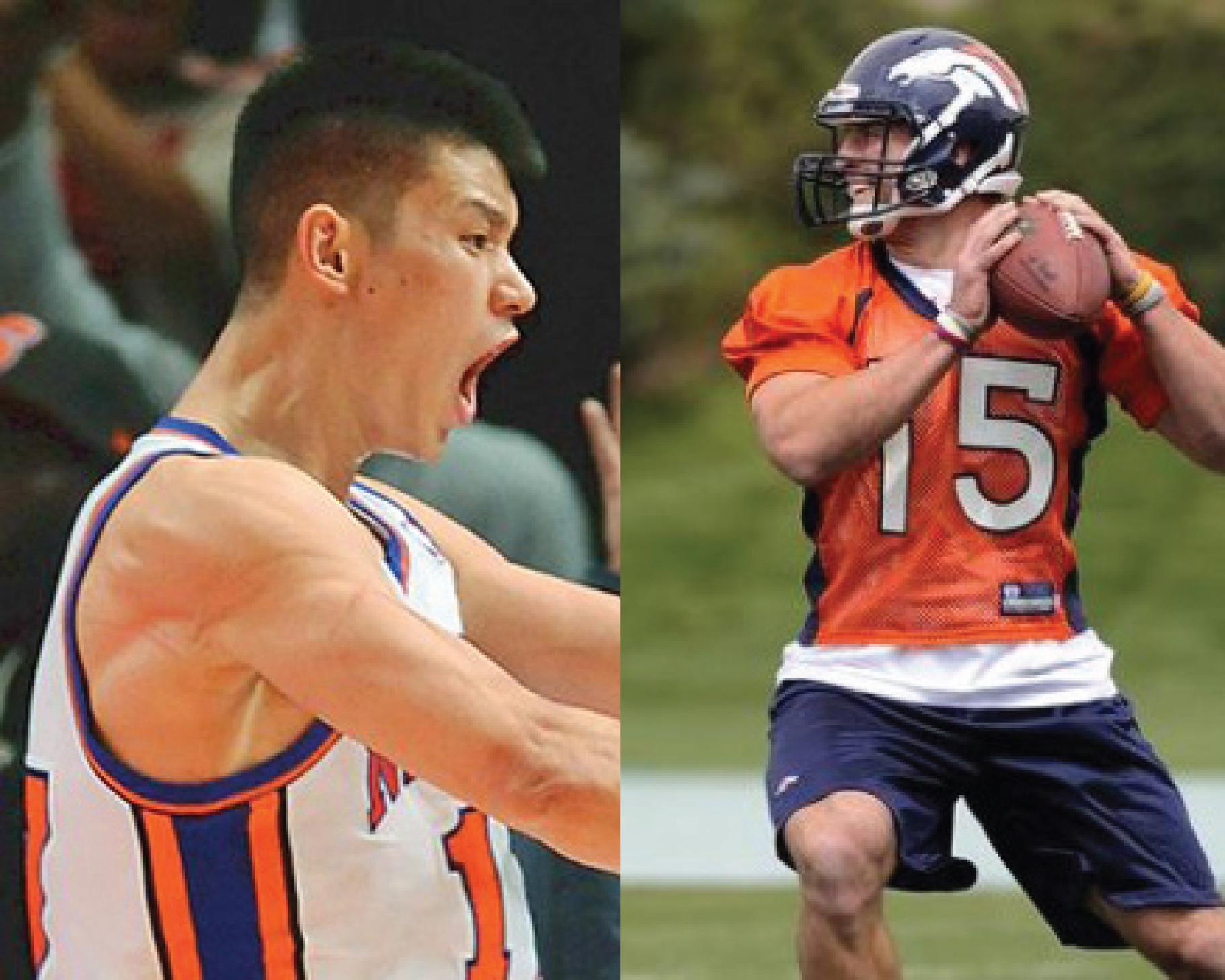
For a comparison to work, the basic elements of the hype have to be similar. And that’s where the similarities stopped with Timothy Tebow. He didn’t come out of nowhere. He was hyped coming out of high school and hyped coming out of college. Which is the complete opposite of the hype associated with Lin. A more apt comparison for the Lin-fueled hype is Kurt Warner.
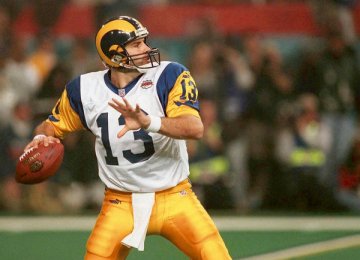
There are two basic elements that make the Warner and Lin story very similar. First, it’s what I like to call ‘The Struggle’. We all know Warner’s story. Undrafted out of Northern Iowa, he signs with the Green Bay Packers who cut him, but advise him he has potential. Warner goes back home to stock shelves at his local Hy-Vee grocery story while working as a graduate assistant for Northern Iowa. He gets his opportunity to play football in the Arena Football League with the Iowa Barnstormers and goes on to have two of the best statistical seasons of any quarterback in league history while leading his team to two straight Arena Bowl appearances (they lost both Bowl games by the way). He finally gets an opportunity to try out for an NFL team with the Chicago Bears, but isn’t able to go because of a spider bite on his throwing elbow sustained during his honeymoon. He goes back to the Arena league and has his best statistical season of his Arena League career. In 1998, he finally gets an opportunity to try out for an NFL team, and eventually gets signed by the St. Louis Rams as their 3rd string quarterback. Warner barely plays in that first season and the team arranges for him to get some reps in NFL Europe with the Amsterdam Admirals. In his second season with the Rams, he’s promoted to 2nd string quarterback and watches as starting quarterback Trent Green tears his ACL in a preseason game. Warner finally gets his opportunity and goes on to have one of the greatest seasons for an NFL quarterback ever. The hype machine starts humming, churning out names like “The Greatest Show on Turf” to describe the Ram’s offense and labeling Warner the greatest quarterback ever to play. It was Warner-mania.
The ‘Struggle’ for Lin started when he was in high school. He led his high school to the state championship beating famed powerhouse Mater Dei and was named Northern California Division II Player of the Year. After not receiving any scholarship offers from any Division I schools, Lin decided to play for Harvard, who showed interest but could not offer a scholarships due to never traditionally offering athletic scholarships. Lin played four seasons for Harvard and left school as one of the greatest modern day Ivy League players. Many had him tabbed as a possible 2nd round pick as draft day rolled around, but he ended up being undrafted. His underdog status and play in college gave Lin a bit of a cult following, which only increased when he was signed by his hometown Golden State Warriors. The cult following continued to gain steam because of the Bay Area’s large Asian population.
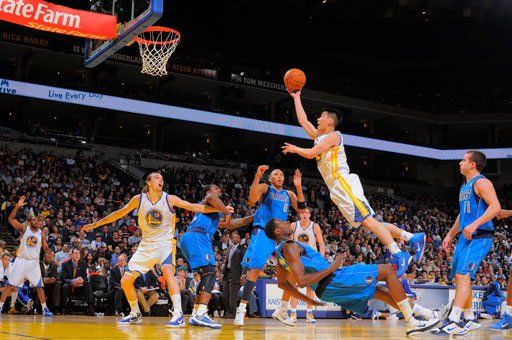
Lin had an up and down rookie season, as he showed flashes of potentially being a good player, while being shuffled back and forth between the Warriors and their D-League affiliate, the Reno Bighorns. After the lockout ended, Lin was cut in a cost cutting move in an attempt to sign budding big man DeAndre Jordan. Lin was picked up by the Houston Rockets two weeks before the season started, but succumbed to the same fate a day before the start of the season as the Rockets cut him in a cost-cutting measure in order to sign big man Samuel Dalembert. The New York Knicks claimed Lin two days after the season started, and had him on the bench for most of the first month and a half. But injuries and lackluster guard play led to Knicks coach Mike D’Antoni taking a chance and putting Lin in the starting lineup. And what has happened since then, has been nothing short of remarkable. It’s a feat that has never been seen in modern basketball history. In Lin’s first 4 starts, he scored the most points ever by someone starting for the first time. Ever! We are talking about greats like Michael Jordan, Shaquille O’Neal, Lebron James, Kevin Durant, etc. None of them scored as much in their first 4 starts as Lin. And of course, the hype machine took off after that, naming the phenomenon ‘Linsanity’ and causing New Yorkers to freak out and try to buy into any and everything Lin.
In both cases, the Struggle made each of their successes fascinating stories. People love stories that make them feel good. Stories about underdogs who continue to believe in their dreams and eventually succeed on a grand scale, critics be damned. It’s the American dream, encapsulated in leather, and shown on either a hardwood floor or a grassy field. But what makes these stories even grander is ‘The Cause’ behind each stories that gives it that extra push.
In Warner’s case, the ‘Cause’ was his openness about his religious beliefs and his “ahh shucks” persona. He wasn’t your typical braggadocio superstar that we were used to seeing. Instead, he was humble hard worker who caught his break and succeeded like the public never thought he would. He usually thanked God and his wife during interviews. We hear athletes thank God all the time during interviews, but very seldom do we hear them thank their wives. Warner was Tebow before Tebow was ever heard of.
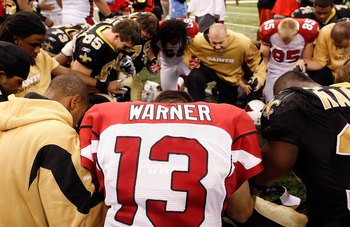
People like to attach their values to their athletics, and religion, whether you believe in it or not, is usually at the core of their values. So when an athlete not only performs great on the field, but also praises the same deity you worship openly, you tend to cheer for that guy a little harder. It’s an attachment that goes beyond the playing field. The ‘Cause’ fuels the hype machine to an extent that the ‘Struggle’ never could by itself. We all love underdog stories, but if that underdog represents a cause that you live for, then you not only cheer for the athlete, but also for the cause, which usually wields a much stronger influence on your psyche.
The funny thing about the ‘Cause’ is that the person championing it (i.e. the athlete) usually doesn’t intentionally choose to represent that cause. In Jeremy Lin’s case, his cause is as a representative for the worldwide Asian community, but more importantly, for Asian American. There have been Asian superstars, but they have always been from the Motherlands (i.e. China or Japan). There has never been an Asian American superstar that the public can invest in and support. That’s what Lin represents. And to do it all in New York, at MSG, makes it even more magical.
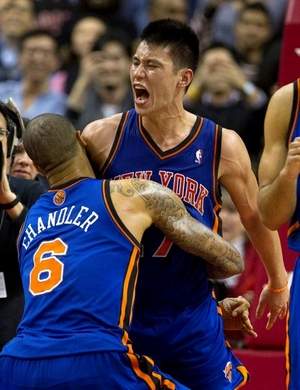
We know how the Kurt Warner story played out. His play oscillated from injury plagued bad to redemption good, which led to him becoming a polarizing figure amongst fans. But, for the most part, he still remained a well-liked figure because he never wavered from his ‘Cause’. We are just now witnessing the beginning of the Jeremy Lin story. I have no idea how it will play out. I’ve constantly thought that the next game would be the one where he finally returns back to Earth, but it hasn’t happened yet. Along the way, I’ve gone from apathetic observer to curious seeker to all-out fanatic. While I’m not Asian, I am a minority, and do understand the pride that builds up when “one of your own” succeeds on the highest level. Last night, in the game against Toronto, in Toronto, the cheers for the opposing player weren’t just for his stellar play. The cheers were mostly for what he represents….and that’s the Cause.


 Now That's Thunder Basketball